SKU: 35441888043
cheap grow tent ventilation

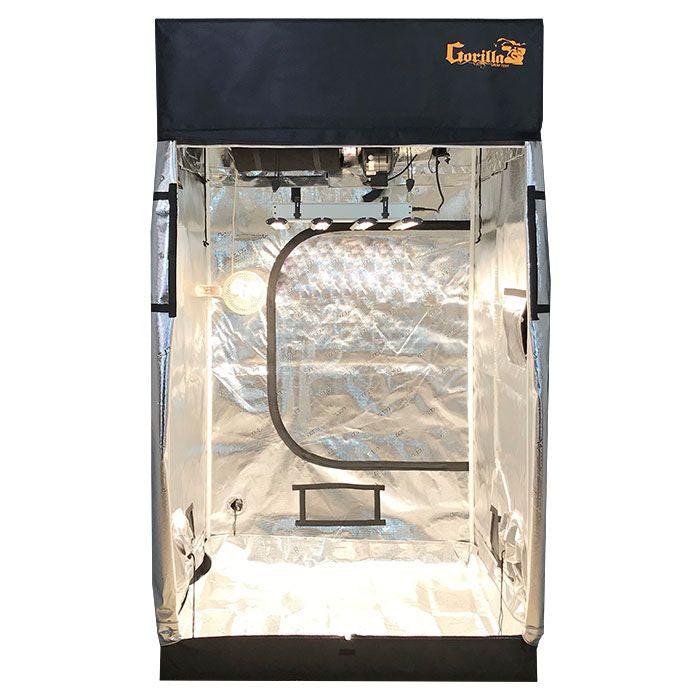
cheap grow tent ventilation Gorilla Grow Tent 4' x 4' 250 Watt Covert LED-X Grow Tent Kit With Automated Ventilation Package

Sale price$25.44 Regular price$28.27
Save 10%

Pay in installments of $7.07 with ShopPay, AfterPay and Klarna

Shipping Estimate
USA
  • USA
  • CAN

Ships within 48 hours · Estimated delivery Oct 19 - Oct 24

Promo Codes Available:

For Your Every Summer RSVP, with Code: SUMMER15

Description

cheap grow tent ventilation Gorilla Grow Tent 4' x 4' 250 Watt Covert LED-X Grow Tent Kit With Automated Ventilation PackagePremium Quality, Yet Affordable For All Growers Check Out The New Gorilla Grow Tent 4' x 4' 250 Watt LED X Grow Tent Kit! The 48" x 48" x 83" footprint of the included heavy duty Gorilla Grow Tent is ideal for growing 6 9 large plants from seed to harvest. The full spectrum Covert LED X Grow Light only pulls 250 watts from the wall, while evenly spreading the light over the plant canopy due to its unique multi bar open fixture design. This makes it so

Premium Quality, Yet Affordable For All Growers - Check Out The New Gorilla Grow Tent 4' x 4' 250 Watt LED-X Grow Tent Kit!


The 48" x 48" x 83" footprint of the included heavy-duty Gorilla Grow Tent is ideal for growing 6-9 large plants from seed to harvest. The full-spectrum Covert LED-X Grow Light only pulls 250 watts from the wall, while evenly spreading the light over the plant canopy due to its unique multi-bar open fixture design. This makes it so the plants at the edges of your garden will still have full coverage from the lighting, whereas most fixtures fail in this aspect. The plug-and-play set-up of the tent and light means you'll be up and running in no time.

Low heat, low energy consumption, and high yields are just a few of the reasons LED lighting is considered the best option for grow tents. Regardless of what size tent you need, there is an LED option for you. With the included Covert ventilation kit, you will never experience any heat or humidity issues. This is just another reason why our grow tent packages are the perfect match for all home growers. No more worrying, we've got you covered!


Everything you need and nothing you dont

We’ve made choosing an LED Grow Tent Kit very easy. No more trying to determine what products are designed to work together, our kits include products that were hand-picked by our staff, which also grows in these ourselves! We know how great these kits are, and you should too!

Our base grow tent systems include the main necessary components such as a Grow Tent , LED Grow Light (with timer and hangers ), Ventilation System (with air circulation clip fan ), and a Humidity/Temperature Monitor . All other items are available as add-ons, which we breakdown for you lower down in the description.


The Grow Tent Kit Includes:

  • Gorilla Grow Tent 4' x 4' Heavy Duty Grow Tent
  • Covert LED-X 250 Watt Full-Spectrum LED Grow Light
  • 6" Smart Inline Exhaust Fan System
  • 6" Carbon Air Filter
  • 6" Ducting with clamps
  • 6" Clip Fan
  • (4x) Light Hangers - (2x To Hang The Carbon Filter)
  • Light Timer

  • Included: Gorilla Grow Tent 4' x 4' Heavy Duty Grow Tent

    Gorilla Grow Tents are professionally designed grow tents that are ideal for experts and perfect for beginners. The expert configuration positions ducting ports where they should be. Large EZ View windows offer easy grow snapshots without compromising your environment. The doorways offer 360-degree convenient access. The larger layouts provide frustration free maneuvering. Thick material and large double cinching ducting ports make maintaining an ideal growing space a snap. Grow easy on yourself. Grow Gorilla.

    Constructed with 1680D thread density fabric (compared to 200D-600D) is up to 9x denser than any other grow tent, making it Ideal for experts and perfect for beginners. Gorilla Grow Tent features all steel poles with steel interlocking pins for a frame that is up to 2-5x stronger than any competitor’s tent frame. Diamond Reflection Technology, redistributes up to 30% more lumens, creating less waste & giving your plants more of what they need to thrive.

    Learn more about the worlds best 4' x 4' Grow Tent here.

    Want to learn more? Here are some recommended articles from our learning center


    Gorilla Grow Tent 4' x 4' Specifications:

    • Dimensions: 4’ x 4’ x 6’11”
    • Height with 1 ft. Extension Kit: 7’11” (included)
    • Height with 2 ft. Extension Kit: 8’11” (sold separately)
    • Weight: 50 lbs.
    • Canvas Density: 1680D
    • Pole Diameter: 19mm
    • Door Quantity: 1
    • Ducting Port Quantity: 6 (11" Double Cinching)
    • Electrical Port Quantity: 2 (3")

    Gorilla Grow Tent Optional Accessories:

    • High CFM Kits - The high CFM kit is to help prevent your indoor grow tent walls from sucking in due to high amounts of negative pressure from exhaust systems.
    • Extensions Kits - Increase the height of your tent for more growing space.
    • Trellis Netting - These perfectly sized durable nylon trellises with hooks that easily attach to any diameter pole, creating a sturdy support structure for the heaviest flowers.
    • Gear Boards - It snaps to your existing tent poles and maximizes space by removing floor items from your growing area. Hang oscillating fans, expensive meters, and monitors up off your floor.

    Included: Covert LED-X 250 Watt Full-Spectrum LED Grow Light

    With only 250 watts pulled from the wall, the all-new Covert LED-X series grow light provides a complete full spectrum ideal for the vegetative stage through the flowering phase, resulting in increased crop quality and yields over similar wattage LED's on the market. The design of these fixtures allow light to be spread throughout the entire footprint more evenly, reducing hotspots and delivering uniform levels of photosynthesis flux density, or PPFD.

    For more information and specifications about this LED, checkout the product page for the Covert LED-X 250 Watt Full-Spectrum LED Grow Light here .

    The 250 watt Covert LED-X is designed to cover a vegetative footprint of up to 5' x 5' and 4' x 4' in flower. These low profile, lightweight fixtures are perfect for grow tents or smaller grows. The recommended hanging height for this light is betweenn 6" - 12" above the canopy.

    NOTE: Included with the grow light are light hanger ratchets and a light timer.


    Included: Covert Ventilation System - the heat, humidity & odor solution.

    The ventilation system is a crucial component of your grow tent kit, and will help manage excess temperature, humidity, and odors. Your garden is a living breathing system that needs to take in the fresh air and expel waste air and heat. This is especially important in an enclosed environment like a grow tent. This is why the Covert Ventilations System is a must-have.

    To go along with the ventilation kit, we have included a clip fan(s) to help circulate air and “make your plants dance”. Keeping the air circulating in your tent will strengthen stems, keep temperatures and odors to the minimum, and help discourage pest and disease development. If you want to learn more, check out our post on grow room atmosphere and ventilation .

    The Odor and Ventilation Control Package now includes the Covert Smart Inline Fans, which can be programmed to operate at set temperature and humidity settings, helping take the guess work out of your grow! Learn more about the Covert Smart Inline Fan here!

    Set up shown is example and will vary.


    Optional Add-Ons & Enhancements:

  • Choose between Soil or Hydroponic growing methods
  • Plant Nutrients & pH Control
  • Grow Tent Air Intake Kit
  • CO2 Enrichment Kit
  • Seedling Starter Kit
  • Garden Scissors
  • Trellis Netting

  • Optional: Choose Your Growing Method - Soil vs. Hydro

    Now that you have your base grow tent kits products, you’ll need to make an important decision - what will your growing method be?

    You can choose between a complete hydroponic system or traditional soil and pots. If you are a new grower, you are probably better off with a complete grow tent kit for soil. Once you have a few grows under your belt, and feel more confident in your abilities, you can always upgrade to a hydroponic system.

    Hydroponics is appealing for a number of reasons, with the main one being decreased time to harvest, less water used, cleaner growing conditions, and more. This style of growing can be really fun, but it is challenging. There is a steep learning curve and lots of moving pieces, so if you aren’t willing to dedicate plenty of time and energy to your grow, stick with the lower maintenance option - soil.

    Learn more about Hydroponics in our learning center here.


    Optional: Add Accessories & Upgrades

    While this is really all you need to grow (besides nutrients), you will inevitably need some accessories along the way.

    These include scissors for pruning, trellis for training, propagation supplies for starting seeds/clones, and CO2 for boosting growth and yields.

    You will need many of these at some point, so why not grab them while you’re here?! If you don't see the accessories you are looking for, don't worry. We have everything you could ever need for your grow tent, so just reach out to us or browse our site for it.


    Optional: Add Harvest Supplies

    The final step in building your flourescent grow tent is adding your harvest supplies. You can grab drying racks, trimming equipment, and even extraction equipment!

    Many growers procrastinate on grabbing harvest equipment because it's so far down the road. But, it makes so much more sense to just grab everything you need right now, and then you don’t have to worry about anything down the line!

    Most of what we have presented in this flourescent grow tent kit builder is for hand trimming, but there is a good chance you may want a trimming machine , especially for the larger grow tent sizes.

    If that is the case, we have trimming machines for every size grower! We also carry bucking machines , extraction equipment , storage supplies , and much more.

    Shipping Notes
    • Free Standard Shipping on $100+ Orders to the USA.
    • Except Preorder products are shipped in 48 hours.
    • Delivery to the USA:
    1. Standard Shipping : 3-10 business days
    • If time is of the essence, please consider selecting expedited delivery for faster service.
    Exchange/Return Notes
    • We offer a 30-day return/exchange service after receiving.
    • Final sale items are not eligible for returns or exchanges.
    • To process your return/exchange, please contact us at [email protected]
    • Please click here for more details>>> Return & Exchange Policy
    SKU: 35441888043

    Discover Niche Categories That Outsell cheap grow tent ventilation

    Top-Converting Item to Boost Your Average Order

    4.8 ★★★★★
    Based on 10 reviews
    Sort
    Highest Rating
    Newest First
    Oldest First
    Product Reviews
    A
    Verified Purchase
    Amazon Customer
    Birmingham, US
    ★★★★★ 5
    The Psychology of Money: A Masterclass on Wealth, Human Nature, and True Happiness
    Morgan Housel’s The Psychology of Money is not your typical finance book. It's an insightful and profound exploration of how human behavior, rather than cold hard numbers, often determines financial success—or failure. If you’re looking for a book that teaches you how to manage wealth, understand greed, and find happiness, this is a timeless treasure trove of wisdom that transcends spreadsheets and stock markets. Lessons in Human Behavior, Not Just Finance Housel's genius lies in his ability to connect finance to human psychology, showing how our emotions, biases, and decision-making habits influence our financial outcomes. Unlike most personal finance books that focus on technical advice, this one delves deep into the mindset required to build and maintain wealth. Through engaging storytelling and real-life anecdotes, Housel illustrates that how we think about money is often more important than what we actually know about it. The Power of Compounding Behavior One of the book’s core messages is the immense power of compounding—not just in terms of investments but in life itself. Housel masterfully explains how small, consistent decisions can lead to huge gains over time, whether in wealth-building, relationships, or personal growth. He reminds us that patience and discipline are the cornerstones of financial success, and that short-term thinking is often the enemy of long-term wealth. His examples of how figures like Warren Buffet amassed fortunes through simple, disciplined investing make this concept strikingly clear. Greed: The Silent Wealth Killer Greed is one of the most destructive forces in personal finance, and Housel addresses it head-on. Through stories of financial bubbles, crashes, and personal downfalls, he shows how the relentless pursuit of "more" can derail even the most secure fortunes. His exploration of why it’s so hard for people to "have enough" is a sobering reminder that wealth is as much about mindset as it is about numbers. The book doesn’t just highlight the dangers of greed; it also offers practical ways to avoid falling into its trap by cultivating a sense of financial contentment. Happiness Beyond the Dollar Signs While the title suggests that money is the focus, happiness is the true heart of this book. Housel argues that wealth, when viewed properly, is a tool for freedom rather than a scorecard. His chapters on the importance of controlling your time, living below your means, and the intangible rewards of financial security are powerful reminders that happiness isn’t just about how much you earn, but how well you live. He masterfully weaves together the idea that wealth is not the end goal, but a means to achieve a life filled with joy, autonomy, and purpose. Timeless Lessons for Every Reader What sets The Psychology of Money apart is its universal appeal. Whether you're a seasoned investor, a financial novice, or someone simply seeking a healthier relationship with money, the book’s lessons are relevant and accessible. Housel’s conversational writing style makes complex concepts feel straightforward, and his ability to blend financial advice with psychology and philosophy makes this book a must-read for anyone wanting a holistic approach to money and life. Final Verdict: A Wealth of Wisdom Morgan Housel’s The Psychology of Money is a masterpiece of personal finance and self-awareness. Its lessons on wealth, greed, and happiness go far beyond dollars and cents, challenging readers to rethink their relationship with money and life itself. This book isn't just about getting rich—it’s about getting smart, getting wise, and getting happy. A timeless, essential read for anyone looking to master not just their money, but their mindset.
    WAS THIS REVIEW HELPFUL?YesReportShare
    Reviewed in the United States on September 5, 2024
    S
    Verified Purchase
    Stephen S
    Charlottesville, US
    ★★★★★ 4
    A Significant and Badly Needed Contribution to the Qualitative Part of our Financial Life.
    Format: Paperback
    From the first sentence to the last, this book provides the latest and most up-to-date evidence for financial literacy's wholesome power to enrich your entire life. The author tells stories to discover financial literacy and living a good life go hand and hand. Most financial books discuss the dominated and respected quantitative side, the sophisticated science, complicated formulas, and mind-numbing statistics. Reading the traditional personal finance genres makes people erroneously think investors need to be intelligent and aggressive to invest successfully. The Psychology of Money is courageously different. It is about life first and finances second. Don’t we want to better understand our behavior, our sense of ourselves and what makes us tick so we can achieve that vibrant and contented life? I know I do. The author skillfully separates the easy part of discovering the investing process versus the hard part. This may shock newbies, but understanding the quantitative aspect of finances, such as constructing a diversified portfolio of low-cost index funds, is the easy part. Look, it is not the little guy or gal versus the massively intimating stock market with the macho goal of beating the average returns. Instead, this book is about understanding our behavior and the decisions we make to achieve a balanced and calm life with accepting reasonable stock market returns. Now that’s the hard part! But this author makes understanding our behavior achievable and interesting. He accepts whatever skills, experience, or knowledge readers bring to the table. The author brings up an age-old adage that we have been taught by our elders for generations—don’t take things so personally! With life's many challenges and sometimes negative surprises, isn't it about how we react that counts? Instead, if we respond with wisdom gained from our experiences over the long haul, the challenge itself will eventually be insignificant. The author explains that our reactive behavior, whether the sudden death of a loved one, a broken water pipe damaging our house, or a stock market crash, how we respond to each of these vastly different crises is no different. As a reviewer of this outstanding book, I took the liberty of interpreting the primary theme with my examples. With the death of a loved one, we can blame the doctors, the hospital, and isolate from friends and family, and sob over beers for the rest of your life as a lonely and bitter widow or widower, or you can blame the stock market, your broker, or valueless Wall Street for your portfolio loses. For example, it is well known that millions of investors reacted negatively for over a decade. They sat out with their two to three trillion of the longest bull market in history because they lost money in the 2008 financial crisis. So, no matter what the experience, isn't it always how we react? This book would help those unfortunate investors pull themselves and their portfolio together to get back in the market. To bring mindfulness to our reactions, the author talked about investors' emotions, attitude, and temperament. To be successful in this counterintuitive financial system is to be aware and insightful of this powerful psychological human potential—your expectation of future returns. The Goldilocks Principle doesn't have too high return expectations or too low, but somewhere in between. But what is a reasonable expected return? The author reports one of the most significant FACTS of the entire book: The United States Stock Market Returns 6.8% after Inflation. Allow me to repeat, 6.8%. According to the author, our United States capitalistic system produces about 6.8% return minus inflation since the 1870s (3.1% average inflation generates a total return of 9.9%). It is the law of averages, and it is powerful if we know how to tap into it and to be 100% satisfied with average returns (It has been researched many times that too many investors fail to get average returns). Morgan explains how to harness this massive industry and what strategy will get you the average return. The goal is to earn the average return over many years. Why? Two reasons: 1. 6.8% return over inflation is a great return! 2. Because our emotions will be spared the negative reactions from the massive swings (volatility) of the stock market which will set you up to panic and “get out.” This book will help you find that "just right" balance of your investments and your mind so you can sleep soundly with confidence and reach your financial goals over long periods of time. There is no get rich quick scheme. If a financial adviser or your best friend says that they can beat the averages, walk away, and never listen to that nonsense. Housel encourages all investors by debunking one debilitating myth from the start. All you need to be a successful investor is patience, think long term, and one tiny piece of mathematics, the power of compound interest over decades. You do not need an MBA or a high IQ! In fact, for the newbie financial reader with no financial background or smarts, take heart, you have an advantage. He wrote: "Ordinary folks with no formal financial education can be wealthy if they have a handful of behavioral skills that have nothing to do with formal measures of intelligence." That's me! I have never taken a financial course in my life. I flunked 2nd grade and I scored a lower than 100 IQ. But I had a huge advantage because I majored in psychology. Knowing how my mind functioned, I mitigated my return expectations of the market and drama during three of the biggest stock market crashes in history. My expectations for growth and losses are reasonable, balanced between stocks and fixed because I knew what the world-wide stock market returns since 1870. With my mind disciplined to stay the course forever and to do what I can do—control the real deal by keeping expenses low and be extremely happy with reasonable returns. I have perfect control by paying myself instead of some Wall Street mucky muck's yacht. For years, seasoned investors poo-poo psychology (read the one and two-star reviews of this book). There is at least one huge exception. One of the most significant financial thinkers of the 20th century and the mentor and professor of Warren Buffett. Ben Graham wrote said in the very first paragraph of his monumental 623 page The Intelligent Investor, "…little will be said here about the technique of analyzing securities; attention will be paid chiefly to investment principles and investors' attitudes." (1973 revised, page 1). The author had the great wisdom to cite a book titled “Enough” by the legendary John Bogle. Morgan tells stories of people "hit it big" (IN THE BILLIONS!). It wasn’t "enough." They want more, and in the end, they lost it all. Bogle’s most famous quote to get the market averages mentioned previously is to invest in the “entire haystack, do not look for the needle.” The author makes an important statement that is long overdue and worth repeating—the qualitative discussions of investing is more complicated than the quantitative discussions. It is humans that make the decisions and do all the trading on the stock exchanges throughout the world. Last I heard, humans have feelings. Housel says that science is exact and is governed by predictable physical laws. Molecules and atoms do not have feelings! But millions of investors do! Sir Isaac Newton would agree. He famously lamented after losing his investments to the South Sea Disaster in the 18th century, "I can calculate the motion of heavenly bodies, but not the madness of people." Knowledge of psychology and behavior will help you understand and protect yourself from the "madness of people." The author covers a lot of ground because there is a lot of human behavioral and psychological constructs to explain. Luck vs. skill, attitude vs. math, being average vs. being superior, uncertainty vs. certainty, and confidence born from wisdom vs. overconfidence born from recklessness are impossible to measure and explain. The author correctly labeled these constructs “soft skills” (Hard skills are the math, statistics, graphs, and tables). Luck, attitude, accepting average returns, uncertainty, long-term horizon, and overconfidence are difficult to explain without emotional pushback from some investors. Most seasoned investors want to be intelligent, act aggressive, appear confident, and look sophisticated and soft skills will not get them that image and beat the market. We love to think successes originated on skills, knowledge, intelligence, spreadsheets, and math. The most vital reaction to many seasoned investors is downplaying luck to investment success. But Morgan won't have it. Making money from stock and bond investing is being smart with the complicated reality we face, and spreadsheet knowledge will not be enough. That being lucky is part of the equation. He admits that the luck factor is the question that might not be answered in our lifetimes. In the meantime, there is nothing wrong with being lucky. The returns are green too. But most seasoned investors feel insulted. Warren Buffett always reports that he is an incredibly fortunate investor born in the United States. I am lucky that I am alive after contracting stage two colon cancer twenty years ago. Any one of us could have been born in a small village in India in abject poverty, a shantytown in Lima, Peru, or one of our country's public housing projects. Unfortunately, I gave the book four stars. There was one paragraph that does not belong in the book. I was disappointed. I agree that I might be petty, but that paragraph doesn’t make any sense because it doesn’t follow the narrative throughout. On page 218, I rewrote here for those who use the indexing strategy, especially Bogleheads: “That doesn’t mean index investing will always work. It doesn’t mean it is for everyone. And it doesn’t mean active stock picking is doomed to fail. In general, this industry has become too entrenched on one side or the other—particularly those vehemently against active investing.” Did the Author Lose His “Psychology” for a Moment? I scratched my head and seriously wondered, has the author lost his mind? What in the world motivated the author had to write this when he shares how he invests, and it’s just like most Bogleheads and myself invest with low-cost index funds? I believe I can speak for most Bogleheads: of course, we are “vehemently against active investing!” It’s expensive and flawed is thoroughly agreed upon by genuine fiduciary financial advisers. Furthermore, there are books, peer-reviewed academic articles, and the Bogleheads’ forum experiences of how successful the indexing strategy has been overactive management. The author admits on the following page that 85% of active managers fail to beat the averages! The active management strategy has been proven dead for decades, and the author’s stories debunk active management. Over 35 million investors have their seven trillion dollars with Vanguard and TIAA. We know that active managers from Wall Street’s big banks and brokerage firms spend a lot of time sipping martinis on their yachts. Other than that hideous paragraph, The Psychology of Money is a fine book because it makes a huge contribution to financial discussions and what it means to be financially literate. The qualitative argument of financial literacy is desperately needed in the financial world. The quantitative argument is appropriate for constructing your portfolio and understanding how markets only return 6.8% average for 150 years. I learned a ton by reading those books too. But after that, no amount of math, sophistication, financial engineering, or science will protect investors from a bear market. Only what is between our ears will. Investors must get our heads behind the idea that we are up against a massive industry that wants to use our money to make money for themselves. The industry is playing a totally different game, different motivation, and most important different life values—they spend 24/7 in front of their powerful computers trading for two goals only, bonuses and beating the averages. I have one more example of luck--We are lucky that Morgan Housel wrote this important work. It is not about looking at your finances 24/7, searching for that investment “gem” that will make you rich quickly or to compete. At the end of the day, it is about doing our part in making the world a better place than it is now, being generous to those in need, be part of something bigger than yourself, and spending quality time with family and friends.
    WAS THIS REVIEW HELPFUL?YesReportShare
    Reviewed in the United States on November 11, 2020
    B
    Verified Purchase
    Burk Thueson
    Lowell, US
    ★★★★★ 5
    fascinating
    Format: Kindle
    This book the psychology of money is one of the most fascinating books I’ve ever read. I didn’t understand a lot of it because I am definitely not an investor and I know nothing about the stock Market. Morgan Housel is an excellent author and I highly recommend this book.
    WAS THIS REVIEW HELPFUL?YesReportShare
    Reviewed in the United States on May 31, 2026
    A
    Verified Purchase
    Amazon Customer
    New York, US
    ★★★★★ 5
    Very well written and quite useful.
    Format: Paperback
    Very good read for analyzing and assessing our earnings and spending habits.
    WAS THIS REVIEW HELPFUL?YesReportShare
    Reviewed in the United States on April 13, 2026
    A
    Verified Purchase
    A. Moss
    Houston, US
    ★★★★★ 5
    The best personal finance book I’ve ever read.
    Format: Hardcover
    Most finance books focus on the mechanics—budgets, tax strategies, portfolio construction, and the endless parade of acronyms and formulas. Those things matter, of course. But they miss the real issue. Money problems are rarely mechanical. They’re behavioral. That’s where The Psychology of Money stands apart. Housel goes straight to the heart of the matter: how people think about money, how emotions shape financial decisions, and why intelligent people still make poor choices with their finances. The book doesn’t lecture you with formulas. It speaks to you. It speaks to your brain—the quiet assumptions you carry about wealth, success, security, and risk. It forces you to confront the uncomfortable reality that managing money well is far more about temperament than intelligence. One chapter that especially stood out to me is “The Seduction of Pessimism.” Housel explains why pessimism often sounds smarter than optimism. Doom and gloom feel analytical and sophisticated, while optimism can sound naive. But over long stretches of time—especially in markets and economic progress—optimism tends to be far closer to reality. It’s a beautifully written chapter and an important reminder for anyone who spends time around financial news or market commentary. What makes this book exceptional is its clarity and humanity. Housel understands that money isn’t just math—it’s tied to ego, fear, status, insecurity, and hope. And until you understand those forces, no spreadsheet or strategy will save you. If you read only one book about money, make it this one.
    WAS THIS REVIEW HELPFUL?YesReportShare
    Reviewed in the United States on March 13, 2026

    recommand products