SKU: 11028843019
plant a seed bored button

plant a seed bored button All-in-One Cactus Seed Starting Kit – Sacred Buttons

Sale price$23.94 Regular price$26.60
Save 10%

Pay in installments of $6.65 with ShopPay, AfterPay and Klarna

Shipping Estimate
USA
  • USA
  • CAN

Ships within 48 hours · Estimated delivery Oct 6 - Oct 11

Promo Codes Available:

For Your Every Summer RSVP, with Code: SUMMER15

Description

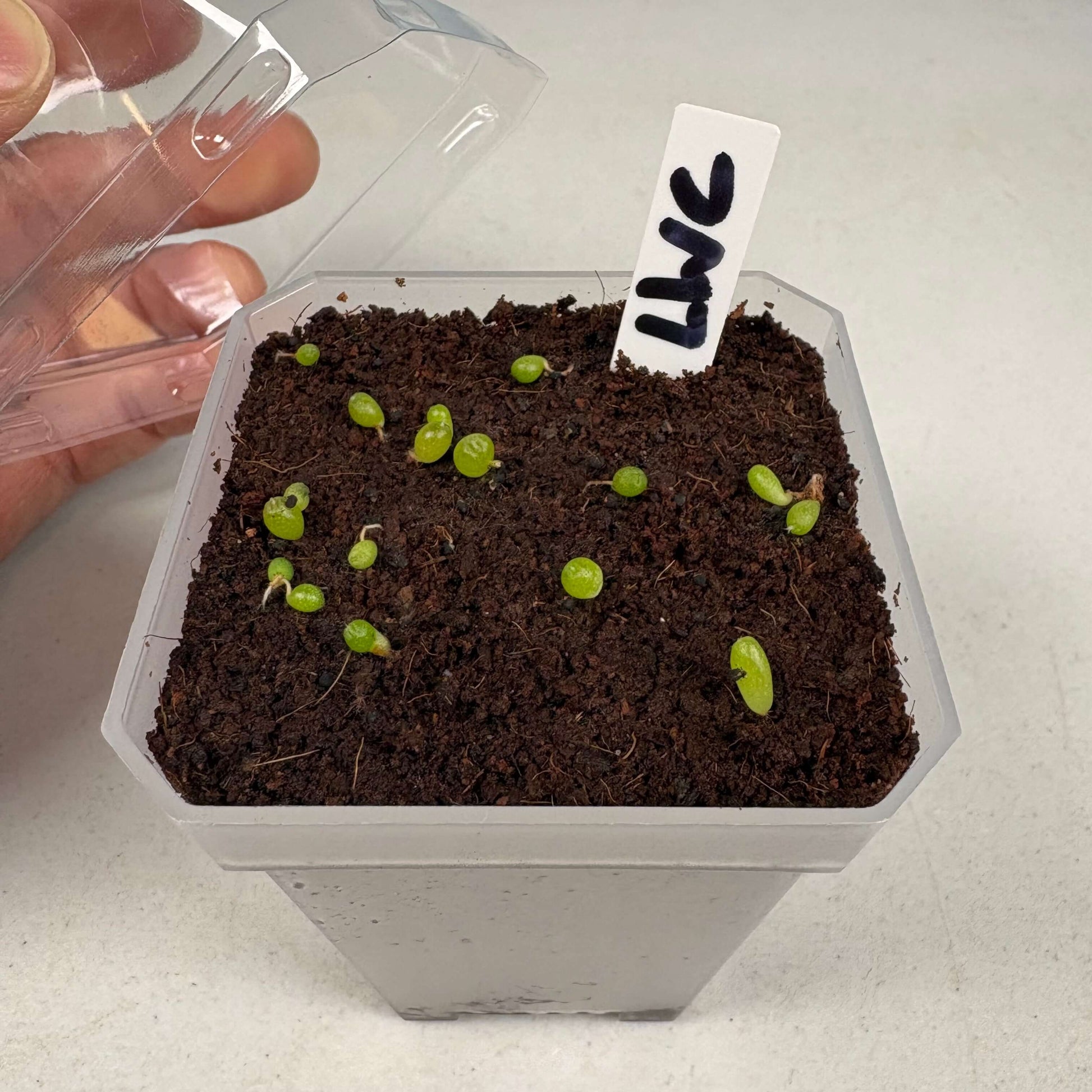
plant a seed bored button All-in-One Cactus Seed Starting Kit – Sacred ButtonsTake the guesswork out of germinating your sacred cactus seeds with our Seed Starting Kit. Designed for success and ease of use, this kit includes all the essentials to increase germination rates and grow healthy, robust seedlings. Perfect for peyote, San Pedro, and a variety of other cactus seeds. Kit Includes: Germination container Seed starting soil Plastic plant label Note: Each kit can comfortably hold up to 25 seeds. Seeds are sold separately.

Take the guesswork out of germinating your sacred cactus seeds with our Seed Starting Kit. Designed for success and ease of use, this kit includes all the essentials to increase germination rates and grow healthy, robust seedlings. Perfect for peyote, San Pedro, and a variety of other cactus seeds.


Kit Includes:

  • Germination container
  • Seed starting soil
  • Plastic plant label

Note: Each kit can comfortably hold up to 25 seeds. Seeds are sold separately.


Instructions for Use:

To help prevent mold, algae, and other contamination during germination, we recommend sterilizing the soil before use. Here’s a quick guide:


Microwave Sterilization (Quick Method)

  • Hydrate the peat pucks with spring water until fully expanded.
  • Place the soil into a small microwave-safe container and cover loosely with a microwave-safe lid or plastic wrap to trap steam (don’t seal airtight).
  • Microwave on high for 2–3 minutes.
  • Let the soil cool completely before sowing your cactus seeds. Leave covered to retain cleanliness.

⚠️ Note: Never microwave dry peat — always hydrate first to avoid fire risk.


Sterilization also kills beneficial microbes that naturally occur in soil and can aid seedling development. While microwave sterilization is fast and easy, it may not be ideal for preserving soil life.


Oven Pasteurization (Recommended for Best Results)

  • Hydrate the peat pucks with spring water until fully expanded.
  • Place it in a small oven-safe container (like a glass or ceramic dish) and cover tightly with foil.
  • Bake in the oven at 180–200°F (82–93°C) for 30 minutes.
  • Let it cool completely before use. Keep the container covered until ready to sow.

This gentle heat treatment kills most harmful pathogens while preserving more of the beneficial soil biology.


Now that your soil has been properly sterilized and allowed to cool overnight, it’s ready for planting. Here are the steps to follow to successfully germinate your sacred cactus seeds.

  1. Sow the Seeds: Before transferring the soil into your germination container, sterilize the container using 99% isopropyl alcohol. Sterilize the entire surface of the plastic cup and humidity dome inside and out. Also, sterilize your hands, a spoon and your work surface. Once everything is clean, transfer the soil to the germination container using the sterilized spoon and then gently flatten the surface of the soil. If the soil has dried out too much during sterilization, re moisten it using clean spring water. Next, sprinkle the seeds on to the surface of the soil (do not cover the seeds with soil). To help fight contamination, use a spray bottle to spray the entire surface of the soil and seeds with pure 3% Hydrogen Peroxide. This will disinfect the seeds, guarding against mold and bacteria. Cover the pot with the humidity dome and make sure that the vent is fully closed. Place in a warm (80-90°F) spot with indirect sunlight or under a grow light. Avoid direct sunlight to prevent burning the seedlings.
  2. Monitor Germination: Keep the container warm, using a heat mat if necessary. Seeds typically germinate within a few of days to a couple weeks. Once sprouted, the seedlings should be bright green. If they are orange or red, they are receiving too much light and need to be moved away from the light source. If they begin growing tall and skinny, move them closer to the light source.
  3. Post-Germination Care: Leave the seedlings in the humidity dome until they are about 1 cm in diameter. Keep the container closed to prevent mold and minimize shock. If the soil dries out, moisten it gently with spring water using a spray bottle.
  4. Hardening Off: Once the seedling reach 1 cm in diameter, harden them off by fully opening the vent on the top of the dome. Then after a week, remove the dome. 
  5. Long-Term Care: Once hardened off, the seedlings can remain in the pot and should be watered once the soil is completely dry. Fertilize with Schultz Liquid Cactus Food at half strength with every watering. Transplant when the seedlings start competing for space.


Fighting Contamination:

  • Green algae is common and not harmful to the seedlings. If the soil becomes contaminated with bacteria, fungus, or mold, use a spray bottle to mist the affected areas with a 50/50 mix of spring water and 3% hydrogen peroxide. If the issue persists or becomes worse, you may need to harden the seedlings off early and allow the soil to dry completely. This will kill off any contaminations. Just make sure to water as soon as the soil is dry so the seedlings do not dry out. Keep allowing the soil to dry between waterings to keep further contamination at bay. 


Shipping Notes
  • Free Standard Shipping on $100+ Orders to the USA.
  • Except Preorder products are shipped in 48 hours.
  • Delivery to the USA:
  1. Standard Shipping : 3-10 business days
  • If time is of the essence, please consider selecting expedited delivery for faster service.
Exchange/Return Notes
  • We offer a 30-day return/exchange service after receiving.
  • Final sale items are not eligible for returns or exchanges.
  • To process your return/exchange, please contact us at [email protected]
  • Please click here for more details>>> Return & Exchange Policy
SKU: 11028843019

Discover Niche Categories That Outsell plant a seed bored button

Top-Converting Item to Boost Your Average Order

4.0 ★★★★★
Based on 11 reviews
Sort
Highest Rating
Newest First
Oldest First
Product Reviews
J
Verified Purchase
John Ferguson
Draper, US
★★★★★ 1
small comic book
Format: Paperback
more like a pamphlet than a book... very disappointing
WAS THIS REVIEW HELPFUL?YesReportShare
Reviewed in the United States on November 18, 2020
L
Verified Purchase
Linda Doyen
Lowell, US
★★★★★ 3
Booklet.
Format: Paperback
Book was depicted like a comic book. Disappointed in the content and how it was presented.
WAS THIS REVIEW HELPFUL?YesReportShare
Reviewed in the United States on December 5, 2024
H
Verified Purchase
Heidi Grange
Dallas, US
★★★★★ 5
Well-told, fascinating history of an important event.
Format: Hardcover
There are many books available about the D-Day Invasion of World War II. But because so many people were involved, there are endless ways for the story to be told. In addition, for the same reason, authors have to pick and choose what information to share, there is simply too much to share in any one book. Plus, no two authors tell the story in the same way. Thus, there is a place for Hopkinson's book on the subject. And she's done a fabulous job in sharing the information in a way that works for adolescent readers. The book starts with the experience of a young man flying over France as one of the thousands of paratroopers proceeding the sea-based invasion. This makes for a great beginning as it pulls the reader right into the story. Following a brief description of what D-Day was and how the U.S. Army was organized (helpful for those with little military or World War II background), Hopkinson goes back and tells the story of the major events that led up to the invasion itself. The book is divided up into 7 parts as follows: The Plan, The Gods of War, Night Into Day, Utah, Omaha, Aftermath: More than Courage, Quartermaster's Department. Each section includes important information related to the general plans and some of the individuals involved in creating those plans. As this book is written for American youth, it focuses on the two invasion sites that the Americans helped invade, the beaches code named Utah and Omaha. I especially appreciated the widespread use of quotes and experiences from individuals who were there. The story feels more real when one reads the words of an actual person. The inclusion of 'dispatches' and 'Reader's Invasion Briefings' helped create context in relation to specific issues that came up during the invasion. All in all Hopkinson has created a compelling account of a day that changed the world forever. A day that young history buffs will want to know about. This is a book that would be easy to recommend to young readers who want a glimpse into the experiences of those involved in both the planning and executing of D-Day.
WAS THIS REVIEW HELPFUL?YesReportShare
Reviewed in the United States on October 3, 2018
S
Verified Purchase
Sunday C
Phoenix, US
★★★★★ 5
Read for yourself. Then book talk and get in the hands of students.
Format: Hardcover, Format: Hardcover
The kind of book you don’t want to put down. For sophisticated YA and adult readers. I thought I knew about D-Day, but as I began to read this book, I realized I had no idea what a complex operation this was--the covert planning and the freaking size of this plan. 13,000 U.S. paratroopers jumped out of planes. Some 57,000 stormed the beaches at Normandy. Others were brought in on "horsas" --airplane "gliders" made of balsa wood that were pulled by bigger planes and then let go to glide into enemy territory - with hundreds of men and equipment including jeeps aboard. Even though they'd planned and planned, the implementation was a debacle. Paratroopers and gliders landed off course. Amphibious vehicles, loaded with men, beached in the wrong spot or were hit by German weaponry and sank, leaving soldiers to drown or swim to shore, loaded down with 75 pounds of equipment. The Germans had lined the coast with explosives and were nested in to bunkers, ready to attack. The U.S. attempted to destroy some of this before men landed but were not successful. The men landing did not know this until they came upon well-fortified, heavily armored and waiting Germans (especially at Omaha Beach). It was a mess. And yet, they got a "toehold" onto the German occupied territory. A toehold that allowed the Allied forces to start moving against Hitler's army. I’m writing all of this to say that Hopkinson expertly conveys the gravity and enormity of the situation. She does not pretend to know the feelings or thoughts of individuals involved in this experience. Instead she uses well-established facts and primary sources including many quotes from oral histories to tell the story of this day. Honestly, I finished this book thinking, “OMG” and feeling incredibly indebted to these soldiers and any other person who has served our country. IN A CLASSROOM – My first thought is “Why do we still rely on textbooks in any kind of high school history class?” Book talk this. And then recruit a group of students to read, engage in student-led conversations, learn from additional sources, and then share their learning (and even their gratitude). Questions that might serve as a guide: • “What made this endeavor enormous?” This kind of question includes the literal numbers, but also thinking critically about the emotional and mental weight of this plan on key individuals that Hopkinson alludes to and thinking beyond the text to the planning that Hopkinson does not describe, but that must have had to happen to get the troops ready. • “How does Hopkinson weave complex details together in a way that makes the enormity of what happened accessible to the reader?” This could include a discussion of how she includes statistics, but also oral histories. What is the role of each of these types of details? • “What does Hopkinson leave out?” or “What choices did Hopkinson clearly make about what to include and what not to include?” or “How does Hopkinson establish accuracy and authority throughout the text?” IF YOU BOOK TALK THIS, a couple of tips: • I would not take for granted the value of students previewing this text before reading, of students thinking through the design of the text (looking carefully at the table of contents) and the PURPOSE of special features (e.g., sidebars like “reader’s invasion briefing” and “dispatch”). This will help them navigate and make sense of the information. Even sophisticated readers could benefit from this. • Also, for me, the narrative really picked up in Part 2 after Hopkinson develops the context for D-Day and describes initial planning. Keep an eye on (striving) readers during Part 1 or until you feel like they are on a roll. It wouldn't hurt to provide extra scaffolds like a current map of Europe, readers can reference as they move through the book or a chance to explore the topic (with video, etc) before they read. • The technical language that Hopkinson includes early on related to service members' rank, division, etc. may bog some readers down. Do not let this deter them. You may need to think aloud in front of students about how you make sense of these terms as a reader and continue moving forward. This lightens up and becomes easier to navigate a little bit into the book. The courage it took to face that day (and many others that we have asked service members to face since then) is stunning. As a reader of this book, YOU FEEL THIS. Towards the end of reading this book, I went to lunch with family and as we entered the restaurant, I saw a group of service members eating at a table nearby. I couldn't help it...I quietly paid for their lunch. I asked to be anonymous, but the wait staff gave me away. When the service members came over to say thank you and shake my hand, I nearly wept. I live in a freaking silo—I know no one serving in the military. This book strengthened by gratitude to anyone who has served our country. Thank you, Deborah Hopkinson.
WAS THIS REVIEW HELPFUL?YesReportShare
Reviewed in the United States on November 11, 2018
A
Verified Purchase
Aly
Chelsea, US
★★★★★ 5
Good read for young history lover
Format: Hardcover
My 10 year old WWII buff loved this book.
WAS THIS REVIEW HELPFUL?YesReportShare
Reviewed in the United States on May 25, 2020

recommand products