Pay in installments of $6.84 with
 ,
,
 and
and

Shipping Estimate
USA
- USA
- CAN
- USA
- CAN
Ships within 48 hours · Estimated delivery Sep 8 - Sep 13
 Promo Codes Available:
For Your Every Summer RSVP, with Code: SUMMER15
Description
shade trees that can be planted close to a house Buy African Sumac Phoenix, AZ | Rhus lanceaArizona's Toughest Evergreen Shade Tree for Desert Landscapes The African Sumac (Rhus lancea) is one of Phoenix's most reliable and versatile evergreen shade trees. With a graceful, rounded canopy of fine textured willow like foliage, arching branches, and remarkable tolerance for extreme heat, wind, and drought, it has become a staple in Arizona landscapes from Scottsdale to Chandler and Mesa to Peoria. Once established, the African Sumac is nearly
Arizona's Toughest Evergreen Shade Tree for Desert Landscapes
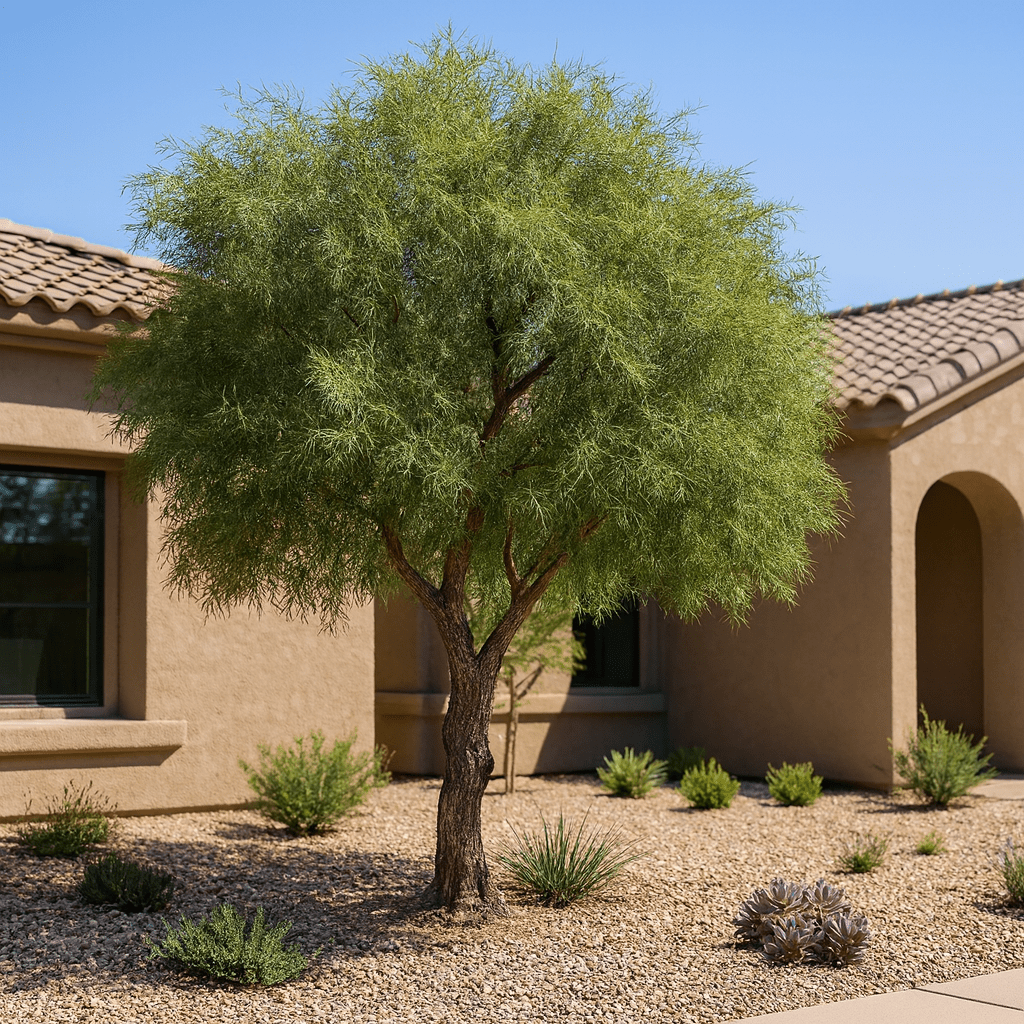
The African Sumac (Rhus lancea) is one of Phoenix's most reliable and versatile evergreen shade trees. With a graceful, rounded canopy of fine-textured willow-like foliage, arching branches, and remarkable tolerance for extreme heat, wind, and drought, it has become a staple in Arizona landscapes from Scottsdale to Chandler and Mesa to Peoria. Once established, the African Sumac is nearly indestructible — thriving in poor soils, reflected heat, and long dry spells that would stress lesser trees. Whether you need a large shade anchor, a windbreak, or a year-round privacy screen, the African Sumac delivers without the fuss.
African Sumac Plant Details
| Attribute | Detail |
|---|---|
| Scientific Name | Rhus lancea |
| Common Names | African Sumac, Willow Rhus, African Willow |
| Mature Height | 20–30 feet |
| Mature Width | 20–30 feet |
| Growth Rate | Moderate to fast — 2–3 feet per year in Phoenix |
| Sun | Full sun. Handles intense reflected heat from walls and pavement. |
| Water | Very low once established. Exceptional drought tolerance. |
| USDA Zones | 8–11 (Phoenix is Zone 9b–10a) |
| Soil | Highly adaptable. Thrives in poor, alkaline, and caliche soils. |
| Foliage | Evergreen — lush, fine-textured green year-round |
| Fruit | Small sticky red-brown berries (attracts birds) |
African Sumac Uses in Phoenix Landscapes
Shade Tree for Patios, Yards & Parking Areas
The African Sumac's broad, rounded canopy makes it one of the best shade trees for Phoenix homeowners. Its soft, weeping branches filter sunlight beautifully while still allowing airflow, creating a cool, dappled shade beneath the canopy. It grows large enough to shade an entire patio or carport within 5–8 years, and its heat tolerance means it won't drop leaves or look stressed during Phoenix's brutal July and August heat.
Windbreak & Privacy Screen
Planted in a row 15–20 feet apart, African Sumac creates an effective windbreak and visual screen that stays green and full throughout the year. Its dense foliage filters wind and dust without the brittleness of some fast-growing trees. It's an excellent choice for property borders in Gilbert, Tempe, and Glendale where year-round screening is needed. For a denser screen, plant 10–12 feet apart.
Specimen Tree for Modern Desert Design
With its naturally graceful form — arching branches, cascading fine-textured foliage, and smooth bark — the African Sumac works beautifully as a single specimen tree in contemporary desert landscapes. Plant it where its silhouette can be appreciated against a stucco wall or among boulders and agaves. It pairs well with Desert Spoon, Texas Sage, and large ornamental grasses for a layered desert aesthetic.
Low-Water, Low-Maintenance Landscapes
Few shade trees in the Phoenix Valley match the African Sumac for pure drought toughness. Once established, it survives on minimal supplemental water — in many Phoenix landscapes it thrives on nothing more than natural rainfall after the first 2–3 years. It's ideal for commercial landscapes, HOA common areas, and homeowners who want significant shade without significant irrigation costs.
Best Time to Plant African Sumac in Phoenix
Fall (October–November) is the optimal planting window. Warm soil promotes rapid root establishment while cooler air temperatures reduce transplant stress — giving the tree 6–8 months to develop its root system before its first Phoenix summer. Spring planting (February–April) is a strong second option. Summer planting is possible but requires consistent watering every 1–2 days for the first month.
How to Plant African Sumac
- Dig wide, not deep — excavate 2–3× the width of the root ball at the same depth as the root ball.
- Break through caliche — if you hit hardpan, break through it to ensure proper drainage. African Sumac tolerates poor soil but not waterlogged roots.
- Backfill with native soil — no need for heavy amendments. A 10–20% compost blend is fine; native desert soil works well on its own.
- Spacing — 20–25 feet apart for individual shade trees; 10–15 feet apart for windbreak or privacy rows.
- Build a watering basin — create a 3–4 inch earthen ring at the drip line to capture and direct irrigation water.
- Mulch — apply 2–3 inches of bark or gravel mulch over the root zone to retain moisture and insulate roots.
Watering African Sumac in Phoenix
First Year Watering Schedule
- Weeks 1–2: Every 1–2 days, deep and slow (20–30 minutes)
- Months 1–2: Every 3–4 days
- Months 3–6: Every 7–10 days (every 5–7 days during peak summer heat)
- After Year 1: Every 14–21 days in summer; monthly or less in winter
Drip Irrigation
Position 1–2 GPH emitters 18–24 inches from the trunk, moving them outward as the canopy expands. Run drip cycles for 60–90 minutes per session. By year 3, most African Sumac trees in Phoenix require only supplemental irrigation during the hottest summer months — their deep roots access subsurface moisture efficiently.
How fast does African Sumac grow in Phoenix?
African Sumac grows at a moderate to fast rate — typically 2–3 feet per year in Phoenix's climate. A 15-gallon tree planted in fall can reach 8–12 feet within 3–4 growing seasons.
Is African Sumac messy?
It does produce small sticky berries that birds love, which can create some mess beneath the canopy. This is a minor consideration given its exceptional shade value and low water needs. Strategic placement away from pool decks or clean hardscape areas minimizes any inconvenience.
Does African Sumac cause allergies?
African Sumac pollen can be an allergen for sensitive individuals, particularly during its flowering period in late winter to early spring. If allergies are a concern, plant it away from primary outdoor living areas or consult with an allergist.
Can it handle Phoenix's reflected heat?
Yes — the African Sumac is one of the most heat-tolerant shade trees available for Phoenix landscapes. It thrives in full sun and handles reflected heat from walls, concrete, and asphalt without leaf scorch or stress.
Is it evergreen in Phoenix?
Yes. African Sumac retains its fine-textured green foliage year-round in Phoenix's Zone 9b–10a climate, making it an excellent choice for privacy and windbreak applications that need consistent coverage every month of the year.
You May Also Like
- Brazilian Pepper Tree — Another fast-growing evergreen with a rounded canopy and showy winter berries, ideal for shade and privacy in Phoenix landscapes.
- Mastic Tree — A long-lived, dense evergreen tree that tolerates extreme heat and drought with very little maintenance.
- Shamel Ash — A large, fast-growing shade tree with a classic round canopy — one of Phoenix's most popular street and yard trees.
- Willow Acacia — A graceful, fine-textured accent tree that complements the African Sumac's form in layered desert plantings.
How Many African Sumac Do I Need?
African Sumac forms a broad, rounded canopy (20 to 30 feet wide at maturity). It is planted as a single shade specimen, or in a row as a windbreak or evergreen privacy screen. Use the mature width to set spacing: 20 to 25 feet apart for a continuous shade canopy, or 10 to 15 feet apart for a dense screening row.
| Row length | Screen row (12 ft spacing) | Shade row (22 ft spacing) |
|---|---|---|
| 24 ft | 2 to 3 trees | 1 to 2 trees |
| 48 ft | 4 trees | 2 to 3 trees |
| 72 ft | 6 trees | 3 to 4 trees |
| 100 ft | 8 to 9 trees | 4 to 5 trees |
For a single shade tree over a patio or carport, one well-placed African Sumac covers the area within five to eight years. Keep it away from pool decks and clean hardscape where the sticky berries would drop.
African Sumac Season-by-Season in Phoenix
- Spring (Feb to Apr): Inconspicuous flowers open in late winter into early spring, followed by a flush of fresh fine-textured growth. This is also when wind-borne pollen can bother allergy-sensitive people. Strong second planting window.
- Summer (May to Sep): Peak shade value. The canopy stays full and green through 110-plus degree heat and reflected heat off walls and pavement without leaf scorch. Monsoon rains (Jul to Sep) push extra growth and demand almost no supplemental water once established.
- Fall (Oct to Nov): Prime Phoenix planting season. Small red-brown berries ripen on female trees and draw birds through the cooler months.
- Winter (Dec to Jan): Stays fully evergreen for reliable year-round screening. Hardy to roughly 15°F, so it rarely shows frost damage in the Valley.
At a Glance
✔ Heat-Loving (Reflected-Heat Tolerant) ✔ Drought-Tolerant ✔ Evergreen ✔ Low-Maintenance ✔ Shade-Providing ✔ Cold-Hardy to 15°F
Plant It With
- Brazilian Pepper: another tough evergreen canopy tree for shade and year-round screening.
- Evergreen Elm: a larger fast shade tree that layers well in a mixed canopy planting.
- Desert Spoon: an architectural native accent that contrasts the sumac's soft weeping foliage.
- Texas Sage: a drought-hardy flowering shrub for the sunny edges under the canopy.
Is African Sumac Right for Your Yard?
African Sumac thrives in full sun and reflected heat, adapts to poor alkaline and caliche soils, and needs 20 to 30 feet of room for its rounded canopy and surface roots. It is one of the toughest low-water evergreen shade and screen trees for the desert. It is not the best fit right over a pool, patio, or clean hardscape, since the sticky berries drop litter and the spring pollen can trouble allergy-sensitive household members.
Shipping Notes
- Free Standard Shipping on $100+ Orders to the USA.
- Except Preorder products are shipped in 48 hours.
- Delivery to the USA:
- Standard Shipping : 3-10 business days
- If time is of the essence, please consider selecting expedited delivery for faster service.
Exchange/Return Notes
- We offer a 30-day return/exchange service after receiving.
- Final sale items are not eligible for returns or exchanges.
- To process your return/exchange, please contact us at [email protected]
- Please click here for more details>>> Return & Exchange Policy