SKU: 12332455497
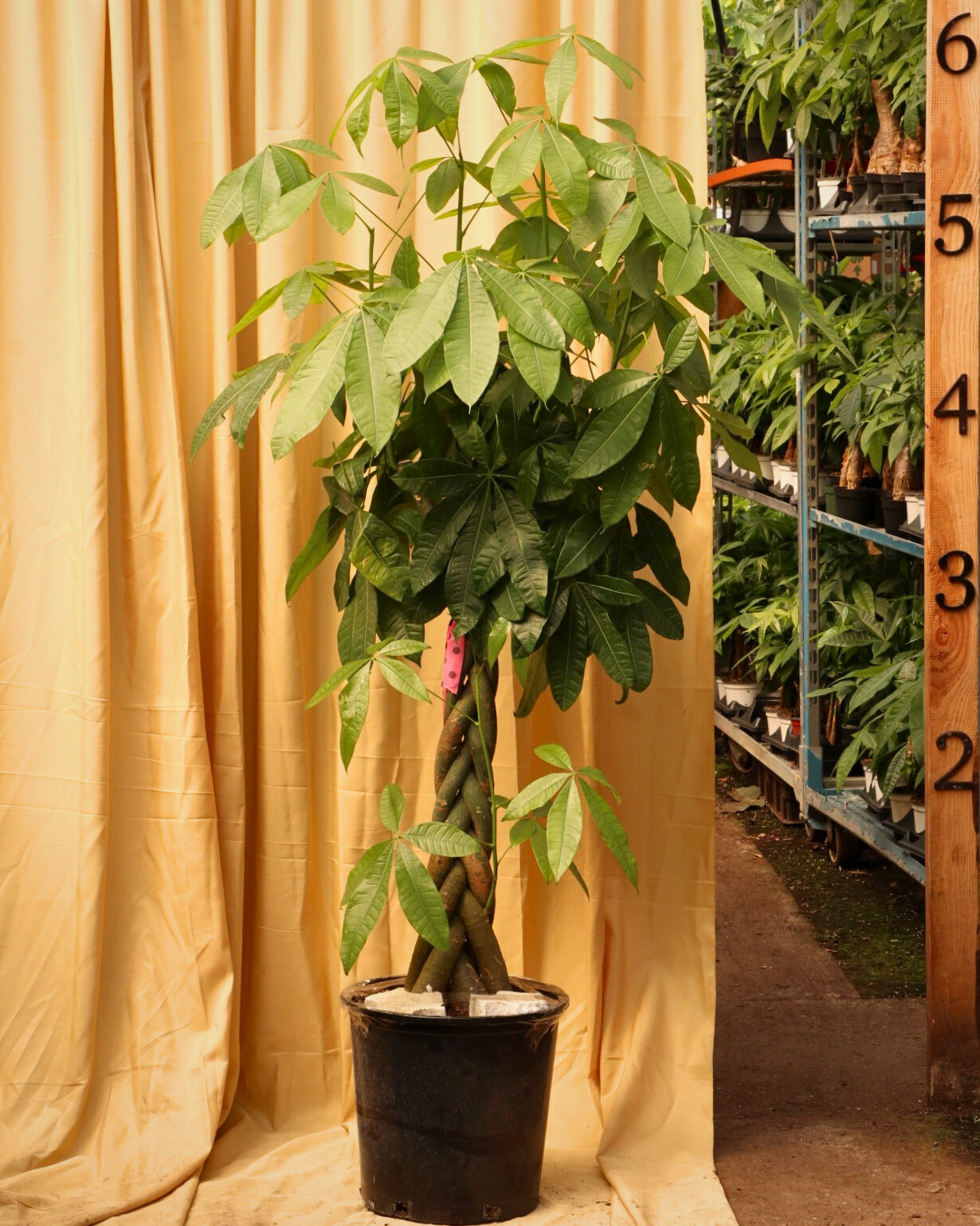
full grown money tree

full grown money tree Full Size Money Tree

Sale price$18.34 Regular price$20.38
Save 10%

Pay in installments of $5.09 with ShopPay, AfterPay and Klarna

Shipping Estimate
USA
  • USA
  • CAN

Ships within 48 hours · Estimated delivery Jul 26 - Jul 31

Promo Codes Available:

For Your Every Summer RSVP, with Code: SUMMER15

Description

full grown money tree Full Size Money TreeIf youre looking for good luckand a large houseplantthen look no further. Mr. Money Trees beautifully braided, swirling trunk traps good fortune. Not just good luck, but also a good income. Its leaves grow in groups of six, possibly representing six figures. Plus, the whole thing just looks striking. Money Tree benefits Some say a Money Tree can even promote healthier sleep, reduce stress, and decrease conflict in the home. We cant confirm the science

If you’re looking for good luck—and a large houseplant—then look no further. Mr. Money Tree’s beautifully braided, swirling trunk traps good fortune. Not just good luck, but also a good income. Its leaves grow in groups of six, possibly representing six figures. Plus, the whole thing just looks striking.


Money Tree benefits

Some say a Money Tree can even promote healthier sleep, reduce stress, and decrease conflict in the home. We can’t confirm the science behind those beliefs, but research does suggest that the Money Tree is an effective air purifier.


Place this adorable plant beside your bed at night, and take a deep breath. You just might sleep better and feel at ease, and you’ll definitely be breathing in cleaner air!


The Money tree looks cool

Scientifically known as the Pachira Aquatica, the Money Tree is a wetland plant native to Central and South America. Each “Money tree” is actually made up of multiple Pachira Aquaticas, gently hand woven together as they grow to maturity. Thanks to the Money Tree’s umbrella-like foliage, the plant’s swirling trunks look like they’re dancing in the rain, adding whimsy and romance to your indoor garden.


The Money Tree is pet-friendly and non-toxic

Money Trees are non-toxic to cats and dogs. We can’t stop your pet from nibbling on your precious Money Tree, but it won’t end in their demise. (We’ll send all the good vibes to your devoured Money Tree, though).


Lighting

Money Trees love low-light spots, even really low light, and they’ll bring you joyful thoughts even from a shady corner—or in bright indirect light. Money can’t buy happiness, but it can buy plants, which is almost the same thing?


Watering

Most houseplants can’t tolerate much trial and error when it comes to watering. But the Money tree is flexible! Money trees kinda like damp soil (they’re native to swampland after all), so overenthusiastic watering generally won’t kill them.


Pick your exact Money tree 


Now that you're an expert with the Money Tree, order this plant by 7pm ET to get this plant shipped out of our greenhouse in New Jersey tomorrow. (Wondering when it will arrive? Check with the zip code validator on top of the “Add To Cart” button.) We’ll deliver your Money Tree in our sustainable, super-secure packaging system, no matter where you live in the U.S. Your plants will arrive safe and intact!


Hop on a video call to select your Money Tree, and we WILL send out the EXACT plant that you picked out, just like if you picked it up at a local nursery or garden center. Except we have more and fresher plants to choose from, and you can't find our PAFE fine ceramic planter options anywhere other than our website. :)


For any other questions or concerns, please don't hesitate to reach out to us at [email protected] or call/text (609)-968-7063! Or if you want to learn more about the Money Tree, keep scrolling!


Money tree benefits


What is a Money tree good for?

The Money tree looks awesome, purifies the air, brightens your home, and—maybe—brings good fortune. That’s a legend, but nobody said legends can’t be based on truth! You should probably test it out, to be on the safe side.


Does the Money tree clean the air or give oxygen?

The Money tree cleans carbon dioxide from the air and replaces it with nice fresh oxygen for us to breathe. It also sucks up chemicals like formaldehyde and benzene, plus other synthetic chemicals from cleaning products, leaving the air cleaner.


Are Money trees easy to keep alive?

Money trees are very low maintenance. They’re not too fussy about their watering schedules or their lighting. However, everyone has something, and Money trees do prefer a narrow range of temperatures (65-75). They also want some humidity. But that’s all.


Money tree care


How often should I water my Money tree?

Water your Money tree every week or two—more often during the spring and summer, and less often in the fall and winter. The Money tree tolerates overwatering better than underwatering, but make sure you’re using well-draining soil.


How do I keep my Money tree happy?

It’s pretty easy to keep a Money tree happy! Water every week or two. Put it anywhere indoors except in direct sun. And sing it a lullaby every night at bedtime. Even easy-care plants don’t mind a little pampering.


Where should a Money tree be placed in the house?

Most importantly, place the Money tree wherever it can get the right lighting—anywhere from bright indirect light to truly low light. But traditionally, for the best luck, the Money Tree is placed in the southeast section of your home.


Do I need to fertilize my Money tree?

Fertilize your Money tree once a month during spring and summer, when it’s really growing. You can use a general-purpose fertilizer—it’s not a picky eater—but dilute it to half-strength and make sure the soil is wet before applying.


What temperature do Money trees like?

The Money tree is a bit fussy, liking a narrow range of indoor temperatures: 65 to 75 degrees. So keep your home at moderate temps year-round. (Finally, you can tell your spouse or Dad to turn up the heat.)


Can Money trees grow without sunlight?

Money trees can live happily in a dark room with little natural light. So if you have a room with teeny tiny windows, or your neighbor’s way-too-close apartment blocks the sun always, it’s ok—Mr. Money tree will be fine.


Should I spray water on my Money tree?

The Money tree does enjoy humidity, and its leaves will get crinkly in low humidity. However, there’s some debate over whether misting helps or not. To be on the safe side, if you live in low humidity, get a humidifier.


Money tree factoids


Why does the Money tree have 6 leaves?

Some say the six leaves symbolize six figures—in other words, the luck from the Money tree might lead to your next promotion. (It’s us, we’re the ones who say that.) No promises, but work really hard just in case.


What is the superstition about Money trees?

Legend says that having a Money tree in your home will bring good luck and possibly even financial fortune. We prefer “legend” over “superstition” because it sounds fancier and makes us look cooler for believing in it.


Is there a difference between a Money tree and a Money plant?

Yes, the Money tree and the Money plant are totally different species. The Money tree is officially Pachira Aquatica, and the most common money plant, the Chinese Money plant, is Pilea Peperomioides—and it’s a small plant, not a tree.


Is the Money tree good for feng shui?

The Money tree is powerful and meaningful in feng shui, especially if you place it in the southeast area of your home. It symbolizes personal and professional growth and is said to bring good fortune to you and your family.


Do Money trees bloom?

In the wild, Money trees often boast glorious fluffy orange blossoms. But that only happens because they’re pollinated by bats. Assuming you don’t keep any bats inside (weirdo), your Money tree is very unlikely to bloom indoors.


How often do Money trees grow money?

Sadly, the legend that Money trees bring wealth and fortune is more of a metaphor than a practical promise. None of our Money trees have ever grown cash, and if they start, we won’t sell them to you anymore!


Why is it called a Money tree?

The Money tree gets its name from the legend, myth, or superstition that it brings financial luck to its owner or household. However, it’s not literal; Money trees don’t grow money (and no one will pay you to own one).


How long do Money trees live indoors?

Even indoors, a Money tree can live ten years or even longer. Of course, it requires TLC, but it’s an easy-care plant so that’s not a tall order. The Money tree will be your botanical companion for a decade.

Shipping Notes
  • Free Standard Shipping on $100+ Orders to the USA.
  • Except Preorder products are shipped in 48 hours.
  • Delivery to the USA:
  1. Standard Shipping : 3-10 business days
  • If time is of the essence, please consider selecting expedited delivery for faster service.
Exchange/Return Notes
  • We offer a 30-day return/exchange service after receiving.
  • Final sale items are not eligible for returns or exchanges.
  • To process your return/exchange, please contact us at [email protected]
  • Please click here for more details>>> Return & Exchange Policy
SKU: 12332455497

Discover Niche Categories That Outsell full grown money tree

Top-Converting Item to Boost Your Average Order

4.1 ★★★★★
Based on 15 reviews
Sort
Highest Rating
Newest First
Oldest First
Product Reviews
B
Verified Purchase
B. Marold
Louisville, US
★★★★★ 5
Great Guide for Specialized Bible Study or Pastoral Use.
Format: Hardcover
`Commentary on the New Testament Use of the Old Testament', edited by G. K. Beale and D. A. Carson supports the idea that given any approach to the examination of the New Testament you may think of, someone has written a book about it. And a superb book it is, if you have need for an examination of this subject from almost every angle. I say almost, because there is actually one thing I would like to have seen in this book, and it is not there. More on this anon. For the lay reader, be aware that this is a scholarly book, with all the Greek, Hebrew, Aramaic, and (I suspect) even Coptic terms used freely, just when I've gotten in the habit of tracking down Greek, I have to deal with two even more difficult languages. I mention that primarily for those who are allergic to footnotes and phrases in languages other than English. Otherwise, I am delighted in how easy the reading is in all the contributions from eighteen (18) major scholars on the New Testament. Much of this is attributable to the marching orders given to the writers by the two editors. This list of guidelines makes the diverse contributions very uniform, which contributes to the value of this book as the guide to a specialized type of Bible study based on this book's subject. Anyone who has tracked down more than a handful of OT passages used in the NT will realize that the NT writers often take some liberties with their interpretations, reading in a prophesy about Jesus which, in the original text actually referred to something completely different. And, one has also run across a wide range of different ways in which OT texts are used, from `exact' quotes to paraphrases to allusions. The editors address this range by asking all authors to address their OT citations from at least five different points of view. These are: 1. What is the NT context of the citation? What is the genre and literary structure of the book or chapter? 2. What is the OT context of the citation? Do these Markan citations come directly from Exodus, for example, or are they quoted from Isaiah's use of Exodus verses? 3. How was the OT quote handled or interpreted by Second Temple Judaism, or early Judaism in general? 4. From what text is the OT quotation copied. The Septuagint (LXX), the Masoretic text, or a Targum (scripture translated into Aramaic or Coptic). 5. What is the ultimate use or connection being made by the NT author's use of the OT. Is it simply to emote a connection, is it a use of a common OT idiom, is it a parable use, shorthand to evoking an OT story, or is there a belief that events in NT times fulfill a specific OT prophecy. Of course, many commentaries on individual NT books do this as well, but most do not go into detail on points 2, 3, and 4. In looking at those parts of the NT I know best, I find this book delivers everything it promises on these five points, but that the book cannot replace good commentaries and study Bibles for NT books. In looking at one of the most famous uses of OT scripture in Luke, at 4:18 - 19, where Jesus teaches from Isaiah 61:1 - 2, the authors, David Pao and Eckhard Schnabel cover all the editors' points admirably, including references to important opinions by famous scholars such as Rudolph Bultmann. For this passage and for all others in this chapter on Luke, the actual passage is NOT presented in any translation. Therefore, one has to have a copy of the Bible open to the passage, as you read the authors' interpretation of it. Less important is the fact that the explanation of this section of Luke on Jesus' teaching in the Nazareth synagogue says nothing about the puzzling climax, where the congregation turns on Jesus. But that is a logical limitation of the approach, and is not relevant to the subject of the book. The introduction to Lucan passages was illuminating, as it tells us that even though one of Luke's primary objectives was to show the resolution of OT prophesies, Luke actually uses fewer OT quotes than Matthew. This is rarely discussed in commentaries on Luke. So, especially with regard to the synoptic Gospels, this would be an excellent book to use as a guide to OT references in the NT. For the scholar, there is the usual tower of bibliographical references after each article, plus the usual index to Biblical citations at the back of the book. There was just one thing I wanted which is missing. This is a `reverse' index, if you will, of OT books, with the number and locations of where verses are cited in the NT. The reason for wishing such an index is as a guide to selecting which OT books may best be studied together, as with Luke and Deuteronomy (some commentators claim the 10 chapter journey of Jesus to Jerusalem is patterned after Deuteronomy). Ultimately, this is a great reference if you make a habit of studying NT scriptures in depth, as either a pastor or bible study teacher.
WAS THIS REVIEW HELPFUL?YesReportShare
Reviewed in the United States on December 19, 2007
D
Verified Purchase
DJ
Alexandria, US
★★★★★ 5
Most Amazing
Format: Kindle
To look at the New Testament through the same thought process of those that wrote it is nothing short of ingenious. It takes nothing away from the Word being written by the Holy Spirit through men. In fact, it adds to the validity of the cohesion between the Old and New Testament while giving insights rooted in God’s Word written centuries before the coming of Christ. It does include the Apocryphal books as well and it’s citations of OT are well documented to work both from the OT to the NT or from the NT to the OT which is the purpose of this book. I would highly recommend this book to anyone who desires to dig deeper into the thought process of God and move beyond the regular commentary process that tends to be limited to the author’s insights and singular theological perspective. Further, if you desire to answer the question of why is this written or how did this come to be, many passages point to multiple references from the OT giving substance to Paul’s letter to encourage a young pastor to hold onto what has been given to him. Not a new teaching as we would assume, but a correct understanding of the Hebrew Testament in light of Jesus death, resurrection, and ascension into the Ancient of Days court as described in Daniel 7. Jesus is clearly more than a teacher when viewed through the eyes of the Hebrew Testament, He is the second person of the Holy Trinity for which this Old Testament confirms multiple times over. The downside of this extensive commentary is the use of technical jargon and the assumption that the reader has fluency in Hebrew and Greek. However, if you are a student who sits in the front of the classroom because you want to learn more and miss nothing (and not up there because the teacher desires to keep a closer eye on you) this book will not disappoint you. On the contrary, you will find it’s usefulness beyond sermon and Bible Study preparation. You will get the opportunity to sit in the dirt and learn from the Master as Mary did and will find it is hard to move onto the rest of your list that needs to get done for the day.
WAS THIS REVIEW HELPFUL?YesReportShare
Reviewed in the United States on August 9, 2022
F
Verified Purchase
Fnord Fjamily
San Leandro, US
★★★★★ 5
Essential Commentary, I Use it Every Time
Format: Hardcover
I won't write an exhaustive review, but I can easily commend this commentary to any seminary student by saying this: it goes into my pile of reference books for nearly every paper I write, on any subject. It's always relevant. If I'm dealing with any New Testament text, it's worth looking up in this commentary to see if it has an OT basis, if it's an allusion, a quote, or something similar. This adds dimensionality and thoroughness to my treatment of the NT, putting it in perspective. There is a similar volume, which I use just as often, called 'Commentary on the Old Testament Use of the Old Testament.' For OT studies, I use it along with 'The Context of Scripture' (which is basically ANET with cross-indexed biblical passages and ancient texts). There have been a few times when I've followed the chain all the way from NT text -> NT use of OT -> OT text -> OT use of OT -> Context of Scripture. If you're a Bible nerd, you can imagine this is basically cause to run around the neighborhood six times shouting 'Hallelujah' while the neighbors scratch their heads or close their blinds. I use this book as much as NICNT for NT studies, which is to say, any time I study the NT. This commentary is amazing, it earns its footprint on my booksehelf. Absolutely recommend it.
WAS THIS REVIEW HELPFUL?YesReportShare
Reviewed in the United States on January 1, 2026
B
Verified Purchase
Brian
Pawtucket, US
★★★★★ 5
A much needed resource!
Format: Hardcover
A phenomenal and much needed resources for the church today! I am delighted that it is now part of my theological library.
WAS THIS REVIEW HELPFUL?YesReportShare
Reviewed in the United States on March 2, 2026
I
Verified Purchase
InHisHand
Boise, US
★★★★★ 5
Pastoral Use of Beale's and Carson's Commentary
Format: Hardcover
This book was properly NOT entitled "Commentary on the New Testament Exegesis of the Old Testament." It is a well studied and scholarly look at how the New Testament writers made USE of the Old Testament Scriptures. And they did make use of those Scriptures is varied and instructive ways. Beale and Carson have compiled and edited articles from numerous trustworthy believing scholars which explain where, how, and why specific passages of Old Testament texts were employed by NT authors. These articles are careful to cite OT and NT contexts, predominant Middle Eastern scholastic thought prior to the 1st Century, and provide an analysis of what style was likely being used by the NT author (for example: typology, compare / contrast, poetic / emotive, prophetic fulfillment, simile, and at times even exegetical / interpretive). Such varied approaches by the NT authors to acquiring and working with OT passages begs the question of whether we ought to handle the OT in the same manner as did they. This commentary fairly well states that the answer is, "Yes...but." Yes, if we were to be as careful as they in understanding that we are not always merely quoting and interpreting the OT nor making absurd allegories of the OT texts but using them as instructive examples, poetic bursts of emotion, and historical typographic illustrations then we should indeed use the OT in the same way. Often the articles and entries in the commentary are long. This is not a dictionary and does not lend itself to quick reference lookups. Such attention to detail and depth enhances the experience of using this volume as it unearths elements and aspects of the Old Testament references that we rarely attempt to see from a 1st Century perspective today. Its overall format is rather straightforward. Identify a NT passage and look it up in the commentary in the passage's traditional Protestant biblical order. Generally only OT passages that are directly quoted, paraphrased, alluded to, or cited by the NT are expanded upon in the commentary. If an OT passage is merely somewhat similar to or has only surface resemblances with an OT passage (giving one the feeling that it is being brought to mind for evocative or emotive reasons alone) then the commentary may not touch on it. In general this is a very useful collection of articles. Its heart is not on being a commentary on the entire New Testament but is focused most narrowly on how the New Testament writers put the Old Testament to work to illustrate Jesus as the Christ, the evils of rebellion and sin, and the complex intricacies of God's epic sweeping salvific plan for humanity.
WAS THIS REVIEW HELPFUL?YesReportShare
Reviewed in the United States on September 28, 2012

recommand products