SKU: 12471966575
succulents flapjacks

succulents flapjacks Flapjack Plant ‘Kalanchoe luciae’

Sale price$20.09 Regular price$22.32
Save 10%

Pay in installments of $5.58 with ShopPay, AfterPay and Klarna

Shipping Estimate
USA
  • USA
  • CAN

Ships within 48 hours · Estimated delivery Jul 25 - Jul 30

Promo Codes Available:

For Your Every Summer RSVP, with Code: SUMMER15

Description

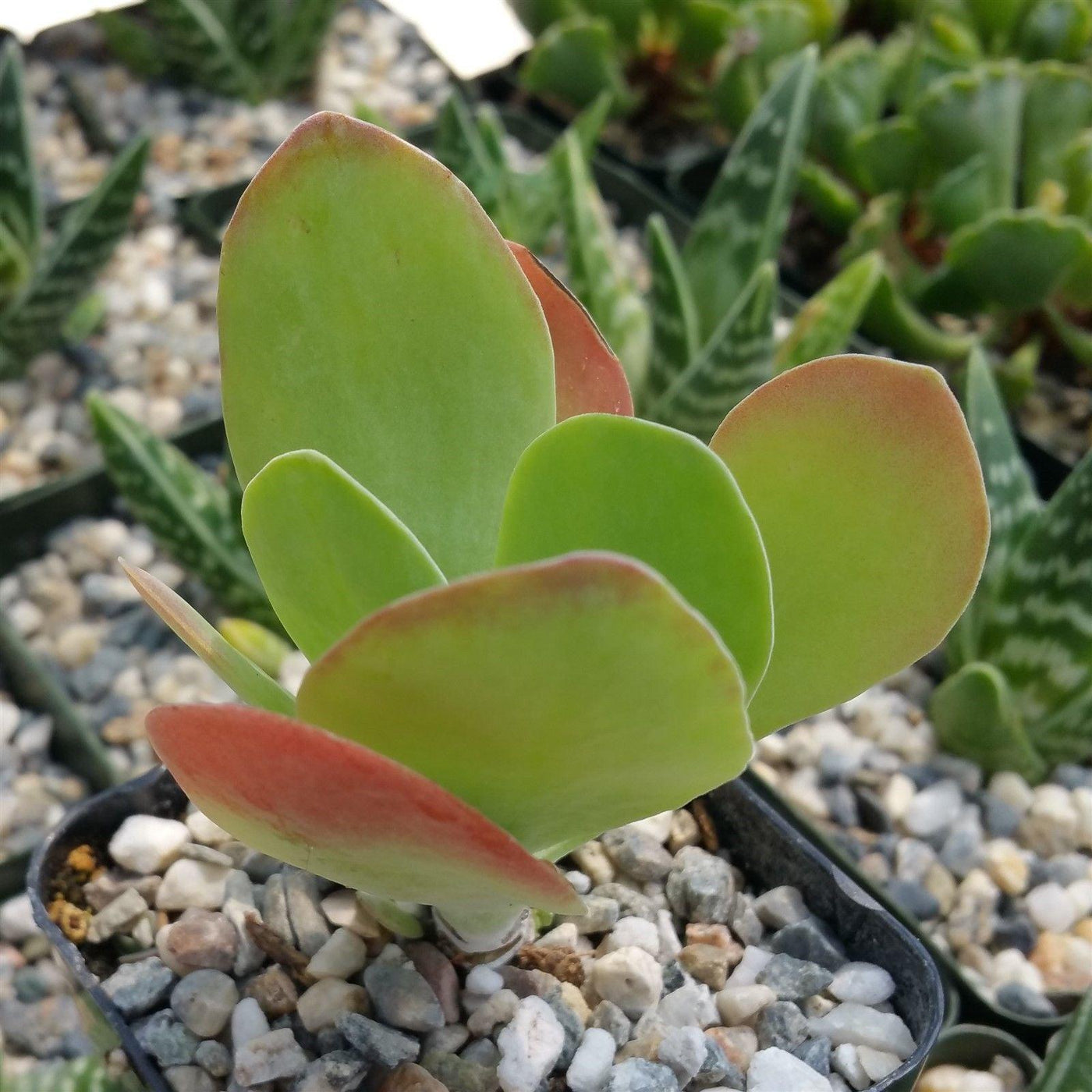
succulents flapjacks Flapjack Plant ‘Kalanchoe luciae’The Flapjack plant known as kalancho Luciae, is a striking succulent known for its thick, rounded leaves that stack in a flat, layered rosette. Its bold, sculptural form gives it a clean, modern look that stands out in both indoor and outdoor spaces. Native to South Africa, this plant is well adapted to dry conditions and thrives with minimal care, making it a great choice if you want something low maintenance but still eye catching. It grows slowly,

The Flapjack plant known as kalancho Luciae, is a striking succulent known for its thick, rounded leaves that stack in a flat, layered rosette. Its bold, sculptural form gives it a clean, modern look that stands out in both indoor and outdoor spaces.

Native to South Africa, this plant is well adapted to dry conditions and thrives with minimal care, making it a great choice if you want something low maintenance but still eye catching.

It grows slowly, stays compact, and works well in containers, succulent arrangements, or sunny outdoor gardens.

The powdery coating helps protect the plant from intense sunlight and conserves moisture.

In the bright sunlight, the leaves turn to blush red, otherwise, leaves remain uniformly green.

As the flapjack plant matures, it forms a rosette shape with tightly clustered leaves that can grow up to 2 feet tall and wide, making it a great addition to both indoor and outdoor gardens.

The flowers of the flapjack plant bloom in late winter, bearing clusters of small, bell-shaped flowers. These pale-yellow tubular flowers attract pollinators like bees and butterflies.  

Related Product

What makes it especially eye-catching is the way the leaf edges turn vibrant red when exposed to bright sunlight. This bold color contrast and sculptural form make it a standout choice for both indoor displays and outdoor succulent gardens.

When and How to Water Your Flapjack Succulent

The Flapjack plant is a drought-tolerant succulent that prefers to dry out completely between waterings, making it more resilient to underwatering than overwatering.

Water your flapjack plant once every 1 to 2 weeks during the growing season, with a thorough soak, and reduce watering to once every 3 to 4 weeks during the dormant season, keeping moisture very light.

In the summer and spring, allow the soil to fully dry out before watering again. This soak and dry approach helps keep the roots healthy and supports steady growth.

In the winter and fall, it needs even less water. With cooler temperatures and slower growth, light and infrequent watering is enough to maintain its health. 

Light Requirements - Where to Place Your Flapjack Plant

When growing indoors, it thrives in bright, indirect light for about 4 - 6 hours a day. Place your Kalanchoe plant near a window that receives plenty of sunlight throughout the day.

A south-facing or west-facing window is usually ideal, as it provides the right amount of light without exposing the plant to direct sunlight, which can cause sunburn on the leaves.

If you notice your flapjack succulent stretching or leaning toward the light, it might be an indication that it needs more sunlight. 

When growing outdoors, it can tolerate more direct sunlight compared to when it’s indoors. It does best with 6 - 8 hours of sunlight daily, handling full sun to partial shade, but it’s still best to provide some protection from intense afternoon sun, especially in hotter regions..

A spot that receives morning sun and filtered afternoon shade would be perfect. In the bright light, its leaf margin takes a reddish hue. If you live in a climate with extremely high temperatures, providing some shade during the hottest part of the day can help prevent leaf scorch. 

Optimal Soil & Fertilizer Needs 

The Flapjack succulent prefers very airy, sandy soil that drains well, along with light feeding once a year in spring. Planting it in regular, moisture-retaining soil can lead to compacted roots and slow growth, so it is best to use a specialized succulent potting mix, ideally one with added perlite or mycorrhizae to support a strong and healthy root system.

When it comes to fertilizing, apply a balanced, low-strength NPK fertilizer once a year during spring to give your plant a gentle boost. Use a balanced, low strength fertilizer with an NPK ratio around 5-10-5 to support healthy root development. 

Avoid over fertilizing, as too much can lead to weak, leggy growth and reduce the vibrant color of the leaves. With the right soil and minimal feeding, your flapjack plant will stay compact, healthy, and full of color.

Hardiness Zone & More 

In the United States, it is mostly grown as an indoor plant, but if you live in southern Florida or Hawaii, you can grow it outdoors in USDA zones 9-11. 

It prefers temperatures between 60°F and 75°F and can tolerate average indoor humidity levels.

It's always a good idea to provide some humidity by placing a tray of water near the plant, especially if you live in a dry climate or if the air in your home tends to be dry. If you live in a colder climate, it is best to bring the flapjack plant indoors.

How to Grow as an Indoor Houseplant 

Your flapjack plant grows best indoors in temperatures between 60°F and 75°F. It can handle slightly cooler conditions, but it’s best to keep it away from frost, cold drafts, and sudden temperature changes. As for humidity, the flapjack plant adapts well to average indoor levels, so there’s no need for extra moisture in most homes. Just make sure the air doesn’t become too dry, especially during cooler months, and always use well-draining soil to keep the roots healthy. 

Wildlife - Flapjack Flowers Attract the Following Friendly Pollinators 

The Flapjack succulent produces tall, central stalks with clusters of small, tubular yellow or green-yellow flowers that attracts friendly pollinators such as bees, butterflies, hummingbirds, and other beneficial insects. These pollinators are drawn to its tall flower stalks with nectar-rich blooms and play an important role in supporting plant reproduction and overall garden biodiversity.

Butterflies
Bees
Hummingbirds
Lady Bugs
Multi Pollinators
Other Birds

According to ASPCA, the Kalanchoe luciae is mildly toxic to humans or pets if ingested in large amounts. While it is safe to keep as a houseplant, it’s best to place it out of reach of curious pets and small children to avoid accidental ingestion. 

How to Propagate Your Flapjack Succulent 

You can propagate the Kalanchoe flapjack plant by using leaf cuttings or offsets. To propagate from a leaf, gently twist off a healthy, mature leaf from the base. Let it sit in a dry place for a few days until the cut end forms a callus. Once dried, place the leaf on top of well-draining soil and lightly mist it every few days. 

Once it produces offsets or “pups,” you can separate them from the mother plant using clean hands or scissors. Let the offsets dry for a day, then plant them in a small pot with succulent soil. Water lightly after a few days once they settle in.

Keep new cuttings in a bright area with indirect sunlight and avoid overwatering while they establish roots, as this is essential for healthy growth and overall flapjack plant care. 

Key Takeaways

  1. The Kalanchoe luciae plant adds bold visual appeal with its wide, paddle-shaped leaves and striking red edges that intensify in bright light.
  2. It is a low-maintenance succulent, making it ideal for beginners or anyone looking for an easy indoor plant to care for.
  3. Its compact, rosette growth makes it perfect for windowsills, desks, and decorative containers without taking up much space.
  4. This plant thrives in bright environments, helping you bring a fresh, vibrant look to sunny indoor areas or outdoor spaces in warm climates.
  5. When mature, it produces tall flower stalks with beautiful blooms, adding seasonal interest and attracting beneficial pollinators.

Final Thoughts 

Overall, the flapjack succulent plant (Kalanchoe luciae) is a stunning succulent with paddle-shaped leaves that have a silvery-gray or bluish-gray appearance. It can reach a mature size of 1-2 feet tall, making it a great addition to indoor and outdoor gardens. The plant produces vibrant pale yellow or gray bloom, attracting pollinators like bees and butterflies. To care for the flapjack plant, provide it with bright light, well-draining soil, and occasional watering. It's a low-maintenance plant that adds beauty and interest to any space. 
Shipping Notes
  • Free Standard Shipping on $100+ Orders to the USA.
  • Except Preorder products are shipped in 48 hours.
  • Delivery to the USA:
  1. Standard Shipping : 3-10 business days
  • If time is of the essence, please consider selecting expedited delivery for faster service.
Exchange/Return Notes
  • We offer a 30-day return/exchange service after receiving.
  • Final sale items are not eligible for returns or exchanges.
  • To process your return/exchange, please contact us at [email protected]
  • Please click here for more details>>> Return & Exchange Policy
SKU: 12471966575

Discover Niche Categories That Outsell succulents flapjacks

Top-Converting Item to Boost Your Average Order

4.5 ★★★★★
Based on 13 reviews
Sort
Highest Rating
Newest First
Oldest First
Product Reviews
A
Verified Purchase
alexandria
Cuba, US
★★★★★ 1
Beware there are no page numbers.
Format: Kindle, Format: Kindle
it is not mentioned anywhere for E-textbook kindle version. Only displays location. If you need this for a class it will be impossible to know what exactly needs to be read.
WAS THIS REVIEW HELPFUL?YesReportShare
Reviewed in the United States on June 11, 2023
T
Verified Purchase
Thaumagnost
Battle Creek, US
★★★★★ 5
An Informative Introduction Based on Current Academic Studies of Western Esotericism
Format: Hardcover
This introductory text is the fruit of a fairly new field of recognized academic studies which developed as a result of the pioneering literary efforts of scholars such as D. P. Walker (1914 - 1985) and Frances A. Yates (1899 - 1981) who took the subject of Western esotericism seriously rather than denigrate it as an area filled with superstition and irrationalism as many earlier scholars in different specialized fields had done. Other scholars of esotericism who have contributed to this growing field include but are not limited to Henry Corbin, Francois Secret, Antoine Faivre, Arthur Versluis, Joscelyn Godwin, and Wouter Hanegraaff, the last being the senior editor of the landmark Dictionary of Gnosis and Western Esotericism (2005), a collaborative effort by many scholars. Goodrick-Clarke is also a recognized scholar in this field and introduces it to the reader in his own introduction which also addresses the question of how esotericism is defined by those dedicated to studying it. As clarified in the introduction, Western esotericism is rooted in the Hellenistic philosophy of classical paganism as expressed in Alexandrian Hermeticism, Neoplatonism, and Gnosticism which have syncretized with the three Abrahamic religions of Judaism, Christianity and Islam, leaving vital traces within each. Through the Italian Renaissance, a Hermetic revival occurred as a result of the rediscovery of ancient texts which further resulted in the development of magic, astrology, alchemy, and Cabala through prominent individuals such as Marcilio Ficino, Pico della Mirandola, Johannes Reuchlin, Johann Trithemius, Henry Cornelius Agrippa, John Dee, and Paracelsus, each given significant attention. The development of German Naturphilosophie, Christian theosophy through Jacob Boehme and his followers (such as Gichtel, Pordage and Law), and Pietism are also covered before thoroughly introducing us to Rosicrucianism in the early 17th century, high-grade Freemasonry and Illuminism in the 18th century, and the ideas and practices of Emanuel Swedenborg and Franz Anton Mesmer which significantly impacted esotericism. Within the context of Rosicrucianism, the content of the manifestos are discussed along with Johann Valentin Andreae and the Tubingen Circle; in England, Michael Maier, Robert Fludd, and Comenius and the Origins of the Royal Society are covered. The impact of Rosicrucianism and theosophy on Freemasonry are explored as well as the following types of Freemasonry: "Scottish" and Chivalric, German Templar, and Egyptian. Within the context of Freemasonry and Illuminism, the following are also discussed: Martines de Pasqually and the Elect Coens, Louis Claude de Saint-Martin, Martinesism, Martinism, Willermozism, The Illumines of Avignon, and Count Cagliostro. Not only are the ideas of Swedenborg and Mesmer presented but also how they contributed to spiritualism and healing movements in the 19th century, including the United States which birthed Andrew Jackson Davis as the main theologian for spiritualism; Phineas Parkhurst Quimby, Warren Felt Evans and others who developed the New Thought Movement; and Mary Baker Eddy who founded Christian Science. A separate chapter is dedicated to ritual magic from 1850 to the present. Within this chapter, one is introduced to Eliphas Levi and the French Occult Revival, the Hermetic Order of the Golden Dawn and its members, and special attention is given to the contributions of A. E. Waite, Aleister Crowley and Thelemic magick, and Dion Fortune and the Inner Light. I was, however, disappointed to see the section on Crowley end with the following: "Gerald Gardner (1884 - 1964), the founder of modern witchcraft, introduced Crowleyan magick into the neopagan Wiccan movement." For a better understanding of the influential role of Crowley and ritual magic, including the grimoires, on Wiccan practices, I recommend Wicca: Magickal Beginnings (2008) by Sorita d'Este and David Rankine. Helena Blavatsky and her Theosophical Society are given a separate chapter which expounds on her influences, travels, developing doctrines, and legacy. The last chapter titled "Modern Esotericism and New Paradigms" discusses theosophical heirs such as Annie Besant, Charles W. Leadbeater, and Rudolph Steiner (who developed his own religious system called "Anthroposophy"). It also has a section on Fourth Way Groups, introducing Gurdjieff and Ouspensky. Additionally, it covers the scientization of esotericism, New Age science, and Carl Jung's influence on esotericism. One individual I would have liked to see introduced within the context of Steiner is Valentin Tomberg who anonymously wrote Meditations on the Tarot: A Journey into Christian Hermeticism which is recognized by some, including esoteric scholar Antoine Faivre, as a masterpiece of 20th century esoteric/mystical literature. Goodrick-Clarke's book not only includes valuable footnotes and recommendations for further reading for each chapter, but also includes a helpful index as well as over 30 illustrations comprised of portraits, diagrams, plates, charts and other relevant pictures to supplement the text. This historical introduction to Western esotericism deserves wide readership.
WAS THIS REVIEW HELPFUL?YesReportShare
Reviewed in the United States on February 26, 2009
K
Verified Purchase
Kevin Fuller
Houston, US
★★★★★ 5
The Tradition Lives
Format: Hardcover
Throughout the Christian experience, Christianity has been a religion of the heart, perhaps best represented by the exoteric outer symbol and ritual of the Tradition. However, the Spirit will not go lacking, and there have been those individualistic and Protestant minded folks who have injected the Christian experience with Pagan influence in order to better satisfy the mind. Sources have included the towering Plato and Plotinus, while the Egyptian influence has been the quiter yet rangier philosophy of Hermes Trismegistus. Whereever the Christian Revelation has intersected with this Greek and Egyptian Rationalism, the product has resulted in Western Esotericism. The Tradition has quietly lived through millenia of possible persecution, martyrdom and certainly marginalization, yet has survived all the same. This book puts a glass to this Tradition and puts it in perspective, and expertly in my view. Major players are highlighted and minor counterparts are covered as well. Each participant, whether it by Mirandola compiling the Christian Kabbalah, or Paracelsus pushing past Galen to bring medicine to the door step of empiricism, all have added their own unique vision to the bigger picture of Western Esotericism. Though the Tradition has it's roots in Egyptian and Greek Mystery Schools, it has been preserved, since the fall of the Roman Empire by Secret Societies such as Rosicrucianism, Freemasonry and even Theosophy and proves to be a viable option yet today for those who seek a deeper more inner sacred experience than what perhaps their outer religious profession provides. Wondering? This is a good place to start.
WAS THIS REVIEW HELPFUL?YesReportShare
Reviewed in the United States on January 2, 2009
F
Verified Purchase
Florida Man
Bozeman, US
★★★★★ 4
Serious[ly]
Format: Hardcover
This book is exactly what the title claims - a historical introduction. While although the author doesn't go into a great deal of depth, he more than makes up for it in breadth. The author starts with an attempt at defining what exactly esotericism is. After that, the book is arranged chronologically, starting with Hellenistic esotericism and proceeding through the Renaissance, the Enlightenment and up to the present. Each chapter centers on an individual or group of individuals who were influential thinkers in their time and place. At the end of each chapter, there is a list of books for further study, much like a textbook. It is serious; it is scholarly. It is most definitely not silly. If you are at all interested in a "Third Way", which is neither mainstream religion nor strictly empirical "scientism", this may be a gooding jumping-off point for you, as it was for me.
WAS THIS REVIEW HELPFUL?YesReportShare
Reviewed in the United States on February 18, 2014
J
Verified Purchase
JA
Cuba, US
★★★★★ 5
An amazing book that teaches a great history
Format: Kindle
This is a great book that takes the reader on an amazing journey through a part of Western history that is rarely taught. This book teaches the other side of the development of Western religion and after reading this book I now have a knew light on previous theological education. It is easy to understand but does not compromise on scholastic research and standards.
WAS THIS REVIEW HELPFUL?YesReportShare
Reviewed in the United States on March 12, 2014

recommand products