SKU: 13695649408
money tree hours federal way

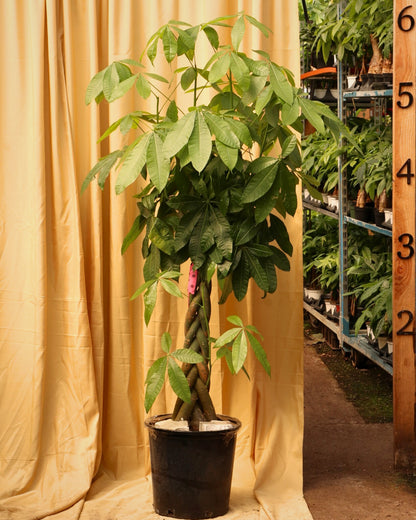
money tree hours federal way Full Size Money Tree

Sale price$18.76 Regular price$20.84
Save 10%

Pay in installments of $5.21 with ShopPay, AfterPay and Klarna

Shipping Estimate
USA
  • USA
  • CAN

Ships within 48 hours · Estimated delivery Sep 7 - Sep 12

Promo Codes Available:

For Your Every Summer RSVP, with Code: SUMMER15

Description

money tree hours federal way Full Size Money TreeIf youre looking for good luckand a large houseplantthen look no further. Mr. Money Trees beautifully braided, swirling trunk traps good fortune. Not just good luck, but also a good income. Its leaves grow in groups of six, possibly representing six figures. Plus, the whole thing just looks striking. Money Tree benefits Some say a Money Tree can even promote healthier sleep, reduce stress, and decrease conflict in the home. We cant confirm the science

If you’re looking for good luck—and a large houseplant—then look no further. Mr. Money Tree’s beautifully braided, swirling trunk traps good fortune. Not just good luck, but also a good income. Its leaves grow in groups of six, possibly representing six figures. Plus, the whole thing just looks striking.


Money Tree benefits

Some say a Money Tree can even promote healthier sleep, reduce stress, and decrease conflict in the home. We can’t confirm the science behind those beliefs, but research does suggest that the Money Tree is an effective air purifier.


Place this adorable plant beside your bed at night, and take a deep breath. You just might sleep better and feel at ease, and you’ll definitely be breathing in cleaner air!


The Money tree looks cool

Scientifically known as the Pachira Aquatica, the Money Tree is a wetland plant native to Central and South America. Each “Money tree” is actually made up of multiple Pachira Aquaticas, gently hand woven together as they grow to maturity. Thanks to the Money Tree’s umbrella-like foliage, the plant’s swirling trunks look like they’re dancing in the rain, adding whimsy and romance to your indoor garden.


The Money Tree is pet-friendly and non-toxic

Money Trees are non-toxic to cats and dogs. We can’t stop your pet from nibbling on your precious Money Tree, but it won’t end in their demise. (We’ll send all the good vibes to your devoured Money Tree, though).


Lighting

Money Trees love low-light spots, even really low light, and they’ll bring you joyful thoughts even from a shady corner—or in bright indirect light. Money can’t buy happiness, but it can buy plants, which is almost the same thing?


Watering

Most houseplants can’t tolerate much trial and error when it comes to watering. But the Money tree is flexible! Money trees kinda like damp soil (they’re native to swampland after all), so overenthusiastic watering generally won’t kill them.


Pick your exact Money tree 


Now that you're an expert with the Money Tree, order this plant by 7pm ET to get this plant shipped out of our greenhouse in New Jersey tomorrow. (Wondering when it will arrive? Check with the zip code validator on top of the “Add To Cart” button.) We’ll deliver your Money Tree in our sustainable, super-secure packaging system, no matter where you live in the U.S. Your plants will arrive safe and intact!


Hop on a video call to select your Money Tree, and we WILL send out the EXACT plant that you picked out, just like if you picked it up at a local nursery or garden center. Except we have more and fresher plants to choose from, and you can't find our PAFE fine ceramic planter options anywhere other than our website. :)


For any other questions or concerns, please don't hesitate to reach out to us at [email protected] or call/text (609)-968-7063! Or if you want to learn more about the Money Tree, keep scrolling!


Money tree benefits


What is a Money tree good for?

The Money tree looks awesome, purifies the air, brightens your home, and—maybe—brings good fortune. That’s a legend, but nobody said legends can’t be based on truth! You should probably test it out, to be on the safe side.


Does the Money tree clean the air or give oxygen?

The Money tree cleans carbon dioxide from the air and replaces it with nice fresh oxygen for us to breathe. It also sucks up chemicals like formaldehyde and benzene, plus other synthetic chemicals from cleaning products, leaving the air cleaner.


Are Money trees easy to keep alive?

Money trees are very low maintenance. They’re not too fussy about their watering schedules or their lighting. However, everyone has something, and Money trees do prefer a narrow range of temperatures (65-75). They also want some humidity. But that’s all.


Money tree care


How often should I water my Money tree?

Water your Money tree every week or two—more often during the spring and summer, and less often in the fall and winter. The Money tree tolerates overwatering better than underwatering, but make sure you’re using well-draining soil.


How do I keep my Money tree happy?

It’s pretty easy to keep a Money tree happy! Water every week or two. Put it anywhere indoors except in direct sun. And sing it a lullaby every night at bedtime. Even easy-care plants don’t mind a little pampering.


Where should a Money tree be placed in the house?

Most importantly, place the Money tree wherever it can get the right lighting—anywhere from bright indirect light to truly low light. But traditionally, for the best luck, the Money Tree is placed in the southeast section of your home.


Do I need to fertilize my Money tree?

Fertilize your Money tree once a month during spring and summer, when it’s really growing. You can use a general-purpose fertilizer—it’s not a picky eater—but dilute it to half-strength and make sure the soil is wet before applying.


What temperature do Money trees like?

The Money tree is a bit fussy, liking a narrow range of indoor temperatures: 65 to 75 degrees. So keep your home at moderate temps year-round. (Finally, you can tell your spouse or Dad to turn up the heat.)


Can Money trees grow without sunlight?

Money trees can live happily in a dark room with little natural light. So if you have a room with teeny tiny windows, or your neighbor’s way-too-close apartment blocks the sun always, it’s ok—Mr. Money tree will be fine.


Should I spray water on my Money tree?

The Money tree does enjoy humidity, and its leaves will get crinkly in low humidity. However, there’s some debate over whether misting helps or not. To be on the safe side, if you live in low humidity, get a humidifier.


Money tree factoids


Why does the Money tree have 6 leaves?

Some say the six leaves symbolize six figures—in other words, the luck from the Money tree might lead to your next promotion. (It’s us, we’re the ones who say that.) No promises, but work really hard just in case.


What is the superstition about Money trees?

Legend says that having a Money tree in your home will bring good luck and possibly even financial fortune. We prefer “legend” over “superstition” because it sounds fancier and makes us look cooler for believing in it.


Is there a difference between a Money tree and a Money plant?

Yes, the Money tree and the Money plant are totally different species. The Money tree is officially Pachira Aquatica, and the most common money plant, the Chinese Money plant, is Pilea Peperomioides—and it’s a small plant, not a tree.


Is the Money tree good for feng shui?

The Money tree is powerful and meaningful in feng shui, especially if you place it in the southeast area of your home. It symbolizes personal and professional growth and is said to bring good fortune to you and your family.


Do Money trees bloom?

In the wild, Money trees often boast glorious fluffy orange blossoms. But that only happens because they’re pollinated by bats. Assuming you don’t keep any bats inside (weirdo), your Money tree is very unlikely to bloom indoors.


How often do Money trees grow money?

Sadly, the legend that Money trees bring wealth and fortune is more of a metaphor than a practical promise. None of our Money trees have ever grown cash, and if they start, we won’t sell them to you anymore!


Why is it called a Money tree?

The Money tree gets its name from the legend, myth, or superstition that it brings financial luck to its owner or household. However, it’s not literal; Money trees don’t grow money (and no one will pay you to own one).


How long do Money trees live indoors?

Even indoors, a Money tree can live ten years or even longer. Of course, it requires TLC, but it’s an easy-care plant so that’s not a tall order. The Money tree will be your botanical companion for a decade.

Shipping Notes
  • Free Standard Shipping on $100+ Orders to the USA.
  • Except Preorder products are shipped in 48 hours.
  • Delivery to the USA:
  1. Standard Shipping : 3-10 business days
  • If time is of the essence, please consider selecting expedited delivery for faster service.
Exchange/Return Notes
  • We offer a 30-day return/exchange service after receiving.
  • Final sale items are not eligible for returns or exchanges.
  • To process your return/exchange, please contact us at [email protected]
  • Please click here for more details>>> Return & Exchange Policy
SKU: 13695649408

Discover Niche Categories That Outsell money tree hours federal way

Top-Converting Item to Boost Your Average Order

4.6 ★★★★★
Based on 10 reviews
Sort
Highest Rating
Newest First
Oldest First
Product Reviews
E
Verified Purchase
E. C. Tozer
Waukegan, US
★★★★★ 5
An Excellent Book that Appeals to All Levels of Inquiry
Format: Paperback, Format: Paperback
The Case for the Resurrection of Jesus by Gary R. Habermas and Michael R Licona makes a persuasive case for the historical resurrection of Jesus. What I like about this book is that it is structured for different levels of interest. The first 150 pages gives the basic facts surrounding the resurrection and addresses the major objections to the resurrection. The next seventy pages deals with the lesser known objections and offers some suggestions on how to dialog with objectors. The Appendix is almost thirty pages of a detailed outline of information provided which leads to the uniqueness of this book. It does more than gives you information; it makes a valent attempt for the reader to remember this information. The authors helps the reader remember the information provided by providing nineteen flow charts which outline each major point (very helpful), the appendix, highlighted summaries, and a DVD game. The flow charts allowed me to quickly see the flow and the connection of each major point. The highlight summary sections quickly state the main points. The DVD game is imaginative and fun and is divided into ten categories with some two hundred questions which reinforced the material. The appendix is another avenue to gain quick access to the information. The material and arguments are from a minimalist approach. The authors focus on information that almost all historians agree upon and how a historian determines the likelihood of an event. The mindset of a historian is not to say that something is true or false but to determine a scale or gradient to determine if something ranges from very doubtful to very certain. Some of the criteria of evaluating an event include multiple independent witnesses, attestation by enemies, embarrassing admissions, eyewitness testimonies, and early testimonies supporting the historical claims. When it comes to the resurrection of Jesus there are at least four and possibly five facts that land in the “very certain” category. The historical claims that are graded in the very certain category are these four. One, Jesus died by crucifixion which is supported by five non-Christian sources. Two, the disciples of Jesus believed that He rose and appeared to them which is supported by nine sources in three categories pointing to a multiple and very early eyewitness testimony. Not only did the disciples of Jesus believe that they personally saw the resurrected Jesus, but they were willing to suffer for that belief which is attested to by seven ancient sources. Three, the church persecutor, Paul, was suddenly changed and became a martyr for this testimony which is supported by seven ancient sources. Four, Jesus’ skeptic brother, James, was converted and became a follower of Jesus which resulted in him becoming a martyr for this belief as reported by Josephus, Hegesippus, and Clement of Alexandria. Finally, the empty tomb is in a separate category from “very certain” (75% of scholars accept the empty tomb as a historical fact). The reasons that most scholars accept the empty tomb as a historical is because of the attestation of enemies, the culturally embarrassing testimony of the women, and the Jerusalem factor. After establishing the historical events that are accepted by historians, the authors simply compare these facts against various alternate theories that have been floated over time. The question is, do these theories deal with the facts and which theory clearly stands out from all the other ideas because it deals with the facts? In short, there is but one idea that stands alone. “Therefore, Jesus’ resurrection is more than the most plausible explanation to account for the data. It is the only explanation that accounts adequately for all of the facts.”
WAS THIS REVIEW HELPFUL?YesReportShare
Reviewed in the United States on July 16, 2019
R
Verified Purchase
Ronald C. Payne
Whiting, US
★★★★★ 5
Great Apologetic Resource
Format: Paperback
This is a great introductory resource for Christians who want to defend the hope that is within them. Habermas and Licona outline and defend a strong "minimal fact" argument for the resurrection of Jesus. In short, this historical argument argues for certain facts concerning the events surrounding the resurrection such as Jesus dying on a cross, the disciples claiming to have seen him risen, and Paul having a transforming experience of the risen Christ on the road to Damascus, etc. After arguing for all these alleged facts, the authors argue that a bodily resurrection fits the evidence better than any other theory. The strength of this argument is that it relies on multiple points each of which has a good body of evidential support. One can still claim agnosticism on the resurrection I suppose but I think that if one is honest (and philosophically open at least to be possibility of God acting in history via miracles) he or she would have to conclude that Jesus rose from the dead. As I said above, this is a great introductory work. Someone who wants to delve further should read N.T. Wright's The Resurrection of the Son of God, and works by William Lane Craig on the subject. Read the other side as well both online at Internet Infidels and through books by Christian deconverts. Both authors quote other prominent New Testament scholars to back up their points while citing the original sources behind their alleged facts, ensuring that one who is earnestly seeking can check their work and investigate the matter for herself. The book also contains charts that visually summarize the points being made in the text which makes the material easier to remember. The book deals with alternative theories and then discusses the philosophy of Naturalism. I have read better critiques of Naturalism but this book does a good job of refuting pop-Naturalism I suppose. The next part contains brief chapters defending the bodily resurrection view against the heavenly appearance view and that Jesus claimed divinity. I think these sparse chapters could have been lengthened, especially the chapter on Jesus' self-understanding to make a stronger case. The next chapter on Intelligent Design is really out of place in this book and should have been left out. If the authors wanted to give props to ID they should have done so in an Afterward or an appendix. The book is mainly about Jesus, what he was about and what happened to him, not about ID. Lastly, the book has many endnotes which I much appreciate along with an extensive bibliography which I appreciate even more. Overall this was a very edifying read and can help you when someone challenges you about the evidential basis for your faith.
WAS THIS REVIEW HELPFUL?YesReportShare
Reviewed in the United States on July 21, 2010
E
Verified Purchase
EB
Cuba, US
★★★★★ 5
Recommended for Pastors
Format: Kindle
Knowing why you believe what you believe is one of the hardest parts of being a Christian. Just as parents answer a child's endless supply of "why?" questions and usually run out of answers, The Case for the Resurrection of Jesus by Gary Habermas ensures that we Christians don't. It begins with "why" it is important for us to know the information provided in this book. The answer is found in God's Holy Word, I Peter 3:15, "Sanctify Christ as Lord in your hearts, always being ready to make a defense to everyone who asks you to give an account of the hope that is in you, yet with gentleness and reverence." This book takes several arguments disputing the resurrection of Christ and tears them to shreds. It demonstrates that the very sources used against the resurrection are biased and partial. The amount of information and biblical knowledge contained within is astounding. It includes a CD-ROM which is pure genius, educating the public about the resurrection. Habermas dissects common questions that argue against Jesus' resurrection, making it an easy reference for the future. For example, say the person you are witnessing to says, "The disciples stole the body;" it is easy to find the information to refute that false belief. Every known argument for why the resurrection didn't happen is accounted for in this book, and proven wrong. This book is an excellent learning tool for every Christian. I recommend it for pastors as a reference tool and a study guide, regardless of where they are in their walk with the Lord. All of life is a time to learn, and learning never stops. We can never know too much about God. With the inclusion of a detailed outline of the arguments contained in this book, the notes taken to write the book ( listed by individual chapter),and the bibliography of other reference books used in this one, there is an limitless supply of Bible studies and/or sermons. What pastor could not use this book? This book is by far one of the most useful books on the Christian faith. -- Tammy Hornbeck, Christian Book Previews.com
WAS THIS REVIEW HELPFUL?YesReportShare
Reviewed in the United States on March 28, 2016
J
Verified Purchase
Jason McDonald
Lexington, US
★★★★★ 5
Buy it for the Resurrection but Stay for the Logic
Format: Kindle
Being a huge fan of Bishop Robert Barron on YouTube, I turned to this book for a specific issue: what is the historical evidence not only that Jesus lived but that He was resurrected? In addition, I wanted something that wasn't written from the perspective of theology but from a more neutral, historical stance. Furthermore, I wanted a book that wasn't a 900 page academic treatise but a book that a layperson could read, easily, and get an overview to the historiography. AN OVERVIEW TO THE HISTORIOGRAPHY This book fulfilled that role. Whether you accept its evidence or not hinges a) on your own religious perspective and open mindedness, and b) whether you accept the veracity of many of the early writings of Christianity. Not being an expert, I can't really reach a firm conclusion on "b." The authors are clearly fervent Christians, but they do an admirable job of leaving their beliefs aside and resting their survey to the facts and the historiography. The book is an excellent overview to the logic and argument in favor of the resurrection. If you're curious or you've ever wondered whether there is any evidence... this is an excellent choice. AN EXPOSE ON LOGIC What I found surprising and enjoyable, however, was the writers' expose on logic. If x is true, then y is true. If a is not true, then b cannot be true - etc. The discussion of historical logic, above and apart from the Resurrection, was eye-opening. It made me think - a lot - about how I apply logic to my own understanding of "reality," whether a scientific theory (e.g., evolution) or a historical theory (e.g., that Christ was resurrected). For that alone, the book is worthy of the read. Did Jesus live? Was he resurrected? This book is not only a good survey of the evidence and arguments but also a wonderful adventure in logic. Read it, and you decide.
WAS THIS REVIEW HELPFUL?YesReportShare
Reviewed in the United States on December 14, 2015
C
Verified Purchase
C. Price
Massapequa, US
★★★★★ 4
Equipping Believers to Evangelize the Resurrection
Format: Paperback
To be candid, I am not a fan of most popular apologetics -- especially on the resurrection. But when I saw that this book was 384 pages long, I thought it was perhaps an exception and would cover the issue in more detail than others. I was wrong. So why do I still rank this book so high? Because it does what it intends to do effectively. This book effectively equips Christians to witness to their friends, neighbors, and families using the historical evidence for the resurrection of Jesus. Habermas and Licona begin with a discussion about the importance of the resurrection of Jesus to Christianity. Though this seems obvious, the discussion is helpful because it wisely recommends focusing on the resurrection without getting bogged down in, presumably, issues such as inerrancy and a complete harmonization of the resurrection narratives. This is a common failing of Christians trying to share their faith. The authors' emphasis on keeping the eye on the ball extends throughout the book. After the opening chapter, the book turns to the core of the issue, the historical evidence for the resurrection of Jesus. The strength of this section is that it distills down, accurately, a high level of scholarship on the issue. Habermas and Licona present five "minimal facts." That is, they focus on five historical facts that are accepted by most scholars: 1) Jesus' death by crucifixion; 2) Jesus' disciples believed that he rose and appeared to them; 3) Paul, a persecutor of the church, has suddenly changed to faith in Jesus; 4) James, skeptical of Jesus during his ministry, was suddenly changed to faith in Jesus; and, 5) The tomb of Jesus was empty. No. 4 is perhaps more disputed than Habermas and Licona discuss (and by far the least important of the five), but the rest of the discussion accurately represents the state of historical scholarship. Although their discussion will not supplant the more probing discussions of N.T. Wright or William L. Craig, it will equip the reader to accurately present to their friends, neighbors, and family the persuasive historical evidence for the resurrection of Jesus. They fit their "minimal facts" together effectively to present a strong case for the resurrection of Jesus. Most of the rest of the book deals with various objections to the resurrection. This includes the usual suspects, such as the hallucination theory or the forgotten grave site. But it also includes others that scholars tend to ignore but which actually pop up in real conversation, such as whether Jesus could have been an alien (don't laugh, I've heard that one) and how do we know that even if there was a resurrection that God had anything to do with it. Their response effectively focuses on the context of Jesus' ministry and claims about himself. There are a few sections that appear out of place, such as the discussion of near death experiences and even the section about the existence of God. But the book closes with its strength, a helpful discussion of how to take the knowledge conveyed by the book and convince others about the resurrection of Jesus. Christians wishing to share effectively the core of their faith with those they care about will find this book very helpful. And for that reason, I recommend it.
WAS THIS REVIEW HELPFUL?YesReportShare
Reviewed in the United States on August 26, 2004

recommand products