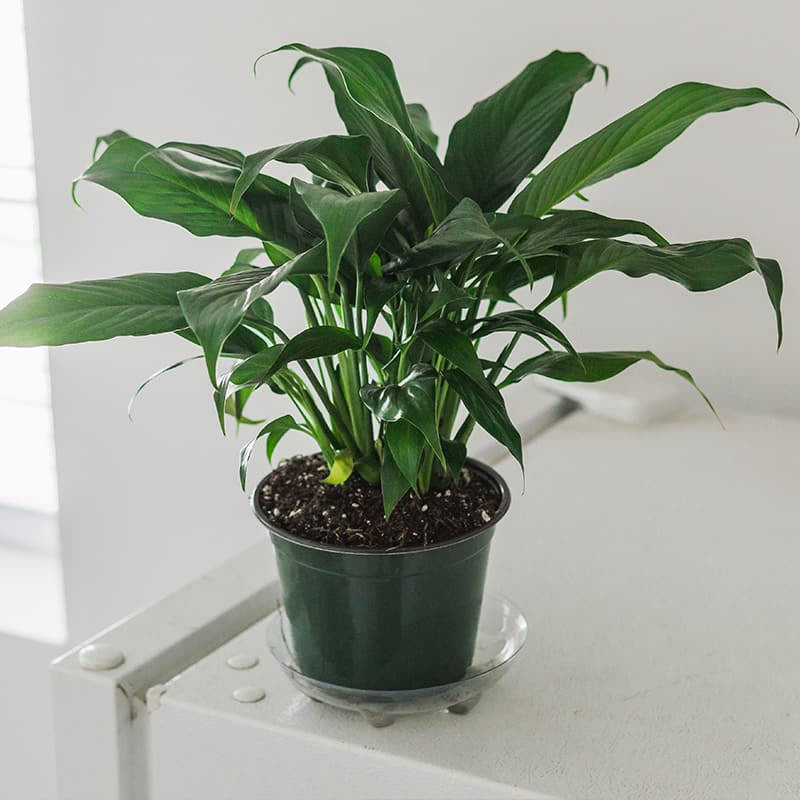
SKU: 14447126097
kinds of peace lily plants

kinds of peace lily plants Buy Peace Lily for Sale | Online Houseplant Store

Sale price$20.46 Regular price$22.73
Save 10%

Pay in installments of $5.68 with ShopPay, AfterPay and Klarna

Shipping Estimate
USA
  • USA
  • CAN

Ships within 48 hours · Estimated delivery Jul 18 - Jul 23

Promo Codes Available:

For Your Every Summer RSVP, with Code: SUMMER15

Description

kinds of peace lily plants Buy Peace Lily for Sale | Online Houseplant StoreBuy Green Peace Lily Online NASA Approved for Air Toxin Removal + Adds Touch of Green Decor to Your Home The Green Peace Lily is a classic houseplant, perfect to start your collection. The dark green foliage contrasts beautifully with the pure white blooms that the flowering plant produces. If youre looking for a houseplant with endless blooms and easy maintenance, the Peace Lily plant is the way to go! As a natural air detoxifier, NASA has deemed

Buy Green Peace Lily Online

NASA Approved for Air Toxin Removal + Adds Touch of Green Decor to Your Home

The Green Peace Lily is a classic houseplant, perfect to start your collection. The dark green foliage contrasts beautifully with the pure white blooms that the flowering plant produces. If you’re looking for a houseplant with endless blooms and easy maintenance, the Peace Lily plant is the way to go!

As a natural air detoxifier, NASA has deemed this plant in the top 5 for removing pollutants from the air. The toxins it can remove include benzene, formaldehyde, trichloroethylene, xylene, and ammonia. We recommend keeping this plant in your bedroom at night to help you sleep.

This elegant and graceful tropical houseplant will make a great addition to any interior. Keep it in your office for a burst of green or put it on your nightstand to purify the air. The options are endless, just like their blooms!

When Do Peace Lilies Bloom?

Peace lily flowers bloom in spring and the blooms can last for two months. Given the right conditions, the peace lily will bloom in the fall too. As the plant matures it can have multiple white flowers blooming at a time. The peace lily is not a true lily but a member of the Araceae family.

HOW TO CARE FOR A PEACE LILY

Peace lily plants prefer bright, indirect light conditions for best results. The more light the common houseplant receives, the bigger the blooms and foliage will grow. Be sure not to expose it to direct sunlight as this can burn or scorch the green leaves and they will turn yellow and eventually brown.

You can grow these tropical plants indoors or outdoors as long as they have the proper growing conditions. The mature size of the plant can get up to 2-3 feet tall and wide. If being grown outdoors, the plant can only tolerate USDA hardiness zone 10-11 but can be moved indoors for the winter months in other zones. Growing peace lilies indoor, care may differ slightly depending on the humidity, light, and temperatures.

How to Repot a Peace Lily?

Repotting a peace lily is quite simple. Choose a pot no bigger than double the size of its current container and use new potting soil. Peace lilies prefer well-draining soil and being planted in a container with a drainage hole. We recommend our Organic Potting Mix with added Perlite as the best option. You can fertilize peace lilies annually in early spring to promote growth and encourage flowering.

How Often To Water Peace Lily?

Peace lily watering schedules can change throughout the year. They are thirsty plants and in the warm, summer months they may need watering up to 3-4x/week especially if in a shallow container or growing outdoors. If you are wondering how often to water a peace lily, the best way to tell is by feeling the soil for moisture or purchasing a moisture meter. You do not want to wait until the soil is dry to water as the peace lily likes moist conditions. Peace Lillies will display dehydration by having saggy leaves, so check your soil for the first couple of weeks before establishing a schedule. Overwatered peace lilies will show symptoms of root rot like yellowing leaves, a foul odor, and droopy leaves.

How to Prune a Peace Lily

Pruning Peace Lillies is not necessary to keep the plant in good condition. You can deadhead any drying blooms to encourage reblooming. When pruning or deadheading the peace lily, cut the stalk at the base of the plant. This will encourage new growth, as every stalk can only bloom once. Older plants may drop some leaves as a natural cycle, so pruning them once they show signs of yellowing will expedite the process.

Are Peace Lilies Toxic to Cats?

Peace Lilies are toxic to cats and other pets when consumed. The toxic component, calcium oxalate, will irritate your pet’s mouth and stomach. Some symptoms after ingesting include excessive drooling and salivating, vomiting, difficulty swallowing, and behaviors displaying discomfort. Most animals will only attempt consumption once, as irritation starts immediately.

Buy peace lilies for sale to brighten up your home or outdoor areas!

Check out our complete collection of houseplants for sale.

Shipping Notes
  • Free Standard Shipping on $100+ Orders to the USA.
  • Except Preorder products are shipped in 48 hours.
  • Delivery to the USA:
  1. Standard Shipping : 3-10 business days
  • If time is of the essence, please consider selecting expedited delivery for faster service.
Exchange/Return Notes
  • We offer a 30-day return/exchange service after receiving.
  • Final sale items are not eligible for returns or exchanges.
  • To process your return/exchange, please contact us at [email protected]
  • Please click here for more details>>> Return & Exchange Policy
SKU: 14447126097

Discover Niche Categories That Outsell kinds of peace lily plants

Top-Converting Item to Boost Your Average Order

4.4 ★★★★★
Based on 13 reviews
Sort
Highest Rating
Newest First
Oldest First
Product Reviews
A
Verified Purchase
Anna
Pawtucket, US
★★★★★ 5
Work fantastic
Size: 100 Count (Pack of 1)
I have a terrible immune system and work in a hospital. I use to stay sick constantly until I started taking these and now I rarely get sick!
WAS THIS REVIEW HELPFUL?YesReportShare
Reviewed in the United States on March 28, 2026
J
Verified Purchase
Jessica S.
Lake Worth, US
★★★★★ 5
A Boost to My Health
Size: 100 Count (Pack of 1)
I’ve been using this elderberry supplement for a few weeks now, and I’m already seeing amazing results! It’s a natural powerhouse that’s helped boost my immune system and keep me feeling strong and energized. The capsules are easy to take and have no aftertaste, which is always a bonus.
WAS THIS REVIEW HELPFUL?YesReportShare
Reviewed in the United States on March 24, 2025
Z
Verified Purchase
ZMR
Chelsea, US
★★★★★ 5
Re: potentially toxic substances
Flavor Name: Unflavored, Size: 8 Ounce (Pack of 1)
For those worried about the presence of potentially harmful substances such as Mercury, Lead, Aluminum, Fluoride, and Arsenic please do your research before panicking. This product is natural and all substances in it are naturally occurring. To find a product without the certain substances most likely means you are getting a more processed and synthetic product. Please read below an email I received from Dr. Darrin Starkey re: why those substances are in ConcenTrace mineral drops. "Trace Minerals Research regularly tests for the presence of heavy metals, using Environmental Protection Agency (EPA) testing methods in addition to other standard testing methods. Test results consistently show that the amounts of these elements are well below safety tolerance levels established for food and drug manufacturing. In fact, recent test results released by an independent laboratory, using U.S. EPA approved testing methodologies, affirm that Trace Minerals Research’s mineral products do not contain levels that even approach the EPA’s reference dose for these elements. The recent findings should assure you, as well as our consumers everywhere, that Trace Minerals Research’s products are safe and do not pose any threat of heavy metal toxicity. The product is GRAS affirmed. If you are not familiar with GRAS affirmation, I would recommend educating yourself on it. Our trace minerals are harvested (not manufactured) from the Great Salt Lake, and if you look at the landscape of the Great Salt Lake, you realize very quickly that it is surrounded by mountains. These mountains have various streams and rivers, that naturally runoff into the Great Salt Lake, and with no outlets, the lake becomes a sort of catch basin. As the snowpack melts in the spring, and this runoff makes it's way down the mountains, it picks up minerals from the rocks and soil that then accumulate in the Great Salt Lake. Information that was put together by the Utah Geological Society on the Great Salt Lake actually clarifies how the lake is able to self clean without any outlets. It is important, and interesting, to note this information because while the lake has been concentrating inorganic salts in its waters for thousands of years, the total soluble concentrations of heavy metals are actually low. The information the Utah Geological Society put together states that the heavy metals, including clays, are enabled within the sediments and brines due to anaerobic conditions that then immobilize the metals. At Trace Minerals Research, we take great pride in the quality and purity of our products. Our mineral brines are harvested from our private ponds on the Northwest side of the lake. Once the trace minerals are harvested, each lot of mineral brines undergoes extensive testing by both "in-house" and independent laboratories (as I have already mentioned), to test for impurities and to ensure potency, purity, and balance. Careful handling is a part of our harvesting process which is similar to that of an agricultural operation, and, just as in organic farming, great care is taken to avoid contamination by chemicals. You specifically mentioned a concern about Lead, Mercury, Fluoride, Arsenic, and Aluminum. Again, this is question/concern many people have, and so it is important to understand how trace minerals work to understand why we have trace amounts of these elements in the product. First off, toxicity often occurs when a single element is introduced out of balance with other trace minerals. Man-made by-products are, all too often, the culprits of this because they are found in much higher doses than nature would have them. For instance, mercury contamination of our oceans has created a situation where the fish we consume from the very oceans we have contaminated contain much higher mercury levels than nature would normally have them contain. Most forms of life are not very good at expelling mercury so they tend to accumulate and concentrate mercury that they consume. If plankton consumes sea water over its life, it will tend to accumulate any mercury from the sea water and, thus, the mercury in the plankton will typically be higher than levels that are found in the sea water. When a fish eats the plankton over its life, it tends to accumulate mercury from the plankton and, thus, the fish will typically have higher levels of mercury than the plankton. As this paradigm continues upwards through the food chain, mercury levels tend to increase. The balance of trace minerals has been disrupted, and and as a result, there is now concern over human consumption of fish and the risk of mercury contamination. The amount of Mercury found in 40 drops (1/2 teaspoon) of ConcenTrace is 0.008 parts per million (ppm). To put this into perspective, in a baked potato or a lean grilled chicken breast you get 0.4 ppms, and in a strawberry, you get 0.6 ppms of Mercury. Arsenic is another perfect example of a man-made byproduct that has been linked to toxicity and as a result, most information about arsenic is focused around this concern. But, did you know that some of the richest sources of arsenic in our diets are found in our seeded berries such as strawberries. Most people wouldn't think twice about popping a strawberry in their mouth, and shouldn't, but that is also the amount of arsenic we are talking about in the ConcenTrace. Fluoride does occur naturally, however, the concern over fluoride comes not from the naturally occurring fluoride, but from synthesized versions that are made by man and then added to our drinking water and to toothpaste. On average, we usually consume anywhere from 1.3-1.8 milligrams of fluoride a day from our foods. Fluoride naturally occurs in potatoes, beef, apples, chicken, milk, eggs, and oatmeal to name just a few. The same applies to both Lead and Aluminum as well that are found in our product. Both are naturally occurring trace minerals found in their naturally occurring ionic state, and as such, are in similar amounts to that which is found naturally existing in many of the foods we consume. Understanding how trace minerals work, helps to put into perspective the concerns over toxicity. Again, toxicity occurs when a single element is introduced out of balance with other trace minerals, and, as I said, man-made by-products are, all too often, the reason why we associate certain elements with toxicity. Trace minerals work synergistically with one another to ensure that proper absorption, activation, regulation, and pH balance occurs within the body. An example of this synergistic relationship is that of the one between molybdenum and iron. All the iron in the world will do you no good without molybdenum. Molybdenum performs a very important, but basic, function by mobilizing iron from its storage location in the liver so that it can help blood carry oxygen to cells and tissues. This important, but often overlooked mineral, is vital in sustaining our lives, and only recently was its purpose discovered. Another role of trace minerals is to police each other. When taken in proper balance, trace minerals control one another to ensure that no one element gets out of control and creates a toxic situation within the body. Trace Minerals Research does not manufacture their trace minerals. They are harvested in their naturally occurring state, and as such, also occur in their naturally balanced state. Again, in this state, they help to regulate one another, and create a balanced state within the body. Best of health, Dr. Darrin Starkey Manager of Education and Training Trace Minerals Research " Hope this helped!
WAS THIS REVIEW HELPFUL?YesReportShare
Reviewed in the United States on March 30, 2017
C
Verified Purchase
C. Andrews
Cuba, US
★★★★★ 5
Great Mineral supplement, easily incorporated into food/drinks. No notable taste!
Flavor Name: Unflavored, Size: 2 Fl Oz (Pack of 1)
I would give 20 Stars if I could, too. It takes a few to 6 weeks to begin to experience the benefits, but when you do: Increasd energy, stamina, fingernails are stronger, and more. The liquid blends easily with any drink you have, it's pretty much flavorless and seems easily digestible.
WAS THIS REVIEW HELPFUL?YesReportShare
Reviewed in the United States on May 17, 2026
B
Verified Purchase
BN
Lowell, US
★★★★★ 5
Good stuff
Flavor Name: Unflavored, Size: 8 Ounce (Pack of 1)
I agree with many of the reviews, as far as the taste being horrible…It really is, it’s just so salty, that it doesn’t want to go down..I now mix it with a small amount of juice, equivalent to a shot glass…I can still taste it but nothing bad..You can try brushing your teeth first or suck on an ice cube before hand…That numbs the taste buds It’s definitely a good product…The first day I took it, I did a 1/2 tsp = 40 drops, at night…I had horrible dreams and I never remember any of my dreams ever and I woke up with a mild headache that lasted just about all day..I wasn’t going to continue the drops…I then decided to divide the dosage in 1/2, I took 20 drops in the morning and 20 at night…That made a huge difference..I wake up no problem in the mornings. I don’t feel tired,I feel more focused now and my hot flashes aren’t as bad…I also have more energy throughout the day..I don’t have issues with pain, my one knee does click and that’s even gotten better. I have been taking it for about a week now…My husband is also taking it, ever since he had “Covid”, back in 2021,he had dry mouth and was drinking so much water and it wasn’t helping…He’s been on it for about 4 days now and has noticed a big difference in the dry mouth. I will definitely continue to take this product. I don’t normally write reviews, unless either, I really like a product or despise one and try and let people know. It is a little pricey compared to others, but it lasts a long time…Our foods now are depleted because the soil isn’t rich in minerals anymore..I would definitely recommend this product.
WAS THIS REVIEW HELPFUL?YesReportShare
Reviewed in the United States on March 1, 2024

recommand products