Pay in installments of $6.88 with
 ,
,
 and
and

Shipping Estimate
USA
- USA
- CAN
- USA
- CAN
Ships within 48 hours · Estimated delivery Sep 9 - Sep 14
 Promo Codes Available:
For Your Every Summer RSVP, with Code: SUMMER15
Description
planting oak trees from seed Oak Seed (Acorns) – Living Soil Tree FarmAcross much of the east coast and Midwest oak species play a keystone role in the environment. They are perhaps the most diverse group of trees on this continent. There are 27 species of oak native to Virginia where I currently live. Thats some serious diversity! Oak trees feed a vast array of wildlife through both their acorns and their leaves. Oak leaves are preferred browse for many caterpillars who in turn feed our native birds. The oak tree
Across much of the east coast and Midwest oak species play a keystone role in the environment. They are perhaps the most diverse group of trees on this continent. There are 27 species of oak native to Virginia where I currently live. That’s some serious diversity! Oak trees feed a vast array of wildlife through both their acorns and their leaves. Oak leaves are preferred browse for many caterpillars who in turn feed our native birds. The oak tree itself provides habitat for all sorts of life.
Human beings have a long-standing tradition of utilizing acorns to make flour. Some species of oak make acorns that are well suited to pressing for cooking oils. Their potential to feed livestock in silvopasture systems is immense. Some oaks such as the classic white oak are long lived able to reach upwards of 500 years in age, while others like willow and pin oak typically don’t last more than 100 or so years. These are just a few words of praise to a magnificent group of trees that our ecosystems could not exist without.
Growing your own oak trees from acorns is an extremely rewarding process. There is something magic about watching an acorn sprout and knowing that little seedling has potential to live 100s of years and reach a truly massive size. When I am in the presence of large old oaks, I find it fascinating to imagine how this tree would have looked when it was just a young seedling. We have several species of oak seed (acorns) available this year for anyone who is interested. If you are reading this in fall and have interest to forage your own acorns I (Nick) highly encourage you to do so! Check out any of our social media for videos and posts about how we gather and process acorns.
2025 Selections:
Black oak (PA)
Seed collected by our friend Mark in Fayette County, PA. Black oak are considered to be in the red oak group and generally are found on drier sites. They thrive across much of the east coast and mid west. As far as red oaks go they have a medium sized acorn, larger than willow oak but smaller than northern red oak. We have not worked with the acorns extensively but some folks report good success using them for flour and oil production.
Bur Oak (PA)
Seed collected by our friend Mark in Fayette County, PA. Bur oak, considered to be in the white oak group, are fast growers and can reach massive sizes. They thrive across the east coast and mid west. The main draw to bur oak is the size of their acorns which are very large (size can vary from individual to individual) and the fact that some bur oaks drop acorns with low levels of tannins. Bur oaks like lots of sun and plenty of space. Bur oak acorns can sprout in the fall although our experience has been that not all do.
Swamp White Oak (PA)
Seed collected by our friend Mark in Fayette County, PA. Swamp White Oak is a medium-to-large deciduous tree in the white oak group, native to eastern and central North America. It’s known for its adaptability to wet soils and its reliable acorn production. Swamp white Naturally occurs in bottomlands, floodplains, and swampy lowlands, often along rivers and lake margins. They Tolerate poorly drained, periodically flooded soils better than most oaks, but also grows on well-drained upland loams if moisture is available. Commonly found mixed with species like silver maple, green ash, and other bottomland oaks. Their acorns are large and can have low tannin content. Do note that swamp white oak acorns tend to sprout in the fall.
2024 Selections:
Bur Oak - Bur oak is in the white oak group. They are fast growing trees known for their large acorns. Being in the white oak group their acorns leach of their tannins easier than red oaks. Some bur oaks have such low tannins levels they can be consumed without leaching. The large frilly/hair caps on their acorns are impossible to mistake. This year we have two selections of bur oak available.
Hershey Bur Oak (25 acorns per pack)
John Hershey is famous in the tree crop world for his nursery work and experimental plantings back in the early and mid-1900s. His nursery was known as Americans number one tree crops nursery. John worked to collect seed and scion wood from trees with superior qualities all across the country. He grew out seedlings and grafted trees on his farm in Downingtown PA. Sadly after his death the farm was not protected and much of it has been destroyed to make room for suburban sprawl. Some of the trees remain.
There is a cluster of trees planted by John near where his old farm used to be. These trees are found in the area surrounding Downingtown Friends Meetinghouse. The acorns from this batch came from a single bur oak tree across the street from the meeting house. This tree makes acorns that weigh around 12 grams each on average. There are two bur oaks at the meeting house that are larger than this tree but they were not bearing this year. To give a reference point for folks who have not worked with bur oak before, 12 grams per acorn is in the middle of the spectrum. Some trees are known to produce acorns averaging 20 grams each or more.
Alwood Bur Oak (available in packs of 25 or 50 acorns)
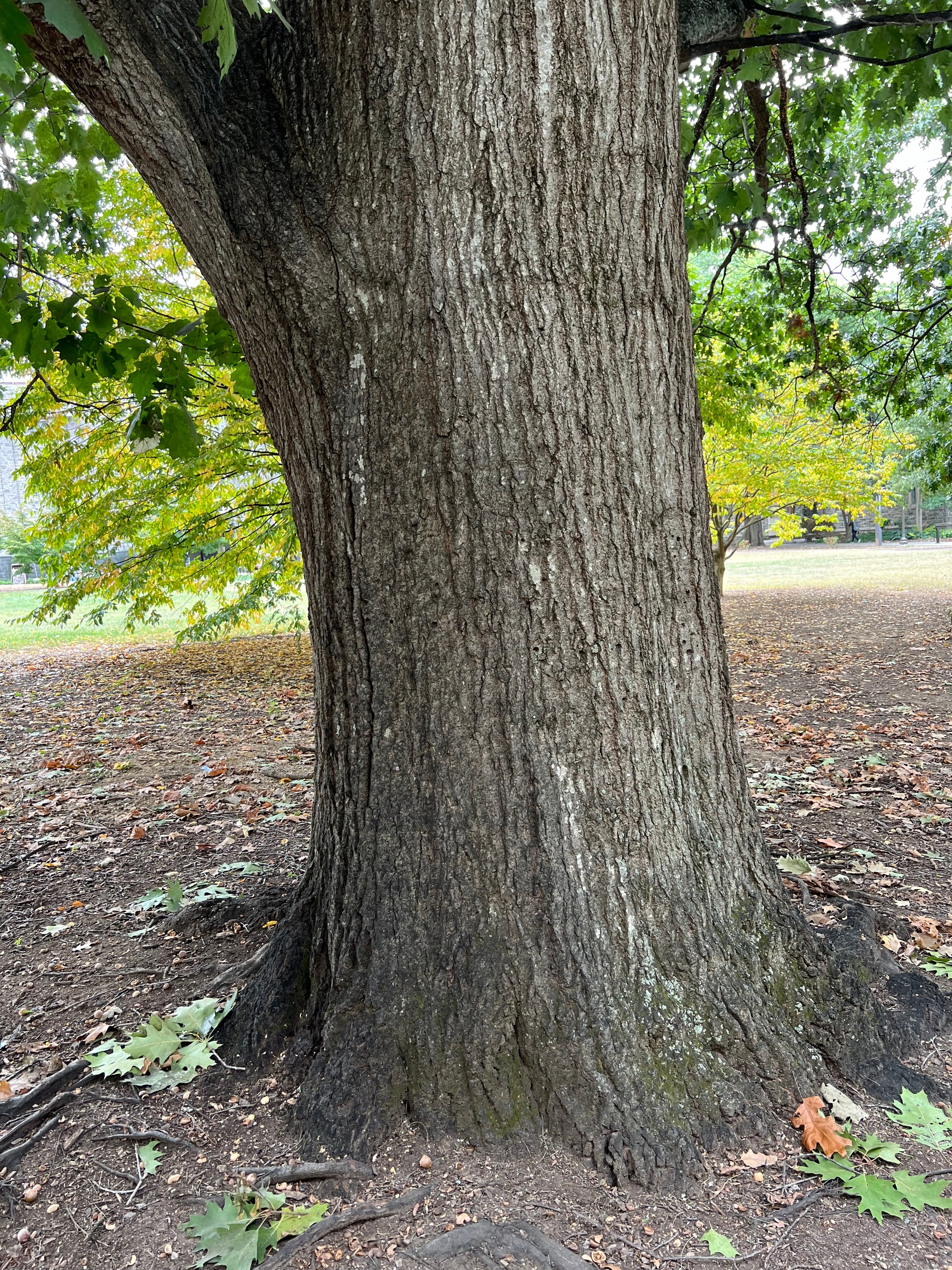
This bur oak on the campus of Virginia Tech was planted in 1895 by professor William Bradford Alwood. Alwood was a well-known figure in the agricultural world at the time. This oak tree is only part of the legacy he left behind. Walking under this oak is a transformative experience. Its limbs reach out wider horizontally than its trunk extends vertically. Some of the limbs come close to touching the ground. The space that this one tree takes up is mind boggling. On average acorns from this tree weigh about 10 grams. To give a reference point for folks who have not worked with bur oak before, 10 grams per acorn is in the middle of the spectrum. Some trees are known to produce acorns averaging 20 grams each or more.
**Oak seed should not be allowed to completely dry out. Although not all oak species require cold stratification to germinate, we typically stratify all our acorns anyway. In zone 7 and warmer acorns can be planted outdoors in fall. Fall planting may work in colder zones although we haven’t tried this ourselves.
If fall planting in not an option for any reason acorns can be stored over winter in buckets with drainage holes packed with the medium of your choice (wood chips, sawdust, compost, sand etc.). These buckets should be insulated from freezing by piling mulch around the outside of the bucket. Be sure to protect the buckets from rodents if you go this route. They can smell acorns from a mile away!
As an alternative to outdoor storage and fall planting acorns can be stored in the fridge and planted out in spring. We like to use Ziplock bags. If you see drops of water in the bag conditions are way too wet. A little visible condensation is okay. Acorns can be stored in other containers in the fridge such as jars. If you want you can pack your acorns with a medium such as sand or you can pack them free of any medium. For more instruction on planting acorns see our social media or feel free to shoot us an email!
These acorns were collected in October of 2024 and should be planted or put into stratification conditions immediately upon receipt. Seed orders typically ship out within 3 days from the time you place your order.**
Shipping Notes
- Free Standard Shipping on $100+ Orders to the USA.
- Except Preorder products are shipped in 48 hours.
- Delivery to the USA:
- Standard Shipping : 3-10 business days
- If time is of the essence, please consider selecting expedited delivery for faster service.
Exchange/Return Notes
- We offer a 30-day return/exchange service after receiving.
- Final sale items are not eligible for returns or exchanges.
- To process your return/exchange, please contact us at [email protected]
- Please click here for more details>>> Return & Exchange Policy