SKU: 15222369515
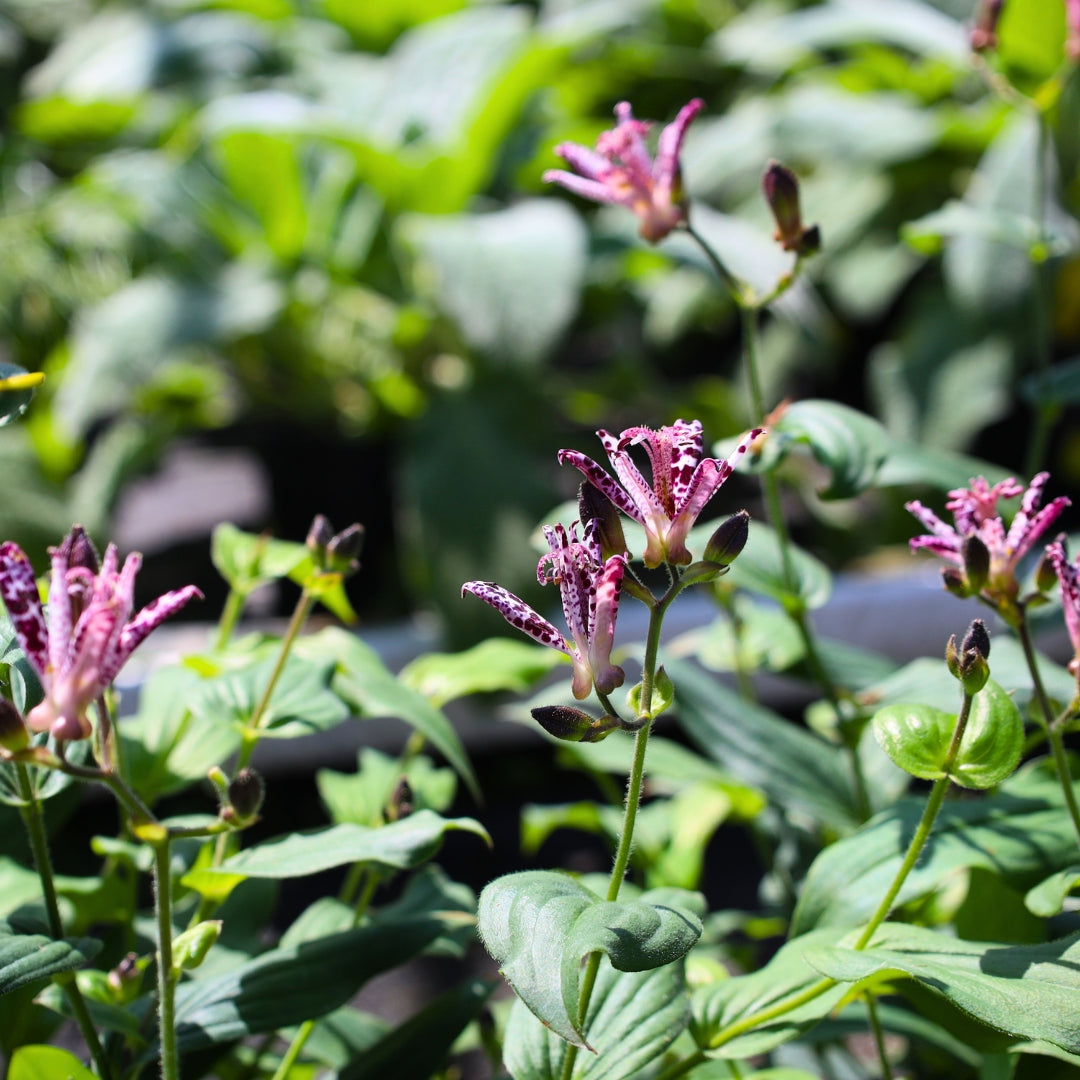
toad lily flower

toad lily flower Sinonome Toad Lily for Sale

Sale price$23.59 Regular price$26.21
Save 10%

Pay in installments of $6.55 with ShopPay, AfterPay and Klarna

Shipping Estimate
USA
  • USA
  • CAN

Ships within 48 hours · Estimated delivery Sep 13 - Sep 18

Promo Codes Available:

For Your Every Summer RSVP, with Code: SUMMER15

Description

toad lily flower Sinonome Toad Lily for SaleOrchid Like Flowers for the Shade Garden Sinonome Toad Lily is a distinctive shade perennial grown for its exotic looking, orchid like flowers and graceful upright habit. In late summer to fall, this Tricyrtis produces small ivory white blooms marked with burgundy to purple spots, giving shaded garden spaces a rare flower display at a time when many perennials are winding down. This plant is especially useful for gardeners who want more late season

Orchid-Like Flowers for the Shade Garden

Sinonome Toad Lily is a distinctive shade perennial grown for its exotic-looking, orchid-like flowers and graceful upright habit. In late summer to fall, this Tricyrtis produces small ivory-white blooms marked with burgundy to purple spots, giving shaded garden spaces a rare flower display at a time when many perennials are winding down.

This plant is especially useful for gardeners who want more late-season interest in woodland beds, shade borders, and under-tree plantings. The flowers appear along arching stems above medium green foliage, creating a delicate, layered look that rewards close viewing near paths, patios, and garden seating areas.

Late-Season Blooms When Shade Gardens Need Color

Sinonome Toad Lily brings color into the garden from late summer into fall, helping bridge the gap between summer perennials and autumn foliage. Its spotted flowers may be small, but their unusual markings and orchid-like shape make them stand out in shaded spaces where bold bloom color can be harder to find.

The late bloom window is one of the strongest reasons to plant this perennial. Use it where visitors can see the flowers up close, such as along a shaded walkway, near a bench, beside a woodland path, or at the front or middle of a moist-shade border. The plant’s refined flowers add a collector-quality feel without needing a high-maintenance care routine.

Perfect for Woodland Gardens, Shade Borders, and Moist Beds

Sinonome Toad Lily performs best in part shade to full shade with rich, moist, well-drained soil. It is a natural fit for woodland gardens, north-facing beds, shaded foundation plantings, and protected areas beneath open-canopied trees and shrubs.

Plant it with hostas, ferns, heuchera, hellebores, astilbe, brunnera, foamflower, Japanese forest grass, and other shade-loving perennials. Its upright stems add height and bloom texture among lower foliage plants, while the spotted flowers bring a refined seasonal detail that works beautifully in naturalistic shade designs.

Deer Resistant, Rabbit Resistant, and Best with Consistent Moisture

Sinonome Toad Lily is noted for being deer-resistant and rabbit-resistant, making it a useful choice for shaded gardens where browsing can limit plant options. Deer resistance can vary by location and pressure, but this plant is often a lower-risk perennial compared with many tender shade plants.

Moisture is the key to success. Toad lilies prefer soil that stays evenly moist but not soggy. They are not ideal for hot, dry shade unless supplemental watering is provided. Mulching helps conserve soil moisture, cool the root zone, and protect the crown during seasonal temperature swings.

Easy Care with Shade, Mulch, and Spring Cleanup

Plant Sinonome Toad Lily in part shade to full shade with humus-rich, well-drained soil. Add compost or organic matter at planting time to help retain moisture and support healthy root growth. Avoid exposure to direct sunlight, especially in warmer climates.

Water regularly after planting and during dry spells. Apply a light mulch layer around the plant, keeping mulch slightly away from the crown and stems. Cut old stems back in late fall after frost or in early spring before new growth begins. Divide mature clumps in spring if they become crowded.

Shipping Notes
  • Free Standard Shipping on $100+ Orders to the USA.
  • Except Preorder products are shipped in 48 hours.
  • Delivery to the USA:
  1. Standard Shipping : 3-10 business days
  • If time is of the essence, please consider selecting expedited delivery for faster service.
Exchange/Return Notes
  • We offer a 30-day return/exchange service after receiving.
  • Final sale items are not eligible for returns or exchanges.
  • To process your return/exchange, please contact us at [email protected]
  • Please click here for more details>>> Return & Exchange Policy
SKU: 15222369515

Discover Niche Categories That Outsell toad lily flower

Top-Converting Item to Boost Your Average Order

4.2 ★★★★★
Based on 10 reviews
Sort
Highest Rating
Newest First
Oldest First
Product Reviews
S
Verified Purchase
Sergio denny
Phoenix, US
★★★★★ 4
A powerful and influential
Format: Kindle
This is an important and eye-opening read for anyone interested in nature, public health and environmental protection.
WAS THIS REVIEW HELPFUL?YesReportShare
Reviewed in the United States on January 31, 2026
L
Verified Purchase
Liz Cole
Los Angeles, US
★★★★★ 5
A True Mystery Story
Silent Spring is as relevant today as it was 50 years ago. Our ground, our air, our food and we are bombarded with chemicals, carcinogens, products of all sorts to kill weeds and bugs and are capable of killing us. Rachel Carson, a biologist and talented writer, walks us through a litany of misuse and overuse of chemicals that have never been tested for safety to humans. Laws are on the books requiring this testing to be done, but it is disregarded because they make our grass greener, our bugs keel over dead and a lot of people rich. Carson is known best for revealing the reason that Bald Eagle eggs had such thin shells that they broke well before the required incubation before hatching. The drastic reduction is successful Eagle births was DDT. Because this is our national bird and is supported by activists in and out of government, DDT was banned and the eagles began producing young again. We have not been so lucky. This book is factual in a clear and understandable way, and it informs us of the human actions and choices that put us all at risk. No alarmist language is employed, but facts lead us to conclusions that are concerning. The stunning fact to me is that the book was written fifty years ago, and the same risks to humanity and our future are being taken today when we could find better ways of solving problems, more cautious ways of using chemicals and restricting their use in sensible ways. As I talk to people about the issues raised in this book, they have not heard of Rachel Carson and have heard nothing of the assured negative effects on our own health from the chemicals we expose ourselves to daily. We knew so much back then when Carson wrote this book. Why hasn't more been researched and shared with us, so we can have current knowledge of the facts and risks. It is important that Carson's writing not be buried on a dusty shelf. It is a real mystery story and we are the cast.
WAS THIS REVIEW HELPFUL?YesReportShare
Reviewed in the United States on November 23, 2016
M
Verified Purchase
misterbustercat
Phoenix, US
★★★★★ 5
This should’ve been required reading since the ‘70’s.
Format: Hardcover
It takes a strong writer with a very clear view ( back in the early 60’s) to make a very sciency topic into a gripping read. Ms. Carson broke down a complex scientific relationship between chemicals and the welfare of the planet and those of us who live here.. All of us, down to the microbes. This is a very logical explanation of how all living things are dependent on a clean environment, and how profiteering companies have compromised the health of all life on earth in the name of fewer weeds, attractive produce at the market, and ignoring the failures of the chemical approach that disregards integrated pest management. I promise you that it’s not a boring textbook study. I was a pest control advisor for many years, and had I known then what I know now I’d have trusted less in what I was trained, looking harder into the collateral damage that was created, and pushed harder, sooner, to stop the use of carbamate, organophosphates, and other “harmless” pesticides and carriers that have destroyed a multitude of environmentally sensitive and important components of a healthy ecosystem that we may not recover from in the name of profit. Other than that, it’s light reading!
WAS THIS REVIEW HELPFUL?YesReportShare
Reviewed in the United States on June 2, 2022
A
Verified Purchase
Amazon Customer
Grantham, US
★★★★★ 5
Perfected wisdom
Format: Hardcover
This book arrived on time and in perfect condition.
WAS THIS REVIEW HELPFUL?YesReportShare
Reviewed in the United States on January 9, 2026
K
Verified Purchase
Killoran
Boise, US
★★★★★ 3
Poor formatting on kindle version
Format: Kindle
Five stars for the book, 0 stars for the formatting of this kindle version. Every word that contains a double "l", such as "all", "Stillness", "hill", etc. omits the second "l" in the word. Universal y. Kil. Al. Germ cels. It is extremely annoying, and one or more on nearly every page. Is it possible to swap this one for a kindle version with better formatting?
WAS THIS REVIEW HELPFUL?YesReportShare
Reviewed in the United States on January 8, 2026

recommand products