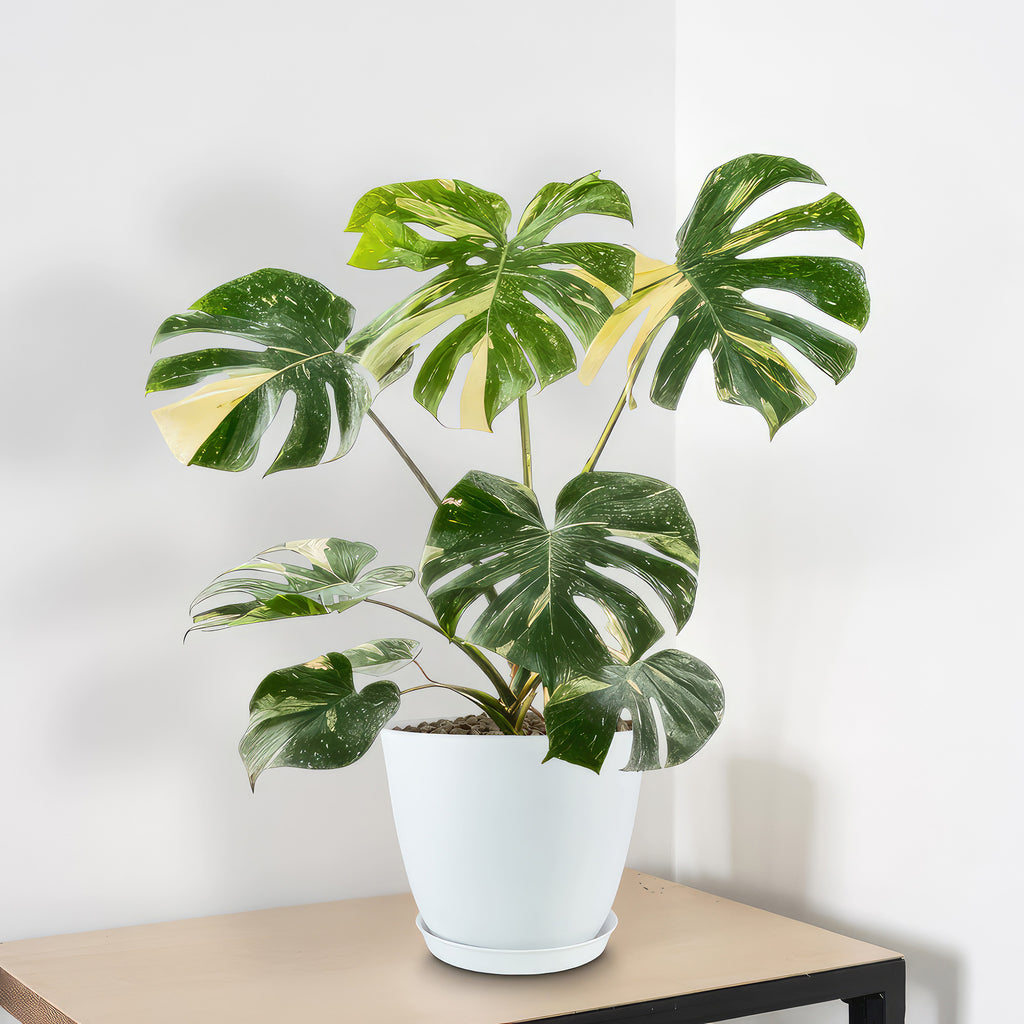
SKU: 15428512526
monstera constellation

monstera constellation Shop 'Thai Constellation Monstera' Care & Growing Guide

Sale price$18.40 Regular price$20.44
Save 10%

Pay in installments of $5.11 with ShopPay, AfterPay and Klarna

Shipping Estimate
USA
  • USA
  • CAN

Ships within 48 hours · Estimated delivery Sep 4 - Sep 9

Promo Codes Available:

For Your Every Summer RSVP, with Code: SUMMER15

Description

monstera constellation Shop 'Thai Constellation Monstera' Care & Growing GuideThe Thai Constellation Monstera, is a popular, climbing plant prized for its beautiful, creamy white and green variegated large leaves. A naturally occurring mutation of Monstera deliciosa, which is known for its large, split leaves with dramatic fenestrations (holes) as it matures. What sets the Thai Constellation apart is its unique variegation, with splashes and flecks of white that resemble stars scattered across a dark green background, which is

The Thai Constellation Monstera, is a popular, climbing plant prized for its beautiful, creamy white and green variegated large leaves. A naturally occurring mutation of Monstera deliciosa, which is known for its large, split leaves with dramatic fenestrations (holes) as it matures. 

What sets the Thai Constellation apart is its unique variegation, with splashes and flecks of white that resemble stars scattered across a dark green background, which is why it’s named “Thai Constellation.” This Monstera has gained considerable popularity among plant collectors and interior design enthusiasts for its impressive leaf size, easy care requirements, and stunning visual appeal.

The Thai Constellation Monstera’s origins trace back to Southeast Asia, particularly Thailand, where it was selectively bred for its rare variegation. It grows as an epiphytic plant, meaning it can climb trees and other structures to reach sunlight in the forest canopy. Its natural habitat contributes to its preference for warm, humid conditions, where it thrives in indirect sunlight and well-drained soil.

The Thai Constellation Monstera is distinguished by its large, heart-shaped leaves that, with maturity, develop dramatic splits and holes. The small holes or transparent areas in a plant's leaves is thought to be an adaptation to the rainforest, allowing sunlight to filter through to lower plants.

The Thai Constellation’s leaves are marbled with white and creamy-yellow patterns, giving each leaf a unique appearance. Mature Thai Constellations can grow to impressive sizes, with leaves reaching up to 4 feet wide and the entire vine plant capable of reaching 16 feet in height when provided with ample support, such as a moss pole or trellis.

Thai Constellation flowers are creamy-white and typically bloom in mature plants during the warm growing season. These inflorescences feature a spathe that encloses a spadix, resembling the blooms of other aroids like the peace lily. While the flowers are beautiful, most growers focus on the plant’s unique foliage and often remove blooms to promote leaf growth. 

In its natural habitat it produce gorgeous edible fruit that has a flavor reminiscent of pineapple, but flowering and fruiting are rare occurrences indoors, where light and humidity conditions usually aren’t sufficient for this process.  

The Thai constellation Monstera cuttings once costing a few hundred dollars, has come down in price in recent years, making it more affordable and accessible. This monstera is surprisingly easy to grow at home and requires little care, even though it is rare.  

Beyond its aesthetic appeal, the Monstera deliciosa Thai Constellation provides several benefits. Like many tropical plants, it can help purify indoor air by removing toxins and increasing humidity levels, which contributes to a healthier indoor environment. Additionally, its large leaves release moisture, making it a natural humidifier. It’s beautiful, variegated foliage brings an element of nature into living spaces, creating a calming and relaxing atmosphere, which has been shown to reduce stress and improve mood.  

When and How to Water Your Thai Constellation Plant

Like other drought-tolerant plants, Thai Constellation Monstera prefers minimal watering once established. When it comes to watering needs, it's essential to strike a balance to ensure the plant remains healthy. 

In the spring and summer, during the growing season, Monstera Thai Constellation is actively growing and will require more frequent watering typically once a week. Water the plant thoroughly when the top inch or two of the soil feels dry. Ensure that excess water can drain away to prevent waterlogging, as this can lead to root rot. Water the plant consistently but allows the soil to dry out slightly between waterings to mimic its natural habitat.

In the fall and winter, during the dormant season, its growth slows down, and watering needs decrease once every 2-3 weeks. During this time, reduce the frequency of watering but still monitor the soil's moisture levels. Water the Thai Constellation Monstera sparingly, allowing the soil to dry out more between waterings. It's crucial to adjust your watering routine based on the plant's growth cycle to prevent overwatering, which can be detrimental to its health. 

By observing the plant's growth patterns, adjusting watering frequency accordingly, and ensuring proper drainage, you can help your plant thrive while respecting its drought-tolerant nature.  

Light Requirements – Where to Place Your Thai Constellation Monstera

When grown indoors, place your Thai constellation near a window where it can receive filtered sunlight or indirect light for at least 4-6 hours a day. Avoid placing it in direct sunlight, as this can scorch the leaves. If the plant is not receiving enough light, its variegation may fade, so ensure it gets adequate light to maintain its vibrant appearance. 

For outdoor cultivation, these Monstera Thai constellation plants thrive in bright, indirect light or dappled shade. They can benefit from morning sunlight or filtered light throughout the day.

Avoid exposing the plant to harsh afternoon sun, especially in hot climates, as this can damage the leaves. Providing the right balance of light outdoors will help the plant grow healthily and maintain its striking variegation. 

Whether grown indoors or outdoors, Thai Constellation Monstera's light requirements play a crucial role in its overall health and appearance. By ensuring the plant receives the appropriate amount of light, you can help it thrive and showcase its beautiful, variegated leaves to their full potential.  

Optimal Soil & Fertilizer Needs

Thai Constellation Monstera thrives in well-draining soil that retains some moisture but does not become waterlogged. A good potting mix for this plant is a combination of peat moss, perlite, and orchid bark to provide the right balance of aeration and moisture retention. Planet Desert specializes has Go to soil cactus mix blend 1 gal 4 qt cacti succulent dirt compost growing media that includes an organic substrate with mycorrhizae to help with the growth of a healthy root system to help your Monstera Thai constellation thrive. When repotting or planting your Thai Constellation plant, ensure the soil is well-draining to support its growth.

When it comes to fertilizer needs, Monstera Thai Constellation benefits from minimal feeding during the growing season to support its lush foliage. A balanced NPK fertilizer with an equal ratio of 5-10-5 can be applied once a year during the growing season in the spring. This helps provide essential nutrients for healthy growth and vibrant leaves. However, during the plant's dormant season, reduce or stop fertilizing to allow the plant to rest. 

By ensuring the Thai monstera constellation roots have access to the right nutrients and soil conditions, you can help it thrive and maintain its stunning appearance. Remember to adjust your fertilization schedule based on the plant's growth cycle to support its overall health and well-being.

Hardiness Zones & More

When grown indoors, Thai Constellation Monstera prefers temperatures between 65-80°F with bright, indirect light. It thrives in a warm and humid environment, making it ideal for indoor spaces with consistent temperatures. To maintain the plant's health, avoid exposing it to sudden temperature fluctuations or drafts, as this can stress the plant and affect its growth. Keeping the indoor environment stable and comfortable will help your Monstera plant thrive. 

For outdoor cultivation, your Thai Constellation plant is typically suited for USDA zones 10-12. These zones generally have milder winters and warmer temperatures, which are favorable for tropical plants like the Monstera Thai Constellation.

If you live in a region outside these zones, you can still grow the plant outdoors during the warmer months and bring it indoors during colder periods to protect it from frost and low temperatures.  

By understanding the temperature and humidity preferences of Thai Constellation, you can create an environment that mimics its natural habitat and supports its growth. Remember to adjust care practices based on the season and environmental conditions to ensure the plant remains healthy and vibrant.  

Wildlife – Monstera Thai Constellation Attracts the Following Friendly Pollinators  

The Thai Constellation Monstera is known to attract pollinators such as bees, hummingbirds, butterflies, and other beneficial insects due to its unique and fragrant flowers. These pollinators play a vital role in the plant's reproductive process by transferring pollen from one flower to another, leading to fruit production in Monstera. 

Butterflies
Bees
Hummingbirds
Lady Bugs
Multi Pollinators
Other Birds

According to the ASPCA, Monstera plants are considered mildly toxic to humans and pets and can cause symptoms like oral irritation, drooling, vomiting, and difficulty swallowing if consumed. It is recommended to keep these plants out of reach of pets and children to prevent accidental ingestion and ensure their safety. 

How to Propagate Your Thai Constellation Plant  

To propagate your Thai Constellation plant, you can take stem cuttings from a healthy, mature plant. Make sure the cutting has at least one node, as this is where roots will develop. Place the cutting in water or a well-draining soil mix until roots form, then transplant into a pot with fresh soil. Keep the new plant in a warm, humid environment to encourage growth, and continue to care for it as you would an established plant. With proper Monstera Thai constellation care and patience, your propagated plant will grow into a beautiful and healthy plant, ready to adorn your space with its stunning variegated leaves.

Key Takeaways

  1. The Thai Constellation Monstera displays stunning, creamy-white marbling across its dark green large leaves, resembling a starry constellation, making each leaf truly unique. 
  2. The Thai Constellation Monstera is an excellent climber, using aerial roots to attach itself to supports like moss poles or trellises, which encourages it to grow larger leaves with more pronounced fenestrations.
  3. Mature leaves develop splits and fenestrations, mimicking rainforest adaptations to let light filter through to lower plants and giving it an iconic “Swiss cheese” look. 
  4. Bred in Thailand, this rare Monstera cultivar is surprisingly drought-tolerant for a tropical plant, able to withstand brief periods of dryness, though it thrives with consistent moisture.
  5. It absorbs toxins and increases humidity in indoor spaces, helping improve air quality naturally. 
  6. While rare indoors, it can produce flowers and fruit with a pineapple-like flavor under ideal conditions, adding to its unique appeal

The Bottom Line

Overall, the Thai Constellation Monstera is a stunning tropical plant that brings a touch of celestial beauty to any indoor space with its unique, star-like variegated large leaves and impressive size. This rare cultivar adds both aesthetic appeal and functionality by helping to purify indoor air and increasing humidity. Although it’s a tropical plant, the Thai Constellation is relatively easy to care for, thriving best in bright, indirect light with moderate humidity and well-draining soil. While it’s drought-tolerant enough to withstand occasional dry periods, regular watering helps it reach its fullest potential. Given adequate support and the right indoor conditions, it makes a captivating, low-maintenance addition to any plant lover’s collection. Order your very own Monstera Thai constellation for sale today!  

Shipping Notes
  • Free Standard Shipping on $100+ Orders to the USA.
  • Except Preorder products are shipped in 48 hours.
  • Delivery to the USA:
  1. Standard Shipping : 3-10 business days
  • If time is of the essence, please consider selecting expedited delivery for faster service.
Exchange/Return Notes
  • We offer a 30-day return/exchange service after receiving.
  • Final sale items are not eligible for returns or exchanges.
  • To process your return/exchange, please contact us at [email protected]
  • Please click here for more details>>> Return & Exchange Policy
SKU: 15428512526

Discover Niche Categories That Outsell monstera constellation

Top-Converting Item to Boost Your Average Order

4.6 ★★★★★
Based on 13 reviews
Sort
Highest Rating
Newest First
Oldest First
Product Reviews
T
Verified Purchase
TigerSwan
Omaha, US
★★★★★ 5
works
Item Package Quantity: 1, Size: 100 Count (Pack of 1)
I work night shift and these keep me energize without jitters. Also, I do not crash. They last a good 6 hours and I'm able to sleep when I get home.
WAS THIS REVIEW HELPFUL?YesReportShare
Reviewed in the United States on December 1, 2025
A
Verified Purchase
Anthony R
Waukegan, US
★★★★★ 1
They don't work
Item Package Quantity: 1, Size: 100 Count (Pack of 1)
Used to work, useless now. It seems they reformulated things. I used to wake up on this guarana, and the most recent batch not only does nothing, I can take two and need a nap within an hour.
WAS THIS REVIEW HELPFUL?YesReportShare
Reviewed in the United States on March 15, 2026
P
Verified Purchase
Patrick Neary
Massapequa, US
★★★★★ 5
This can be the best for some people and potential trouble for others. BP warning:
Item Package Quantity: 1, Size: 100 Count (Pack of 1)
It triggers my bipolar mania. Even though this detrimental effect is short-lived - only a few hours before coming back to normal... I don't feel right taking this ever again in supplement form. It's ok in a Monster Energy Drink or a Starbucks Tripleshot coffee or something for me personally. Really it's in my opinion the best herbal supplement for energy that is somewhat adventurous and flexitive. For me more like go outside and play, climb pine trees or something. In contrast, I'll suggest this term: "GNC-type herbal stimulants" - they feel more oriented toward focus and less towards locomotive behavior.
WAS THIS REVIEW HELPFUL?YesReportShare
Reviewed in the United States on May 21, 2025
C
Verified Purchase
Craig Matteson
Los Angeles, US
★★★★★ 5
This wonderful biography focuses on what the contemporary records actually tell us.
Format: Paperback
I am very grateful to Richard Bushman for this book. Writing about Joseph Smith invites a storm of criticism because skeptics only want him debunked and believers want their faith supported. Each wants their pre-conceived image of who Joseph was to be proven correct. Bushman takes a strong stance that lets the evidence we have speak for itself, preferably as close to Joseph himself and contemporary witnesses as possible, and tell the story of his life to high scholarly standards. For me the book read somewhat sparer than a biography that includes anecdotes as if they are history. Many familiar stories that I learned growing up are simply not here. However, relying as much as possible on contemporary accounts and what Joseph himself wrote or said provides a a biography more consistent in its view of Joseph than the books that either extol him or those that tend to attack him and try to debunk him. For example, the famous Brodie biography seemed to me to want Joseph to be both a genius and a dolt, a highly energetic man yet lazy, a crazed believer and a cynical con man, and on and on with similar contradictions. Bushman achieves a more consistent lens on Joseph, despite the complications of the man and his life. I think this is both a great achievement and a real help in trying to understand Joseph. I mean it as high praise for the book when I say that I think that almost everyone who reads this book thoughtfully will take away a broader and deeper conception of who Joseph Smith was and what he did. Rather than try to recount the book to you I want to share several things that I learned from the book and really value. I could list dozens more, but you can read the book for yourself (which I encourage you to do). Yes, I am a believing member of the LDS Church, but I think the book is intelligent and honest and complete enough to provide interesting and thought provoking material for both the believer and the skeptic and for someone who comes with no knowledge of Joseph at all. Believers will have to consider the complications of the man and his flesh and blood temperament and the misjudgments he made in his life about the people he trusted and some of the actions he took. Skeptics will have to deal with the reality of the man and his achievements. Simply dismissing him as a con man or a crazed visionary will not work because that is not what the actual evidence says. Joseph did not run the Church as the single central figure nor did he turn it into a cult of Joseph Smith. Bushman showed me the power and genius of the organization of the Church and its balancing mechanisms of being flat with a broadly held male priesthood with a hierarchical leadership with doctrine of keys and how the later addition of women in the operation, governing of the Church, and caring of the needs of the Saints strengthened and enriched it. And while Joseph was the President of the Church and its Prophet and Seer he really did let local leadership govern itself according to the principles taught through the revelations. I think Bushman's focus on the development of the organization and its role in preserving the Church and its ongoing growth after Joseph's murder is spot on and helped deepen my appreciation of its dynamism and adaptability. I also like the compromise language Bushman achieved in dealing with the realities of the revelations of Joseph Smith. The author always refers to them as Joseph's revelations. For believers, we accept them as revelations from God through Joseph Smith, but I can see them as "Joseph's" in that they were given through him. And skeptics who reject anything divine about the revelations can accept that, whatever they are, Joseph spoke them. I also liked learning how many of the revelations were given in the presence of others in meetings, how matter of fact they were, how they were immediately copied and circulated, and how difficult it was to get them collected and printed for a variety of reasons until we finally got them published as the Doctrine and Covenants. Another thing I gained a deeper appreciation of was the utter daring and the monumental nature of building the Kirtland Temple so early in the Church's life. Most Mormon congregations (wards) have around 500 members. Kirtland at the time they were building the temple was growing, but only had around 600 members when the project began. I can't fathom taking on such a project with so few people and for a people living in log structures and less it is even more incredible. Yet they built it in that rugged frontier town. I also thought that Bushman handled the sense of the miraculous around the dedication of the temple very sensitively. I also did not realize that when Joseph and Oliver were receiving the visitation of the Savior, Moses, Elijah, and Elias on the altar of the temple that up to 1,000 members were in the temple on the other side of the curtain. When I was growing up I did not understand clearly how early the Saints arrived in Missouri and how much larger the settlement there was than in Kirtland even though the temple in Kirtland was built and the proposed temple for Zion was not. Bushman also does a good job of giving a clear picture of the dynamics of the persecutions in Missouri and how the growing political power and anti-slavery stance of the Mormons antagonized the locals. The so-called Mormon War is also more critical to the rest of Joseph's life than I had realized. The constant hounding from Missouri and Joseph having to fear for his life from then on was something I had not truly appreciated. I also think Bushman handles the issue of plural marriage as well as it can be handled. And I think I gained a deeper understanding of John C. Bennett's role in the persecution of the Mormons in Illinois than I had before. I think the actual martyrdom is given a little too light a treatment here, but it is well covered material, and as Bushman notes, a great deal of faith promoting stories have accumulated around that event over the years. And I think he was probably wise in not opening up his book to attacks because he debunked someone's favorite story about Joseph's last days. Just laying out what is actually documented from the time is very helpful. Even with all the praise I have given, I could heap a great deal more if I had the space and time. But I do want to share an honest perspective I have of the book. It is superior, truly marvelous, from Joseph's early life through the dedication of the Kirtland Temple. That is the zenith of the book. From that point on, while good, the author himself cites difficulty in getting to Joseph directly after that point because his life and the nature of the work of the Church and the lives of the Saints changed. The rest of the book is not as exquisite. Very good, interesting, and informative, but not quite equal to the previous material. It becomes more of a narrative than it had been probably for the reason Bushman cites. I did find the footnotes and bibliography quite useful. They enriched my reading and sent me on to other reading I found illuminating and will help me in selecting other directions for study for years to come. So, I am especially thankful for the hard work in putting all that material together, as well. This is a monumental work and a treasure. Read it. Evaluate it for yourself no matter your present attitude or judgments of Joseph Smith. You will have a more considered and informed view for having read it. And, I don't know why this is in the paperback section. I bought and read the hardcover of the book. Reviewed by Craig Matteson, Saline, MI
WAS THIS REVIEW HELPFUL?YesReportShare
Reviewed in the United States on May 15, 2012
R
Verified Purchase
R. Mckissick
Draper, US
★★★★★ 5
Candid Honesty from a great American Historian
Format: Hardcover
Reading Puritans to Yankees, a Bancroft Prize history, I moved to this tome. Professor(full) Bushman is a great American historian. This book follows tradition. One look at Prof. Bushman's on-line student sylabuses or awards at Columbia illustrates his leadership ofhistory students. Years I've spent trying to better understand ancient Pauls revelations; in particular the one with Christ on the road. How can one get closer to Christ without understanding revelation? At the third read of Rough Stone, and lots of redlines, I think this book is about revelation. Also what a rare thing revelation has been; heaven is open modernly for revelation. I wish I could understand the Bible without a guide to communicaton form God. Rough Stone has opened a new understanding of revelation. Maybe the most important thing is that God is all powerful and supreem, and will talk to us when He wants and we are able to understand. Bushman's honest facts include the unknown. Cited notes and end references indicate ratio of 20 to 1, focusing on issues not defense. His knowledge quest is aparent, like an intelligent friend who relates and lays out the reasons for his analysis. The evidence historians rely on, shows that Smith himself spoke and acted consistently with God. All true history I have read has good and bad - same here - the voice is one of personal knowledge. Whether or not you accept Bushman's conclusions on various issues, it is clear that Bushman himself has come historically to his conclusions. Very powerfull statement for an eminent historian. Dissecting a paragraph on prayer, washings and annointings leading up to the 1836 Kirtland Temple dedication is illustrative. After a summary, each person involved is organized into groups (priests, bishops presidents etc.). Concise background connects mental states. Bushman conveys the visions and revelations. Each hammered paragraph a razor sharp sword of truth, accompanied by the Spirit of Christ. May I someday write like this. This book does not attempt reader placement in contextual cultural affinity. The 1840's Latter-day Saints were persecuted, we are not. The Holocost Jews, read pogrom, are culturally atuned, and able to sympathize, we are not. Conveying instructions on getting revelation to unsympathetic readers like us was a challenge beyond comprehenson; study brings some understanding. Bushman has become sympathetic. His out-of-book descriptions of Lincoln defending on the Illinois circuit court clearly depict Bushmans cultural affinity. After three reads, I am becomming sympathetic. My wife calls me a bit crazy with the the 10 mile walks to Church, and baking bread from hand ground wheat, and almost loosing my job from sticking up for "no discussions of dating activities by the student interns at work". A good book should motivate action - maybe I should be less motivated (so she says). The highest recommendation, this is what I would give this book. I A guide to me, it sits with Bushmans other books and essays. I seem better able to understand conference talks. I listened to N. Eldon Tanners talk on Christ from the 147th conference (1982). He went over the first vision. But it became clear Tanner was talking from personal revelation, relating the 1832 description of Joseph Smith. Characteristics of revelation I learned reading Bushmans book jumped out at me during Tanners' talk.
WAS THIS REVIEW HELPFUL?YesReportShare
Reviewed in the United States on January 3, 2011

recommand products