SKU: 16355373161
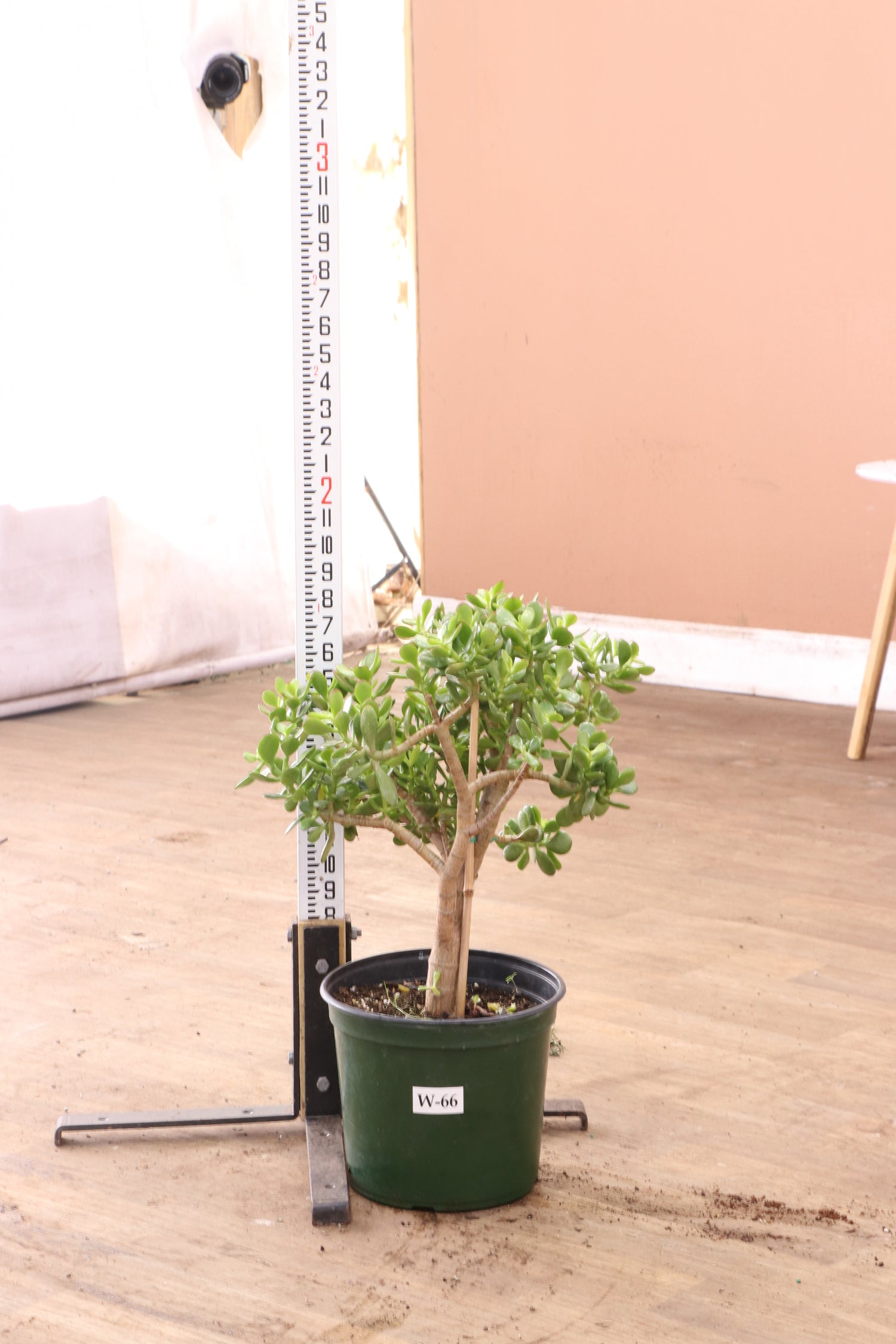
large succulent tree

large succulent tree 3-5 FT Jade Succulent Bonsai (Crassula) – Dahing Plants

Sale price$21.52 Regular price$23.91
Save 10%

Pay in installments of $5.98 with ShopPay, AfterPay and Klarna

Shipping Estimate
USA
  • USA
  • CAN

Ships within 48 hours · Estimated delivery Sep 7 - Sep 12

Promo Codes Available:

For Your Every Summer RSVP, with Code: SUMMER15

Description

large succulent tree 3-5 FT Jade Succulent Bonsai (Crassula) – Dahing PlantsDescription The jade bonsai brings a peaceful presence to any home. Its glossy leaves and THICK woody trunk give the plant a bonsai look or a mini tree look. Having a mini tree that's also a succulent? Yes please! it creates the sense of calm we all need. The jade bonsai isn't your ordinary houseplant it's a miniature masterpiece, offering wonderful company without demanding constant attention. And it grows more beautiful with time, just like your

Description

The jade bonsai brings a peaceful presence to any home. Its glossy leaves and THICK woody trunk give the plant a bonsai look or a mini tree look. Having a mini tree that's also a succulent? Yes please! it creates the sense of calm we all need.

The jade bonsai isn't your ordinary houseplant – it's a miniature masterpiece, offering wonderful company without demanding constant attention. And it grows more beautiful with time, just like your friendship over the years. It’s a forgiving little tree, perfect for new plant parents and established green fingers.


Care 

Are bonsai trees hard to maintain?

We know many people worry about bonsai care, but your jade bonsai is wonderfully understanding! Unlike more demanding varieties, it’ll forgive occasional neglect and keeps thriving even when life gets hectic. Perfect for nurturing your confidence.

Jade bonsai care is refreshingly straightforward, making it ideal for both beginners and busy plant enthusiasts. You just need to focus on three simple things: proper light, infrequent watering, and occasional pruning. We're here to guide you through each step.


How much light does a jade bonsai need?

Your jade bonsai flourishes in bright, indirect sunlight – think of it as your plant's daily vitamin D! Give your little tree 4-6 hours of bright light each day, but protect those delicate leaves from harsh direct rays.

Learning how to care for a jade plant is wonderfully simple: provide good light, water thoughtfully, and give it space to grow at its own pace. 


How often do you water a jade plant? 

Your jade plant appreciates a thoughtful watering approach. Wait until the soil feels nearly completely dry before offering a drink – usually every 2-3 weeks. It's better to underwater than overwater, as these resilient plants store water in their leaves.


Is jade bonsai good for beginners?

If you've experienced heartbreak with other plants, let the jade bonsai tree help restore your confidence! This understanding little tree tolerates learning curves and forgetfulness, making it perfect for those just starting their plant journey or wanting a fresh start.

Our small jade bonsai offers gentle encouragement as you develop your plant care skills. Behind any successful "plant person,” there might be a patient jade bonsai quietly supporting their growth. It could be the companion you need to believe in your green thumb again.


Should I mist my jade bonsai?

Your jade bonsai tree is wonderfully low-maintenance and doesn't require regular misting. While an occasional gentle mist won't harm your plant, this resilient succulent naturally thrives in drier conditions. We love how adaptable these plants are to typical home environments!


Does jade bonsai need sunlight? 

Yes, your jade bonsai needs sunlight to stay healthy and happy! These lovely trees thrive in bright conditions but appreciate protection from intense, direct rays that stress their leaves. Think of it as needing gentle warmth rather than harsh heat.

Basic jade bonsai care means providing bright indirect light and waiting until the soil dries before watering. It's a simple routine that becomes second nature, and we're always here if you need guidance along the way.


Do jade plants like deep or shallow pots?

Jade bonsai plants feel most comfortable in shallow pots with good drainage. This keeps them compact and prevents root problems that could affect their health. We want your plant to have the perfect home where it can thrive for years.


Do jade plants like to hang?

While your jade plant can adapt to hanging arrangements, these steady companions typically prefer traditional upright displays. 


How big do jade bonsai get? 

Your jade bonsai will typically reach about 1-4 feet tall when lovingly maintained, creating the perfect tabletop companion. Unlike their larger relatives that can grow up to 15 feet, these miniature beauties are perfectly sized for indoor spaces and apartments.


How do I keep my jade plant small? 

Keeping your jade plant small involves gentle, regular pruning – think of it as giving your plant a caring trim. This encourages compact growth and helps maintain that adorable bonsai form we all cherish. Your plant actually benefits from this attention!


What is the best fertilizer for jade bonsai?

Your jade bonsai appreciates gentle nutrition without overwhelming its system. A balanced, water-soluble fertilizer once monthly during the growing season provides just what it needs. We believe in supporting your plant's natural growth rhythm.


Can jade bonsai trees survive outdoor conditions?

Your jade bonsai can enjoy outdoor time in warm weather! These adaptable trees thrive outside when temperatures stay consistently between 65-95°F. Just remember to bring your plant inside before temperatures drop below 40°F to keep it safe and comfortable.

Taking your jade outside is wonderful for both of you during suitable weather. In warm climates, it will soak up the sunshine and fresh air, but always be ready to welcome it back inside when temperatures change. We want your plant to feel secure wherever it grows.


What are the best conditions for growing a jade bonsai indoors?

Your jade bonsai will thrive with bright indirect light, temperatures between 65-95°F, and soil that's allowed to dry completely between waterings. Creating these comfortable conditions helps your plant feel secure and encourages healthy growth throughout the year.

Think of your jade bonsai tree as a steady companion who appreciates consistency. Give it a shallow pot with good drainage, monthly fertilizing during growing season, and regular pruning to keep it looking its best. 


Pet-friendly?

When it comes to pet safety, we need to share some important information about your jade bonsai. True jade plants from the Crassula genus are toxic to both cats and dogs, and we want to help you keep your furry family members safe and healthy.


Are jade bonsai toxic to cats? 

Unfortunately, jade bonsai trees made from Crassula species are toxic to our feline friends. If your kitty nibbles on any part of your jade bonsai, they may experience vomiting, lethargy, or loss of coordination. Call your vet straight away. 


Are jade bonsai trees safe for dogs? 

Jade bonsai trees are toxic to your canine companions. These Crassula species can cause vomiting, stomach pain, and lethargy if ingested. Small dogs are especially vulnerable, so extra caution is needed in homes with petite pups


Factoids

Is jade bonsai the same as dwarf jade? 

Dwarf jade and regular jade are actually different plant species, each with their own special qualities! Dwarf jade (Portulacaria afra) and the jade plant (Crassula ovata) may look similar, but they're actually distinct plants with unique characteristics.


What is the significance of jade bonsai?

Your jade bonsai carries beautiful meaning beyond its appearance! These charming trees are associated with prosperity, positive energy, and good fortune. Many people give them as thoughtful gifts to share blessings with loved ones – a tradition we're honored to continue.


Do jade bonsai trees lose their leaves?

Your jade bonsai tree keeps its leaves year-round. If you notice leaf drop, it's usually your plant's gentle way of telling you something needs adjusting – perhaps watering, light, or temperature. We're here to help you understand these signals.


Do jade plants flower? 

Your jade can surprise you with blooms! With proper care, jade plants produce lovely white or pink flowers in late spring to early summer. They often come after a brief dry period – nature's way of celebrating resilience together.


How long do jade bonsai live?

With loving care, your jade bonsai can be a lifelong companion! These remarkable plants can thrive for over a hundred years, potentially becoming heirlooms passed down through generations. We think that's pretty special – a living legacy of care and connection.


How big does a jade plant get? 

Jade plant relatives can reach an impressive 10-15 feet tall! But as a cherished bonsai, yours will stay beautifully compact at about 2-4 feet, depending on your pruning care. This size makes it an ideal companion for any space.


Buy a Jade Bonsai

Are you ready to start a rewarding journey with your very own jade bonsai? Our jade bonsai trees come with all the patience and charm you need for successful plant parenthood – there’s no experience required!

Each jade bonsai tree has been carefully nurtured to bring you years of peaceful companionship. Perfect for busy families, new plant parents, or anyone seeking a gentle introduction to the world of bonsai. Let us help you find the perfect green companion today!

Shipping Notes
  • Free Standard Shipping on $100+ Orders to the USA.
  • Except Preorder products are shipped in 48 hours.
  • Delivery to the USA:
  1. Standard Shipping : 3-10 business days
  • If time is of the essence, please consider selecting expedited delivery for faster service.
Exchange/Return Notes
  • We offer a 30-day return/exchange service after receiving.
  • Final sale items are not eligible for returns or exchanges.
  • To process your return/exchange, please contact us at [email protected]
  • Please click here for more details>>> Return & Exchange Policy
SKU: 16355373161

Discover Niche Categories That Outsell large succulent tree

Top-Converting Item to Boost Your Average Order

4.6 ★★★★★
Based on 25 reviews
Sort
Highest Rating
Newest First
Oldest First
Product Reviews
C
Verified Purchase
CJ
Cuba, US
★★★★★ 4
Buy it
Format: Paperback
Just finished reading it. It’s a good, easy read.
WAS THIS REVIEW HELPFUL?YesReportShare
Reviewed in the United States on June 8, 2019
M
Verified Purchase
MW
Los Angeles, US
★★★★★ 5
Quality Book
Format: Paperback
Quality book.
WAS THIS REVIEW HELPFUL?YesReportShare
Reviewed in the United States on December 14, 2019
M
Verified Purchase
Michael Burnam-fink
Los Angeles, US
★★★★★ 5
There is a war... for your Mind!
Format: Kindle
"There is a war... for your Mind!" That's the slogan of InfoWars, the incendiary conspiracy news network and nutritional supplement marketing firm. And while Alex Jones is wrong about almost everything, he's right about that. In LikeWar Singer and Brooking ably synthesize a sophisticated picture of information warfare in 2018, drawing from sources as diverse as Taylor Swift, Donald Trump, and ISIS, to argue that the internet has lead to a blurring of lines between consumer, citizen, journalist, activist, and warrior which threatens the foundations of liberal democracy. The tech companies which built these platforms and profited from them must grapple with the politics of their technologies, before we all reap the whirlwind. Computer networks and smart phones connect billions of people, allowing ideas to flow faster than ever before in history. Sometimes, the results can be impressive. The Chiapas Zapatista movement in 1994 was a dial-up and fax version of a network insurgency that managed to bring enough international opprobrium on Mexico that the government blinked, and reached some kind of political accord (Chiapas is complicated). More recently, Eliot Higgins and a team of open source analysts at Bellingcat managed to track down the exact BUK missile system and Russian soldiers responsible for shooting down MH 17 in 2014. But there are a lot of dark sides. When people connect, the emotion that spreads most rapidly is anger. Lies spread five times faster than truth. Musicians can use social networks to directly connect with their fans, and ISIS uses it to connect with alienated Muslim youths worldwide. Social networks sort diverse citizens into filter bubbles of people who think alike. Eliot Higgin's careful open source intelligence has a paranoid fun-house mirror version in the QAnon conspiracy, where Qultist decoders find hidden messages from an alleged 'senior white house source'. And then there is the matter of information war, an area that even now, after years of offensive cyber operations, liberal democracies still don't understand. Hostile propaganda slips into Western news networks and major platforms like Twitter, Facebook, and Instagram are infested with bots. LikeWar can even take a personal toll. Over the course of writing this book, General Michael Flynn went from forward looking full-spectrum commander to head Trumpist conspiracy cheerleader to indicted and plead out felon. Flynn's fall is complex, but it can't be separated from the internet. If the trolls got him, what chance does your idiot cousin stand? The counters, 'citizen truth teams' and senior emissaries to groups vulnerable to recruitment, seem like thin reeds against the coming maelstrom of noise. LikeWar starts with Clausewitz's dictum that war is a continuation of politics by other means, and there are clear links between cyberspace and physical space. Intensity of hashtags impacted the subsequent intensity of Israeli airstrikes during attacks on the Gaza strip. ISIS used propaganda to create an aura of invincibility that outflanked the defenders of Mosul, while Russia denied that its 'little green men' were even in Ukraine. But the difference is that cyberspace is constructed space rather than natural space. The networks are built, maintained, and owned by real corporations and real people. The internet grew from an anarchic specialized scientific network to a major engine of commerce and communicate with little deliberate government oversight. Section 230 absolved American companies of responsibility for policing content, with major carve outs for copyrighted IP and pornography. Yet as concerns over cyberbullying and counter-terrorism rose, major networks adopted digital constitutions that were permissive towards speech and censorious towards erotica. Policing content is and was possible, but always took a back seat to growth and engagement, the guide stars of Silicon Valley. The future is if anything, darker. Advances in machine learning and AI allow ever more realistic bots, computer generated DeepFakes where a politician can be programmed to say anything, and personalized targeting of people with exactly the propaganda they'll believe. There are defensive counters, but if I might draw military analogies, what we saw in 2016 was armored warfare circa 1918: clearly the future, but not yet a mature system. Given the pace of technology, we only have a few years before digital blitzkrieg. I'm extremely online, and I've been following this space for years. I've presented at multiple conferences on this topic, including Governance of Emerging Technologies and Association of Internet Researchers. LikeWar is the book I wish I'd written. Cognizant, forward looking, and deeply researched, it is vital reading for anyone interested in technology or politics. My only reservation is that I wish the sources were better linked in the text, instead of being buried in static endnotes. Maybe the next edition will push an update.
WAS THIS REVIEW HELPFUL?YesReportShare
Reviewed in the United States on October 19, 2018
V
Verified Purchase
Victoria Weisfeld
Battle Creek, US
★★★★★ 5
Making Sense of the Tactics Deployed in the Social Media War
Format: Hardcover
Singer and Brooking’s book, pulls together in one place the various threads of information about cyberthreats from the last few years, weaving them into a coherent, memorable, and understandable(!) whole. All these authors provide exhaustive lists of sources. It’s incumbent on responsible people to understand the tactics of information warfare, because, “[recent Senate hearings] showed that our leaders had little grasp on the greatest existential threat to American democracy,” said Leigh Giangreco in the Washington Post. These ill-intentioned manipulators understand the human brain is hard-wired for certain reactions: to believe in conspiracy theories (“Obama isn’t an American”); to be gratified when we receive approval (“likes”!); to be drawn to views we agree with (“confirmation bias”). If we feel compelled to weigh in on some bit of propaganda or false information, social media algorithms see this attention and elevate the issue—“trending!”—so that our complaints only add to the virality of disinformation and lies. “Just as the internet has reshaped war, war is now radically reshaping the internet,” the authors say. Contrary to the optimism of the Silicon Valley entrepreneurs who saw social media as a positive, democratizing force, this new technology is being used to destructive effect at many levels of society. At a local scale, for example, it bolsters gang violence in Chicago; at a national scale, it contributed to the election of fringe politicians; at a regional scale, it facilitated the emergence of ISIS; and at an international scale, it undergirds the reemergence of repressive political movements in many countries. How to be a responsible citizen in this chaos? Like it or not, “we’re all part of this war,” the authors say, “and which side succeeds depends in large part on how much the rest of us learn to recognize this new warfare for what it is” and how ready we are for what comes next.
WAS THIS REVIEW HELPFUL?YesReportShare
Reviewed in the United States on January 14, 2019
K
Verified Purchase
Ky
Pawtucket, US
★★★★★ 4
A Must-Read for the Internet Age (Even If It’s a Little Terrifying)
Format: Kindle
If you’ve ever found yourself doomscrolling through Twitter (sorry, X—ugh), arguing with a stranger in the comments section, or wondering why that ridiculous meme is suddenly everywhere, LikeWar is the book that explains why. And let me tell you, it does so in a way that’s as entertaining as it is unnerving. P.W. Singer and Emerson T. Brooking take a deep dive into the battlefield of social media, where wars aren’t just fought with bullets but with hashtags, viral videos, and AI bots pretending to be real people (or worse, real people pretending to be bots). They connect dots between everything from military psy-ops to online disinformation campaigns, showing how social media has become the new frontline of modern warfare. The book is packed with fascinating stories—from ISIS using social media to recruit followers like an influencer pushing protein powder, to political campaigns that make you question reality itself. And while the subject matter is serious, the authors keep things engaging with sharp writing, eye-opening insights, and just enough humor to keep you from spiraling into existential dread. So why four stars instead of five? Well, while LikeWar is undeniably eye-opening, it occasionally gets a little too caught up in explaining things at length. Some sections feel a bit stretched, like that one friend who insists on telling a story with every single detail included. A tighter edit in some places might have made it even stronger. That said, this book is a must-read for anyone who wants to understand how the internet shapes the real world—whether you’re a journalist, a policymaker, or just someone trying to figure out why your uncle keeps sharing weird conspiracy theories on Facebook. It’s insightful, timely, and slightly terrifying, but in the best way possible.
WAS THIS REVIEW HELPFUL?YesReportShare
Reviewed in the United States on March 17, 2025

recommand products