SKU: 16616231639
where to buy vanilla seeds for planting

where to buy vanilla seeds for planting Vanilla Planifolia – Grow Your Own Vanilla Beans at Home

Sale price$22.02 Regular price$24.47
Save 10%

Pay in installments of $6.12 with ShopPay, AfterPay and Klarna

Shipping Estimate
USA
  • USA
  • CAN

Ships within 48 hours · Estimated delivery Oct 15 - Oct 20

Promo Codes Available:

For Your Every Summer RSVP, with Code: SUMMER15

Description

where to buy vanilla seeds for planting Vanilla Planifolia – Grow Your Own Vanilla Beans at HomeVanilla Planifolia Grow Your Own Vanilla at Home Bring the exotic and rewarding experience of growing your own vanilla beans into your home or garden with Vanilla planifolia. Known for producing the worlds most sought after vanilla, this stunning vining orchid is a must have for plant lovers and culinary enthusiasts alike. Unlike many other plants, Vanilla planifolia offers both beauty and function, gracing your space with lush, climbing vines and,

Vanilla Planifolia – Grow Your Own Vanilla at Home

Bring the exotic and rewarding experience of growing your own vanilla beans into your home or garden with Vanilla planifolia. Known for producing the world’s most sought-after vanilla, this stunning vining orchid is a must-have for plant lovers and culinary enthusiasts alike. Unlike many other plants, Vanilla planifolia offers both beauty and function, gracing your space with lush, climbing vines and, when properly cared for, fragrant vanilla beans.

What Makes Vanilla Planifolia Special?

  • The Source of Real Vanilla – If you’ve ever enjoyed vanilla ice cream or baked goods flavored with genuine vanilla extract, chances are it came from Vanilla planifolia. This plant is responsible for nearly 99% of commercial vanilla production worldwide.
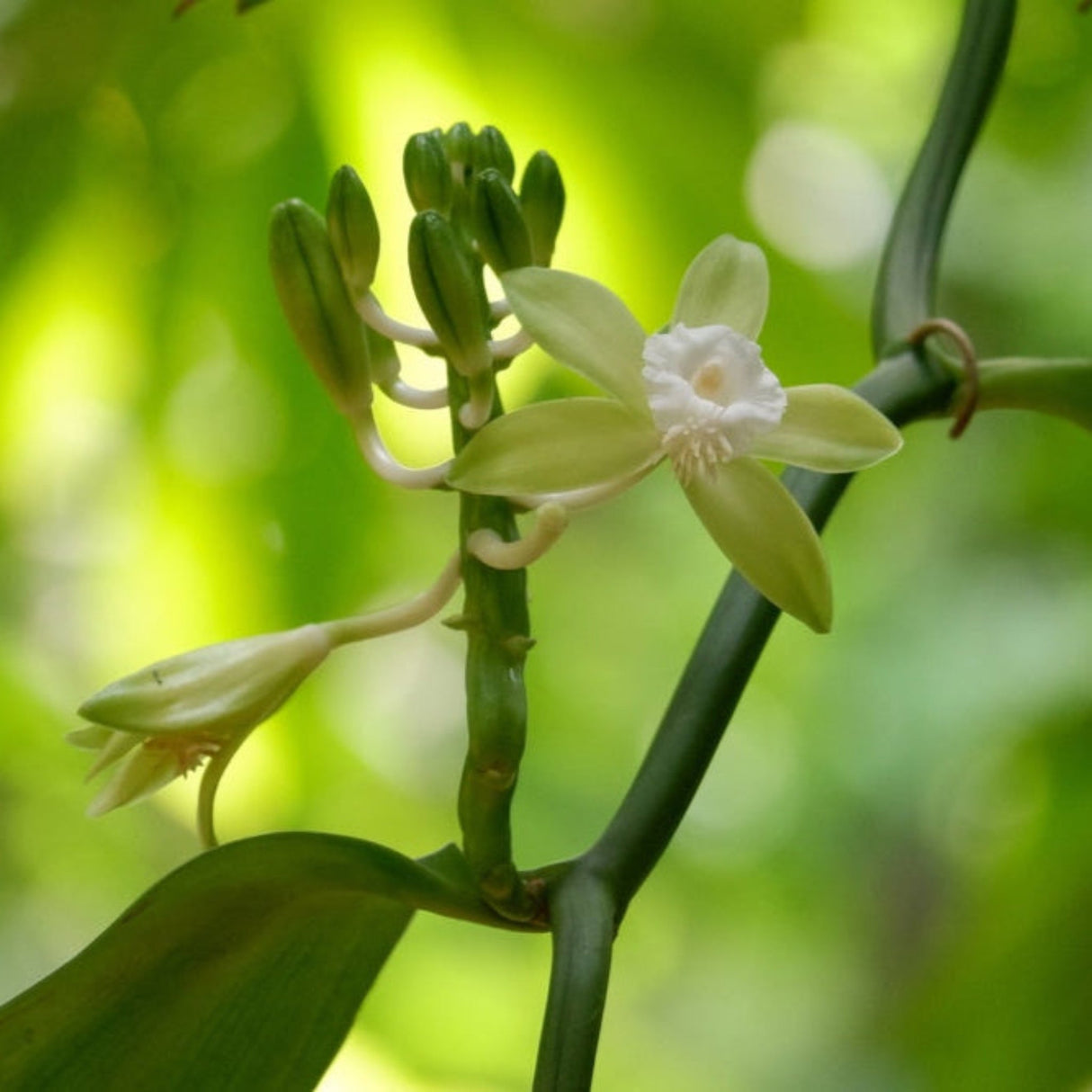
  • A Rare Flowering Orchid – As a member of the orchid family, Vanilla planifolia produces delicate, pale yellow-green flowers that bloom for just one day, adding an element of intrigue and rarity to its growth cycle.
  • Edible and Aromatic Rewards – Unlike most orchids that are purely ornamental, Vanilla planifolia produces long, slender pods filled with tiny seeds—these are the vanilla beans that, when cured and dried, yield the rich, aromatic flavor used in countless recipes.
  • A Fast-Growing Climber – This plant doesn’t just sit in a pot; it thrives when allowed to climb, making it an excellent choice for trellises, greenhouses, or large indoor spaces with vertical support.
  • Unique Growth Habit – Unlike traditional orchids, this variety grows as a vine rather than in a compact form, giving it a strikingly different appearance compared to its relatives.

Growing Vanilla Planifolia at Home

You don’t need a tropical rainforest to cultivate Vanilla planifolia—with the right conditions, you can successfully grow it in your home or garden. While it thrives in warm, humid environments, it can adapt to indoor cultivation with careful attention to its needs.

Light Requirements

  • Prefers bright, indirect light—too much direct sun can scorch its delicate leaves, but too little will slow its growth.
  • If growing indoors, place near an east or south-facing window with filtered light.
  • Can also thrive under grow lights if natural light is insufficient.

Temperature & Humidity

  • Loves warmth! Ideal temperatures range from 65°F to 85°F.
  • Humidity is key—aim for 50-70% humidity to mimic its natural tropical habitat.
  • If you live in a dry climate, consider misting the plant or using a humidity tray.

Watering & Soil

  • Keep the soil moist but not soggy—overwatering can lead to root rot, a common issue with orchids.
  • Use a well-draining, airy potting mix—orchid bark mixed with perlite and peat moss works well.
  • Water when the top inch of soil begins to dry out.

Support for Climbing

  • Vanilla planifolia needs a sturdy support structure to climb, such as a trellis, moss pole, or wooden stake.
  • Unlike some vines, it doesn’t have tendrils to attach itself, so gently secure it as it grows.

Pollination & Blooming

  • Hand-pollination is necessary if you want vanilla beans—unless you live in an area with the specific pollinators this plant relies on (such as the Melipona bee in Mexico).
  • Flowers bloom for just one day, so pollination must be done within hours of opening.
  • If successful, the flowers will develop into green vanilla pods, which take 6-9 months to fully mature before they can be harvested and cured.

Why Grow Vanilla Planifolia?

A One-of-a-Kind Houseplant

While many orchids are grown for their flowers, Vanilla planifolia offers a unique twist by providing edible rewards alongside its beautiful, trailing vines. Its ability to grow like a climbing vine sets it apart from other houseplants, making it an eye-catching feature in any collection.

A Rewarding Culinary Experience

There’s something special about making your own vanilla extract from homegrown beans. By growing Vanilla planifolia, you gain complete control over the process—from pollinating the flowers to curing the beans. The result? A richer, fresher vanilla flavor that’s unlike anything store-bought.

Low Maintenance Compared to Other Orchids

Unlike delicate orchid varieties that require strict humidity control and frequent repotting, Vanilla planifolia is more forgiving. It’s resilient, adaptable, and can thrive with basic care, making it a fantastic choice for both beginners and experienced plant lovers.

A Sustainable and Ethical Choice

Vanilla production is labor-intensive, and much of the commercially available vanilla comes from plantations where environmental and labor concerns exist. Growing your own vanilla ensures an ethical, chemical-free supply for personal use, reducing reliance on mass-produced sources.

Fun Facts About Vanilla Planifolia

  • One of the Only Edible Orchids – While many orchids have beautiful flowers, Vanilla planifolia is among the very few that produce an edible product.
  • A Slow but Worthwhile Process – Vanilla beans must be cured for several months after harvest to develop their signature aroma and flavor.
  • Originally from Mexico – Though now grown in Madagascar, Tahiti, and other tropical regions, Vanilla planifoliais native to Mexico, where the Totonac people were the first to cultivate it.
  • Vanilla is a Natural Mood Booster – The scent of vanilla has been shown to have calming effects and may even help reduce stress.

Is Vanilla Planifolia Right for You?

This plant is ideal for those who love orchids but want something beyond traditional flowering varieties. If you have a bright, humid space and are willing to provide a climbing structure, Vanilla planifolia will reward you with stunning vines and the potential to produce your very own vanilla beans. Whether you’re an orchid collector, a foodie, or someone looking for an exciting plant challenge, Vanilla planifolia is a fantastic choice!


Add this incredible vanilla orchid to your collection today and start your journey toward growing and harvesting your very own homegrown vanilla beans!

Shipping Notes
  • Free Standard Shipping on $100+ Orders to the USA.
  • Except Preorder products are shipped in 48 hours.
  • Delivery to the USA:
  1. Standard Shipping : 3-10 business days
  • If time is of the essence, please consider selecting expedited delivery for faster service.
Exchange/Return Notes
  • We offer a 30-day return/exchange service after receiving.
  • Final sale items are not eligible for returns or exchanges.
  • To process your return/exchange, please contact us at [email protected]
  • Please click here for more details>>> Return & Exchange Policy
SKU: 16616231639

Discover Niche Categories That Outsell where to buy vanilla seeds for planting

Top-Converting Item to Boost Your Average Order

4.3 ★★★★★
Based on 7 reviews
Sort
Highest Rating
Newest First
Oldest First
Product Reviews
B
Verified Purchase
Booksalottle
Alexandria, US
★★★★★ 4
Nothing Exceptional but Gets the Job Done
Color: Blue, Size: 4.3-Quart, Color: Blue, Size: 4.3-Quart
I’ve owned this 4.5 Qt. Amazon Enameled Cast Iron Dutch Oven for almost two months and have used it three times to date. Upon arrival and at first glance, the gradient blue color is beautiful and super glossy; most importantly, the pot is heavy for its size - as it should be. It looks exactly like the product pictures, with a globular shape than square shape as others. Unfortunately, I also noticed that there was one pin hole and two tiny uneven protrusions on the enamel inside the pot. I own three other enameled cast iron cookware from two other brands (photos attached for size comparison) and performance wise, this cast iron by Amazon performs equally to them. The pot isn’t exceptional or special but it gets the job done. Other than the pin holes and protrusions, I have no complaints. This isn’t my first rodeo so when heating up the pot and while cooking, I have zero issues. I am starting the pan off at 4-Stars and will update my review as time progresses, or if I have any major issues with its durability or performance in subsequent months. For the amateur home cook, or for anyone who is new to cast iron cooking, below I’ve included tips that you may find useful while using this or any other enameled cast iron cookware. ================================ Regarding the 3 Photos and 1 video I've Attached: (Note: all photos were taken with an iPhone under kitchen lights during the evening. Photos have not been edited nor enhanced.) Photo 1: Size comparison of this Amazon Enameled Cast Iron Dutch Oven compared to three other enameled cast iron cookware that I own from two other brands. From left to right: 7 qt. Tramontina, 4.5 qt. Amazon, 3 qt. Lodge 4 qt. Tramontina. Photos 2 and 3: fresh produce shown next to 4.5qt Amazon Dutch Oven for color and size contrast. Video: 4.5 qt. Amazon Enameled Cast Iron Dutch Oven on gas stove over medium heat, with food cooking. ================================ TIPS THAT YOU MAY FIND USEFUL While Using your cast iron dutch oven: (Note: I included these similar tips in my review of a different enameled cast iron pot from a different brand. My tips can apply to all enameled cast iron cookware) 1. If you find that you have issues with food sticking, it could be that you are not heating up your cast iron pot properly to prevent undue hot spots. I heat my pot up gradually starting at low, then medium, then high heat. After my pot is very hot is when I add my fat/cooking oil. As the oil is heating up in the pot, I lift it and swirl the oil around to coat all sides of the pot that will come in contact with food. 2. Take into consideration the temperature of the items you are adding to your heated pot. As a general rule for cooking: when ever possible, ensure that the items you are adding to a hot pot are at room temperature, rather than ice cold from the fridge; this will assist with even cooking. 3. Also, get comfortable with adjusting your heat by lowering and raising it based on what you’ve added to the pot. In general, you will need more heat at the beginning of the cooking process, and less heat towards the end. If you cook by recipe, I highly recommend that you read all the steps ahead before starting, so that you become familiarized with all the procedures, allowing you to maneuver accordingly when you start cooking. 4. At the exception of searing meat to achieve a brown crust, deep frying, or when caramelizing onions, you should be stirring your pot (I recommend using a wooden spoon) every few minutes when cooking in cast iron that is placed over high heat. If you are braising on the stove at low heat versus braising in the oven, the frequency of your stirring will need to be adjusted. No matter how you’re cooking though, a watchful eye on the pot plus stirring, should both be a habit not an afterthought. 5. For all cooking vessels in general but especially for cast iron: after cooking, allow your pot to cool down completely before cleaning. NEVER immerse a hot cast iron pot into cold water, nor pour cold dish water into hot pot. You risk not only being scald by dangerous steam, but you also risk weakening the enamel, therefore lessening the durability of your pots over time. 6. This cookware and others like it from Tramontina and Lodge are economical and if used correctly, will perform well for most cooking; if used correctly, they should also last for years. Nonetheless, if you can afford it, authentic enameled cast iron cookware made in France by Le Creuset is the best way to go. Le Creuset is the gold standard in cast iron cookware and their quality is second to none. I definitely recommend this Amazon dutch oven but if you can afford to splurge, Le Creuset's reputation is stellar. As a professional chef, I've used them in high end kitchens and their quality and performance is premier.
WAS THIS REVIEW HELPFUL?YesReportShare
Reviewed in the United States on July 2, 2018
N
Verified Purchase
Nicholas Wilson
Carnegie, US
★★★★★ 5
Nice BIG enameled cast iron dutch oven. like LeCreuset but costs less
Color: Blue, Size: 6-Quart
This is nice quality, similar to the far more costly French LeCreuset brand. I was surprised how big this model is, possibly too big for my small kitchen and limited storage space. I store it in the oven. It would be great for baking sourdough boule bread.
WAS THIS REVIEW HELPFUL?YesReportShare
Reviewed in the United States on May 13, 2026
J
Verified Purchase
JoiceMaynard
Port Orchard, US
★★★★★ 5
Enamel finish
Color: Matte Navy, Size: 6-Quart
This is an amazing pot, got the 6 Qt for beautiful roast dinners and for baking bread. All comes out evenly baked. Cast Iron is best and it has a nice finish for easy clean up.
WAS THIS REVIEW HELPFUL?YesReportShare
Reviewed in the United States on April 24, 2026
T
Verified Purchase
T. J. MCNEILL
Belleville, US
★★★★★ 5
Great Cookware Best purchase
Color: Blue, Size: 6-Quart
I purchased mine back in 2021 and I absolutely love it, cooks the best stew ever easy wash and cleanup. Also great for deep frying
WAS THIS REVIEW HELPFUL?YesReportShare
Reviewed in the United States on June 6, 2026
F
Verified Purchase
Firebabe
Carnegie, US
★★★★★ 5
Great quality. Easy to clean. Nice appearance.
Color: Red, Size: 4.3-Quart
Solid, heavy pot for cooking and baking. I bought it mainly for making soups, stews and breads. I have only tried soups thus far. The pot cleaned up very easily. The bottom of the pot heated uniformly. Nothing was stuck to the pot when I was simmering on the glass top stove. I have not had the chance to bake yet, but seeing how evenly it held heat while cooking, I am thinking this will be perfect. I bought the red color. It gives a nice pop of color in my kitchen. This pot will probably last me a long time. I would buy one if I needed a replacement, or a gift for someone.
WAS THIS REVIEW HELPFUL?YesReportShare
Reviewed in the United States on November 29, 2025

recommand products