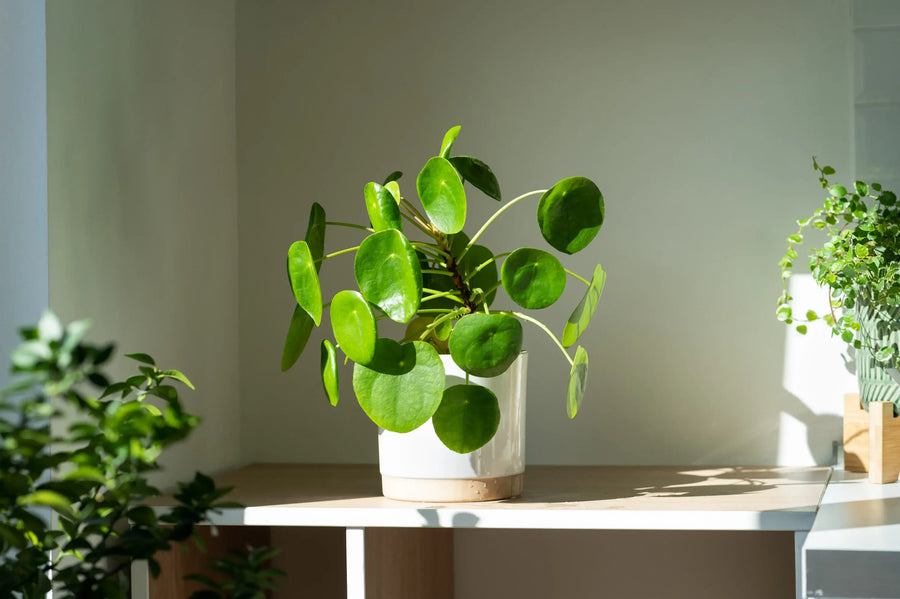
SKU: 16782425414
anthurium plowmannii

anthurium plowmannii Anthurium plowmanii – Ruffled Bird's Nest Anthurium

Sale price$20.20 Regular price$22.45
Save 10%

Pay in installments of $5.61 with ShopPay, AfterPay and Klarna

Shipping Estimate
USA
  • USA
  • CAN

Ships within 48 hours · Estimated delivery Sep 10 - Sep 15

Promo Codes Available:

For Your Every Summer RSVP, with Code: SUMMER15

Description

anthurium plowmannii Anthurium plowmanii – Ruffled Bird's Nest AnthuriumAnthurium plowmanii Anthurium plowmanii is a large, broad leaved Anthurium with a birds nest style habit and leathery green foliage. It forms a spreading rosette of substantial leaves from a compact centre. This species is native from Peru to Brazil, Mato Grosso do Sul and Paraguay, where it grows as an epiphyte or lithophyte in seasonally dry tropical biome. Its root zone needs warmth and a chunky substrate that can approach lightly dry at the upper

Anthurium plowmanii

Anthurium plowmanii is a large, broad-leaved Anthurium with a bird’s-nest-style habit and leathery green foliage. It forms a spreading rosette of substantial leaves from a compact centre.

This species is native from Peru to Brazil, Mato Grosso do Sul and Paraguay, where it grows as an epiphyte or lithophyte in seasonally dry tropical biome. Its root zone needs warmth and a chunky substrate that can approach lightly dry at the upper layer between thorough waterings.

Broad rosette leaves and airy roots

  • Leaf shape: Leaves are broad, leathery and elliptic to obovate, with a firm surface and a substantial petiole.
  • Growth habit: The plant develops as a short-stemmed rosette with broad leaves arranged from a compact centre.
  • Root style: Epiphytic and lithophytic growth suits coarse substrate that drains quickly after watering.
  • Origin: The species is native from Peru to Brazil, Mato Grosso do Sul and Paraguay.
  • Substrate preference: A bark-rich, chunky mix keeps the pot from staying dense and wet after watering.
  • Pot balance: Mature leaves can make the plant top-heavy, so a stable pot is important.

Rosette development and pot balance

The broad leaves of Anthurium plowmanii rise from a compact centre, creating the rounded form often associated with bird’s-nest Anthuriums. The foliage is thick enough to handle brief drying at the upper substrate layer, while the root zone still needs a loose, airy structure that drains well after each watering.

Because the plant carries large leaves on firm petioles, pot stability matters more than tight root confinement. A heavy nursery pot or decorative outer pot can keep the rosette upright, especially as new leaves increase the plant’s spread.

Root-zone care for Anthurium plowmanii

  • Substrate: Use a chunky aroid mix with bark, coarse fibre and mineral drainage material.
  • Watering: Water thoroughly, then let the upper part of the mix approach lightly dry before watering again.
  • Pot balance: Use a stable pot as the rosette widens and the firm petioles carry more weight.
  • Light: Place it in bright filtered light. Hot direct sun can scorch broad leaf surfaces.
  • Crown care: Keep stale water from collecting in the centre of the rosette, especially during cooler periods.
  • Temperature: Keep it warm. Cold, wet substrate around thick roots can lead to decline.
  • Humidity: Average to moderately high humidity keeps new leaves expanding smoothly, especially in warm conditions.
  • Feeding: Feed lightly at low strength during active growth.

Troubleshooting Anthurium plowmanii

  • Yellow lower leaves: Persistent wetness in an ageing mix can reduce root oxygen and trigger yellowing.
  • Brown margins: Check for hard drying, salt build-up, hot sun or irregular watering.
  • Crown stress: Water sitting in the rosette during cool conditions can damage young tissue.
  • Unstable growth: A top-heavy rosette may wobble if the pot is too light or the root ball is disturbed.
  • Pests: Inspect the base of the rosette, leaf undersides and petiole junctions for scale, thrips and mealybugs.

Safety around pets and children

Anthurium plowmanii should be kept away from pets and children. Its tissues contain insoluble calcium oxalate crystals that can cause irritation if chewed or swallowed. Wear gloves if your skin reacts to aroid sap.

Name and species background

Anthurium plowmanii is an accepted Anthurium species described by Thomas B. Croat and published in 1987. It was named for botanist Timothy Plowman. The species combines a broad rosette with epiphytic or lithophytic root behaviour and a seasonally dry tropical range.

Over time, Anthurium plowmanii builds a broad rosette of firm green leaves carried from a compact central crown.

Shipping Notes
  • Free Standard Shipping on $100+ Orders to the USA.
  • Except Preorder products are shipped in 48 hours.
  • Delivery to the USA:
  1. Standard Shipping : 3-10 business days
  • If time is of the essence, please consider selecting expedited delivery for faster service.
Exchange/Return Notes
  • We offer a 30-day return/exchange service after receiving.
  • Final sale items are not eligible for returns or exchanges.
  • To process your return/exchange, please contact us at [email protected]
  • Please click here for more details>>> Return & Exchange Policy
SKU: 16782425414

Discover Niche Categories That Outsell anthurium plowmannii

Top-Converting Item to Boost Your Average Order

4.9 ★★★★★
Based on 5 reviews
Sort
Highest Rating
Newest First
Oldest First
Product Reviews
S
Verified Purchase
SHOUKET FAREED
Natrona Heights, US
★★★★★ 5
Very good knowledge
Format: Paperback
Details about the subject
WAS THIS REVIEW HELPFUL?YesReportShare
Reviewed in the United States on August 31, 2023
C
C. C Chin
Port Orchard, US
★★★★★ 5
Great ex294 exam book
Format: Paperback
Got his Rhel 8, Kindle Rhel 9, need background check 5,6 for Ansible playbook add users to Rhel sever project.. Perfect for review, also build Rhel sandbox using Oracle virtual Box to simulate sandbox.. His exams are a nice touch each task refers back to chapters so you can really learn. Chapter one is build Rhel 9 sandbox to practice the chapters for the real exam. If you want to take ex294, or most Redhat exams, they are pbq, performance based questions, so you have no choice but to practice.. Guess for me chap 1, Rhel 9 lab sand box and ch 5,6 adding users and practice adding users!! Then start doing Redhat Ansible playbook to add users!!
WAS THIS REVIEW HELPFUL?YesReportShare
Reviewed in the United States on February 27, 2025
M
Verified Purchase
Marc Jenkins
Massapequa, US
★★★★★ 4
Good book minus Containers chapter.
Format: Paperback
Great book with useful information. However, I gave it 4 starts due to the "Containers" chapter. Very poorly written chapter. In fact, if you get this book, just ignore the container chapter as it will only waste your time and can be better spent using other sources.
WAS THIS REVIEW HELPFUL?YesReportShare
Reviewed in the United States on May 6, 2025
J
Verified Purchase
Jean P.
Port Orchard, US
★★★★★ 4
Portable format
Format: Paperback
It is a good book , the only inconvenient some links provided did not work and it doesn’t have a portable format available online
WAS THIS REVIEW HELPFUL?YesReportShare
Reviewed in the United States on April 9, 2025
T
tommy the runion
Massapequa, US
★★★★★ 4
Good book that will help with your RHCSA, But...
Format: Kindle
...watch out for typos and problems with some of the explanations in some parts of the book. I bought this book (kindle version) and used it to pass the RHCSA. The book is clearly tailored for the RHCSA and to be fair does live up to that reputation. There are a lot of exercises and examples that clearly outline what the author is trying to convey. Examples are clear to understand and if you do the exercises yourself, then you are well on your way to passing the RHCSA. However, there are a lot of typos big and small and I did send them to the author with the assumption that it would benefit others with the corrections (especially the kindle version). The author was responsive at the beginning acknowledging the errors. I did not check whether they have been fixed or not. I just went through the content after making note of the typos and with the understanding that he would fix it. The topics are well covered and explained. Three topics that could have been better covered are SELinux, AutoFS and Containers. The explanation uses excessive word-o-logy that leaves somebody new to SELinux with tons of confusion and more questions. I used youtube resources to prep myself on the how and why (Ed Walsh on a youtube channel clearly explains the need for SELinux - I have not seen a better explanation than Ed's anywhere else). The author's coverage of AutoFS is again excessive word-o-logy that is a confusing mess. The examples are fine, but the explanation uses confusing rhetoric that can leave you messed up with NFS and AutoFS setup. I read explanations on direct and indirect mappings and watched a couple of youtube videos before I understood what the author was trying to convey. I pointed out both of these to the author. The container chapter is missing explanations or examples that the reader is well advised to take note. DIY labs 22-3 and 22-4 relate to rootless containers and therefore has to be launched as a regular user. Both labs require that you launch rootless, persistent data containers with folders under /. However, the author does not mention in any of his examples that this type of container requires you to "chown" the folders under root to belong to the user. If you launch a rootless container with this setup as a regular user without "chown"ing, (even with full DAC permissions for everybody) then SELinux does not want to apply the correct context type (container_t to the shared folder). For both these DIYs, if you make a folder anywhere other than areas that a regular user can write or has access, then you will need to "chown" it to the user before launching the rootless container, otherwise this has to be launched as a root container not rootless. I pointed this out to the author. I did not hear from him. Further, container questions (20,21,22) in mock exam #3 has user60 with a NFS mounted home folder. The questions relate to launching rootless containers as user60 with a NFS mounted home folder. SELinux barfs when it encounters the home folder with a type context as "nfs_t" for user60. It suggests workarounds that did not work for me. I googled it and the latest versions of podman seem to have some fix for the errors associated with a home folder on a NFS server. I tried to research this issue further but had an exam scheduled within days. Therefore, I requested the author for clarification/help. Here again, I did not hear from him. Luckily, I did not have to work on any such scenarios on the real test. Still, the book is a good reference to the topics on the test and is pretty useful. Although I had to refer to other resources for some chapters, the examples and mock exams are very good.
WAS THIS REVIEW HELPFUL?YesReportShare
Reviewed in the United States on June 12, 2023

recommand products