SKU: 17255742315
areca palm houseplant uk

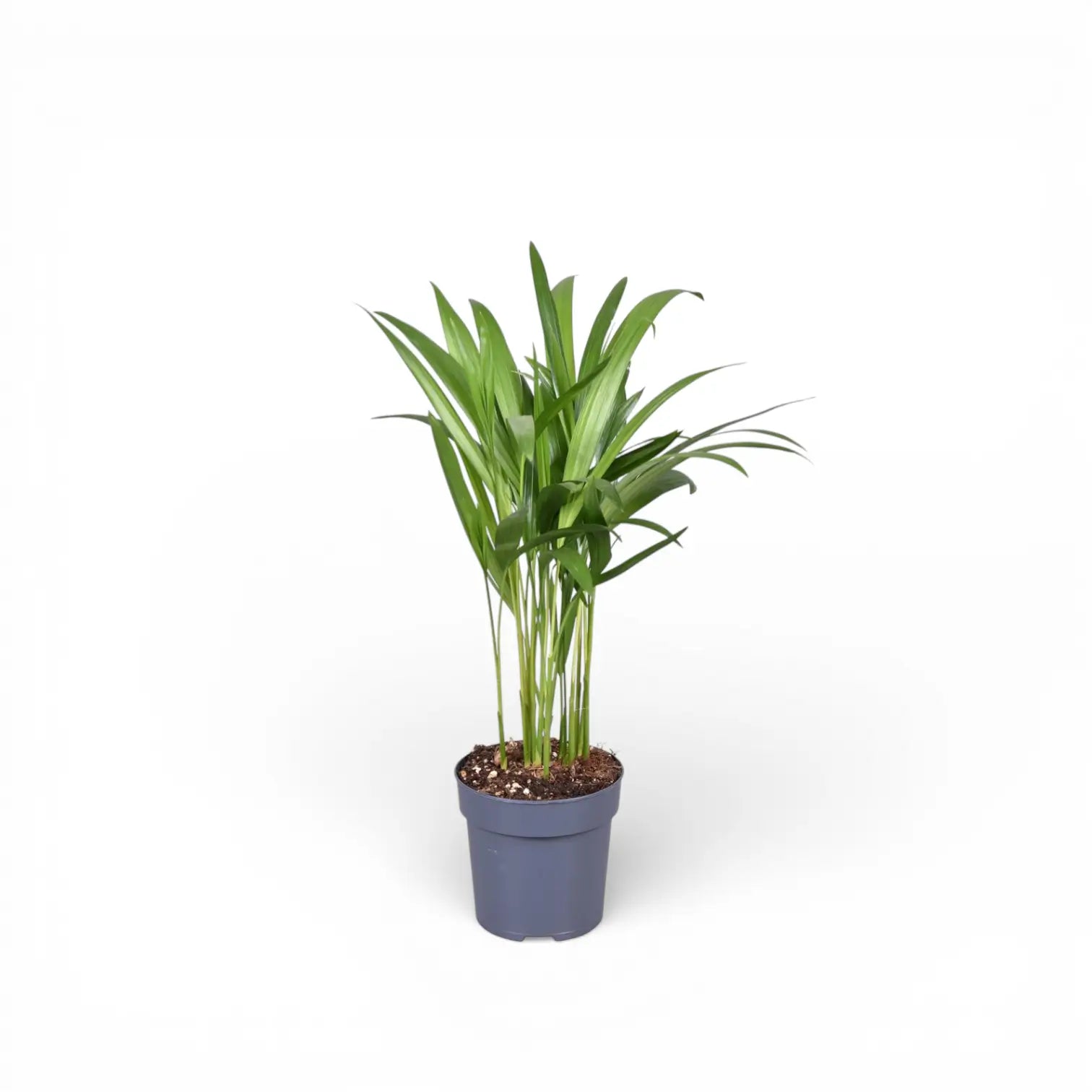
areca palm houseplant uk Chrysalidocarpus lutescens

Sale price$26.77 Regular price$29.74
Save 10%

Pay in installments of $7.43 with ShopPay, AfterPay and Klarna

Shipping Estimate
USA
  • USA
  • CAN

Ships within 48 hours · Estimated delivery Jul 25 - Jul 30

Promo Codes Available:

For Your Every Summer RSVP, with Code: SUMMER15

Description

areca palm houseplant uk Chrysalidocarpus lutescensChrysalidocarpus lutescens Chrysalidocarpus lutescens, still widely known under the synonym Dypsis lutescens, is a clustering palm with upright cane like stems and long, arching feather leaves. Several stems rise from the base, creating a soft, fountain shaped crown with yellow green petioles and narrow leaflets arranged along each frond. Indoors, this palm develops slowly into a broad, leafy specimen with a layered vertical outline. As the stems

Chrysalidocarpus lutescens

Chrysalidocarpus lutescens, still widely known under the synonym Dypsis lutescens, is a clustering palm with upright cane-like stems and long, arching feather leaves. Several stems rise from the base, creating a soft, fountain-shaped crown with yellow-green petioles and narrow leaflets arranged along each frond.

Indoors, this palm develops slowly into a broad, leafy specimen with a layered vertical outline. As the stems mature, they become more defined, while the fronds keep the crown airy, layered, and finely textured.

Golden cane palm details

  • Golden cane palm forming grouped yellow-green stems
  • Arching pinnate fronds with many narrow green leaflets
  • Yellow-green leaf stalks and midribs give the plant its warm tone
  • Can form a sizeable indoor floor plant over time
  • Rarely flowers indoors; mature outdoor plants may produce yellow flowers and small fruits

Eastern Madagascar origin and clumping growth

Chrysalidocarpus lutescens is native to Madagascar and belongs to the palm family, Arecaceae. In habitat and tropical cultivation it can grow as a shrub-like or tree-like palm, with multiple stems forming a broad clump. Indoors, its final shape depends on light, root space, and steady watering.

Each stem grows from a central crown. Fully brown fronds can be removed at the base, while green fronds should stay in place so the palm retains enough leaf area for new fronds. New fronds emerge from the growing points and gradually open into the palm’s feathered canopy.

Because this palm forms a clump, uneven growth is normal: some canes may sit lower while newer stems fill the centre. Turn the pot occasionally so the crown develops evenly, and keep the leaf bases open enough for inspection because pests often settle where the fronds meet the stems.

Keeping Chrysalidocarpus lutescens evenly leafy

  • Light: Use a bright, indirect position. Gentle morning or late afternoon sun suits acclimated plants, while strong midday sun behind glass can scorch fronds.
  • Watering: Keep the substrate evenly lightly moist during active growth, then let the upper layer dry before watering again. Avoid cold, saturated soil.
  • Substrate: Use an airy, well-drained palm or houseplant mix with mineral drainage material to keep the root zone open.
  • Temperature: Keep the palm warm, ideally above 18 °C, and avoid cold draughts or temperatures below about 15 °C.
  • Humidity: Average to moderate indoor humidity is workable, although very dry heated air can crisp leaflet tips. Use a humidifier where winter air becomes persistently dry.
  • Feeding: Use a low-strength fertiliser in spring and summer. Too much feed can show as yellowing or salt stress on leaflet tips.
  • Repotting: Move up one pot size when roots have filled the container, often after 2–3 years. Avoid oversized pots that keep the mix wet for too long.
  • Pruning: Remove only fully spent fronds. Cutting green fronds reduces the palm’s active leaf area.
  • Leaf cleaning: Wipe dusty leaflets gently or rinse the fronds with lukewarm water so the narrow leaflets can receive light evenly.

Frond, cane and pest checks

  • Brown tips: Often linked to dry air, irregular watering, salt build-up, or old leaf age. Check moisture pattern and flush the substrate if fertiliser salts have built up.
  • Yellowing fronds: Can follow overwatering, poor drainage, low light, nutrient imbalance, or natural ageing of older leaves. Check the root zone before feeding.
  • Mites or scale insects: Fine stippling, webbing, sticky residue, or bumps on stems and leaf bases need early inspection and treatment.
  • Collapsed stems: Soft bases usually point to root or crown stress from persistently wet, cool conditions.

Pet-safe palm status

ASPCA treats the areca palm, Chrysalidocarpus lutescens, as non-toxic to cats and dogs. Sensitive pets may still get mild stomach upset from chewing the fronds.

Accepted name and synonym note

Chrysalidocarpus lutescens H.Wendl. is the accepted botanical name for this Arecaceae species. Dypsis lutescens remains a common synonym in horticulture. The genus name refers to chrysalis-like fruits, while lutescens means turning yellow, matching the yellow tones in the flowers, stems, and leaflet midribs.

Chrysalidocarpus lutescens grows into golden cane clusters with airy fronds and a full upright palm outline.

Shipping Notes
  • Free Standard Shipping on $100+ Orders to the USA.
  • Except Preorder products are shipped in 48 hours.
  • Delivery to the USA:
  1. Standard Shipping : 3-10 business days
  • If time is of the essence, please consider selecting expedited delivery for faster service.
Exchange/Return Notes
  • We offer a 30-day return/exchange service after receiving.
  • Final sale items are not eligible for returns or exchanges.
  • To process your return/exchange, please contact us at [email protected]
  • Please click here for more details>>> Return & Exchange Policy
SKU: 17255742315

Discover Niche Categories That Outsell areca palm houseplant uk

Top-Converting Item to Boost Your Average Order

4.8 ★★★★★
Based on 17 reviews
Sort
Highest Rating
Newest First
Oldest First
Product Reviews
L
Verified Purchase
Lovechunk
Boise, US
★★★★★ 5
The Best Gift Ever!
Denomination: 0, Design Name: You're the best. (Animated)
Easy Peasy! Who doesn't like to get an Amazon eGift Card!
WAS THIS REVIEW HELPFUL?YesReportShare
Reviewed in the United States on May 17, 2026
T
Verified Purchase
Tim M.
Chelsea, US
★★★★★ 5
Great gift idea!
Denomination: 0, Design Name: You're the best. (Animated)
Always a great gift for anyone and easy to purchase and redeem.
WAS THIS REVIEW HELPFUL?YesReportShare
Reviewed in the United States on May 12, 2026
M
Verified Purchase
Madison
Los Angeles, US
★★★★★ 5
Quick delivery, Naturally a great and easy gift.
Denomination: 0, Design Name: You're the best. (Animated)
Always a great way to say thank you.
WAS THIS REVIEW HELPFUL?YesReportShare
Reviewed in the United States on June 6, 2026
P
Verified Purchase
Paul Frandano
Bozeman, US
★★★★★ 5
A Dyadic Review: Baffling, Brilliant
Difficult. Rewarding. Serious. Hilarious. Wise. Faux-wise. Scholarly. Mock-scholarly. Observant. Absurdly, obsessively observant. Sharp characterizations. Ridiculous characters. Devout. Bawdy. Endearing. Frustrating. Genius. Barking mad. Narratively incoherent. Stream-of-consciousness associative. Consistently provincial. Profoundly universal. Mired in the 18th century. Harbinger of 20th century literary Modernism. Baffling. Brilliant Not for every taste. For my taste. And while I'm at it, let me give a shout-out for the out-of-print Norton critical edition, which provides many helps, essay avenues of understanding, and a clever chapter summary/table of contents. For so many years - since reading Moby Dick in grad school with the help of a Norton critical - this publication line has been my go-to for great texts: useful annotations, contemporary reviews, later scholarly articles, and more. And also let me give a shout-out to Anton Lesser, who narrated the complete novel for Naxos. I have never, ever experienced an audiobook as masterfully produced and narrated as Naxos' Tristram Shandy. No, it is simply not a book one can listen to and fully comprehend as heard. But one might read while listening, or listen while reading, with - if you have the riight software - the narration sped up closer to one's own reading speed, and experience the full majesty of Lesser's absolute preparation, with Latin, Greek, French, and German - as well as regional English - beautifully and humorously intoned, character voices carefully differentiated, tone and mood captured, etc. Or, as I do, go for a walk and listen as you walk, and afterward slip into a comfy chair, crack the novel open, and continue from where you left off, or backtrack if necessary to sort out the characters. In any event, and particularly for devotees of audio books, do find Anton Lesser's note-perfect reading, a veritable radio serial, perhaps the last book you'd expect anyone to attempt single-handedly, with My Father, My Uncle Toby, Corporal Trim, Parson Yorick, Doctor Slop, Widow Wadman, and all the rest of the supporting characters beautifully, consistently interpreted. Lesser is, in a galaxy of fine narrators, the greatest I've heard: an absolutely peerless voice actor in a most demanding work.
WAS THIS REVIEW HELPFUL?YesReportShare
Reviewed in the United States on June 13, 2016
R
Verified Purchase
Ritesh Laud
West Palm Beach, US
★★★★★ 5
Brilliant stream of consciousness style, *extremely* humorous
"The Life and Opinions..." is perhaps impossible to really classify. It purports to be a biography of the fictional Tristram Shandy, but I don't think you can call something a biography when it only covers a year or so of the subject's life! I would say that more than half of the novel actually falls into the "Opinions" referred to in the title. The rest consists of short stories on Tristram's father, uncle, and a couple other minor characters. I have never in my life read so many digressions from the topic at hand, most of which were utterly irrelevant but the charm of it is that Sterne *knows* they're irrelevant, but mockingly expresses his license of authorship in forcing the reader to go off on these sidetracks. His attitude is: "If you can't wait a chapter or two to get back to the story, well, go take a flying leap, I'm the author." Sometimes the digressions are exasperating. Very unlike Victor Hugo's signature habit of digressing, say when a certain main character in Notre Dame decides to enter the Paris sewers, Hugo takes thirty or more pages to give a history of the design and construction of the Paris sewer system. At least Hugo's digressions have *something* to do with the story. Well, maybe that's the problem. There isn't a main story in this novel. It's not a storybook. There are many short stories nested within the main framework, but there is no real protagonist or overarching theme of any sort. Indeed, the end comes abruptly and there is absolutely no resolution of any conflict. It's not trying to teach anything, really. So what is it? I'm not sure. More a comedy than anything else. Right up there with Dickens' "Pickwick Papers" in terms of humor, but lacking the story. Maybe funnier than Dickens and just as clever. I was rolling in the aisles so many times I lost count. I read the Penguin edition, edited by Melvyn & Joan New. The back cover does a better job than I could ever do in providing a sense of what you're getting into when you pick this one up: "No one description will fit this strange, eccentric, endlessly complex masterpiece. It is a fiction about fiction-writing in which the invented world is as much infused with wit and genius as the theme of inventing it. It is a joyful celebration of the infinite possibilities of the art of fiction, and a wry demonstration of its limitations." It's a large work, it will take a while to work through. It's worth it. There are passages I want to go back to and make copies of to tape to the walls, they're that brilliant.
WAS THIS REVIEW HELPFUL?YesReportShare
Reviewed in the United States on July 31, 2005

recommand products