SKU: 17901456661
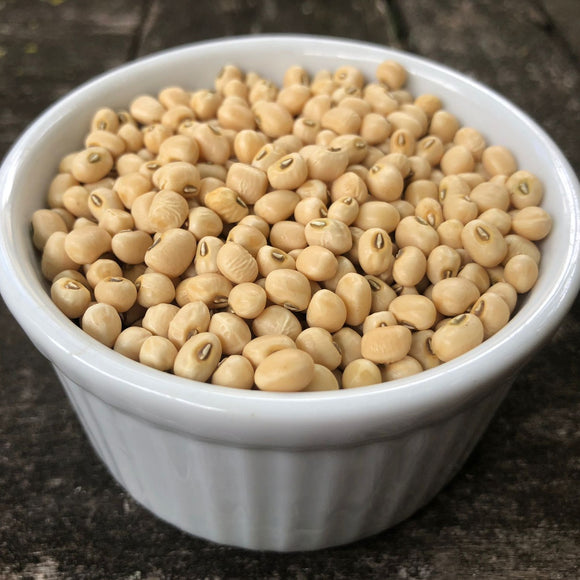
white rice seeds for planting

white rice seeds for planting Rice Pea – Truelove Seeds

Sale price$24.68 Regular price$27.42
Save 10%

Pay in installments of $6.86 with ShopPay, AfterPay and Klarna

Shipping Estimate
USA
  • USA
  • CAN

Ships within 48 hours · Estimated delivery Sep 13 - Sep 18

Promo Codes Available:

For Your Every Summer RSVP, with Code: SUMMER15

Description

white rice seeds for planting Rice Pea – Truelove SeedsRice Peas are a Gullah Geechee variety of lady pea used in coastal Carolina Hoppin' John and Reezy Peezy alongside Carolina Gold Rice. CheFarmer Matthew Raiford of Gilliard Farms sent these seeds to us from his ancestral farmland in Georgia, and he likes to use them in hummus, succotash, and blended with other beans: they have a good, fine flavor and arent as earthy as other peas. See the article at the bottom of this page by David Shields to learn

Rice Peas are a Gullah Geechee variety of lady pea used in coastal Carolina Hoppin' John and Reezy Peezy alongside Carolina Gold Rice. CheFarmer Matthew Raiford of Gilliard Farms sent these seeds to us from his ancestral farmland in Georgia, and he likes to use them in hummus, succotash, and blended with other beans: they have a good, fine flavor and aren’t as earthy as other peas. See the article at the bottom of this page by David Shields to learn lots more about this Rice Pea.

Days to maturity: 90

Seeds per pack: 40

Germination rate: 95% on 04/17/2026

Planting / harvesting notes

Direct sow southern peas safely after frost, any time between late May and mid-July. This is a climbing vine crop, so it benefits from being planted next to a structure or trellis. Plant 1" deep with 3-4" spacing, either in 1 row on each side of the net trellis. Being a legume, it does fairly well in poor soil and adds nitrogen.

Seed keeping notes

Southern peas are self-pollinating, though it is best to isolate different varieties of V. unguiculata (including black-eyed peas, southern peas, cowpeas, and long beans) at least 20 feet, if not much farther to avoid unwanted cross-pollination. Allow beans to dry fully into a brown crispy state. This is when they are ready to harvest for seed. If necessary, lay them out to dry a little longer in their pods.

Rice Pea, by David Shields

The following descriptions and historical records of this pea were published here by David Shields, who is known throughout the American South as the "Flavor Saver." He is Chairman of the Board of the Carolina Gold Rice Foundation, holds the Carolina Distinguished Professorship at the University of South Carolina, and chairs Slow Food's Ark of Taste Committee for the American South.

One of that class of white pea called "lady peas", the rice pea for a century and a half has been reputed to be unexcelled in flavor. From the 1896 North Carolina Experimental Station Bulletin: "The table quality of this pea is considered superior to that of any other of the cowpea family" (342). Esteemed for its delicacy, its creamy texture, and its way of harmonizing with other flavors, the rice pea early attracted the attention of cooking professionals. From the Boston Cooking School Magazine 1914: "There is a field pea called the rice pea, grown extensively in southern states, which is white, eye and all, with a slightly creamy tint, and it is even more delicate of flavor than the black-eyed peas; these are as delicate as early June peas, and they retain their natural color when cooked, and do not change the color of meat cooked with them. Perhaps the reason rice peas are not grown more generally is that they are not as hardy as black-eyed peas and other field peas. These delicately flavored rice peas, cooked with tender young pork, are far and away more appetizing than pork and beans, and almost or quite as nutritious. They are good, either cooked after they have become dry in the autumn and winter, or when young and tender in the late Spring and early Summer. Southern ladies often cook the tender young peas, pods and all, as snap beans are cooked.They are also good, creamed, either fresh in Spring or Summer, or when dry" (59). Hoppin' John made using rice peas and Carolina Gold rice was considered the most refined form of that dish.

Description of the Plant: Semi recumbent vine, vigorous growing; small light green semi-globose leaf and stalk; trails at end of vines. Snow white blooms. Pea form—small white kidney verging on semi-translucent. Pod, small, yellow. Very late ripening. Peas are heavy yielding. Some points worth noting—there was nomenclature confusion, with some persons calling the small lady pea or lady finger pea a white rice pea. But the small lady is a crowder pea with a roundish shape, not the kidney shape of the Rice Pea. USDA PI 663025

Seed for the rice pea does circulate in the seed saving circles. But as field peas go, the rice pea is peculiarly sensitive to local conditions. If the soil is too acid, or the weather too dry, the young plants wilt and die. So during the restorations of the crop in the Lowcountry during the 2010s, it took four years of selecting seed from the few plants that thrived in order to get consistently productive fields. But once Glenn Roberts, Ben Dubbard and others began steady production, the pea became a culinary favorite. At the April 9th, 2017, meeting of the Carolina Gold Rice Foundation (the one that introduced Moruga Hill Rice and celebrated Francis Morean's work), B. J. Dennis cooked some up curried West Indian style. Memorable. The peas lack the chalkiness and graininess of many of the black eyed and cream pea varieties.

While numbers of theories have arisen about why rice peas bear their name (there is actually a class of pulses that are designated rice peas/beans that includes green and red rice peas), the general thought is that they were co-crops with rice in Italy, West Africa, and America. They were a water tolerant field pea (most aren't).

Shipping Notes
  • Free Standard Shipping on $100+ Orders to the USA.
  • Except Preorder products are shipped in 48 hours.
  • Delivery to the USA:
  1. Standard Shipping : 3-10 business days
  • If time is of the essence, please consider selecting expedited delivery for faster service.
Exchange/Return Notes
  • We offer a 30-day return/exchange service after receiving.
  • Final sale items are not eligible for returns or exchanges.
  • To process your return/exchange, please contact us at [email protected]
  • Please click here for more details>>> Return & Exchange Policy
SKU: 17901456661

Discover Niche Categories That Outsell white rice seeds for planting

Top-Converting Item to Boost Your Average Order

4.8 ★★★★★
Based on 18 reviews
Sort
Highest Rating
Newest First
Oldest First
Product Reviews
P
Verified Purchase
Paul Frandano
West Palm Beach, US
★★★★★ 5
A Dyadic Review: Baffling, Brilliant
Difficult. Rewarding. Serious. Hilarious. Wise. Faux-wise. Scholarly. Mock-scholarly. Observant. Absurdly, obsessively observant. Sharp characterizations. Ridiculous characters. Devout. Bawdy. Endearing. Frustrating. Genius. Barking mad. Narratively incoherent. Stream-of-consciousness associative. Consistently provincial. Profoundly universal. Mired in the 18th century. Harbinger of 20th century literary Modernism. Baffling. Brilliant Not for every taste. For my taste. And while I'm at it, let me give a shout-out for the out-of-print Norton critical edition, which provides many helps, essay avenues of understanding, and a clever chapter summary/table of contents. For so many years - since reading Moby Dick in grad school with the help of a Norton critical - this publication line has been my go-to for great texts: useful annotations, contemporary reviews, later scholarly articles, and more. And also let me give a shout-out to Anton Lesser, who narrated the complete novel for Naxos. I have never, ever experienced an audiobook as masterfully produced and narrated as Naxos' Tristram Shandy. No, it is simply not a book one can listen to and fully comprehend as heard. But one might read while listening, or listen while reading, with - if you have the riight software - the narration sped up closer to one's own reading speed, and experience the full majesty of Lesser's absolute preparation, with Latin, Greek, French, and German - as well as regional English - beautifully and humorously intoned, character voices carefully differentiated, tone and mood captured, etc. Or, as I do, go for a walk and listen as you walk, and afterward slip into a comfy chair, crack the novel open, and continue from where you left off, or backtrack if necessary to sort out the characters. In any event, and particularly for devotees of audio books, do find Anton Lesser's note-perfect reading, a veritable radio serial, perhaps the last book you'd expect anyone to attempt single-handedly, with My Father, My Uncle Toby, Corporal Trim, Parson Yorick, Doctor Slop, Widow Wadman, and all the rest of the supporting characters beautifully, consistently interpreted. Lesser is, in a galaxy of fine narrators, the greatest I've heard: an absolutely peerless voice actor in a most demanding work.
WAS THIS REVIEW HELPFUL?YesReportShare
Reviewed in the United States on June 13, 2016
R
Verified Purchase
Ritesh Laud
Belleville, US
★★★★★ 5
Brilliant stream of consciousness style, *extremely* humorous
"The Life and Opinions..." is perhaps impossible to really classify. It purports to be a biography of the fictional Tristram Shandy, but I don't think you can call something a biography when it only covers a year or so of the subject's life! I would say that more than half of the novel actually falls into the "Opinions" referred to in the title. The rest consists of short stories on Tristram's father, uncle, and a couple other minor characters. I have never in my life read so many digressions from the topic at hand, most of which were utterly irrelevant but the charm of it is that Sterne *knows* they're irrelevant, but mockingly expresses his license of authorship in forcing the reader to go off on these sidetracks. His attitude is: "If you can't wait a chapter or two to get back to the story, well, go take a flying leap, I'm the author." Sometimes the digressions are exasperating. Very unlike Victor Hugo's signature habit of digressing, say when a certain main character in Notre Dame decides to enter the Paris sewers, Hugo takes thirty or more pages to give a history of the design and construction of the Paris sewer system. At least Hugo's digressions have *something* to do with the story. Well, maybe that's the problem. There isn't a main story in this novel. It's not a storybook. There are many short stories nested within the main framework, but there is no real protagonist or overarching theme of any sort. Indeed, the end comes abruptly and there is absolutely no resolution of any conflict. It's not trying to teach anything, really. So what is it? I'm not sure. More a comedy than anything else. Right up there with Dickens' "Pickwick Papers" in terms of humor, but lacking the story. Maybe funnier than Dickens and just as clever. I was rolling in the aisles so many times I lost count. I read the Penguin edition, edited by Melvyn & Joan New. The back cover does a better job than I could ever do in providing a sense of what you're getting into when you pick this one up: "No one description will fit this strange, eccentric, endlessly complex masterpiece. It is a fiction about fiction-writing in which the invented world is as much infused with wit and genius as the theme of inventing it. It is a joyful celebration of the infinite possibilities of the art of fiction, and a wry demonstration of its limitations." It's a large work, it will take a while to work through. It's worth it. There are passages I want to go back to and make copies of to tape to the walls, they're that brilliant.
WAS THIS REVIEW HELPFUL?YesReportShare
Reviewed in the United States on July 31, 2005
D
Verified Purchase
Diogenes
Waukegan, US
★★★★★ 3
Interesting read, but takes some getting used to
I heard about this book on a blog, and figured I'd check it out. It's the rambling tale of a man determined to give you every last detail of everything that might be important to the narrative of his life. Unfortunately, he goes on tangets so often that he doesn't even get to his birth for several chapters, let alone the story of the rest of his life. Along the way, you're introduced to lots of random characters who are (at best) loosely related to the protagonist, but as often as not these tangents are fairly amusing. The writing is pretty dense, and this along with the tangents had me putting the book down fairly often. It's probably ideal for a commuting book, but I never wanted to just sit down and blitz through big chunks of it. Overall it's a very different kind of experience than a novel reader typically gets. It's worth a read for a change of pace, but I can't say it's a life-altering read.
WAS THIS REVIEW HELPFUL?YesReportShare
Reviewed in the United States on March 21, 2013
J
Verified Purchase
J. W. Kennedy
Louisville, US
★★★★★ 4
Mixed Bag
Everyone should know, first off, that the Dover thrift edition is NOT a graphic adaptation. For some reason, Amazon has attached editorial reviews from the hardcover edition of the graphic novel version to this page. Now, the book itself offers a range of experiences from delightfully hilarious to annoyingly tedious. Lots of the "funny" parts depend on an understanding of 18th-century social mores. I'm sure some of it went over my head but I'm enough of a nerd to have enjoyed most of the drollery. I think... The story is whimsical, told all out of order by a scatterbrained, easily-distracted narrator. Tristram Shandy himself is hardly in the novel at all; aside from narrating it, he only appears momentarily as a newborn infant and then as a boy about 6 years old - and his role in both incidents seems peripheral to the carryings-on of the other characters. Each turn in the story reminds the author of something else, and he turns aside to tell stories inside of stories, each of which are necessary to give the reader some vital "background information" .. with the result that the main story hardly moves forward at all. It takes nearly 200 pages just for Tristram to be born! and even then the reader isn't quite sure it has happened since the conversations and minute actions of the other characters are magnified to such an importance that the narrator's own birth is hardly observed. For the most part this rambling comes across as "quirky and delightful" and the novel flows along quite pleasingly in spite (or perhaps because) of it. The digressions add layers to the story. Except when they don't. The "chapter upon noses" which is a translation of a fictitious(?) Latin work by the great Slwakenbergius, has little bearing on the story. Like most of the book, it builds up to a climax and then stops short of resolution, leaving you to wonder what was the point. It leads nowhere, but at least it was interesting. The same cannot be said of Book VII, which is a sort of travel diary of Tristram (in the novel's "present" time) touring France by post-chaise. Although this is the only significant appearance of Tristram himself as a character in the book, it has absolutely nothing to do with the story/stories he was telling, and it is neither very interesting nor very funny. It serves as nothing but a pointless interruption, delaying the reader for 50 pages before getting to the part we were waiting for: Toby's courtship of the widow Wadman. This last section goes along nicely for a while, and then the book stops. It doesn't end; it just stops right in the middle of a conversation, with the courtship unresolved and most of the reader's questions unanswered. This is perfectly in keeping with the spirit of the entire novel, but I have to admit it's frustrating. I had trouble deciding whether to give this book 3 or 4 stars but I think it entertained me more than it exasperated me, so I'll give it the benefit of the doubt ... and round up from 3.5. It's worth reading once, just for the experience - there's no other book quite like it - and the price of the Dover Thrift Edition can't be beat.
WAS THIS REVIEW HELPFUL?YesReportShare
Reviewed in the United States on September 23, 2010
L
Verified Purchase
Lawrentius Verifer
Omaha, US
★★★★★ 5
An extraordinary tale of an 18th Century family
Have you wanted to read a book where the author decides to "rip out" one of the chapters, or leaves a blank page for you to 'draw' one of the characters? Would you enjoy a story which takes many chapters before the hero manages to be born? This 18th-Century tale is touchingly told. The characters are real, and fascinating. It's not their fault that their story is frequently and impishly interrupted by outlandish "digressions" on the part of an author so creative that his modern descendants are considered to be Joyce and Beckett, as well as many others. Would you enjoy a chapter on Chapters? About buttonholes? About whether parents and their children are kin to each other? A chapter on curses? Poor Laurence Sterne has so much trouble getting two of his characters down the stairs that he finally calls in a "critic" to help! Advice on reading such an unusual, even unique, book: read the first several chapters, then stop and reread them. Continue that process and soon the book will feel quite familiar, and that's when the fun really starts. The Oxford World's Classics edition follows the first edition of the book, and is preferred. Amazon also offers the fully-annotated edition, the "Florida" edition, in three volumes. A caution about the Everyman hardcover edition: they reprinted a later edition which groups Tristram Shandy into three volumes, not nine. And then they renumbered all the chapters! That's OK unless you read secondary sources that refer you to Book VII, Chap 4: good luck ever finding it.
WAS THIS REVIEW HELPFUL?YesReportShare
Reviewed in the United States on June 4, 2000

recommand products