SKU: 1852846659
can you plant sage in a pot

can you plant sage in a pot White Sage Plants ‘Salvia apiana’

Sale price$19.71 Regular price$21.90
Save 10%

Pay in installments of $5.47 with ShopPay, AfterPay and Klarna

Shipping Estimate
USA
  • USA
  • CAN

Ships within 48 hours · Estimated delivery Jul 16 - Jul 21

Promo Codes Available:

For Your Every Summer RSVP, with Code: SUMMER15

Description

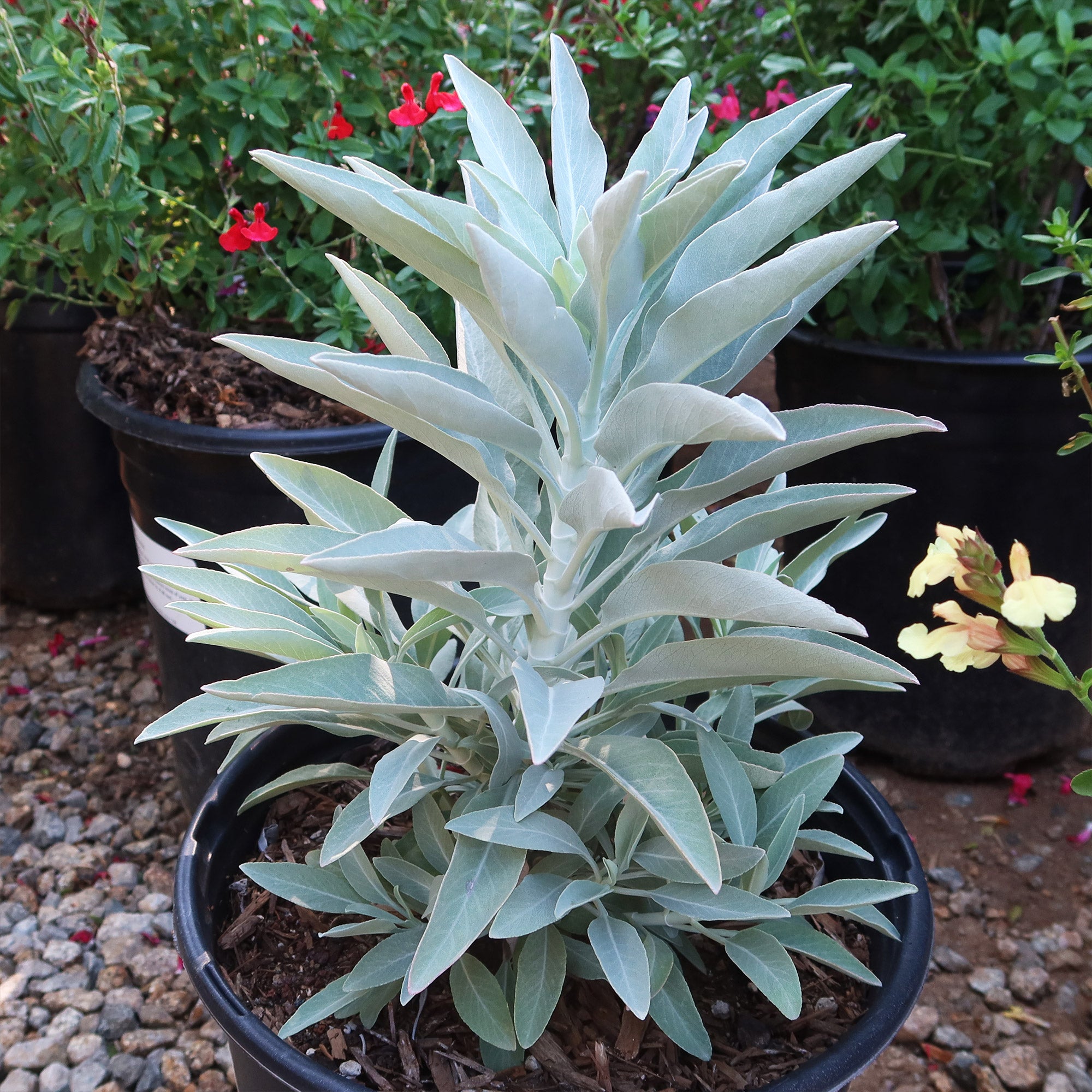
can you plant sage in a pot White Sage Plants ‘Salvia apiana’The white sage plant, known as Salvia apiana, is a fragrant evergreen shrub popular in gardens for drought tolerant, or low maintenance landscapes. This Salvia apiana reflects the white to silver appearance of its elliptical leaves. It has several other common names such as Sacred Sage, or bee sage. The plants unique scent, which is both pungent and sweet, is a defining feature, and is often grown in herb gardens, medicinal plant collections, and

The white sage plant, known as Salvia apiana, is a fragrant evergreen shrub popular in gardens for drought-tolerant, or low-maintenance landscapes. This Salvia apiana reflects the white-to-silver appearance of its elliptical leaves.  

It has several other common names such as Sacred Sage, or bee sage. The plant’s unique scent, which is both pungent and sweet, is a defining feature, and is often grown in herb gardens, medicinal plant collections, and ornamental spaces for its aesthetic appeal and cultural value.

It is most commonly used in Native American rituals for ceremonial smudging and cleansing. White sage is often bundled into smudge sticks for these rituals, which are deeply rooted in Indigenous practices.

This California white sage is renowned for its historical and cultural significance. The only region where white sage naturally occurs are Southern California and Northern Baja.  It holds significant cultural value for the Indigenous communities in these areas.

The White Sage typically can grow up to 5 feet tall and wide.

The silvery-white foliage gives the plant its characteristic look, with leaves that are slightly furry to the touch, adding a soft texture to the landscape.

Its upright, woody stems support this compact structure, making it ideal for borders, drought-tolerant gardens, focal points for water-wise gardens, or as a specimen plant in a xeriscape design. This sage plant is also reflective of the moon and night lighting.

The white sage plant blooms in late spring to summer, with white to pale lavender flowers. The white sage flower stalks can reach up to 6 feet in height. These delicate blooms not only enhance the plant’s ornamental value but also provide a vital food source for a variety of pollinators.  

When and How to Water Your White Sage Plant 

Native to arid regions, these white sage plants are adapted to drought conditions, so they prefer infrequent watering. When watering your sage plant, it's essential to mimic its natural habitat by allowing the soil to dry out between waterings. Overwatering can lead to root rot and other issues, so it's crucial to strike a balance. 

In the spring and summer, during the growing season, you can water your Salvia apiana more frequently, but always check the soil moisture level before watering. A good practice is to water deeply but less frequently to encourage the plant's roots to grow deeper into the soil. In contrast, during the winter months or dormant periods, reduce watering to prevent waterlogged soil, which can harm the plant. 

Observing your Salvia apiana plant for signs of wilting or drooping can also indicate when it needs water. Remember, it's better to underwater than overwater white sage plants. By understanding and meeting the watering needs of your Salvia apiana, you can help it thrive and enjoy its aromatic foliage and beautiful white flowers. 

Light Requirements – Where to Put White Sage

When grown indoors, it's crucial to place your white sage plant in a location that receives plenty of bright, indirect sunlight for at least 4-6 hours. A south-facing window is ideal for indoor Salvia apiana, as it can get the sunlight it needs without being exposed to direct harsh rays that could scorch its leaves. Rotate the plant occasionally to ensure all sides receive adequate light for even growth.

For outdoor cultivation, white sage plants thrive in full sun conditions. They require at least 6 to 8 hours of direct sunlight daily to grow vigorously and produce their aromatic leaves and flowers.

Ensure no large trees or structures shade the plant during the day. It is well-suited to arid and sunny climates, making it an excellent choice for gardens in regions with plenty of sunlight. 

By providing the right amount of light, whether indoors near a sunny window or outdoors in a full-sun location, you can help your plant flourish and maintain its health and vitality.

Remember to adjust the plant's position as needed to ensure it receives adequate sunlight for robust growth and abundant foliage.

Optimal Soil & Fertilizer Needs

White sage prefers well-draining soil with a sandy or gravelly texture, mimicking its natural arid habitat. Planting them in ordinary soil will result in compacted roots, stunted growth, and most likely root rot.  A well-drained potting mix works well for container-grown plants, ensuring excess water can easily drain away to prevent root rot. Instead, make or buy a well-draining potting mix, or ideally use our Go to soil-cactus-mix-blend-1-gal-4-qt-cacti-succulent-dirt-compost-growing-media that contains 5 natural substrates and mycorrhizae to promote the development of a strong root system that helps your plant to thrive. 

In terms of fertilization, white sage is a low-maintenance plant that doesn't require frequent feeding. A light application of a balanced fertilizer, such as a 10-10-10 formula, in the spring as new growth begins can help provide the necessary nutrients for the plant's development. Avoid over-fertilizing, as this can lead to excessive foliage growth at the expense of the plant's aromatic qualities. 

Organic fertilizers, such as compost or well-aged manure, can also be beneficial for California white sage plants. These natural fertilizers provide a slow release of nutrients that can support the plant's growth without the risk of chemical buildup in the soil. By selecting the right soil type and using a balanced fertilizer sparingly, you can help your plant thrive and maintain its unique fragrance and appearance. 

Hardiness Zone & More

When grown indoors, white sage prefers a warm and dry environment similar to its native habitat. Maintain indoor temperatures around 60-75°F during the day and slightly cooler at night. Avoid placing the plant near drafts or heating vents that can create temperature fluctuations, which may stress the plant. 

For outdoor cultivation, white sage is well-suited to regions with warm to hot climates. It is typically recommended for USDA hardiness zones 9-11, where temperatures remain above freezing throughout the year. It can tolerate temperatures down to approximately 20°F, but prolonged exposure to frost can damage the plant. In terms of humidity, it thrives in low-humidity environments, making it an excellent choice for arid or semi-arid regions where humidity levels are naturally low. 

This traditional method of drying white sage leaves helps to preserve their aroma and medicinal properties. Once the leaves are completely dry, they can be used for smudging rituals or for making herbal teas. 

Wildlife - White Sage Plant attracts the following Friendly-Pollinators

White Sage flowers are particularly loved for their ability to attract pollinators, especially native bees like the California bumblebee or carpenter bees. The abundance of nectar in its flowers serves as a food source for various pollinators, contributing to the health of the surrounding ecosystem. In addition to bees, the plant is frequently visited by hummingbirds and butterflies, adding a dynamic element to any garden. 

Butterflies
Bees
Hummingbirds
Lady Bugs
Multi Pollinators
Other Birds

Toxicity: As for toxicity, White Sage is generally non-toxic to humans, pets, and livestock. It is safe for use in herbal preparations and ceremonies, and there are no significant risks of toxicity for dogs, cats, or birds. However, as with any plant, it’s essential to ensure that pets don’t consume large quantities, as excessive ingestion of any plant material may cause minor gastrointestinal discomfort in sensitive animals.

Propagating White Sage Plant

To propagate white sage plants, you can use both seeds and stem cuttings. When propagating from Salvia apiana seeds, start by collecting mature seeds from the plant and sowing them in a well-draining soil mix in early spring. Keep the soil consistently moist but not waterlogged until the seeds germinate. For stem cuttings, take a 4-6 inch cutting from a healthy Salvia plant, remove the lower leaves, and place the cutting in a pot with a mix of perlite and peat moss. Keep the soil lightly moist and provide indirect light until roots develop. With proper care and attention, you can successfully propagate Salvia apiana plants to expand your garden or share with others. 

Key Takeaways 

  1. It is most commonly used in Native American rituals for ceremonial smudging and cleansing.
  2. White Sage (Salvia apiana) is a hardy, aromatic shrub with striking silvery foliage and fragrant leaves.
  3. Known for its cultural significance and ability to thrive in dry, arid conditions.
  4. Perfect for low-maintenance, drought-tolerant gardens.
  5. It reaches a mature size of 5 feet, with upright growth and tall spikes of pale lavender flowers.
  6. Requires full sun, well-drained soil, and minimal watering once established.
  7. Ideal for xeriscaping due to its drought tolerance.
  8. It attracts pollinators and is non-toxic, making it versatile for both ornamental and practical uses.
  9. A standout addition to your garden—order your white sage plant for sale today!
Shipping Notes
  • Free Standard Shipping on $100+ Orders to the USA.
  • Except Preorder products are shipped in 48 hours.
  • Delivery to the USA:
  1. Standard Shipping : 3-10 business days
  • If time is of the essence, please consider selecting expedited delivery for faster service.
Exchange/Return Notes
  • We offer a 30-day return/exchange service after receiving.
  • Final sale items are not eligible for returns or exchanges.
  • To process your return/exchange, please contact us at [email protected]
  • Please click here for more details>>> Return & Exchange Policy
SKU: 1852846659

Discover Niche Categories That Outsell can you plant sage in a pot

Top-Converting Item to Boost Your Average Order

4.0 ★★★★★
Based on 26 reviews
Sort
Highest Rating
Newest First
Oldest First
Product Reviews
M
Verified Purchase
Mike
Fort Morgan, US
★★★★★ 5
Fantastic book! Great introduction to some of the current misunderstandings about the Bible.
Format: Kindle
As a believer, I have wrestled with the issue of why I trust the Bible to be God’s defining word. After all, simply saying that I have faith in God and Jesus and therefore the Bible must be true creates an ever-tightening inward spiral based on nothing more than a belief that it’s true. Probably not the best standard to be waiving. Why I Trust The Bible by Dr. William Mounce answers not only this question, but also whether or not Jesus was real and why the different Bible translations are so different. We live in an age where we are bombarded with half-truths and deceptions by purported experts whose only requirement is to have a YouTube page. The Bible is no more immune from these barrages of untested and ill-researched ideas than is science or politics, but the stakes are higher. While many refute the authenticity and truthfulness of the Bible, one name stands out among the rest: Bart Ehrman. He seems to be very good at nuancing just the right word to cause a reaction in support of his unfounded claims. Fortunately Dr. Mounce is superb at refuting the often-ridiculous claims as well as correcting minor misunderstandings. What I especially liked about Why I Trust The Bible was the way Dr. Mounce not only disproved the inaccuracies touted by Ehrman, but revealed the underlying false premises and sensationalist comments that Ehrman uses. Dr. Mounce’s corrective approach was very helpful. Why I Trust The Bible easily counters the common claims and misrepresentations against the Bible’s inspiration. If you want to understand the background of how and why our Bible is accurate, real, truthful, and God’s inspired word, this resource is for you. Dr. Mounce systematically addresses key issues originating from contradictory arguments presented by unbelievers while at the same time answers questions many believers have about their Bible. I especially appreciated the way Dr. Mounce included enough material for each section so that I was able to understand the issue without feeling overburdened. It is an enjoyable read: comprehensive and coherent. This book opens by evaluating the reality of Jesus, then moves to dismantle common criticisms against the Bible, examines the processes and decisions necessary when translating from the original languages into English, and finishes by addressing some of the perceived claims against the nature of God. While these issues tend to be technical, Dr. Mounce expertly navigates the waters to keep the reader engaged as he addresses the Bible’s history, fundamentals of textual criticism, and interpretative and translation principles. Whether you begin this book with a blank slate in these areas or already understand these issues, the book will fill the gaps. Too often people confuse their faith in the Bible with how faith (in any proposition) reinforces beliefs and closes one’s mind to other possibilities. Much of what we believe is actually an outgrowth from our paradigms. Dr. Mounce points out that we all have faith-beliefs. For example, if I believe God is able to alter the laws of nature to perform a miracle, then that is my faith-belief. But if I believe there is no God or that miracles cannot happen, then that is also my faith belief. We each assess everything by our paradigms. Although we live in a world that seeks to accept every idea as a relative truth, only one of these propositions can be correct; in the case of miracles, they can either happen or they cannot. One thing that stood out was the tendency for the non-believers to try to make the believer prove them wrong. Dr. Mounce flips the script and places the onus on the non-believer to prove that miracles can happen. He can do that because through his systematic approach to answer the critical questions about the Bible, he shows that it is not a work of fiction and that the events in the Bible were not late additions or were not the result of conspiracies perpetrated by a cabal of nefarious theologians of the past. His book documents the veracity and reliability of the Bible that we now have, and while we may not have the first-edition autographed copy, we are confident we have what the original authors wrote. There are some who attempt to use the faith-belief premise as an argument against the truthfulness and accuracy or our Bible, but that is the wrong approach because it does not accurately represent the stalemate that exists between believers and non-believers. The problem is much deeper and is more centered on the belief that just because we don’t have the original documents, and that because there are too many discrepancies in the Bible itself, that it is untrustworthy. These are unfounded or inaccurate statements which are not backed by any facts, but are simply distortions, untested by any historic or scientific means. Why I Trust The Bible breaks through the unfounded arguments against authenticity by providing the documentation and proof that it is real, that what it says happened actually did happen, and that those who so diligently protected the text for us through the many generations did so with the utmost respect for God and his word. Yes there are what appear on the surface to be discrepancies. Yes there are variants between the 5,600 plus manuscripts (less than 1/10 of 1 percent even warrant further research). But Dr. Mounce shows how it is not the number of textual differences that matter, but whether or not the differences are significant in any way that they alter the basic understanding of God, Jesus, or salvation. He guides the reader in understanding that although there seems to be a lot of discrepancies, only a small number are viable; they do not alter any truth in the Bible. He proves that, “there is not a single viable variant that calls into question any point of biblical theology, major or minor.” This book is an excellent choice for anyone wanting to understand how we got our Bible, why we can trust it to be true, that it is the faithful word of God, and how Bible translators struggle with real issues relevant to helping us understand what God said. I have many of the resources listed in the footnotes of this book and have studied these issues in the past, but as in most books I read, I discover new insights and information. This book is not just for the person beginning this study, but is applicable for even those who have studied these concepts. If you don’t have the foundation necessary to believe that the Bible we now have “is the very words of God” or want to learn more about the processes involved in interpreting words and phrases and the various theories of Bible translation, then this is the book for you. Mike F., MDiv, Theology
WAS THIS REVIEW HELPFUL?YesReportShare
Reviewed in the United States on October 7, 2021
B
Verified Purchase
Bryan Catherman
Lake Worth, US
★★★★★ 5
It's Great, but Maybe a Little More on the Topic than Some Might be Ready For
Format: Paperback
Dr. William Mounce's new book, "Why I Trust the Bible: Answers to Real Questions and Doubts People Have About the Bible," is a bit different than his typical work. This book is not specific to learning biblical Greek. Instead, it's a series of arguments for the reliability of the Bible with a much broader audience in mind. Mounce addresses this historicity of Jesus, contradictions in the Bible, how we have the biblical canon, issues of textual criticism, aspect of translation, and how the Old Testament supports our trust in the Bible more than you might think. "Why I Trust the Bible" is an accessible introduction to a selection of apologetic matters but goes deeper and beyond an introduction. For one seeking to explore these topics--for the first time or deeper study--Mounce does an outstanding job with each of these arguments. Each chapter (corresponding to a question) is well-argued and contains an excellent bibliography of references. Even without any theological knowledge, the book is easy to read, and it stands upon excellent theological study and solid academic work. While I highly recommend "Why I Trust the Bible," I found the scope of the "questions" and "doubts" limited. As a pastor, there are many questions about the historical Jesus, contradictions, how we got the revelation of God, and issues of translations. Sure. But they often come as more of an attempt to reject the Bible. Mounce's answers are excellent but address the reality of the situation rather than the questioner's heart. It's not something I'd expect to find someone with doubts and totally new to the Bible would pick up this book. Therefore, this book is better suited for the person who handles the questions and doubts of others. It provides the foundation and information to the pastor, Sunday school, teacher, friend, or family member in doubt. "Why I Trust the Bible" is also a helpful book for the seminary student, budding apologists, and preachers of God's Word. The chapters on textual criticism supply a fantastic framework (complete with charts and history). As we would expect from Bill Mounce, these chapters are a resource every pastor should have on his shelf, ready for when the tough challenges come. I found the book good and helpful and I have a Doctorate of Ministry and more than a decade of pastoral ministry under my belt. My twelve-year-old son is reading the book and also finding it in formative and helpful (although he also thumbs through my commentaries). My point: there's a little for everyone.
WAS THIS REVIEW HELPFUL?YesReportShare
Reviewed in the United States on September 15, 2021
C
Verified Purchase
C Dow
New York, US
★★★★★ 5
An excellent, if brief introductory survey of the defense of the reliability of Scripture!
Format: Kindle
“How can you trust the Bible? Didn’t you know there are 400,000 disagreements between all the different copies of the New Testament alone, while there are only 110,000 words in it?” “The Bible contradicts itself, so it can’t be the Word of God.” “Church leaders picked and chose what went into the Bible, leaving out books and letters they didn’t agree with, so how can you trust what it teaches?” “Even the different versions of the Bible disagree with one another, so how can it be reliable?” “Jesus is more myth than historical figure, cobbled together from a bunch of ancient sources and religions. He’s made up, so can’t be a real savior.” Skeptical claims like these, and plenty others, are leveled against the Bible ALL. THE. TIME. On social media, in popular media, and in documentaries purporting to give the straight dope about the history surrounding the Word of God. We should not be surprised. After all, the enemies of God hate Him, and hate His Word. However, many Christians lack the ability to refute these claims. Many of us merely shout “nuh uh,” all the while wondering if there really are answers to these claims. There are answers to these claims, Christian. There is an entire field of study, namely apologetics, which provides a defense of the faith. “Why I Trust the Bible” is a one-stop-shop of introductions to several topics which comprise much of the field of apologetics these days: - The Historical Jesus - Contradictions in the Bible - How We Got the Canon (list of books in the Bible) - Textual Criticism (making sense of textual discrepancies or variants) - How Translation Happens - The Supposed Contradiction of the Old Testament In “Why I Trust the Bible” Dr. Mounce, renowned Greek language scholar, explains why he trusts the Bible, and why you should too. As a layperson who has done a lot of study in these areas, I found the this book a great introductory survey of these topics, with a great set of footnotes and bibliography for further reading. Most skeptics tossing out the objections covered are merely repeating talking points, and this book will be more than enough to equip you to answer them. “Why I Trust the Bible” is a great introduction to all of these subjects and can provide a great foundation for further study into any and all of them. If you have studied any of these subjects in greater depth, you may find Mounce’s treatment of them entirely too brief, but for someone who is new to apologetics and specifically the reliability of the Bible, this book is an excellent choice!
WAS THIS REVIEW HELPFUL?YesReportShare
Reviewed in the United States on September 15, 2021
D
Verified Purchase
David M. Wilson
Los Angeles, US
★★★★★ 4
Using this one for a special study in our church.
Format: Paperback
This is a very scholarly book, but the author seeks to simplify it a bit for the reader. This book is written to respond to Biblical skeptics and answers many of the challenges those folks have for skeptics. Very well researched and very well written.
WAS THIS REVIEW HELPFUL?YesReportShare
Reviewed in the United States on October 28, 2024
J
Verified Purchase
Justin Effler
Houston, US
★★★★★ 5
A Pleasure To Read
Format: Kindle
Academic books are known to be dry and poorly written, with semantics used that inadvertently confuse the reader; not with this book. Mounce displays that not only does he really know his “stuff” as a scholar, but how to make the read enjoyable to the laity. I recall reading the notorious bible skeptic’s book, “Misquoting Jesus” by Bart Ehrman a number of years back and even though as a Christian who loves the Bible I couldn’t help but notice how well and enjoyable he made the book. Both Mounce and Ehrman are in the same field and understand as textual critics how to communicate to people in an manner to the lay person. I sought out this book with the understanding of how we can trust the canon and got a lot more than I thought! While, I will admit, a lot of trusting that the 27 books of the New Testament (and the Old Testament) are what they are supposed to be is a matter of trusting God in his sovereignty. He laid great groundwork for why the early church believed them and what their criterion was to accept a book as “scripture”. He also brought some important distinctions int eh church’s infancy that there was a functional canon and exclusive canon; that being from scholar Michael Kruger that he referenced. I found the section on translations very useful as it brought a balanced perspective on what it means not just translate but how to treat the text properly. One of his examples with a big criticism on the term “reading the Bible literally” when translated from one language (Greek, Hebrew and Aramaic) to another (English, etc.). We develop much of our words in translation not just by individuals words that can mean a lot of different things, but with its surrounding context. I won’t spend too much time but there were a vast amount of other important topics, like the historical Jesus, Old Testament as well as the problem of evil and other things that where quite useful to, but for me and the importance of canon is why I sought on this book. Now I am still on the journey of studying more about why this canon but a lot more clearly has come and I trust the Lord in his sovereignty in that we have preserved God’s holy books. This is a must read for any Christian apologist or just anyone who is looking to understand the Bible better.
WAS THIS REVIEW HELPFUL?YesReportShare
Reviewed in the United States on June 24, 2023

recommand products