SKU: 19842574849
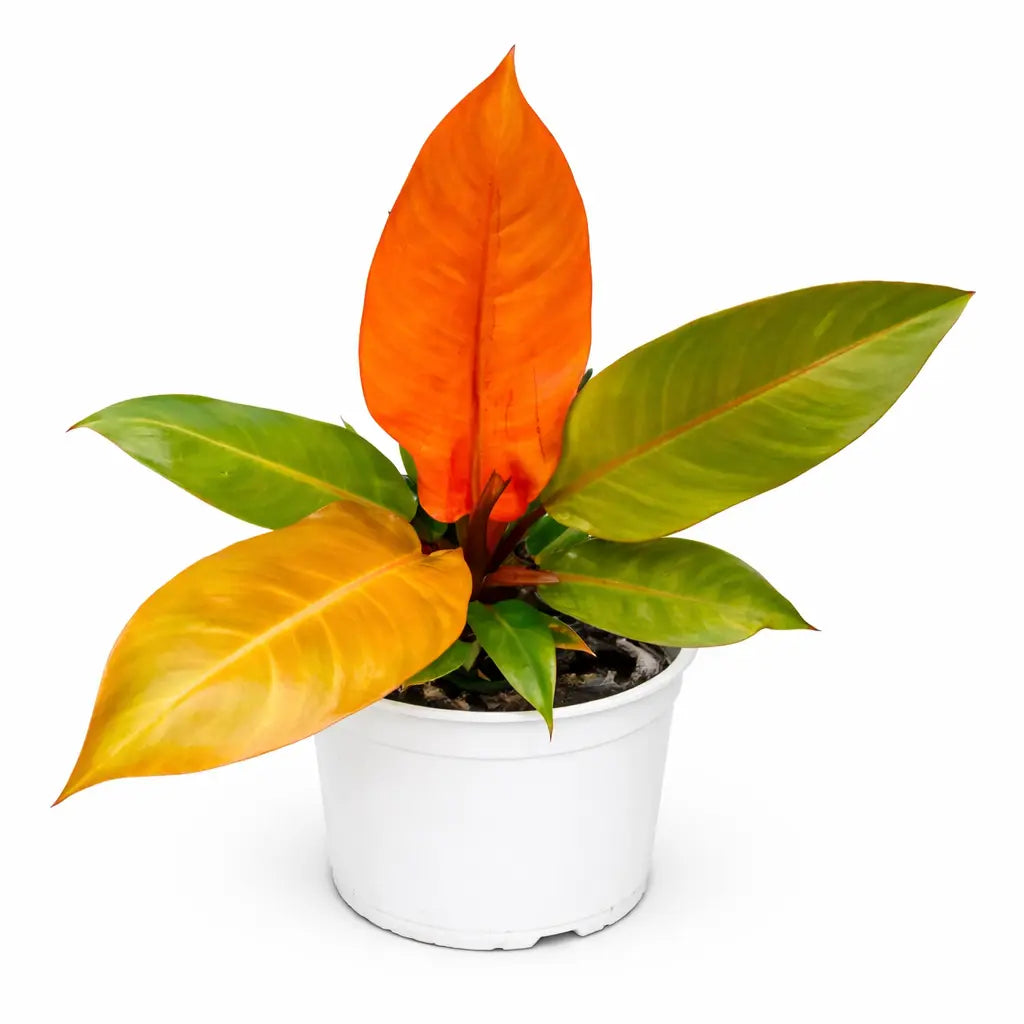
autumn queen philodendron

autumn queen philodendron Philodendron 'Prince of Orange'

Sale price$24.95 Regular price$27.72
Save 10%

Pay in installments of $6.93 with ShopPay, AfterPay and Klarna

Shipping Estimate
USA
  • USA
  • CAN

Ships within 48 hours · Estimated delivery Jul 27 - Aug 1

Promo Codes Available:

For Your Every Summer RSVP, with Code: SUMMER15

Description

autumn queen philodendron Philodendron 'Prince of Orange'The Philodendron 'Prince of Orange' is one of those rare plants that earns its name without any exaggeration. Every new leaf that unfurls does so in vivid orange deep, saturated, genuinely the colour of a ripe citrus then spends the following weeks travelling through copper and amber and chartreuse before settling into the rich, glossy dark green of a mature leaf. Because the plant pushes new growth continuously, multiple stages of this journey are

The Philodendron 'Prince of Orange' is one of those rare plants that earns its name without any exaggeration. Every new leaf that unfurls does so in vivid orange — deep, saturated, genuinely the colour of a ripe citrus — then spends the following weeks travelling through copper and amber and chartreuse before settling into the rich, glossy dark green of a mature leaf. Because the plant pushes new growth continuously, multiple stages of this journey are always visible simultaneously: a fully orange new spear at the centre, copper leaves mid-transition, and deep green mature leaves forming the outer canopy. No two moments in the growing season look quite the same. A hybrid of the *Philodendron erubescens* lineage — *erubescens* meaning "blushing" in Latin, a name suddenly made literal by the Prince of Orange's extraordinary leaf colour — it is entirely self-heading: it grows as a compact, symmetrical rosette without climbing, without needing a moss pole, and without taking over a room. At 60–90 cm at maturity it is perfectly scaled for desks, shelves, and tabletops, and it is one of the fastest-growing self-heading Philodendrons available.

💡 Stable Colour — This Is Not Variegation The orange colouration of the Prince of Orange is genetically locked into the plant's growth cycle — it is not chimeric variegation and it does not revert. Every new leaf this plant produces will emerge orange, without exception. The colour is driven by pigment expression in new growth that fades as chlorophyll develops and the leaf matures — a reliable, repeatable process. The intensity of the orange phase is directly controlled by light: brighter indirect light = more vivid, longer-lasting orange before the leaf greens up. Lower light = the orange phase is shorter and the leaf transitions to green faster. More light is the single most effective tool for keeping the display as vivid as possible.
🌿 Self-Heading Habit — No Pole, No Climbing, No Drama Unlike the majority of collector Philodendrons, the Prince of Orange does not climb and does not need support. It grows as a compact, upright rosette, producing new leaves from the central growing point and expanding outward symmetrically. This makes it one of the most practical collector aroids available — ideal for desks, console tables, windowsills, and shelves where a climbing vine would be out of place. Simply rotate the pot a quarter turn every few weeks to ensure even light exposure and a balanced, symmetrical form.
☀️

Light

Bright indirect light — the most important factor for a vivid, long-lasting orange display. An east or west-facing window is ideal; a south-facing window with a sheer curtain works well. The orange phase is most intense and lasts longest in bright conditions — in lower light the new leaves transition to green quickly and the distinctive colour display loses much of its impact. No direct harsh afternoon sun — it scorches and bleaches the leaves. Gentle morning sun is fine and beneficial. A grow light at 12–14 hours is excellent and produces the most consistently colourful new growth.

💧

Watering

Allow the top 3–5 cm to dry before watering thoroughly. The Prince of Orange prefers to dry out a little more between waterings than moisture-loving aroids — consistent soggy soil causes root rot faster in self-heading forms. Use room-temperature filtered water where possible. Empty the saucer after watering; never allow to sit in standing water. Reduce frequency slightly in winter but never allow to dry out completely. Check weekly; water when the top layer is clearly dry rather than just slightly dry.

💦

Humidity

50–70% preferred — a humidifier is beneficial but not essential. The Prince of Orange is more humidity-tolerant than many collector aroids and adapts well to typical Indian indoor conditions. Keep away from cold AC drafts and heating vents. Do not mist directly onto the leaves — water sitting on the new orange leaves encourages brown spotting, particularly on the tender young growth. India's tropical climate is naturally adequate for outdoor or semi-outdoor growing.

🌱

Growing Media

Well-draining aroid mix — 40% quality potting soil, 25% orchid bark, 25% perlite, 10% coco coir. pH 5.5–7.0. The mix must drain freely; self-heading Philodendrons are more susceptible to root rot from compacted, moisture-retentive mixes than climbing forms. Repot every 1–2 years in spring, one pot size up — the plant prefers to be slightly snug rather than over-potted. A pot with drainage holes is essential; terracotta is a good option for extra drainage insurance.

🌾

Feeding

Balanced liquid fertilizer at half strength every 2–3 weeks in spring and summer. The fast growth rate means consistent feeding during the growing season is visibly rewarded — larger leaves and more frequent new growth flushes. Apply to moist soil only. Flush every 3 months to prevent mineral salt build-up. Stop feeding in autumn and winter. Avoid high-nitrogen formulas — they push very fast leafy growth that outpaces the plant's structural development.

⚠️ Common Issues & Quick Fixes

New Leaves Coming Out Green, Not Orange

Insufficient light — the most common complaint. The orange phase shortens and fades dramatically in low light; in deep shade new leaves can emerge barely orange at all. Move to a significantly brighter indirect position or add a grow light. The colour will return to full intensity within 1–2 new growth cycles in better light. This is not reversion — the plant cannot revert; it is purely a light response.

Brown Spots on New Orange Leaves

Water contact on tender new leaves — do not mist; ensure watering does not splash onto unfurling leaves. Also check for thrips, which target new growth specifically: silver streaking or distorted unfurling leaves indicate thrips. Treat with spinosad spray every 5–7 days for 4 weeks and quarantine immediately.

Yellow Leaves

Overwatering or root rot — allow the top 3–5 cm to dry before watering. One older lower leaf yellowing as new growth pushes is normal cycling. Widespread yellowing with soggy soil: unpot, inspect roots, trim any blackened or mushy sections, repot in fresh well-draining mix, and water less going forward.

Leaves Staying Small

Insufficient light, underfeeding, or the plant being too root-bound to support larger leaf production. Move to a brighter position, begin consistent feeding every 2–3 weeks, and check whether the plant needs repotting — roots circling the base of the pot indicate it is ready for the next size up.

Leggy or Lopsided Growth

The plant is reaching toward its light source — rotate a quarter turn every 2–3 weeks to maintain even, symmetrical growth. If the plant has become significantly lopsided, increase overall light levels and begin regular rotation to gradually correct the form.

📋 Quick Plant Profile

Botanical Name Philodendron erubescens 'Prince of Orange'
Name Meaning erubescens = Latin for "blushing" — the vivid orange-red new leaf colour taken to its most dramatic expression
Common Names Prince of Orange, Orange Splendor (Indian market trade name)
Family Araceae
Colour Journey Vivid orange → copper → amber → chartreuse → deep glossy green; all stages visible simultaneously
Colour Type Stable genetic trait — not variegation; every new leaf will be orange; does not revert
Colour Key More light = longer, more vivid orange phase; less light = faster transition to green
Growth Habit Self-heading rosette — does not climb; no moss pole needed; compact and symmetrical
vs. erubescens Emerald Queen Same lineage; Emerald Queen is a climber with cream variegation; Prince of Orange is self-heading with orange new growth
Light Bright indirect; no direct harsh sun; grow light excellent; low light fades orange phase
Watering Top 3–5 cm dry between waterings; well-draining mix essential; do not sit in water
Humidity 50–70%; adaptable; no misting on leaves; humidifier beneficial but not essential
Temperature 18°C–30°C; no cold drafts; thrives in Indian indoor conditions
Mature Size 60–90 cm height and spread; compact; ideal for desks, shelves, and tabletops
Growth Rate Fast for a self-heading Philodendron — new leaves in frequent succession with good light and feeding
Rotation Quarter turn every 2–3 weeks for even, symmetrical growth
Ideal For Desks, Shelves, Tabletops, Bright Rooms, Collectors, Gifting, Beginners and Experts Alike
Care Level Easy to intermediate — bright light is the one non-negotiable; everything else is forgiving
Shipping Notes
  • Free Standard Shipping on $100+ Orders to the USA.
  • Except Preorder products are shipped in 48 hours.
  • Delivery to the USA:
  1. Standard Shipping : 3-10 business days
  • If time is of the essence, please consider selecting expedited delivery for faster service.
Exchange/Return Notes
  • We offer a 30-day return/exchange service after receiving.
  • Final sale items are not eligible for returns or exchanges.
  • To process your return/exchange, please contact us at [email protected]
  • Please click here for more details>>> Return & Exchange Policy
SKU: 19842574849

Discover Niche Categories That Outsell autumn queen philodendron

Top-Converting Item to Boost Your Average Order

4.4 ★★★★★
Based on 7 reviews
Sort
Highest Rating
Newest First
Oldest First
Product Reviews
X
Verified Purchase
X-ray 77
Battle Creek, US
★★★★★ 5
Out of Control with Technology
Format: Hardcover
I found the book very interesting! The authors did a great job of discussing the benefits of different social media sites. While the sites were intended for good use, there is always a downside. Each of the sites were exploited over time for a use other than intended. While this is by no means a surprise, it is amazing how others were quick to use the sites for illegal purposes. The history of how some of the sites were developed was interesting too. Of additional interest was the amount of notes included in the book. A third of the book is devoted to this alone. It shows the level of thoroughness the authors took to allow readers to delve deeper into topics discussed in each chapter. The most pressing question for social media: What is the next level of advancement?
WAS THIS REVIEW HELPFUL?YesReportShare
Reviewed in the United States on July 28, 2024
C
Verified Purchase
Current Prez
Bozeman, US
★★★★★ 5
All's fair in Like and War
Format: Hardcover
Is Mark Zuckerberg responsible for exacerbating the killing fields on the South Side of Chicago? What is China's Golden Shield Project and what might it mean for you? Did Michael Flynn have any good ideas before his fall from grace serving in the Trump administration? Read this book and you'll get the answers to these questions and many more. This book takes a notion with which most readers are likely already familiar - the internet has graduated from its nascent status as a series of tubes connecting nerds and defense contractors to that of an ineffably complex globe-gobbling organism engaged every hour of every day in the instantaneous distribution of information spanning all spectra of human activity - and combines it with one not so well established in the popular imagination - we (or, at least, everyone who uses the internet) are all potential foot soldiers, willing or not, in the online and offline wars still raging as well as those yet to come. Written in succinct, snappy prose, the book tells the story of the internet from its peculiar vantage point at the intersection of social media and military conflict with its arguments firmly based in factual and expert analysis. Those seeking to validate a particular political slant or ideology should look elsewhere.
WAS THIS REVIEW HELPFUL?YesReportShare
Reviewed in the United States on October 2, 2018
T
Verified Purchase
Thomas M. Magee
Omaha, US
★★★★★ 3
Insightful but troubled
Format: Hardcover
This book could have been so much more but it fell short. The book does capture a new phenomenon sweeping the world. The growth of social media is that phenomenon. The book does a good job chronicling the growth of social media and its impact on a general scale. Through that growth opportunities were created. The book does a good job of listing how people, groups and countries exploit these opportunities. They advance their respective agenda various ways on social media. I loved the pages which talked about how AI can create fake news with all of the authenticity of an eye witness account. The book lists impacts of these trends with crystal clear words. You can see impact clearer than any other source out there. The negative is the bias of the authors. Who the authors voted for in the last election screams out with every chapter. They use the topic as a club to bash republicans, President Trump, and conservatives. They miss how Democrats were playing the same games as Trump before Trump. This bias causes a reader to lose the message and dangers through politics. David Plouffe, the Obama campaign manager in his book "The Audacity to Win" said he used social media in 08 election. Funny how these people ignore those events to focus on what Republicans do. I also think their constant drum beat of what the Russians do creates a false election that they stole the election. The authors forget the failed policies of Hillary.
WAS THIS REVIEW HELPFUL?YesReportShare
Reviewed in the United States on April 1, 2019
P
Verified Purchase
Peter Mario Ricci
Houston, US
★★★★★ 5
Great book!
Format: Paperback, Format: Paperback
Great book. I really appreciate that it was written. It’s very interesting, informative and unfortunately the themes are very relevant at this time. Would definitely recommend the book to anyone interested.
WAS THIS REVIEW HELPFUL?YesReportShare
Reviewed in the United States on November 18, 2025
T
Verified Purchase
The Professor
Birmingham, US
★★★★★ 5
Documents the influence of American Eugenics on the Holocaust
Format: Hardcover
American Court decisions, and what some call the genocide of Native Americans, was one major source of inspiration behind Nazi policy against both the Jews and people that the eugenic scientists considered inferior races. American policy also was very influential in inspiring the Nazi goal of lebensraum, expanding the Germanic population and reducing, and making slaves, of the Slavic peoples (Poles, Russians and other Eastern populations). Following Hitler's rise to power, Lebensraum became an ideological goal of Nazism and provided for them justification for the German territorial expansion into East-Central Europe. After all, the Americans decimated the naïve population of America so, the Nazis reasoned, how is that different from the decimation the native population of Eastern Europe? Some even referred to Ukrainians and other Slavic people as "Indians." Reservations for Native Americans was a factor justifying the concentration camps for Jews, only a few of which were death camps, and this is one reason why the Nazis got away with the Holocaust for so long. It was not until after the war when the Soviets liberated the death camps that we knew for certain the extent of the genocide goal of the Nazis. The main extermination camps were Belzec, Sobibór and Treblinka, which served as "death factories." Auschwitz II–Birkenau was a combination concentration/extermination camp. Anti-Semites, eugenicists and racists inspired by Darwinism in the U.S. helped inspire those in Germany, and vice versa. The US was “a global leader in ‘scientific’ eugenics,” so naturally the German scientists would have to rely on American research and law (page 8). The author covered only briefly the well-documented important influence of Darwin and mentioned evolution only in connection with the evolution of racism (p, 114). Conversely, the eugenics idea and movement was discussed 28 times, such as page 8 where the author documents that eugenics was the basis of both the Nazi Germany and American discrimination laws and policy. The support of the U.S. to Nazi German went well beyond that. U.S. bankers and industry, even the weapons industry, invested heavily in the Nazis war machine. Nazis borrowed ideas from U.S. books, such as the 1916 American best seller racist book titled The Passing of the Great Race and other propaganda, such as that developed in World War I. The U.S. refused to admit significant numbers of Jewish refugees, such as in 1939 the United States refused to admit over 900 Jewish refugees who had sailed from Hamburg, Germany, on the St. Louis to the West. Denied permission to land in the United States, the ship was forced to return to Europe where many died in Nazi German camps. The most famous example is the State Department rejected Anne Frank's attempt to enter the United States (pages 53,116, 149).
WAS THIS REVIEW HELPFUL?YesReportShare
Reviewed in the United States on October 29, 2017

recommand products