Pay in installments of $6.75 with
 ,
,
 and
and

Shipping Estimate
USA
- USA
- CAN
- USA
- CAN
Ships within 48 hours · Estimated delivery Sep 12 - Sep 17
 Promo Codes Available:
For Your Every Summer RSVP, with Code: SUMMER15
Description
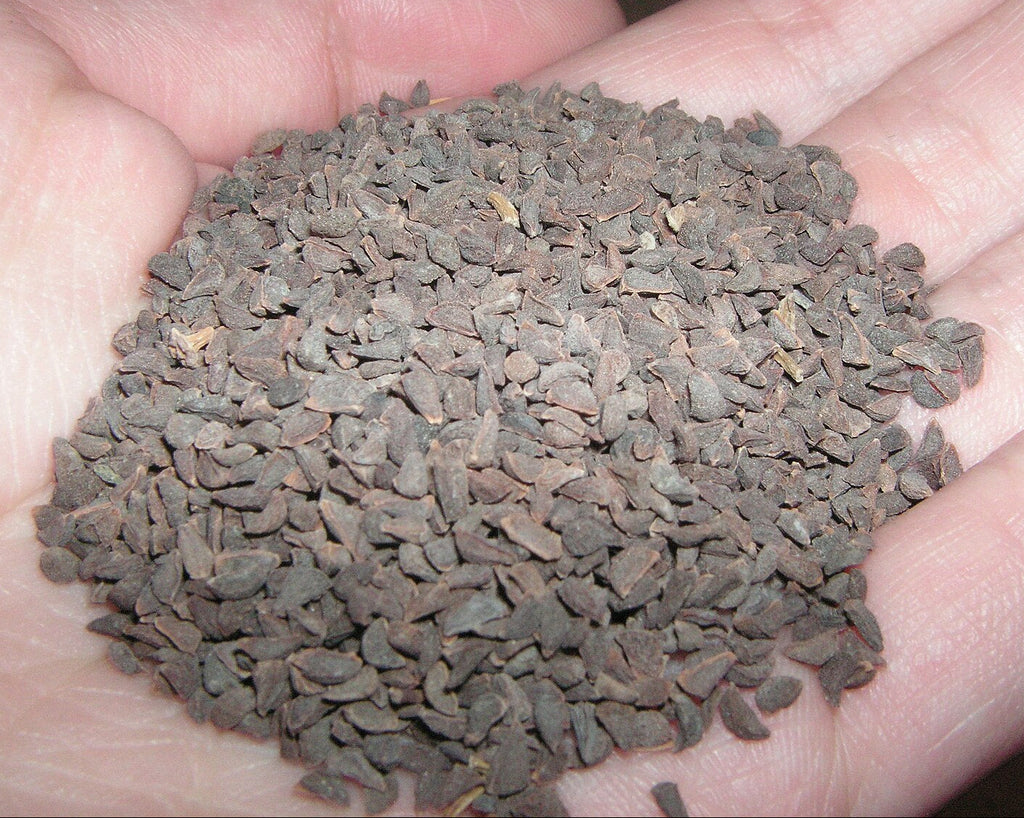
poisonous plant seeds for sale Syrian Rue – Experimental Farm Network Seed StorePeganum harmala Origin: India Improvement status: Unknown Seeds per packet: ~50 BOTANICAL SAMPLE NOT FOR PLANTING OR CONSUMPTION Syrian rue, also known as wild rue, esfand (or espand or esphand), African rue, spilani, and harmel (among many other names), is a powerful perennial plant native to a broad swath of Afro Eurasia from the Mediterranean to South and East Asia. It has also been introduced and established itself in South Africa, France, Mexico,
Peganum harmala
Origin: India
Improvement status: Unknown
Seeds per packet: ~50
BOTANICAL SAMPLE - NOT FOR PLANTING OR CONSUMPTION
Syrian rue, also known as wild rue, esfand (or espand or esphand), African rue, spilani, and harmel (among many other names), is a powerful perennial plant native to a broad swath of Afro-Eurasia from the Mediterranean to South and East Asia. It has also been introduced and established itself in South Africa, France, Mexico, and the United States, taking root in dry, often saline or disturbed habitats, and succeeding from sea level to high elevations. Because of its potential invasiveness, it is banned from being grown in Arizona, California, Colorado, Nevada, and Utah, and restricted in New Mexico and Oregon, so please do not plant Syrian rue seeds if you live in one of those states (and exercise extreme caution in states like Texas, Oklahoma, Washington, Idaho, Wyoming, and Montana, where the plant might also be happy to take root). Louisiana has banned the possession with intent to consume, for reasons that will become clear in the next paragraph. These seeds are therefore being sold as botanical samples: NOT FOR PLANTING OR HUMAN CONSUMPTION.
So why do people love this plant? Well, as its many names attest, Syrian rue is highly valued across many cultures. It has myriad uses, from dye (the famous "Turkey Red" pigment) to incense to traditional medicine, but it is likely most widely utilized as a mind-expanding hallucinogen. Some scholars associate it with the mysterious sacred plant known as soma or haoma in ancient Indo-Iranian texts, a supposedly psychoactive plant and beverage whose identity has been lost to history. Various classical and medieval sources, along with archaeological evidence, point to its ritual use beginning as early as the 2nd century BCE. The name Espand (or Esfand or Esphand) comes from the Middle Persian word spand, which is derived from the Proto-Iranian spanta, meaning "holy."
The volunteer writers and editors at Wikipedia have done an excellent job chronicling its many traditional medicinal and spiritual uses (see Wikipedia for citations): "In Iran and neighbouring countries such as Turkey and Azerbaijan, dried capsules from the plant are strung and hung in homes or vehicles to protect against the evil eye. It is widely used for protection against Djinn in Morocco (see Légey "Essai de Folklore marocain", 1926).
Esfand (called ''isband'' in Kashmiri) is traditionally burnt in Kashmiri weddings to create an auspicious atmosphere. It is also used on other ceremonial and festive occasions, as well as in households, for its fragrant smoke and to ward off negative energies.
Burning esfand seeds is also common in Persian cultures for warding off the evil eye, as in Persian weddings.
In Yemen, the Jewish custom of old was to bleach wheaten flour on Passover, in order to produce a clean and white unleavened bread. This was done by spreading whole wheat kernels upon a floor, and then spreading stratified layers of African rue leaves upon the wheat kernels; a layer of wheat followed by a layer of Wild rue, which process was repeated until all wheat had been covered over with the astringent leaves of this plant. The wheat was left in this state for a few days, until the outer kernels of the wheat were bleached by the astringent vapors emitted by the wild rue. Afterwards, the wheat was taken up and sifted, to rid them of the residue of leaves. They were then ground into flour, which left a clean and white batch of flour.
Peganum harmala has been used as an analgesic [pain reliever], emmenagogue [menstruation aid], and abortifacient agent [for chemical-induced abortion].
In a certain region of India, the root was applied to kill body lice.
It is also used as an anthelmintic (to expel parasitic worms). Reportedly, the ancient Greeks used the powdered seeds to get rid of tapeworms and to treat recurring fevers (possibly malaria).
As related in Des Cruydboeks of 1554 by Rembert Dodoens, in Europe, this plant was considered to be a wild type of rue and identical in medicinal uses — the identity of the two plants and their Ancient Greek and Roman uses had merged, though it was considered stronger, even dangerously so. It could be bought under the name harmel in the apothecaries, and was also known as 'wild' or 'mountain' rue. It could be used for a few dozen ailments, such as to treat woman of their natural disease when the leaves were used in only water, or when the juice were drunk with wine and the leaves pressed against the wound it could cure bites and stings from rabid dogs, scorpions, bees and wasps and the like. From supposedly Pliny, he relates how those covered in the sap, or having eaten it sober, would be immune to poison for a day, as well as to poisonous beasts. Other cures were for 'drying' sperm, 'purifying' women after childbirth, curing earache, getting rid of spots and blemishes on the skin, and soothing bumps and pain caused by hitting something, among many others. All the cures call for either juice or the leaves; none call for the seeds.
Peganum harmala seeds have been used as a substitute for Banisteriopsis caapi in ayahuasca analogs, as they contain monoamine oxidase inhibitors that enable DMT to be orally active. It has also been used in Changa, a DMT-infused smoking blend."
Once again, this is a very powerful plant. Consumption by animals causes reduced fertility and abortions. Leaves and seeds are poisonous, and can manifest themselves as hallucinations, neurosensory syndromes, nausea, vomiting, and bradycardia (low heart rate).
Please be aware of the laws around this plant in your jurisdiction. In addition to the prohibitions mentioned above, possessing harmaline — one of the alkaloids responsible for the plant's hallucinogenic effects — is a controlled substance in countries including France, Canada, and Australia, as of this writing.
We got these seeds from White Buffalo Trading Company, which imported them from India.
Shipping Notes
- Free Standard Shipping on $100+ Orders to the USA.
- Except Preorder products are shipped in 48 hours.
- Delivery to the USA:
- Standard Shipping : 3-10 business days
- If time is of the essence, please consider selecting expedited delivery for faster service.
Exchange/Return Notes
- We offer a 30-day return/exchange service after receiving.
- Final sale items are not eligible for returns or exchanges.
- To process your return/exchange, please contact us at [email protected]
- Please click here for more details>>> Return & Exchange Policy