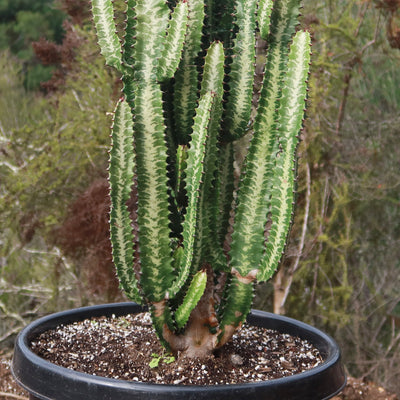
african milk bush indoor plant Shop 'Green African Milk Tree - Euphorbia trigona Green' Care and InfoThe Green African Milk Tree, known as Euphorbia trigona 'Green' s a striking, upright succulent native to the tropical rainforests and savannas of Central Africa particularly found in regions of Cameroon and surrounding areas. This plant is also known as the African milk bush plant. The Trigona refers to the triangular shape of the stems with three distinct sides, resembling a triangle (if it has four sides, you may have a Euphorbia Acrurensis
The Green African Milk Tree, known as Euphorbia trigona 'Green' s a striking, upright succulent native to the tropical rainforests and savannas of Central Africa particularly found in regions of Cameroon and surrounding areas.
This plant is also known as the African milk bush plant. The Trigona refers to the triangular shape of the stems with three distinct sides, resembling a triangle (if it has four sides, you may have a Euphorbia Acrurensis instead).
The African milk tree, Euphorbia trigona, is named for its milky white latex sap, which resembles milk.
This sap serves as a defense mechanism against herbivores but can be toxic and irritating, so avoid contact and handle the plant with care.
This Euphorbia plant is a hybrid between a cactus and a succulent plant, like many others in the Euphorbia genus yet it exhibits characteristics of both.
Its thorny and water storing stem gives it a cactus-like appearance that earned it nicknames like African milk tree cactus, candelabra cactus, cathedral cactus, friendship cactus, and good luck cactus.
But it's not really a cactus at all; it's a succulent plant! It's easy to unintentionally treat it like a cactus, which can cause problems for new owners, but if you follow our care recommendations further below, you'll be fine.
Its upright stems are lined with small thorns and tear drop shaped leaves, giving it a bold, architectural look. Outdoors, it can grow up to 9 feet tall, while indoor plants remain more compact but equally impressive.
As the plant matures, it develops multiple branching stems that give it a dramatic candelabra like shape. Older plants often become thicker and more tree like at the base, adding even more character and visual appeal.
The flowers of the African milk tree bloom during the spring and summer, under bright sunlight. These flowers are typically small and white, attracting pollinators such as bees and butterflies.
When and How to Water Your Green African Milk Tree
Like other Euphorbia plants, the African milk tree, a drought-tolerant is adapted to survive in harsh hot environments, storing water in its stems for months at a time.
Water your African milk tree every 1–2 weeks during the growing season and reduce watering to once every 3–4 weeks, during dormant season.
In the spring and summer you should only water them once every 3-4 weeks at the most. Do not water them unless the soil is dry to a depth of 1-2 inches.
In the fall and winter, the plant growth slows down and it may lose some of its leaves or shrink slightly in size. During this period, reduce watering to once every 4 to 6 weeks, and always check that the soil is completely dry before watering again.
The plant will resume its growth and water requirements once the weather warms up and the days get longer. When you water them, the most important thing is to take care not to overwater them as this wet soil can lead to root rot and fungal infections.
African Milk Tree - Euphorbia trigona 'Rubra'
This Euphorbia trigona also has a stunning Euphorbia trigona 'Rubra' or Royal Red variety with bright red foliage that comes late in the season. This striking variety brings a bold splash of color and unique visual appeal to any plant collection.
Learn more →
Light Requirements - Where to Place Your Green African Milk Tree Plant
When growing indoors, this African milk tree loves bright, indirect sunlight. It thrives in a spot where it can receive around 6 to 8 hours of bright, filtered light each day.
Placing this indoor plant near a window that gets a good amount of natural light is ideal. However, be cautious not to expose it to direct sunlight, as it can scorch the leaves.
When growing outdoors, this succulent does best with about 4 to 6 hours of sunlight daily. It can tolerate some periods of direct sunlight, especially during morning or late afternoon hours, but it's best to avoid prolonged exposure to intense midday sun.
If you notice the leaves of your African succulent turning yellow or brown, it could be a sign that it's getting too much direct light.
Remember to rotate the plant occasionally to ensure even light distribution to all sides. This will help prevent your Euphorbia trigona from leaning or growing unevenly toward the light source.
Optimal Soil & Fertilizer Needs
This plant prefers sandy soil that drains well. Planting them in ordinary soil will result in compacted roots, stunted growth, and most likely root rot. Instead, make or buy a well-draining potting mix, or ideally use our specialized potting mix that contains organic mycorrhizae to promote the development of a strong root system that helps your succulent to thrive.
When fertilizing your african milk tree, you can use natural fertilizers with a balance ratio of NPK 5-10-5. During its active season, applying fertilizer once a year from spring through summer gives it just enough of a nutrient boost without overwhelming its roots.
During fall and winter dormancy, hold off on fertilizing entirely. Feeding the plant while it is resting can push weak, unstable growth and leave it more vulnerable to pests and environmental stress.
Pro Tip
Using a porous clay pot that hasn't been glazed, will absorb excess water and reduce the risk of overwatering.
Hardiness Zone & More
In the United States, Green African Milk Tree is mostly an indoor plant, but if you live in southern Florida or Hawaii, then you can cultivate it outdoors in USDA zones 9-11.
This plant prefers warm temperatures ranging from 60°F to 75°F.
It's important to avoid extreme temperature fluctuations and drafts, as they can stress the plant.
It may not tolerate cold temperatures well, so it's important to protect it from frost and cold drafts. It's important to avoid extreme temperature fluctuations and keep it away from cold drafts or hot, dry air.
The plant can withstand temperatures as low as 25°F, but it's best to protect it from freezing temperatures and frost. If you live in a colder region, it's recommended to keep this plant indoors or provide it with proper protection during winter.
In terms of humidity, this succulent is adaptable and can tolerate a range of humidity levels. It can thrive in average household humidity, but it's important to avoid excessively dry conditions. If the air in your home is particularly dry, especially during winter months or in arid climates, you can increase humidity around the plant by using a humidifier or placing a tray of water near it.
How to Grow Indoors
The African Milk Tree makes an excellent indoor plant thanks to its striking appearance and low maintenance nature. When given plenty of light and the right growing conditions, it can thrive for years while adding a bold, architectural touch to your home.
- Place near a south or east facing window that receives at least 4 to 6 hours of bright light daily.
- Maintain temperatures between 60°F and 75°F for healthy growth.
- Keep away from cold drafts, air conditioning vents, and chilly windows during winter.
- Use a pot with well draining soil that can dry evenly between waterings.
- Rotate the plant occasionally for even growth.
Wildlife - Green African Milk Tree Flowers Attract the Following Friendly Pollinators
The green african milk tree flowers are known to attract a variety of friendly pollinators, including bees, butterflies, and hummingbirds. These pollinators play a crucial role in the ecosystem by aiding in the reproduction of plants and ensuring biodiversity.
Butterflies
Bees
Hummingbirds
Lady Bugs
Multi Pollinators
Other Birds
According to the ASPCA, the Euphorbia trigona 'Green' is considered mildly toxic to both pets and humans. It produces a milky white latex sap that causes skin irritation, redness, and discomfort on contact. It is best to keep this plant out of reach of pets and children, and always wear gloves when pruning or handling it to avoid direct contact with the sap.
How to Propagate Your Green African Milk Tree Succulent
You can propage this plant through stem cuttings. Use a clean, sharp knife or pruning shears to cut a healthy stem from the parent plant. Let the cut end dry and callous over for several days in a warm, dry spot before doing anything else.
Once the end has fully calloused, place it in a pot filled with well-draining cactus or succulent mix. Keep the soil barely moist while the roots develop and set the pot in a bright spot with indirect sunlight and warm temperatures.
Key Takeaways
- The Green African Milk Tree creates an instant focal point with its unique, tree like form and vibrant green stems.
- It is low maintenance and drought tolerant, perfect for plant lovers who want a dramatic statement piece without the demanding care routine.
- This succulent can grow tall and impressive over time, adding strong visual impact indoors or outdoors.
- It grows into an impressive living sculpture that becomes more eye catching with each passing year.
- Adds year round beauty and character to your home, office, patio, or succulent collection.
Final Thoughts
Overall, the African milk tree (Euphorbia trigona) is a unique and fascinating plant. Its distinctive features include tall, branching stems with triangular sections and sharp spines. Whether you are growing it indoors as a bold statement piece or outdoors in a warm climate, this plant genuinely delivers. Just keep the sap away from your skin, your pets, and your children, and you have yourself a striking, long-lived addition to any plant collection.
We think you will love this plant – order your very own Euphorbia trigona - a green healthy African Milk Tree for sale today and start enjoying its beauty in no time!
 ,
,
 and
and

 Promo Codes Available: