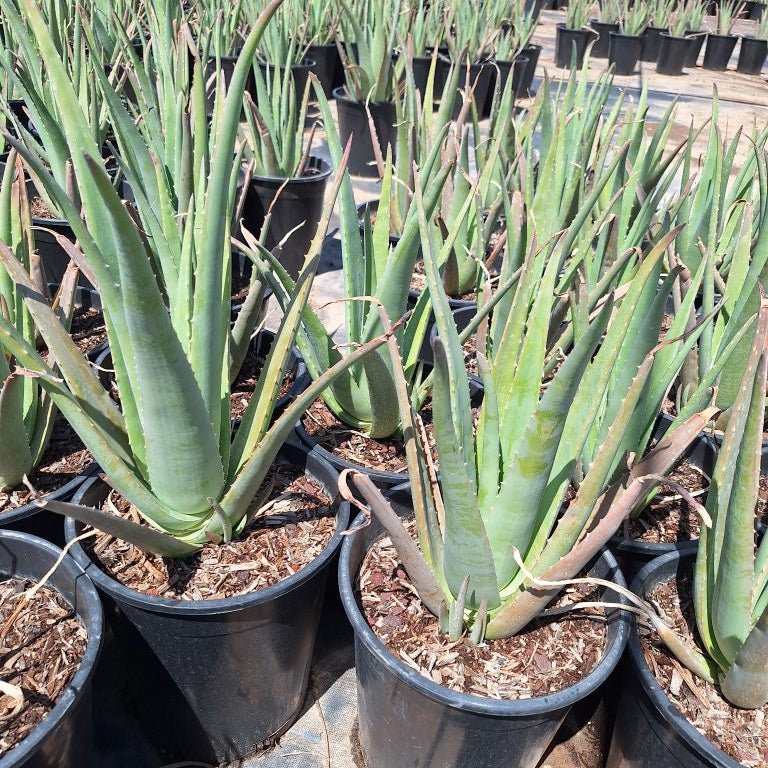
SKU: 21564197337
buy big aloe vera plant

buy big aloe vera plant Buy Aloe Vera Yellow Phoenix, AZ | Aloe barbadensis

Sale price$22.25 Regular price$24.72
Save 10%

Pay in installments of $6.18 with ShopPay, AfterPay and Klarna

Shipping Estimate
USA
  • USA
  • CAN

Ships within 48 hours · Estimated delivery Sep 7 - Sep 12

Promo Codes Available:

For Your Every Summer RSVP, with Code: SUMMER15

Description

buy big aloe vera plant Buy Aloe Vera Yellow Phoenix, AZ | Aloe barbadensisPhoenix's Classic Medicinal Aloe With Sunny Yellow Blooms Aloe vera (Aloe barbadensis) yellow flowering variety is the iconic medicinal aloe that thrives effortlessly across the Phoenix Valley. This fast growing succulent forms large rosettes of thick, gel filled leaves used for centuries to soothe burns and nourish skin, while producing cheerful yellow flower spikes that brighten the winter and spring landscape. Whether you're starting a medicinal

Phoenix's Classic Medicinal Aloe With Sunny Yellow Blooms

Aloe vera (Aloe barbadensis) — yellow flowering variety — is the iconic medicinal aloe that thrives effortlessly across the Phoenix Valley. This fast-growing succulent forms large rosettes of thick, gel-filled leaves used for centuries to soothe burns and nourish skin, while producing cheerful yellow flower spikes that brighten the winter and spring landscape. Whether you're starting a medicinal herb garden in Scottsdale, filling a sunny border in Tempe, or creating a drought-tolerant mass planting in Gilbert — yellow Aloe Vera is one of the easiest, most rewarding desert plants you can grow.

Aloe Vera (Yellow) Plant Details

Attribute Detail
Scientific Name Aloe barbadensis (Aloe vera)
Common Names Aloe Vera, Medicinal Aloe, Yellow Aloe Vera
Mature Height 1–2 feet
Mature Width 2–3 feet
Growth Rate Fast — fills in quickly in Phoenix's warm climate
Sun Full sun to partial shade. Handles reflected heat.
Water Low once established. Highly drought-tolerant.
USDA Zones 9–11 (Phoenix is Zone 9b–10a)
Soil Well-draining. Adapts to Arizona caliche soils.
Foliage Evergreen — thick, gel-filled leaves year-round
Bloom Color Yellow flower spikes, winter to spring
Special Feature Medicinal gel — soothing for burns and skin care

Aloe Vera (Yellow) Uses in Phoenix Landscapes

Medicinal & Herb Gardens

Yellow Aloe Vera is the must-have plant for any medicinal garden in the Phoenix area. Keep it near your kitchen or patio door for instant access to fresh soothing gel whenever you need it for sunburn, minor burns, or skin irritation. It pairs beautifully with rosemary, lavender, and other useful desert herbs.

Mass Plantings & Ground Cover

With its fast growth and prolific pup production, yellow Aloe Vera makes a fantastic living ground cover for sunny slopes, median strips, and large landscape beds. Space plants 2–3 feet apart and they'll fill in within a season. When the yellow flower spikes emerge in winter, the effect across a mass planting is spectacular — neighborhoods in Chandler, Mesa, and Peoria use this technique to great effect.

Pool-Friendly & Foundation Plantings

Aloe Vera's clean rosette form and lack of sharp spines make it ideal around pools, patios, and along foundation walls. It tolerates splash-out chlorine, won't drop messy leaves, and stays evergreen year-round. The sunny yellow blooms add warmth to any outdoor living space.

Container Gardens

Yellow Aloe Vera thrives in containers on patios, balconies, and porches throughout the Valley. Use a well-draining cactus mix in a pot with drainage holes. Containers make it easy to share pups with friends and neighbors — this is one of the most generous plants in the desert.

Best Time to Plant Aloe Vera in Phoenix

Fall (October–November) is the ideal window — warm soil encourages rapid root growth while cooler air reduces transplant stress, giving the plant 6–8 months of establishment before summer. Spring (February–April) is the second-best option. Aloe Vera is tough enough to plant almost year-round in Phoenix, but avoid the peak summer months (June–August) if possible.

How to Plant Aloe Vera

  1. Dig wide, not deep — 2–3x the root ball width, same depth as the container.
  2. Check for caliche — break through any hardpan layer for good drainage.
  3. Backfill with native soil — Aloe Vera is not fussy; a light 20% perlite blend improves drainage.
  4. Spacing — 2–3 feet apart for mass plantings; 3 feet for individual specimens.
  5. Water basin — build a 3–4 inch ring to direct water to roots during establishment.
  6. Mulch — 2–3 inches of gravel or decomposed granite around the base.

Watering Aloe Vera in Phoenix

First Year Watering Schedule

Weeks 1–2: Every 2–3 days, deep and slow. Month 1–2: Every 3–4 days. Month 3–6: Every 7–10 days (every 5–7 days in peak summer). After Year 1: Every 10–14 days in summer; every 3–4 weeks in winter. Aloe Vera stores water in its thick leaves — overwatering is the most common mistake.

Drip Irrigation

Place one 1-GPH emitter 8–12 inches from the base. Run for 20–30 minutes per session. Established plants are remarkably drought-tolerant and may only need supplemental water every 2–3 weeks in summer.

How fast does yellow Aloe Vera grow in Phoenix?
Very fast. A 1-gallon plant can reach its full 2–3 foot spread within 1–2 years in the ground, and it produces abundant pups (offsets) that can be divided and replanted.

What's the difference between yellow and orange Aloe Vera?
The yellow and orange varieties are the same species (Aloe barbadensis) with different flower colors. Growth habit, size, medicinal properties, and care are identical — choose whichever bloom color you prefer.

Is the gel in yellow Aloe Vera the same as regular Aloe Vera?
Yes. The thick, clear gel inside the leaves has the same soothing, moisturizing properties regardless of flower color. Simply slice a mature outer leaf and apply the gel to minor burns, sunburn, or irritated skin.

Does Aloe Vera spread on its own?
Yes — Aloe Vera produces abundant offsets (pups) around the base of the mother plant. These can be left to form a colony or divided and replanted elsewhere. It's one of the easiest plants to propagate and share.

You May Also Like

Aloe vera - orange — The orange-flowering version of the same classic medicinal aloe.

Aloe Hybrid — A variegated hybrid aloe with colorful spotted rosettes and vibrant blooms.

Aloe humilis — A compact clustering aloe perfect for rock gardens and small spaces.

Aloe Banseii — A tree-forming aloe that adds dramatic height to succulent gardens.

How Many Aloe Vera Do I Need?

Yellow Aloe Vera is a fast, clumping rosette 2 to 3 feet wide that pups freely, so it reads as a living groundcover when planted in drifts. Use roughly 30-inch spacing (center to center) for solid coverage. Plant the table counts below, then let the pups knit the gaps closed within a season.

Area to cover Plants needed (30 in spacing)
25 sq ft 4 plants
50 sq ft 8 plants
100 sq ft 16 plants
200 sq ft 32 plants

For a single accent or container specimen, one plant is plenty: it will form its own colony over time.

Aloe Vera (Yellow) Season-by-Season in Phoenix

  • Spring (Feb to Apr): Tail end of the yellow bloom spikes, with a strong flush of new leaves and pups as soil warms. Excellent second planting window.
  • Summer (May to Sep): Takes full Valley heat and reflected heat in stride. Growth slows at the hottest peak. Monsoon humidity is fine as long as the soil drains: avoid standing water.
  • Fall (Oct to Nov): Prime planting season. Roots establish fast in warm soil ahead of the cool months.
  • Winter (Dec to Jan): Cheerful yellow flower spikes rise above the rosettes. Aloe Vera is lightly frost-tender: leaf tips can scorch below about 28 to 30°F. In a hard Valley frost, cover the plants overnight or site them under eaves or a canopy.

At a Glance

✔ Hummingbird-Friendly   ✔ Pollinator-Friendly   ✔ Heat-Loving (Reflected-Heat Tolerant)   ✔ Drought-Tolerant   ✔ Pool-Friendly (Low-Litter)   ✔ Spineless   ✔ Evergreen   ✔ Low-Maintenance   ✔ Deer & Rabbit-Resistant

Plant It With

  • Aloe vera - orange: The orange-blooming twin, for a two-tone medicinal aloe drift.
  • Aloe Hybrid: Spotted, colorful rosettes that add pattern next to the clean green leaves.
  • Aloe humilis: A compact clumping aloe that fills the front edge of the bed.
  • Aloe Banseii: A taller tree-forming aloe for height behind the mass planting.

Is Aloe Vera (Yellow) Right for Your Yard?

Yes if you have full sun to light shade, fast-draining or amended caliche soil, and want an easy, useful, spineless succulent that is safe beside pools, walkways, and play areas. It shrugs off heat and drought and shares pups generously. Not the best fit if your spot stays wet or poorly drained, or if it sits in an unprotected frost pocket where temperatures regularly drop below the upper 20s without any cover.

Shipping Notes
  • Free Standard Shipping on $100+ Orders to the USA.
  • Except Preorder products are shipped in 48 hours.
  • Delivery to the USA:
  1. Standard Shipping : 3-10 business days
  • If time is of the essence, please consider selecting expedited delivery for faster service.
Exchange/Return Notes
  • We offer a 30-day return/exchange service after receiving.
  • Final sale items are not eligible for returns or exchanges.
  • To process your return/exchange, please contact us at [email protected]
  • Please click here for more details>>> Return & Exchange Policy
SKU: 21564197337

Discover Niche Categories That Outsell buy big aloe vera plant

Top-Converting Item to Boost Your Average Order

4.7 ★★★★★
Based on 13 reviews
Sort
Highest Rating
Newest First
Oldest First
Product Reviews
W
William Nutter
Whiting, US
★★★★★ 5
Who knew? Right?
Format: Kindle
Alexander the Great is one of the most prominent figures in ancient history, known for his military conquests and political prowess. Born in 356 BCE in Pella, the ancient capital of Macedonia, Alexander was the son of King Philip II and Queen Olympia. From an early age, Alexander was groomed for leadership and given a rigorous education in military strategy, politics, and philosophy under the tutelage of Aristotle. When Alexander was only 20 years old, he succeeded his father as king of Macedonia. Immediately upon taking the throne, he set his sights on expanding his empire. In 334 BCE, Alexander led an army of approximately 35,000 soldiers across the Hellespont, a narrow strait that separates Europe and Asia. This marked the beginning of his campaign to conquer the Persian Empire. Over the course of the next decade, Alexander achieved a series of stunning victories on the battlefield. He defeated the Persian king Darius III at the Battle of Issus in 333 BCE, and again at the Battle of Gaugamela in 331 BCE. He then continued his conquests into Central Asia and India, where he faced fierce resistance from local armies and encountered new cultures and religions. Despite facing numerous challenges and setbacks, Alexander was a brilliant military strategist who was able to adapt to changing circumstances and inspire his troops to victory. He was known for leading his soldiers from the front, and he fought alongside them in many battles. His leadership style earned him the loyalty and admiration of his soldiers, who were willing to follow him to the ends of the earth. In addition to his military conquests, Alexander was also a skilled politician and diplomat. He understood the importance of winning over the hearts and minds of the people he conquered, and he adopted many of the customs and traditions of the cultures he encountered. He also founded several new cities, including Alexandria in Egypt, which became a major center of learning and culture in the ancient world. Despite his many successes, Alexander's life was cut tragically short. He died in 323 BCE at the age of 32, possibly from malaria or poisoning. His death left a power vacuum in his empire, which led to a period of instability and conflict known as the Wars of the Diadochi. Today, Alexander is remembered as one of the greatest military commanders in history. His conquests had a profound impact on the ancient world, spreading Greek culture and Hellenistic ideas throughout the Mediterranean and Near East. His legacy also lives on in the many cities he founded, which served as centers of trade, commerce, and learning for centuries to come. Alexander the Great was a remarkable leader who left an indelible mark on history. He was a brilliant military strategist, a skilled politician, and a charismatic leader who inspired loyalty and devotion from his soldiers. His legacy continues to be felt today, and his story serves as a reminder of the power of human ambition, courage, and determination.
WAS THIS REVIEW HELPFUL?YesReportShare
Reviewed in the United States on April 13, 2023
V
Verified Purchase
Virginia Jennings
Houston, US
★★★★★ 1
Disappointing
Format: Paperback
Disappointing
WAS THIS REVIEW HELPFUL?YesReportShare
Reviewed in the United States on March 8, 2025
J
Verified Purchase
Jaren
Phoenix, US
★★★★★ 5
Being “Othered” is Real
Format: Kindle
Sky Full of Elephants opens with a haunting and unforgettable image: all the white people walking silently into bodies of water. That beginning alone tells you this is not a book that will play it safe. It is bold, layered, and deeply intentional. The writing is beautiful and the story forces readers to confront what Black history truly is: American history. The novel doesn’t just imagine a world; it holds up a mirror to the one we’ve lived in and the one we’re still shaping. It explores identity, belonging, grief, and survival in a way that feels both speculative and painfully real. As someone who grew up attending predominantly white schools, I connected deeply with Sidney’s experiences. Being “othered” (constantly reminded that you are different, that you don’t quite belong) leaves marks that follow you long after childhood ends. Some of the moments Sidney endures felt painfully familiar, and I found myself reflecting on my own younger self while reading. What struck me most, though, was reading this story as a mother. I have a biracial daughter, and her experience has been very different. She has never been made to feel like she doesn’t belong. She has never been othered. She has always been rooted in her Black identity, primarily raised by her Black mother, surrounded by family who affirm her. Even after I remarried and joined a Black family, she was embraced fully, never questioned, never treated as “less than,” never made to feel separate. Reading Sidney’s journey made me profoundly grateful that my daughter’s story has unfolded differently. It also reminded me how much environment, affirmation, and community matter in shaping a child’s sense of self. Sky Full of Elephants is more than a speculative novel. It is a meditation on race, memory, and belonging. It asks hard questions about America while honoring the fullness and complexity of Black identity. This book lingers with you. It sparks reflection. It opens conversations. And for me, it felt both personal and powerful.
WAS THIS REVIEW HELPFUL?YesReportShare
Reviewed in the United States on February 14, 2026
S
Verified Purchase
S. Donaldson
Chelsea, US
★★★★★ 4
Good Read!
Format: Audiobook
I read this along with my son and his girlfriend in a family “book club”. We had a good discussion about the ending, as we each had differing perspectives, but that was fun! The book was really interesting, and the characters were so well defined and deeply moving. Good read, but the ending left us a little confused.
WAS THIS REVIEW HELPFUL?YesReportShare
Reviewed in the United States on March 16, 2026
K
Verified Purchase
Katherine Ross
Grantham, US
★★★★★ 5
Thought provoking
Format: Kindle
Sky Full of Elephants is a work of speculative fiction that begins with the premise that the white population of the United States has been wiped out. Starting a year after “the event” and following Charlie, a man who spent 20 years in prison due to a cowardly lie, and his resentful, biracial 19 year old daughter, who witnessed her only known family drown themselves, it is at its core a quest for identity in its many forms and how trauma can co-opt that search. In rating and reviewing this book, I’m aware that my lens as a Gen-X, cis-het, white woman, will have a differing view from others’ lived experiences. In reading other reviews, I definitely saw points that I didn’t consider, which I hope is the main point of the book. I do think, as a work of speculative fiction, that it does require the suspension of disbelief from the get go. It is a philosophical “what if” that Mr. Campbell invites the reader to consider. Intrigued by the premise, I was drawn into the story due to Mr. Campbell’s lyrical writing style. The narrative had a rhythmical flow to it that supported the world building and characterizations. I found Charlie to be a very sympathetic character, rebuilding a life shattered by lies in a new world and confronted with the daughter he never had a chance to know. Sydney, Charlie’s daughter, was more of a struggle to empathize with. While her feelings were justified and understandable, her growth throughout the novel was erratic. As the story has an ambiguous ending, perhaps her character will continue to improve. For supporting cast, the grumpy pilot Sailor and his nonbinary child, Zu, offer a counterpoint to Charlie and Sidney’s emerging relationship. The king and queen of Alabama and the thriving town of Mobile were well fleshed out. The Walkers and Sidney’s Aunt Agatha in Orange Beach represented those who were lost in their own way, either due to clinging to their former proximity to whiteness or to the religious biases they were raised with. I found the Walkers to be the most tragic of all. The questions of identity throughout the story are what kept be invested throughout. Are we defined by the color of our skin, our behaviors, the groups we belong to, the choices we make? Are others more valuable or worthy who don’t suffer the same things we do? Does there have to be those that are “lesser” to make us feel whole? As a trauma survivor with C-PTSD, I struggle with my own issues of identity and worthiness, and as a former Special Education teacher, I’ve been witness to that struggle in others. I have never understood or accepted the idea of White Supremacy or Christian Supremacy or any of the myriad ways that humanity continues to other each of us. In reality, there is no “us” or “them” only”we”. Charlie questions who he is as a Black man in the US, a convict, a teacher, a father, and ultimately a fixer and healer. Sidney grapples with her biracial otherness, her wealthy upbringing and sheltered life, the trauma of abandonment, and the lies that her life was built on. The ethical question of the machine at the epicenter of the event adds another layer to the story. While the effects of the first usage were unintended, once they were known is it right to continue to fix it and use it again? Can healing a part of collectiveness that harms or destroys another part ultimately be worth the cost? The world and its people are broken and desperately need healing. But just like the question of eugenics, what of value is lost when specific traits are universally stripped away? And who gets the to decide what is of value anyway? The ambiguity of the ending doesn’t answer the question entirely of what happens when the machine is repaired, but Charlie’s ability to fix things leads me hopeful. Personally, I cared enough about these characters to be interested in a sequel.
WAS THIS REVIEW HELPFUL?YesReportShare
Reviewed in the United States on February 24, 2026

recommand products