Pay in installments of $6.02 with
 ,
,
 and
and

Shipping Estimate
USA
- USA
- CAN
- USA
- CAN
Ships within 48 hours · Estimated delivery Sep 11 - Sep 16
 Promo Codes Available:
For Your Every Summer RSVP, with Code: SUMMER15
Description
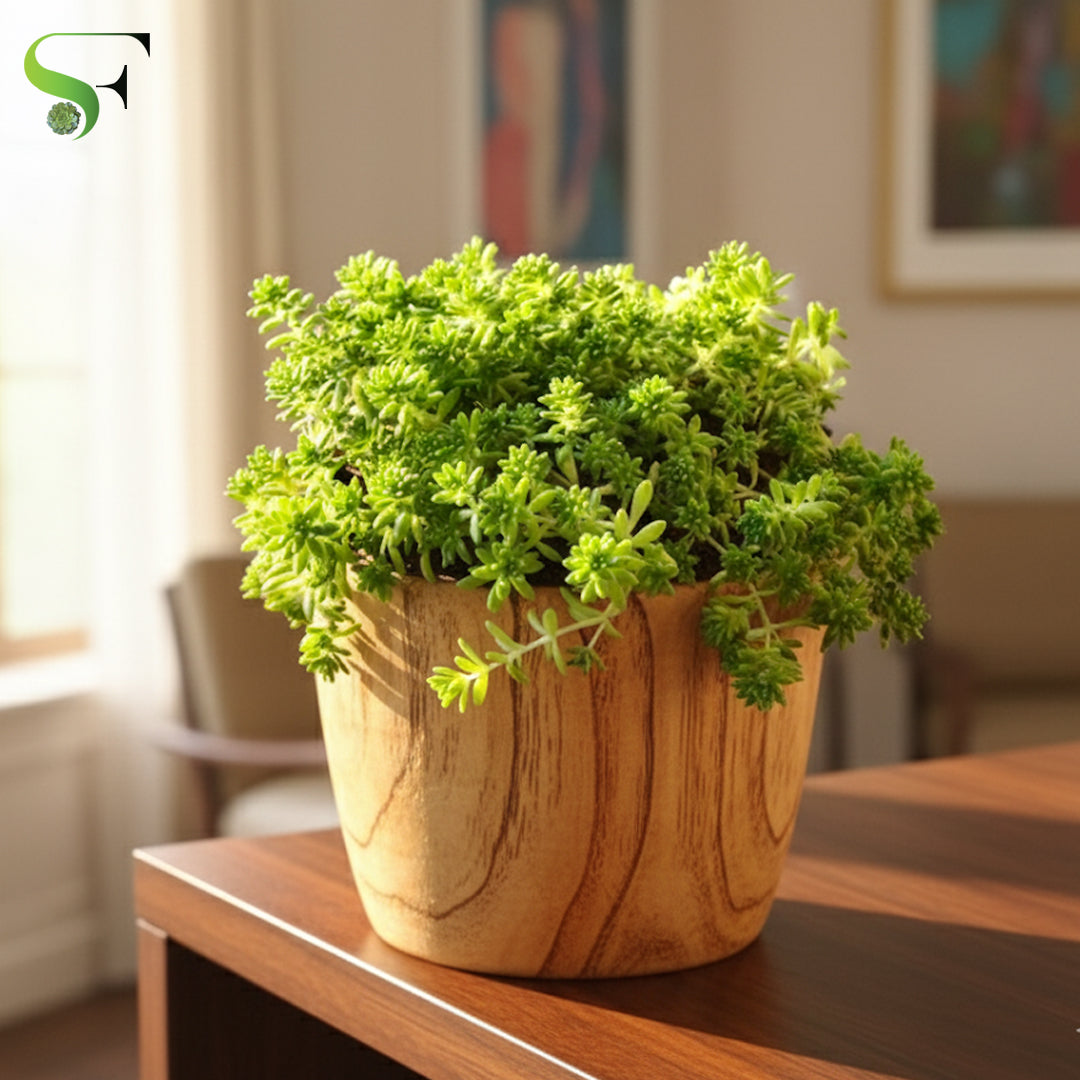
sedum a succulent Sedum Green Mini – Succulent Factory IndiaSedum Green Mini: The Tiny Green Gem Grown In House for Bulk Beauty! Discover the delightful charm of Sedum Green Mini! This adorable and compact succulent, often referred to as "Miniature Stonecrop" or "Small Green Sedum," is a true little treasure for any plant enthusiast. While it may not boast fiery hues, its appeal lies in its dense, lush green foliage and incredibly easy going nature. Perfect for creating intricate miniature landscapes, adding
Sedum Green Mini: The Tiny Green Gem – Grown In-House for Bulk Beauty!
Discover the delightful charm of Sedum Green Mini! This adorable and compact succulent, often referred to as "Miniature Stonecrop" or "Small Green Sedum," is a true little treasure for any plant enthusiast. While it may not boast fiery hues, its appeal lies in its dense, lush green foliage and incredibly easy-going nature. Perfect for creating intricate miniature landscapes, adding texture to arrangements, or as a charming standalone, Sedum Green Mini is a must-have for both beginners and seasoned succulent lovers. At our succulent factory in Bengaluru, Karnataka, India, we specialize in growing Sedum Green Mini in-house, in bulk, ensuring a consistent supply of healthy, vibrant plants for all your gardening needs.
Detailed Introduction: A Compact Carpet of Green from Our Bengaluru Factory
Sedum Green Mini is a charming member of the Crassulaceae family, renowned for its hardiness and diverse forms. This particular variety stands out for its petite size and tightly packed, spherical, bright green leaves that form a dense, moss-like mat or a compact mound. Unlike some of its more flamboyant cousins, the beauty of Sedum Green Mini lies in its subtle elegance and uniform, vibrant green color.
This succulent typically grows to a diminutive height of just 1-3 inches (2.5-7.5 cm) but can spread quite extensively, forming a charming groundcover or gracefully spilling over the edges of pots. Its compact growth habit makes it ideal for succulent arrangements, terrariums, fairy gardens, or as a living mulch in larger planters. While not known for prominent blooms, mature plants may occasionally produce tiny, star-shaped yellow flowers, adding a delicate touch in late spring or early summer.
Why Sedum Green Mini is a Must-Have:
- Compact & Adorable: Perfect for small spaces, arrangements, and miniature gardens.
- Lush Green Texture: Adds a vibrant, soft green accent to any setting.
- Low Maintenance: Extremely forgiving and ideal for busy lifestyles.
- Versatile Use: Excellent for groundcover, fillers, or standalone potted plants.
- Drought Tolerant: Thrives with minimal watering, fitting well into dry garden themes.
- Bulk Availability: Cultivated in our Bengaluru factory, ensuring premium quality and quantity for your projects.
Care Tips: Nurturing Your Tiny Green Gem for Robust Growth
Sedum Green Mini is remarkably resilient and low-maintenance, making it an excellent choice for a wide range of gardeners, including those new to succulents. Following these simple care tips will ensure your plant thrives, just as they do in our controlled nursery environments.
- Potting Mix: The most critical factor for succulent health is excellent drainage. Use a well-draining succulent or cactus mix. You can also create your own by blending equal parts potting soil, perlite, and coarse sand.
- Container: Always choose a pot with drainage holes to prevent waterlogging, which is detrimental to all succulents. Terracotta pots are often recommended as they allow for better air circulation and moisture evaporation.
- Fertilizing: Sedum Green Mini is not a heavy feeder. Fertilize sparingly, if at all, during its active growing season (spring and summer). Use a highly diluted (e.g., half-strength) balanced liquid succulent fertilizer. Over-fertilizing can lead to weak, leggy growth.
- Pest and Disease Control: Generally quite resistant to pests and diseases. However, occasionally check for common succulent pests like mealybugs or aphids. If detected, treat with insecticidal soap or neem oil. Ensure good air circulation, especially in a humid climate like Bengaluru, to prevent fungal issues.
- Pruning: Little to no pruning is required due to its compact nature. You can trim any stray or leggy growth to maintain a neat appearance or to take cuttings for propagation.
Watering Requirement: The Bengaluru Balance – Precision is Key for Miniatures
When it comes to watering Sedum Green Mini, the golden rule of succulents applies: underwatering is always preferable to overwatering. This tiny plant stores water efficiently in its leaves, making it highly drought-tolerant. In a climate like Bengaluru, where ambient humidity can fluctuate, precise watering is crucial.
- The "Soak and Dry" Method: This is the most effective watering technique. Water thoroughly until water drains from the bottom of the pot.
- Allow Soil to Dry Completely: Before watering again, allow the soil to dry out completely. For small pots, this might happen faster than larger ones. Depending on your climate, humidity (common in Bengaluru), and pot size, this could range from a few days to a week or more.
- Check Soil Moisture: A simple finger test works best: stick your finger about an inch or two into the soil. If it feels moist, wait. If it's completely dry, it's time to water. A moisture meter can also be a useful tool.
- Winter Watering: During the cooler, drier winter months in Bengaluru, significantly reduce watering frequency. Water only once every few weeks, or even once a month, depending on your indoor environment and the plant's condition.
Signs of Underwatering vs. Overwatering:
- Underwatering: Leaves may appear slightly less plump, shriveled, or wrinkly. They will usually plump up nicely after a good watering.
- Overwatering: Leaves may turn yellow, mushy, or translucent. The stem might feel soft or show signs of rot. This is a severe issue and can quickly lead to the plant's demise.
Sunlight Requirement: Optimal Light for Vibrant Green
While Sedum Green Mini doesn't need intense sun for color development like some other sedums, sufficient light is crucial for its dense, compact growth and vibrant green hue.
- Bright Indirect to Partial Sun: This succulent thrives in bright indirect light to partial sun, meaning around 4-6 hours of gentle direct sunlight (like morning sun) per day. Too much intense, direct afternoon sun, especially during the peak summer in Bengaluru, might cause the leaves to scorch or lighten.
- Indoors: If growing indoors, place your Sedum Green Mini in the brightest window available, such as an east or north-facing window, or a south/west-facing window with filtered light. If natural light is insufficient, especially during monsoon or cloudy periods, supplement with a grow light to prevent etiolation.
- Insufficient Light: Without enough light, the plant will become leggy (etiolated), stretching and elongating with increased spacing between leaves, losing its desirable compact form and vibrant green color.
Procedure to Propagate: Effortlessly Multiply Your Mini Greens
Sedum Green Mini is incredibly easy to propagate, allowing you to quickly expand your collection or share these charming plants. The most common and highly successful methods are stem cuttings and leaf cuttings. Its rapid rooting makes it a perfect candidate for bulk propagation.
1. Propagation by Stem Cuttings (Most Recommended):
This method is quick and yields larger new plants faster.
- Materials: Sharp, clean scissors or pruning shears, well-draining succulent potting mix, small pots or a propagation tray.
-
Steps:
- Take Cuttings: Choose healthy, mature stems that are at least 1-2 inches (2.5-5 cm) long. Make a clean cut just below a leaf node.
- Allow to Callus: This is a crucial step! Place the cuttings in a dry, well-ventilated area away from direct sunlight for 2-5 days. This allows the cut end to form a protective callus, preventing rot when planted. This is particularly important in Bengaluru's humidity.
- Plant Cuttings: Once callused, gently insert the cut end of each stem about 0.5-1 inch (1-2.5 cm) deep into moist (not wet) succulent potting mix. You can plant multiple cuttings in one pot to create a fuller look.
- Initial Care: Do not water immediately after planting. Wait a few days to a week to allow the roots to start forming.
- Watering: Once roots begin to form (you can gently tug on a cutting to feel resistance), begin to water sparingly, using the "soak and dry" method.
- Light: Place the cuttings in bright, indirect light until they are well-rooted. Once established, they can gradually be moved to their preferred light conditions.
- Transplanting: Once the cuttings have developed a robust root system (usually within 3-5 weeks), they can be transplanted into individual pots or integrated into arrangements.
2. Propagation by Leaf Cuttings:
This method takes a bit longer but is excellent for maximizing your plant production from even a single leaf.
- Materials: Healthy, plump leaves, well-draining succulent potting mix, flat tray or shallow pot.
-
Steps:
- Harvest Leaves: Gently twist or carefully pull a healthy, whole leaf from the stem. Ensure the entire base of the leaf is intact, as this is where the new plantlet will emerge.
- Allow to Callus: Lay the leaves on a dry, well-ventilated surface away from direct sunlight for 2-5 days to allow the cut end to callus.
- Lay on Soil: Once callused, lay the leaves flat on top of moist (not wet) succulent potting mix. Do not bury them.
- Initial Care: Place the tray in bright, indirect light. Mist the soil lightly every few days, or when the soil appears completely dry, to maintain a slightly humid environment around the leaves.
- New Growth: Within a few weeks to a couple of months, you will see tiny roots emerging from the base of the leaf, followed by a tiny rosette (the new plantlet).
- Parent Leaf: The parent leaf will shrivel and eventually fall off as the new plantlet grows, providing essential nutrients to the new plant.
- Watering: Once the new plantlet is established and the parent leaf has shriveled, you can begin to water more regularly using the "soak and dry" method.
- Transplanting: Once the new plantlet is a few inches tall and has a healthy root system, it can be transplanted into its own pot.
Tips for Successful Propagation:
- Sterile Tools: Always use clean, sharp tools to prevent disease.
- Patience: Succulent propagation takes time, so be patient and avoid disturbing the cuttings frequently.
- Warmth: Consistent warm temperatures, typical in Bengaluru, can encourage faster rooting.
- Avoid Overwatering: This is the most common mistake in propagation and leads to rot.
Embrace the Sedum Green Mini Charm! Grown with Expertise in Bengaluru
Sedum Green Mini is a delightful and resilient succulent that adds a touch of fresh green elegance to any collection or design. Its compact size and ease of care make it a fantastic choice for both novice and experienced gardeners. As a premier succulent factory in Bengaluru, Karnataka, we proudly cultivate Sedum Green Mini in bulk, employing expert techniques to ensure you receive healthy, robust, and beautiful plants every time. Enhance your green spaces with this charming miniature succulent!
#SedumGreenMini #MiniatureSucculent #GreenSucculent #CompactSucculent #EasySucculent #DroughtTolerant #SucculentPropagation #IndoorPlants #OutdoorPlants #GardenGoals #PlantLove #SucculentLover #Xeriscaping #ContainerGardening #PlantTips #GardeningIndia #BrightIndirectLight #LowMaintenancePlants #TexturalPlants #PlantsofInstagram #HomeDecor #GardenInspiration #BulkSucculents #BengaluruPlants #KarnatakaPlants #SucculentFactory #WholesalePlants #GrowerDirect #IndianGardening #MossLikePlant
Shipping Notes
- Free Standard Shipping on $100+ Orders to the USA.
- Except Preorder products are shipped in 48 hours.
- Delivery to the USA:
- Standard Shipping : 3-10 business days
- If time is of the essence, please consider selecting expedited delivery for faster service.
Exchange/Return Notes
- We offer a 30-day return/exchange service after receiving.
- Final sale items are not eligible for returns or exchanges.
- To process your return/exchange, please contact us at [email protected]
- Please click here for more details>>> Return & Exchange Policy