Pay in installments of $5.80 with
 ,
,
 and
and

Shipping Estimate
USA
- USA
- CAN
- USA
- CAN
Ships within 48 hours · Estimated delivery Sep 5 - Sep 10
 Promo Codes Available:
For Your Every Summer RSVP, with Code: SUMMER15
Description
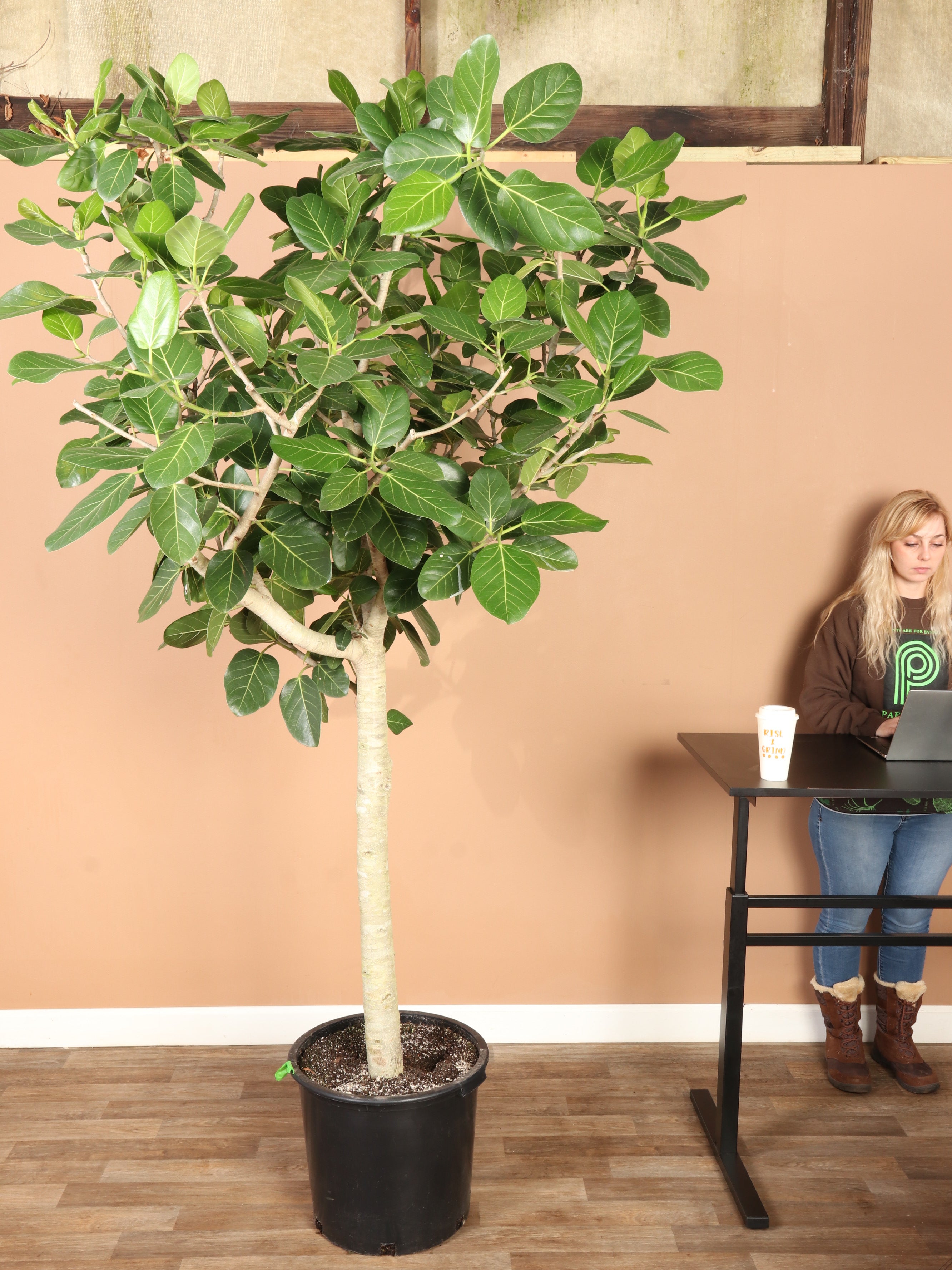
ficus audrey in the wild 7-10 FT Tall Audrey FicusDescription Meet the Audrey Ficusthe sophisticated older sister of the fiddle leaf fig! With her velvety oval leaves and gorgeous pale veining, she's like discovering the perfect vintage jacket at a thrift storeunexpectedly elegant, incredibly versatile, and guaranteed to attract attention. Native to India and Pakistan, this indoor banyan tree knows how to command attention while keeping things manageable. Indoors, your Audrey Ficus will gracefully
Description
Meet the Audrey Ficus—the sophisticated older sister of the fiddle leaf fig! With her velvety oval leaves and gorgeous pale veining, she's like discovering the perfect vintage jacket at a thrift store—unexpectedly elegant, incredibly versatile, and guaranteed to attract attention.
Native to India and Pakistan, this indoor banyan tree knows how to command attention while keeping things manageable. Indoors, your Audrey Ficus will gracefully reach 5-10 feet tall, creating that perfect "I definitely have my interior design game figured out" vibe. Unlike her fussier sister the fiddle leaf fig, she's forgiving about your plant-parenting mishaps and won't throw dramatic tantrums when you're not perfect.
Care
How do you care for an Audrey Ficus?
Audrey Ficus care is refreshingly straightforward: bright indirect light placement, careful watering when the top two inches feel dry, regular gentle misting for proper humidity, and monthly balanced fertilizer during the active growing season for optimal health and vibrant growth.
She'll thrive near a south or west-facing window where she can bask in plenty of bright, filtered light. Water her thoroughly when the top 1-2 inches of soil are completely dry, then let excess water drain away (she hates soggy feet). A little humidity makes her happy, so mist occasionally or use a humidifier. During spring and summer, feed her a balanced fertilizer at half strength monthly—she's not a heavy eater, just appreciates the occasional nutritional boost.
Is Audrey Ficus a good indoor plant?
The Audrey Ficus is an absolutely excellent indoor plant, offering lush tropical vibes with significantly easier care requirements than most large-leafed statement plants, making it perfect for intermediate plant parents seeking dramatic visual impact without constant stress and fussiness.
She adapts beautifully to indoor life and adds instant sophistication to any space. Her air-purifying qualities are just a bonus—she's primarily here to make your home look like it belongs in a design magazine. Unlike some divas in the plant world, she's genuinely pleasant to live with and won't punish you for minor care slip-ups.
Can Audrey Ficus tolerate low light?
Audrey Ficus can tolerate medium light conditions reasonably well but absolutely won't thrive in truly low light situations. She strongly prefers several hours of bright, indirect sunlight daily for optimal growth, vibrant coloring, and healthy leaf development throughout the year.
She's flexible but not a miracle worker. In lower light, you'll notice slower growth and potentially some leaf drop as she conserves energy. For her to really show off those stunning velvety leaves and maintain her elegant form, give her the bright spot she deserves.
How often do you water an Audrey Ficus?
Water your Audrey Ficus thoroughly only when the top 1-2 inches of soil are completely dry, which typically occurs every 1-2 weeks during active growing season and every 2-3 weeks during winter months when growth naturally decreases.
Always check the soil moisture rather than following a rigid schedule—she's much more forgiving of slight underwatering than overwatering. During her active growing period in spring and summer, she'll be thirstier, while winter calls for more restrained watering as her growth slows down.
How quickly does an Audrey Ficus grow indoors?
The Audrey Ficus grows at a pleasantly moderate pace indoors, typically adding around 12-24 inches per year with proper care and attention, gradually reaching its full indoor size of 5-10 feet tall in approximately 5-7 years under ideal growing conditions.
She's not in any rush to overwhelm your space, which makes her perfect for planning your room's layout. This steady growth means you can enjoy watching her gradually transform into a stunning floor-to-ceiling statement piece without suddenly finding yourself living in a jungle overnight.
How much sun does Ficus Audrey need?
Your Audrey Ficus needs several hours of bright, indirect sunlight daily. Gentle morning or evening direct sun is perfectly acceptable, but she won’t appreciate harsh midday sun. Position her near a bright window to soak up plenty of filtered light.
Should I mist my Audrey Ficus?
Misting your Audrey Ficus is definitely good for her health, especially in dry indoor environments. This increases humidity levels and keeps her beautiful velvety leaves clean and dust-free, though not strictly necessary if you maintain adequate household humidity levels.
She appreciates the extra moisture and attention, particularly during winter when indoor air tends to be drier. A light misting every few days or using a humidifier nearby will keep her looking her absolute best and help prevent those crispy leaf edges.
What is the best fertilizer for an Audrey Ficus?
The best fertilizer for your Audrey Ficus is a balanced, water-soluble option with standard NPK ratios like 10-10-10 or 20-20-20, diluted to half strength and applied monthly during spring and summer. Skip the feeding entirely during fall and winter.
Pet-friendly?
The Audrey Ficus is definitely not pet-friendly. While she's gorgeous to look at, she's not safe for nibbling. Her sap contains ficin and proteolytic enzymes that can cause some seriously unpleasant digestive issues for your furry friends.
Is Audrey Ficus toxic to dogs?
The Audrey Ficus is definitely toxic to dogs, with its natural latex sap containing ficin and proteolytic enzymes that can cause vomiting, diarrhea, and oral irritation. If your pup decides to take a taste test, contact your vet right away.
Is Audrey Ficus poisonous to cats?
The Audrey Ficus is toxic to cats, with its natural latex sap potentially causing drooling, vomiting, diarrhea, and mouth irritation. Keep her positioned where your kitty can appreciate her elegance without being tempted to turn her into a salad course.
Factoids
What is the difference between an Audrey Ficus and a Fiddle Leaf Fig?
The Audrey Ficus has oval, velvety leaves and is much easier for busy plant parents to care for. The Fiddle Leaf Fig has dramatic, violin-shaped, glossy leaves and is higher maintenance. Both reach impressive indoor heights when cared for.
Think of Audrey as the cool, collected sister who has her life together, while the Fiddle Leaf Fig is the dramatic sibling who requires constant attention. Both are stunning, but Audrey Ficus won't sulk if you're not perfect with her care routine.
Is Ficus Audrey rare?
Ficus Audrey is considerably less common than the popular Fiddle Leaf Fig but is becoming increasingly available through speciality plant shops and online retailers, so it's not considered truly rare, just more exclusive and harder to find than mainstream houseplants.
She's having her moment in the spotlight as more plant lovers discover her superior temperament and gorgeous looks. While you might not find her at every big box store, she's definitely accessible for anyone ready to upgrade their plant game.
What is the benefit of Audrey Ficus?
The Audrey Ficus gives you healthier indoor air, looks gorgeous, and is significantly easier to care for than similar large-leafed plants. All this makes her perfect if you’re not quite the green-fingered goddess or god you’d like to be.
Where does Audrey Ficus get its name?
The "Audrey" moniker is a modern addition that perfectly captures her sophisticated, timeless appeal—much like a certain iconic actress. Her botanical name, “Ficus benghalensis”, comes from her South Asian heritage and connection to the sacred banyan trees of India.
Buy an Audrey Ficus
Turn your space from "nice apartment" to "botanical sanctuary" with this effortlessly elegant statement piece. Our Audrey Ficus brings sophisticated elegance and air-purifying power to any room, creating that coveted "I definitely know what I'm doing with plants" energy that makes guests wonder if you've secretly hired an interior designer.
With our live video shopping calls, you can literally point and say "THAT gorgeous Audrey!" to select the exact Ficus benghalensis 'Audrey' that makes your plant-loving heart sing. No guessing games, no plant roulette—just you, meeting your future green companion face-to-face before she ships safely to your door. Because finding your perfect banyan tree should be as elegant as the plant herself!
Shipping Notes
- Free Standard Shipping on $100+ Orders to the USA.
- Except Preorder products are shipped in 48 hours.
- Delivery to the USA:
- Standard Shipping : 3-10 business days
- If time is of the essence, please consider selecting expedited delivery for faster service.
Exchange/Return Notes
- We offer a 30-day return/exchange service after receiving.
- Final sale items are not eligible for returns or exchanges.
- To process your return/exchange, please contact us at [email protected]
- Please click here for more details>>> Return & Exchange Policy