Pay in installments of $5.59 with
 ,
,
 and
and

Shipping Estimate
USA
- USA
- CAN
- USA
- CAN
Ships within 48 hours · Estimated delivery Sep 4 - Sep 9
 Promo Codes Available:
For Your Every Summer RSVP, with Code: SUMMER15
Description
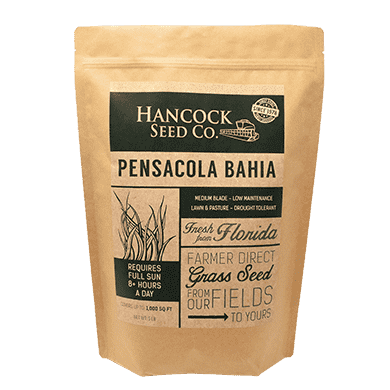
bahiagrass herbicide Hancock's Pensacola Bahia Grass SeedHancock's Raw Pensacola Bahia Grass Seed is a popular product for lawn and pasture applications in Florida and across the southeast United States. This variety settles into difficult, sandy soils where other options have no chance.~~~ Hancock's Raw Pensacola Bahia Grass Seed is used for lawn and pasture applications in the southern climates. Pensacola Bahia Grass Seed is commonly used for lawns, pastures and roadside applications, from North Carolina
Hancock's Raw Pensacola Bahia Grass Seed is a popular product for lawn and pasture applications in Florida and across the southeast United States. This variety settles into difficult, sandy soils where other options have no chance.~~~
Hancock's Raw Pensacola Bahia Grass Seed is used for lawn and pasture applications in the southern climates. Pensacola Bahia Grass Seed is commonly used for lawns, pastures and roadside applications, from North Carolina to California. Pensacola Bahia grass is excellent for sandy soils where many other grasses struggle to survive. Our Pensacola Bahia grass seed is harvested, processed and distributed from Hancock Seed Company, ensuring the highest quality Pensacola Bahia grass seed available.
Product Information
- Application or Use: Lawn, Pasture, Ground Cover, Livestock Grazing, Cover Crop, Erosion Control
- Germination Time: 21 - 30 days, under optimal conditions
- Growing Locations: Warm Season Zone, Transition Zone
- Height: Lawn - 3 - 5 inches; Pasture - 8 - 20 inches
- Sunlight Requirements: 8+ hours, full sun for best results
- Tolerance: Drought tolerance, and exceptional insect and disease resistance; moderate tolerance to sandy soils.
- When to Plant: Recommended planting time is spring and summer when night time temperatures are consistently 65+ degrees and 3 months prior to first frost.
Pensacola Bahiagrass is grown, harvested and processed by Hancock Farm & Seed Co., Inc.
Adaptation:
Hancock's Raw Pensacola Bahia Grass Seed is commonly used for lawn and pasture applications across the Southern United States including Florida, Georgia, South Carolina, Alabama, Mississippi, Louisiana, Northeast Texas, and Southwest California.
Planting and maintenance instructions are included.
Bahia in Florida
Bahiagrass is adapted to climatic conditions throughout Florida and can be grown on upland, well-drained sands, as well as the moist, poorly-drained flatwoods soils of peninsular Florida. In Florida, Bahiagrass is used on more land area than any other single pasture species, covering an estimated 2.5 million acres. Most of this acreage is used for grazing, with some hay, sod, and seed harvested from pastures.
Bahiagrass is a warm-season grass that produces more grazing in the summer than winter. Due to the longer growing season, forage growth is more evenly distributed throughout the year in southern Florida than in northern Florida. In southern Florida, growth of bahiagrass pastures slows in October, and many pastures have very little forage after mid-December, until the grass starts growing again during early March. In northern Florida, Bahiagrass pastures are productive from April to November. On selected sites, the grazing season can be extended by overseeding cool-season legumes and grasses on the Bahiagrass pastures. These cool-season forages provide additional late winter and early spring grazing.
Bahiagrass is popular with Florida ranchers because it tolerates a wider range of soil conditions than other improved grasses, has the ability to produce moderate yields on soils of very low fertility, is easily established from seed, withstands close grazing, and is relatively free from damaging insects (except for mole crickets) and diseases.
Of the major perennial pasture grasses grown in Florida, Bahiagrass is one of two propagated by seed. It is a heavy seed producer and begins sending up seed heads in early summer. Animals may graze Bahiagrass seed heads and carry seed to new areas where it can become established, as the seed will germinate after passing through the digestive tract of cattle.
Cultivars
Bahiagrasses are native to South America and are widely distributed in Argentina, Uruguay, Paraguay and Brazil. Several different types have been introduced into the U.S.
Pensacola is the most widely grown cultivar. It was found growing in Pensacola, Florida in 1935 by Escambia County Extension Agent, Ed Finlayson. Pensacola has long, narrow leaves, taller seed stalks, and it flowers earlier than other cultivars. Like other Bahiagrasses, it has a fibrous root system capable of growing to a depth of 7 feet or more. Pensacola has some cold tolerance, but top growth is killed by moderate frosts. More early-season and late-season production can be obtained from the Pensacola types than from other bahiagrass cultivars In northern Florida.
Pasture Use
Bahiagrass is used mainly for beef cattle pastures. If it is fertilized and rotationally grazed, it will carry about one animal unit per acre from approximately mid-March to mid-November (on southern Florida flatwoods). Carrying capacity will be much less (2.5 acres per animal unit) under continuous grazing on upland sands, and for a shorter period in northern Florida. The quality of Bahiagrass forage is adequate for mature beef cattle, but weaned calves or stocker yearlings make relatively low daily gains, especially from July through September.
Over the years, bahiagrass has been compared with many other grasses at several locations in the state for both yield of dry matter, and animal response. The other improved grasses tend to out-yield the older cultivars of bahiagrass, especially at locations where they are best adapted.
Animal response data is available for different locations within the state. In trials conducted at Belle Glade on organic soils, Argentine produced more animal gain per acre than Pensacola; both produced more than Pangola, and all produced less than St. Augustinegrass. Range Cattle Research and Education Center trials indicated little difference between Pensacola, Argentine, and Paraguay 22. Stargrasses have produced higher average daily gains and greater animal gain per acre than Pensacola Bahiagrass. At Gainesville, Pensacola Bahiagrass and Coastal Bermudagrass produced similar animal gains. Pensacola compared with Floralta Limpograss produced average daily gains that were similar, but carrying capacity and total animal gain per acre were greater for Limpograss. Work at the West Florida Research and Education Center indicates that Pensacola produces slightly more animal gain than Argentine.
Ryegrass and various legumes can be successfully grown with Bahiagrass if soil moisture is sufficient and if competition from the Bahiagrass is reduced before seeding the companion crop. Competition from the Bahiagrass can be reduced by grazing off the top growth, and disking or chopping the pasture just prior to or at seeding. Soil moisture is critical, especially for Ryegrass and White Clover; therefore, only selective sites should be overseeded with these cool season species. Irrigated or low-lying pastures in central and southern Florida, moist flatwoods in northeastern Florida, and clay soils in western Florida are suitable sites for overseeding these forages. The Summer legumes—aeschynomene, Florida carpon desmodium, stylo, and phasey bean—are adapted to the moist flatwood soils in central and southern Florida. Other legumes—such as crimson clover, red clover, arrowleaf clover, alyceclover, hairy indigo, perennial peanut, and stylo—have been used on sites that have good soil moisture but do not flood. Legumes should be used with Bahiagrass. They not only improve pasture quality and all aspects of animal performance, but also reduce the use of N fertilizer. However, incorporation of legumes precludes the use of herbicides to control broadleaf weeds.
Seed Production
Bahiagrass seed production is another source of income on some ranches. Yields range from 50 to 150 lbs. and occasionally up to 350 lbs. of clean seed per acre. If a producer plans to harvest seed from a particular pasture or field of Bahiagrass, field preparations should begin early in the year.
If there is enough accumulated dead grass to supply fuel for burning in January or February, it should be burned. Burn after a rain when the tops have dried, but while the soil surface is still moist. Fertilize using the high N option, but split the N by applying the first application with P and K in February or March and the second application of N alone between late April and the end of May, before seed stalks have started to emerge and cattle have been removed. During the Spring, keep the grass grazed as short as possible. Never let the top growth accumulate to the point where it lodges and completely shades the stolons. Not all seeds mature at the same time, but ripen throughout the Summer. Seeds are mature and ready for harvest if they will strip off when pulled through partially closed fingers. The peak of seed maturation normally occurs in July for Pensacola. If a custom seed harvester is used, arrangements should be made well in advance of the expected harvest date. The remaining forage can be grazed or harvested for hay after the seed is harvested. The hay will be low in quality, and thus would be a good candidate for ammoniation.
Hay
Fertilized Bahiagrass, cut at the pre-head stage of growth, makes good quality hay. However, it is difficult to cut and bale because the grass is dense and low-growing. Surplus pasture growth accounts for most of the Bahiagrass hay. Much of it is low in quality because it is cut after the plants head out and, in some cases, after heads are combined for seed. If hay is harvested from a grazed pasture during the late Summer, it is suggested that additional N (60 to 80 lbs. per acre) be applied to grow the hay crop. Apply P and K if these nutrients were not applied in the Spring. Apply the fertilizer no later than six weeks prior to the end of the growing season, which occurs around October 1. When a field of Bahiagrass is used only for hay production, with multiple cuts, use the same fertility program as would be used for Coastal Bermudaguess or other hay type grasses.
Crop Rotation
Bahiagrass is used in rotation with peanuts, soybeans, tobacco, and some vegetable crops grown on sandy soil. Growth of bahiagrass, after 2 to 3 years, the population level of certain nematodes and other pests is reduced. A slight increase in organic matter and an improvement in soil tilth may result.
*Product packaging may appear different than what is pictured.~~~
Lawn Applications:
Ensure that the seedbed is limed to a pH within the range of 5-6 before planting. The optimum temperature range for bahiagrass seed germination is 85 to 95° F. Summer may be the ideal time to plant in terms of optimum temperatures and moisture, but weed competition may be more severe.
For overseeding an existing lawn, fill in the bare spots by spreading the area by hand or with a spreader. Remember after spreading the seed to lightly rake in the seed to cover no deeper than 1/4 inch. To properly seed the entire lawn use 2 to 5 lbs. per 1000 sq. ft. after removing unwanted dead or living vegetation.
For new plantings of bahiagrass, apply 30 lbs. per acre of nitrogen, all of the P2O5, and half of the K2O recommended on your soil test report as soon as plants have emerged. Apply the remaining K2O and 50 to 70 lbs. / acre of nitrogen 30 to 50 days later. In southern Florida, or if a soil test report is not available, apply 25 lbs. per acre of P2O5 and 25 lbs. per acre of K2O with the N as soon as plants have emerged and apply an additional 25 lb/A of K2O later with the second application of nitrogen. If manure or biosolids are used as the main source of nutrients, apply the entire annual application once the plants are large enough to withstand physical damage from the application. Magnesium is usually sufficient, but it can be applied with the initial fertilizer if a soil test indicates that it is low. Low magnesium is usually remedied by using dolomitic limestone when the soil is limed. Sulfur may or may not be needed, but can be added during establishment by using ammonium sulfate as the nitrogen source. Calcium will be sufficient when the pH is raised to the proper level. Micronutrient deficiencies are rare, and do not limit growth under typical production situations do not limit growth.
Bahiagrass seedlings are small and do not compete well with weeds. Therefore, weed control is very important during the first few months in the life of a new planting of bahiagrass. Also, the small seedlings are sensitive to phenoxy herbicides and thus mowing must be used to control weeds until the plants are 5 to 6 in. tall and well-established. At that time, a phenoxy herbicide can be used to control broadleaf weeds.
Pasture Applications:
Ensure that the seedbed is limed to a pH within the range of 5-6 before planting. The optimum temperature range for bahiagrass seed germination is 85 to 95° F. Summer may be the ideal time to plant in terms of optimum temperatures and moisture, but weed competition may be more severe.
For new pastures, plant 50 to 100 lbs. per acre. Note that 25 lbs. takes 12 - 24 months to fully sod the pasture. The more seed applied to the lawn or pasture during the first planting, the faster the pasture will fully establish a sod or grass base, and prevent future overseeding to fill in bare spots.
Spring plantings may result in a more rapid establishment of a sod if an April or May drought is avoided. In southern Florida, however, it may be planted at any time soil moisture is sufficient for germination and seedling establishment. Seed should be broadcast at a minimum of 25 to 30 lbs. per acre, and covered with 1/2 in. of soil. Higher seeding rates up to 100 lbs. per acre can be used to obtain quicker establishment. Most producers use a rolling device after broadcasting the seed to give all the soil coverage necessary, and it produces a firm, smooth seedbed that conserves moisture. Precision planters, such as a cultipacker-type seeder or drill, may be used for more precise seed placement. Less seed should be required to obtain comparable stands when these types of planters are used. One of the best seeding methods is to firm the seedbed with a land roller, plant the seed with a drill, and follow with the land roller. Mixing seed with fertilizer and spreading both in one application is a popular method with many producers. If this method is used, do not let the mixture set for more than one day before spreading. Also, be aware of the possibility of losing the N and potassium to leaching since there is no root system to absorb these nutrients when they are applied. This may not be as much of a problem for spring plantings as it is for summer plantings that are made during the time of excessive rainfall.
Overseeding rates depend on the amount of established or existing grass in the pasture area. Common application for overseeding is 50 lbs. per acre.
Fertilization:
For new plantings of bahiagrass, apply 30 lbs. per acre of N, all of the P2O5, and half of the K2O recommended on your soil test report as soon as plants have emerged. Apply the remaining K2O and 50 to 70 lbs. / acre of nitrogen 30 to 50 days later. In southern Florida, or if a soil test report is not available, apply 25 lbs. per acre of P2O5 and 25 lbs. per acre of K2O with the N as soon as plants have emerged and apply an additional 25 lb/A of K2O later with the second application of nitrogen. If manure or biosolids are used as the main source of nutrients, apply the entire annual application once the plants are large enough to withstand physical damage from the application. Magnesium is usually sufficient, but it can be applied with the initial fertilizer if a soil test indicates that it is low. Low magnesium is usually remedied by using dolomitic limestone when the soil is limed. Sulfur may or may not be needed, but can be added during establishment by using ammonium sulfate as the nitrogen source. Calcium will be sufficient when the pH is raised to the proper level. Micronutrient deficiencies are rare, and do not limit growth under typical production situations do not limit growth.
From approximately Orlando south, recent soil fertility studies on established, grazed bahiagrass pastures have shown very little if any yield response to the application of P or K even though the soil may have tested low in these nutrients. This result may be explained by the fact that only the top six inches of soil is sampled for a soil test and roots of bahiagrass plants can absorb nutrients from much deeper in the soil profile. Additionally, between 70 and 85% of the P and K consumed in forage is recycled to the soil through manure. It is presently believed that soil testing for P and K in this southern region will not indicate whether a bahiagrass pasture will respond to an application of P or K. Therefore, in peninsular Florida, south of an east-west line t at runs through Orlando, no P or K is recommended for use on established grazed bahiagrass pastures, and soil testing for P and K will not be needed. The suggested fertility program for grazed established bahiagrass pastures south of Orlando is to apply about 60 lbs. of N alone during the spring. Phosphorous and potassium may need to be added to these pastures in the future if a pasture begins to perform poorly. From approximately Orlando on north, soil testing and fertilization recommendations will continue as in the past.
In northern Florida, three fertilization options are recommended for established stands of bahiagrass. Detailed below, these are also printed as part of the soil test report from the extension soil testing laboratory. Choose the option which most closely fits your fertilizer budget, management objectives, and land capability. The P and K recommended on the soil test report should be modified according to the option chosen, because the P and K recommendation is dependent not only on the soil test results but also the amount of N used.
Low-N Option (for grazed pastures only): Apply around 50 lbs. per acre N. At this level, N will still be the nutrient that limits forage yield even when the soil test level for P and K is low. Therefore, do not apply P or K. Do not use this option if you cut hay, because nutrient removal by hay is much greater than by grazing animals.
Medium-N Option: Apply around 100 lbs. per acre N. At this level of N fertilization, P and K may be limited if your soil tested low in these nutrients. Apply 25 lbs per acre P2O5 if your soil tested low in P, and none if it tested medium. Apply 50 lbs per acre K2O if your soil tested low in K, and none if it tested medium. Retest your soil every second or third year to verify P and K levels. If you plan to make a late-season cutting of hay, apply around 80 lbs per acre N between August 1 and 15 (about 6 weeks before the growing season ends).
High-N Option: Apply 160 lbs. per acre N and the recommended rates of P2O5 and K2O for each of your pastures. Split the N into two applications of 80 lbs N per acre each, applying in early Spring and early Summer. The fertilization rates suggested in this option are high enough to allow bahiagrass pasture to achieve above average production. Management and environmental factors will determine how much of the potential production is achieved and how much of the forage is utilized. A single cutting of hay can be made without need for additional fertilization.
For established stands of bahiagrass, apply fertilizer in the early Spring (February - March) to maximize much-needed Spring growth. Bahiagrass is a very efficient forager, and recovers nutrients from deeper in the soil profile than other popular forage grasses (up to 70% of N applied is recovered), so danger of leaching losses is low. Bahiagrass has a somewhat unique trait of accumulating nutrients in its stolons. It has been estimated that the stolons in a fully-established, mature stand of bahiagrass that is well-fertilized may contain a reserve of nutrients that will last 2 to 3 years.
If a good stand of legume (White Clover, etc.) exists in the pasture, N fertilizer may be reduced or eliminated altogether. Phosphorus and potassium recommendations for the particular legume should be followed.
Liming
Soil testing should be used as a guide for applying lime. In southern Florida, lime to a pH of 5; in northern Florida, lime to a pH of 5.5. Bahiagrass pastures, once limed to the target pH, will require repeated liming depending on the source and amount of annual N application. Pasture may need to be limed again every 2 to 3 years if high rates (more than 100 lbs. per acre) of N from ammonium sulfate are used annually, but about every four years if only 60 lbs. N per acre from ammonium nitrate is applied yearly. A higher target pH is required when pastures are overseeded with a cool-season clover or ryegrass. If White Clover or other cool-season legumes are overseeded on a bahiagrass pasture, the pH should be raised to 6.5 prior to overseeding. A pH of 6.0 is needed for warm-season legumes and ryegrass. Although soil testing for P and K on bahiagrass pastures is not recommended for south Florida, soil testing for pH every three years as a guide for lime application remains essential.
When establishing bahiagrass on new land that is very acidic, try to apply and incorporate the lime 6 to 12 months before planting the bahiagrass so that the lime will have had sufficient time to neutralize the soil acidity.
Shipping Notes
- Free Standard Shipping on $100+ Orders to the USA.
- Except Preorder products are shipped in 48 hours.
- Delivery to the USA:
- Standard Shipping : 3-10 business days
- If time is of the essence, please consider selecting expedited delivery for faster service.
Exchange/Return Notes
- We offer a 30-day return/exchange service after receiving.
- Final sale items are not eligible for returns or exchanges.
- To process your return/exchange, please contact us at [email protected]
- Please click here for more details>>> Return & Exchange Policy