SKU: 24617162591
used uppababy minu v2

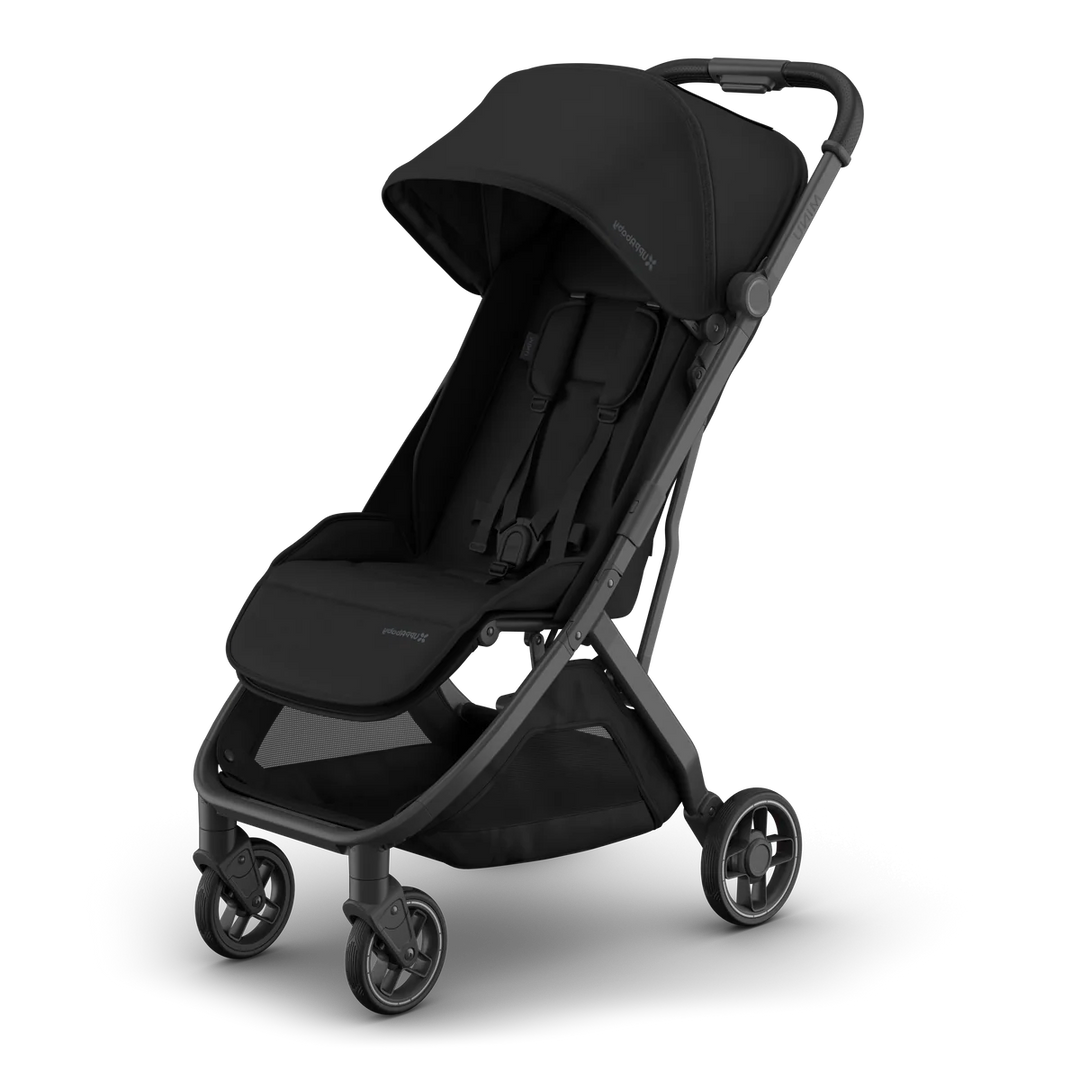
used uppababy minu v2 UPPAbaby Minu V3 Stroller Dillan (Stone Blue)

Sale price$18.65 Regular price$20.72
Save 10%

Pay in installments of $5.18 with ShopPay, AfterPay and Klarna

Shipping Estimate
USA
  • USA
  • CAN

Ships within 48 hours · Estimated delivery Jul 21 - Jul 26

Promo Codes Available:

For Your Every Summer RSVP, with Code: SUMMER15

Description

used uppababy minu v2 UPPAbaby Minu V3 Stroller Dillan (Stone Blue)by UPPAbaby Babesta Pick Best Lightweight Stroller for UPPAbaby Families Category: Lightweight travel strollers Urban strollers Birth to toddler strollers Travel systems Certifications: GREENGUARD Gold REACH certified JPMA certified PFAS free materials The UPPAbaby Minu V3 is a 16. 7 lb compact travel stroller suitable from birth to 50 lbs, with a one hand one step fold that is IATA compliant for airplane overhead bin storage. It is newborn ready out

by UPPAbaby  |  Babesta Pick — Best Lightweight Stroller for UPPAbaby Families

Category: Lightweight travel strollers  |  Urban strollers  |  Birth-to-toddler strollers  |  Travel systems

Certifications: GREENGUARD® Gold  |  REACH certified  |  JPMA certified  |  PFAS-free materials

The UPPAbaby Minu V3 is a 16.7 lb compact travel stroller suitable from birth to 50 lbs, with a one-hand one-step fold that is IATA compliant for airplane overhead bin storage. It is newborn-ready out of the box — the V3’s infinite deep recline and integrated foot barrier (protective footwell) create a safe carriage mode from day one, with no bassinet purchase required. The UPPAbaby Bassinet is not compatible with the Minu V3.

At Babesta, the Minu V3 has a specific and important role in our stroller lineup: it is the only lightweight stroller that is directly compatible with the UPPAbaby Mesa and Aria infant car seats. For any family that already owns a Mesa or Aria, or is planning to buy one, the Minu V3 is the clear lightweight companion stroller. No other travel stroller in this weight class offers that seamless UPPAbaby-to-UPPAbaby click-in.

Compared to the Joolz Aer2 and Stokke Yoyo — the other travel strollers we carry — the Minu V3 is wider (18″ vs. the Aer2’s and Yoyo’s ~17″), heavier by 2–3 lbs, and has a larger basket (20 lbs vs. 17.6 lbs on the Aer2). That wider stance translates to a more stable, planted ride on uneven surfaces — it handles NYC sidewalks with noticeably more confidence than the narrower ultra-compacts. For families who want a lightweight stroller that feels like a lightweight stroller and not a toy, the Minu V3 is the one.


Specifications

Stroller weight

16.7 lbs (frame & seat)

Unfolded dimensions

34.5″ L × 18″ W × 41″ H

Folded dimensions

10″ L × 18″ W × 21.5″ H

Fits airplane overhead bin?

Yes — IATA compliant

Suitable from birth?

Yes — infinite deep recline + integrated foot barrier for newborn carriage mode

Bassinet compatible?

No — UPPAbaby Bassinet is not compatible with the Minu V3. Newborn-ready out of the box via recline + foot barrier.

Max child weight

50 lbs (max height 40″)

Fold type

One-hand, one-step fold; self-standing when folded; integrated carry strap

Seat recline

Infinite deep recline including full lay-flat; one-hand adjustment

Footrest positions

3 positions, adjustable

Crotch buckle positions

2 positions for newborn and older child fit

Handlebar material

100% full-grain leather; adjustable height

Suspension

Front suspension + independent rear suspension for smooth multi-terrain ride

Basket capacity

20 lbs — largest basket in the travel stroller category

Canopy

UPF 50+ water-repellent; zip-out extendable; peek-a-boo mesh window

Harness

5-point adjustable; no-rethread; integrated plush seat liner

Integrated carry strap?

Yes — hands-free transport when folded

Hidden Air Tracker pocket?

Yes

Seat back height

High seat back; grows with child

Certifications

GREENGUARD® Gold; REACH certified; JPMA certified; PFAS-free materials

Warranty

3 year non transferable warranty

Frame material

Durable aluminum


Best For / Not For

Best For: Families who already own or are buying a UPPAbaby Mesa or Aria infant car seat. Parents who want a more stable, wider-stance travel stroller than the Joolz Aer2 or Yoyo. Frequent travelers who need IATA overhead bin compliance. NYC families who want a lighter everyday stroller to complement a full-size like the Vista V3 or Cruz V3. Walkup dwellers who need something they can carry upstairs.

Not For: Families who want the absolute lightest stroller available (the Joolz Aer2 at 14.3 lbs is lighter). Parents who need a double stroller or modular platform. Anyone who wants to use the UPPAbaby Bassinet — it is not compatible with the Minu V3. Jogging or rough terrain use.

Availability & Colors

Colors

Ada, Dillan, Evelyn, Greyson, Jake (black), Savannah (white/grey)

Availability

Generally in stock; If not allow 5–7 business days for order fulfillment. In-store pickup available at Babesta Tribeca, NYC.


Is it suitable for my baby's age?

Newborn (0–3 months)

Yes — the Minu V3 is newborn-ready out of the box via the infinite deep recline and integrated foot barrier (protective footwell). No separate bassinet purchase required. The UPPAbaby Bassinet is not compatible with the Minu V3.

Infant (3–12 months)

Yes — reclined or semi-reclined seat, 5-point adjustable harness, 2-position crotch buckle. Compatible with UPPAbaby Mesa and Aria infant car seats, or Nuna, Cybex, Clek (adapters sold separately).

Toddler (1–4 years)

Yes — upright seat with 3-position footrest, adjustable harness, high seat back for growing kids, up to 50 lbs / 40″ height.


Is it good for NYC / city use?

Yes — the Minu V3 is one of our top recommendations for NYC families who need a compact stroller for daily use. The 18″ width is narrower than the Cruz V3 (22.5″) and Vista V3 (25.7″), making it easier to maneuver through restaurant aisles, elevator doors, and tight retail spaces. The front and independent rear suspension make it considerably more planted on cracked NYC sidewalks than pure ultra-compact strollers, which often sacrifice ride quality for weight savings.

The one-hand fold and integrated carry strap mean you can fold it while holding your child and sling it over your shoulder on subway stairs — a practical consideration that the Joolz Aer2’s shoulder strap also addresses. At 16.7 lbs it is light enough for most parents to carry up a walkup flight without it being an ordeal, though the Joolz Aer2 at 14.3 lbs has a meaningful advantage for anyone doing this multiple times a day.

The 20 lb basket is the largest in the travel stroller category — genuinely useful for NYC parents who are combining errands, school drop-off, and grocery runs in a single outing.


Quick Comparison: Minu V3 vs. Key Lightweight Alternatives

★ = category standout

Feature

Minu V3

Joolz Aer2

Stokke Yoyo

Bugaboo Butterfly

Weight

16.7 lbs

14.3 lbs

~14.8 lbs

~16 lbs

Width (unfolded)

18″

~17.7″

~17.3″

~17″

Basket capacity

20 lbs ★

17.6 lbs

~22 lbs

~17.6 lbs

Newborn-ready (out of box)

Yes

Yes

No

No

UPPAbaby car seat

Yes ★

No

No

No

IATA overhead bin compliant

Yes

Yes

Yes

Yes

All-wheel suspension

Yes

Yes

No

Yes


Car Seat Compatibility

Adapter required (sold separately)

UPPAbaby Mesa, UPPAbaby Mesa V2, UPPAbaby Aria, Select Maxi-Cosi (Mico Max 30, Mico NXT, Mico Max Plus, Mico AP, Mico Plus), Nuna (Pipa Lite, Pipa Lite LX, Pipa Lite R, Pipa Aire, Pipa Aire RX, Pipa Next, Pipa RX, Pipa Urbn, Klik Plus), Cybex, Clek Liing, BeSafe — ask Babesta team for correct adapter for your brand and model.

Bassinet compatible?

No — the UPPAbaby Bassinet is not compatible with the Minu V3. The Minu V3 is newborn-ready via its built-in recline and foot barrier; no bassinet is needed.


What’s Included

       UPPAbaby Minu V3 stroller

       Extendable sun canopy (UPF 50+)

       Large storage basket

       Adjustable 3-position footrest

       Integrated carry strap

       Integrated plush seat liner


Optional Add-Ons Available at Babesta

       UPPAbaby Mesa infant car seat — clicks directly onto Minu V3 without adapters

       UPPAbaby Aria infant car seat — clicks directly onto Minu V3 without adapters

       Car seat adapters for Maxi-Cosi, Nuna, Cybex, Clek, BeSafe (sold separately) — ask Babesta team for your brand and model

       Cup holder / snack tray accessories

       Cozy Ganoosh — footmuff for cold NYC winters


Babesta Pick — Why We Carry It

The Minu V3 fills a very specific gap that no other lightweight stroller in our lineup covers: the UPPAbaby ecosystem. If you have a Mesa or Aria, you already know how easy the click-in travel system works on the Vista V3 or Cruz V3. The Minu V3 gives you that exact same no-adapter experience in a compact, 16.7 lb stroller. For families who want to go from car seat to lightweight stroller without fumbling with adapters — especially with a newborn — that’s a meaningful convenience.

Beyond the car seat compatibility, we carry it because it’s the most stable travel stroller in its class. The 18″ width and dual-suspension system give it a planted, confident feel on NYC sidewalks that the narrower ultra-compacts don’t match. Parents who come in comparing it to the Joolz Aer2 often leave with the Minu V3 once they push both on the pavement outside — the ride difference is immediately noticeable.

The V3 upgrade from the V2 is also significant: the fully flat recline with integrated foot barrier means it’s genuinely newborn-ready without any extra purchase, which the V2 was not. If you were on the fence about the previous Minu, the V3 resolves the main objection.


Babesta Services on This Purchase

When you buy the Minu V3 from Babesta, you get:

       Free in-store assembly and full stroller demo — we walk you through the fold, recline, foot barrier setup, and car seat click-in

       Home delivery below Canal Street NYC (assembled) and same-day courier delivery in NYC/Brooklyn (unassembled)

       In-store pickup available at Babesta Tribeca, 56 Warren Street

       Hold it until you’re ready — no rush

       Price match guarantee

       Registry support — add the Minu V3 and compatible accessories to your Babesta registry


Frequently Asked Questions

Can the UPPAbaby Bassinet be used with the Minu V3?

No — the UPPAbaby Bassinet is not compatible with the Minu V3. The good news is that the Minu V3 is newborn-ready out of the box: the infinite deep recline and integrated protective footwell create a safe carriage mode from birth without needing a separate bassinet. This is one of the key upgrades from the Minu V2, which required a bassinet or infant car seat for newborn use.

Is the Minu V3 compatible with UPPAbaby car seats?

Yes — and this is the Minu V3’s standout advantage among lightweight strollers. The UPPAbaby Mesa, Mesa V2, and Aria infant car seats click onto the Minu V3 frame. It is the only lightweight stroller that offers this seamless no-adapter compatibility with UPPAbaby car seats. If you have a Mesa or Aria, the Minu V3 is your natural lightweight companion stroller.

What other car seats is it compatible with?

With the separately sold adapter, the Minu V3 is compatible with select Maxi-Cosi (including Mico Max 30, Mico NXT, Mico Max Plus), Nuna (including Pipa Lite, Pipa Lite LX, Pipa Aire, Pipa Next, Pipa RX, Klik Plus), Cybex, Clek Liing, and BeSafe models. Ask the Babesta team for the correct adapter for your specific car seat brand and model, as compatibility varies.

How does it compare to the Joolz Aer2?

The Joolz Aer2 is lighter (14.3 lbs vs. 16.7 lbs), slightly narrower, and is available at $579 vs. $499.99 for the Minu V3. The Minu V3 has a larger basket (20 lbs vs. 17.6 lbs), a more stable wider stance (18″ vs. ~17″ for the Aer2), and dual suspension for a smoother ride. Most importantly, the Minu V3 is the only lightweight stroller directly compatible with UPPAbaby car seats. The Aer2 does not work with the Mesa or Aria without adapters; the Minu V3 does. If you have a Mesa or Aria, the Minu V3 is the clear choice. If you prioritize the lightest possible weight and subway portability above all else, the Aer2 has the edge.

Does it really fit in an airplane overhead bin?

Yes — the Minu V3 is IATA compliant at its folded dimensions of 10″ L × 18″ W × 21.5″ H. This was a major upgrade from the Minu V2, which was marketed for overhead bins but wasn’t always guaranteed to fit. The V3 can typically be stowed in the overhead compartment on most commercial aircraft. Always confirm with your specific airline before travel.

Can I use this as my only stroller?

Yes, for many NYC families — particularly those in walkups, those who take the subway regularly, or frequent travelers. If you walk long distances daily in a park-heavy neighborhood and prioritize push quality, you may prefer pairing it with a full-size like the UPPAbaby Cruz V3 for those longer outings. The Minu V3 is also a popular second stroller for families who have a Vista V3 or Cruz V3 and want a lighter option for everyday errands and travel.

Can I try it in person?

Yes — the Minu V3 is on the floor at Babesta Tribeca, 56 Warren Street. Our team can walk you through the fold, the recline and foot barrier setup, and — if relevant — demonstrate the Mesa or Aria click-in directly so you can see how the travel system works before you buy.

Can I put this on my baby registry?

Yes — the Minu V3 is a popular registry add at Babesta, particularly for parents who are also registering for the Vista V3 or Cruz V3 and want a lightweight companion stroller from the same ecosystem. A Babesta registry comes with exclusive perks and expert guidance on building your complete stroller setup.

Shipping Notes
  • Free Standard Shipping on $100+ Orders to the USA.
  • Except Preorder products are shipped in 48 hours.
  • Delivery to the USA:
  1. Standard Shipping : 3-10 business days
  • If time is of the essence, please consider selecting expedited delivery for faster service.
Exchange/Return Notes
  • We offer a 30-day return/exchange service after receiving.
  • Final sale items are not eligible for returns or exchanges.
  • To process your return/exchange, please contact us at [email protected]
  • Please click here for more details>>> Return & Exchange Policy
SKU: 24617162591

Discover Niche Categories That Outsell used uppababy minu v2

Top-Converting Item to Boost Your Average Order

4.8 ★★★★★
Based on 5 reviews
Sort
Highest Rating
Newest First
Oldest First
Product Reviews
D
Verified Purchase
Dark Angel
Charlottesville, US
★★★★★ 4
Worthwhile Read
Format: Hardcover
Extremely insightful.
WAS THIS REVIEW HELPFUL?YesReportShare
Reviewed in the United States on May 11, 2026
W
Verified Purchase
William Echols
New York, US
★★★★★ 5
Beyond the Usual Left/Right bifurcation
When thinking about Howard Zinn's "A People's History of the United States, I am reminded of E.H. Carr's seminal work "What is History?" whereby he stated: "The belief in a hard core of historical facts existing objectively and independently of the interpretation of the historian is a preposterous fallacy, but one which it is very hard to eradicate". As Carr famously stated, millions of people had crossed the Rubicon, but only Julius Caesar's crossing in 49 BC has been given normative value by historians. For those familiar with the philosophical treatment of historical understanding in Tolstoy's War and Peace, this sentiment will ring true. A People's History is designed to give voice to those millions who passed the rubicon but never found their way into the annuals of history. A couple of points. This book was intended to be a supplement as opposed to a strictly chronological account of history that will give you the bullet points for the most important people, dates and events. [sic] It is not meant to be a replacement for a more standardized textbook. Secondly, Zinn did not hate America, and he in fact stated: "I want young people to understand that ours is a beautiful country, but it has been taken over by men who have no respect for human rights or constitutional liberties. Our people are basically decent and caring, and our highest ideals are expressed in the Declaration of Independence, which was that all of us have an equal right to life, liberty and the pursuit of happiness. The history of our country, I point out in my book, is a striving, against corporate robber barons and war makers, to make those ideals a reality-and all of us, of whatever age, can find immense satisfaction in becoming part of that." Regardless of your political position, between the Great Recession and the Iraq war, there is a relevance to this sentiment that cuts across political lines. Now, what one will notice in the bulk of the one star reviews is the sense that either the reviewer has not read the book, they copied and pasted their criticism from another source or they have strictly given the book one star because it does not conform with their view of reality. "Blame America first", "socialism", "communism", "Marx, "liberal propaganda", you can easily get the gist of the talking points because many American conservatives apparently got the same memo in dismissing anything they don't agree with. The disservice they do to themselves and the sphere of ideas in the outright dismissal of any perspective which does not conform to their own is truly sad. When someone gives a book one star merely for not conforming to their view of reality,they have obviously lost the plot. In university I knew many conservative history professors who liked and used Zinn's work. They believed it was important to incorporate and deal with the claims that Zinn made. You cannot whitewash history and blindly stick by the most comforting narrative. That does not mean that one should agree with Zinn's conclusions or think that he has a monopoly on the truth. Zinn himself would not have wanted that. For those who claim Zinn is a socialist or any other kind of -ist, that he is not completely objective, they have obviously never done any research. Pure positivism was dismissed long ago. Even Max Webber started that our subjective bias comes in the moment we choose to study something, for by seeing the subject matter as valuable, we have placed a normative value on it. There is no pure value objectivity, stating one's position and bias from the outset is what responsible social scientists do these days. A dryly academic text with an obvious bias concealed by a detached form of writing gives a falsely omniscient perspective whose reality is psychological but not objective. However they write, they are just a person, and without expressing their biases it will inevitably turn up in their work without necessarily being obvious. This is far more dangerous than what Zinn does in stating his bias from the outset. So it is a red herring to dismiss Zinn for having a perspective. We all have one and it will come into whatever we do. There is no knowable, objective reality (for humans) living in the Platonic world of perfect forms. History was a puzzle of immeasurable size that was blown apart and the pieces scattered over the cosmos. The vast majority of the pieces are gone, never to return. We are stabbing at an imperfect speculation, not ultimate truth when we engage in historical study. Any physicist will tell you that the particle wave duality of light has pretty much closed the book on the notion that we can objectively, perfectly know anything. This book is important because the poison of partisan politics has come to dominate even the dialogue of academic research. If the sole criterion for giving a book one star is the notion that you don't agree with its thesis, then you obviously live in a fragile world and are incapable of being challenged intellectually. This book is of the upmost importance for the conservative to read and digest. In developing a coherent narrative of the United States, you need to wrestle with its sins and determine, despite our historical shortcomings and transgressions, what is it that makes this imperfect union the pinnacle of nation states if one agrees with that prospect. For the liberal, you should not view Zinn's work as the last word on anything, but rather use it as a stepping stone to further develop your own historical understanding and consider how well has American done on a relative scale in light of the political, societal and human failings that have marred all human civilizations. This book is well worth the challenges it presents, and should be a 5 star treat for the conservative who loves his country and wants to develop the most cogent and nuanced argument as to why that is the case despite those unsettling realities to be found in this book as well as the liberal who wants to give voice to his disaffection with certain aspects of American society and the reasons why we need to change it. This is not another tool in the mindless and poisonous Manichean bifurcation of American politics. It is a vehicle to help you strengthen and deepen your understanding of US history, regardless from which direction you are coming. Recommended to all who are interested in the journey of learning as opposed to a presupposed outcome that serves a vested interest.
WAS THIS REVIEW HELPFUL?YesReportShare
Reviewed in the United States on February 13, 2010
D
Verified Purchase
Dr. Lee D. Carlson
Omaha, US
★★★★★ 5
A 50 carat learning gem
The teaching of American history in elementary and middle schools reminds one of the cleaning of a commode: any rings or crud are removed and the bowl is disinfected. It then looks shiny and pretty, as if no foul stuffs were ever deposited in it. The tall tales and antiseptic methodologies employed in the teaching of American history in these citadels of bias are finally being countered by some historians, who are also clearly biased but self-consciously so. They do not hesitate to study the foul stuffs that have been part of the history of the United States, and are willing to put up with the strong odors thereof. What results in their writings is a compilation of the facts that are left unreported by the sycophants of established educational hierarchies. The picture they paint is not a pretty one, but for those who desire the bare, naked truth, and not the stale platitudes of whitewashed historical analysis, it can be a grand viewing. The author of this book is one of these new historians, and he does not hesitate to dig deep into the real stories that have remained hidden for decades. Historical analysis of course is more then muckracking, and requires an accounting of what has occurred in the past without blinders. It also must put to rest the notion that historical events are controlled by a ruling elite, and the latter are not the distinguishing features of history. History is not a history of kings, queens, and princesses. They play a role but it is an ancillary one. The title of this book refreshingly reminds us of this. History is governed and directed by the actions of many individuals, known and unknown. The author calls them "the people", and their story is told unabashedly in this book. The author is clearly a socialist, but his attitude is one of a healthy skepticism towards government, and justified distrust of the military establishment. He reminds us that the draft was in place as early as the Revolutionary War, as were the exceptions granted for avoidance of it. For example in Connecticut Yale students and faculty were exempted from the draft, as were ministers and various government officials. There was also the familiar schism between officers and "ordinary" soldiers, and any in the latter class who chose not to respect this distinction were whipped severely. Wealthy individuals dominated the Continental Congress, but most "ordinary" soldiers were not getting paid. Some groups of "ordinary" soldiers rebelled and some executed by firing squad when the rebellion was suppressed (in one case by soldiers of George Washington himself who led the suppression). The author's commentary and documentation on the Revolutionary War certainly act as a counterexample against the belief that this war had universal support and thought of as a noble cause by the general populace of the time. The Revolutionary War, like all other wars, was an ugly, messy affair, and had its share of false patriotism, brutality, and cowardice, and it affected many other peoples that had no interest or stake in it: native American tribes such as the Iroquois and the Mohawk. These tribes did not come under the umbrella of the Declaration of Independence. Some of these tribes therefore launched, with complete justification, a guerilla war against the new American citizenry, especially when the latter decided to push westward and indulge itself in the forced acquisition of land. The author tells us of the smallpox biological warfare launched against the Appalachian tribes by the British, causing a major epidemic. He tell us of the thousands of black slaves who fought with the British in the Revolutionary War, as did the majority of the Indian tribes. He tell us of the keeping of slaves by Thomas Jefferson throughout his life, of the fact that most of the authors of the Constitution were men of wealth, and none were slaves, indentured servants, women, or men without property. He tell us of Shay's rebellion and its counter, the Riot Act, which allowed authorities to keep people in jail without trial, and of the defiance of Anne Hutchinson against the church fathers in the Massachusetts Bay Colony. He tells us of New Jersey's rescinding of women's right to vote in 1807, of a "feminist" movement as early as the 1840's, and of the founding in 1821 of the Troy Female Seminary by Emma Willard. The author reminds us that the war of 1812 was a conflict waged for expansion into Florida, Canada, and Indian territories, that Congress deliberately and without hesitation appropriated money for war against the Seminoles, and that President Van Buren openly bragged to Congress about the forced removal of Cherokees from lands east of the Mississippi. He reminds us of the doctrine of "manifest destiny" and its justification of the brutal war against Mexico waged by President James Polk in the 1840's with the jingoistic assistance of the newspapers (no other course would be rational some of them reported), with Mexico losing half its territory in the 1848 treaty of Guadalupe Hidalgo. He reminds us of the Anti-Renter movement in the Hudson valley of New York, and that the Renssalaer family at one time ruled over eighty thousand tenants. He reminds us of Dorr's Rebellion in Rhode Island that attacked the idea, and its perpetrators, that only landowners could vote. So yes, there is much in this book that is fascinating and that is food for a hungry and inquisitive mind. It certainly goes against the mainstream view, and any teacher of history will probably come under fire from those who employ them if they decide to discuss the facts and analysis in this book. The history of the United States has been one of brutality mixed with brilliance, the former of which is emphasized in the pages of this book. A future treatise might emphasize the latter, and together they can give a more accurate picture of what the United States is, what it has been, and its future potential.
WAS THIS REVIEW HELPFUL?YesReportShare
Reviewed in the United States on December 30, 2006
D
Verified Purchase
Davut Habip
Massapequa, US
★★★★★ 5
An amazing book ...
Format: Paperback
An amazing book. Reading the book helped me understand why the US is experiencing difficulties in "perceived righteousness" today. I would recommend it to anyone who would like to change the World for the better. Howard Zinn is a benevolent hacker: the kind of hacker I would like my children to be, and why not: all children to be. For me, Zinn’s A People’s History of the United States hacks history and defines a problem and offers a solution: 1. The problem: a one-sided patriotic history enslaves the masses, 2. The solution: a bottom-up, humanistic history empowers everyone and opens the doors for future reconciliations among different communities.(1) At this critical juncture of human history both are relevant not only for the US but rather for our race. A one-sided patriotic bias in history: at what cost? 1. hides wrongdoings and the associated guilt, 2. serves as the first line of defense to deflect current & future criticisms for the past & current mistakes, 3. tampers data gathering, silences questioning & divergence of opinions, 4. reduces communication among communities, 5. defines “the patriotic” and increases the chances of populating the armed forces, 6. defines the other: “the unpatriotic,” 7. increases insecurities, 8. evokes fears (of retribution, etc.) 9. can be misused to justify violence against “the other,” 10. builds a common memory for the masses, builds their egos so that these egos can later be exploited, 11. allows the word “culture” to be used as an equivalence: American culture = being American; (2) 12. a politician can mix these facts to incite emotional reactions of the masses and eventually reach a higher number of votes in a predetermined direction, inexpensively, 13. at school, in the media, in speeches of politicians, and during different rituals (starting with reciting the pledge of allegiance and singing of the national anthem) the patriotic history is repeated and reinforced. Under these conditions, the masses learn to repeat what is given to them. They shun away from questioning further. Their concept of free-will is replaced by a misplaced trust. They learn not to deviate from the norm: they are enslaved and are not even aware of this enslavement. Many words lose their meaning: “a more perfect Union” “Justice” “secure the Blessings of Liberty,” “democracy.” A higher degree of cynicism and later a deep feeling of helplessness ensue. There are costs to the individual, the family, the society. Since many worldwide look up to the US morally, the use of one-sided patriotic history in the US produces world leaders who imitate bad examples. Consequently, Humanity pays dearly. A bottom-up, humanistic history empowers everyone: 1. can eliminate ignorance, 2. can eliminate convenient forgetfulness, 3. can eliminate arrogance, 4. improve self-esteem, communication, & understanding 5. can reduce violence, 6. can empower the individuals and the masses: psychologically and economically and thus improve the quality of life, 7. can help the path to sustainable peace. Among the different communities, the wounds are real. A one-sided history often does not address all of these wounds. Denial freezes any possibility of a reconciliation. A reconciliation process would pass through an acceptance of a historical wrong doing. In time, mankind may realize that what Howard Zinn has started may be the building blocks of sustainable peace. As a new year starts, I wish upon all of us: nations, creeds, ethnicities, etc. our very own Howard Zinns. (1) In the US, these communities can be whites, blacks, American Indians, Mexicans, WASPS, Catholics, Jews, Moslems, Chinese, Japanese, etc. In Turkey, where I am from, these communities include the seculars, non-seculars, Alevites, Armenians, Greeks, Jews, Kurds, etc. (2) Most of us are led to believe that “being” American/WASP/Jewish/Moslem/... is a “culture;” we almost always have these attributes thanks to coincidences; i.e. we are born into these “states;” how can a state that is largely a coincidence, be culture? I would suggest that only what is done through our free-will is deemed culture. Interestingly worldwide, the education systems, the media, and politicians use and propagate the word “culture” to imply largely a static state, rather than the result of a willful action.
WAS THIS REVIEW HELPFUL?YesReportShare
Reviewed in the United States on December 24, 2016
L
Verified Purchase
Lyy
Boise, US
★★★★★ 5
Good quality
Format: School & Library Binding
Perfect!
WAS THIS REVIEW HELPFUL?YesReportShare
Reviewed in the United States on April 30, 2026

recommand products