Pay in installments of $5.16 with
 ,
,
 and
and

Shipping Estimate
USA
- USA
- CAN
- USA
- CAN
Ships within 48 hours · Estimated delivery Oct 20 - Oct 25
 Promo Codes Available:
For Your Every Summer RSVP, with Code: SUMMER15
Description
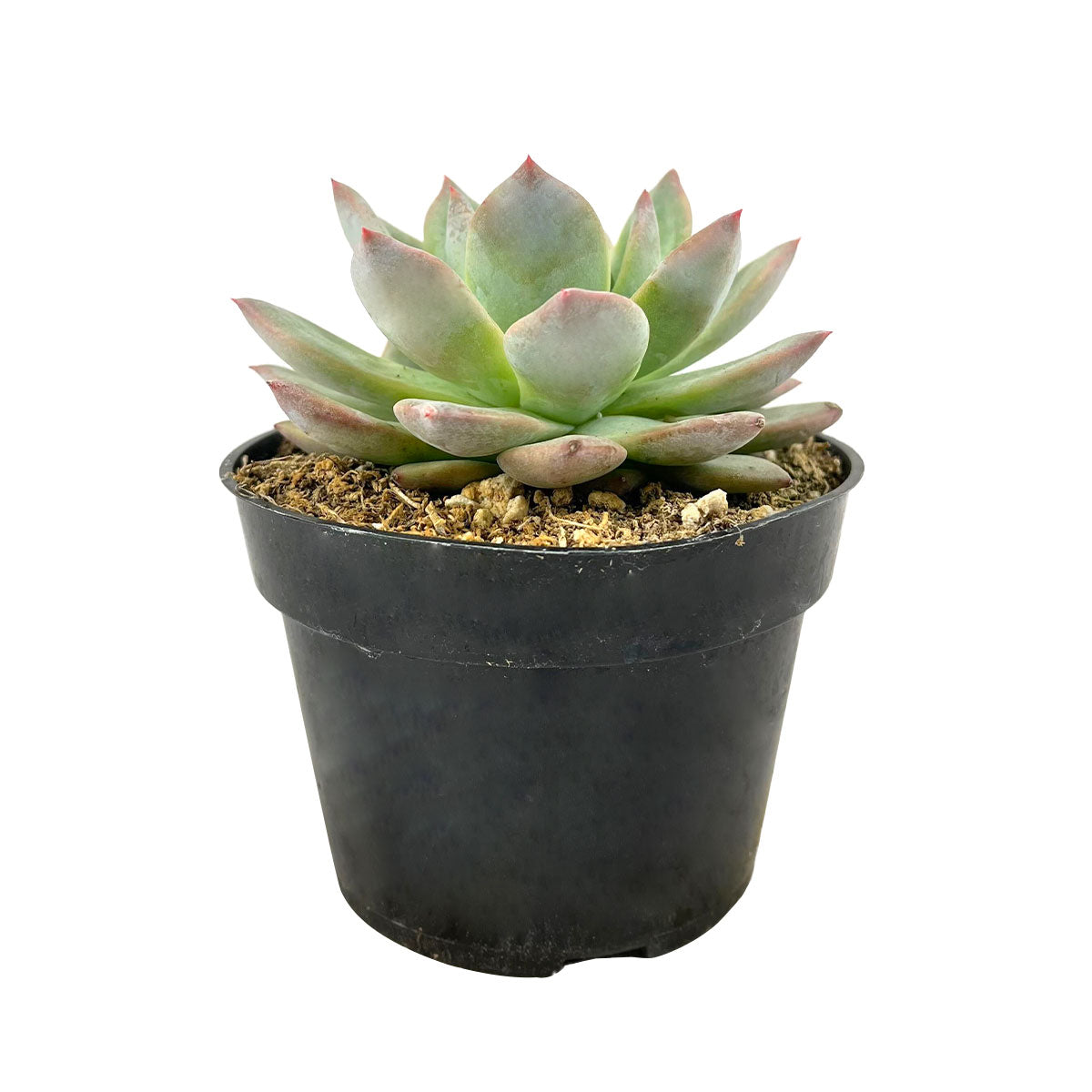
blue toad succulent Echeveria Blue Bird RosetteDescription Light Soil Water Hardiness Echeveria 'Blue Bird' is a beautifully symmetrical succulent with soft, powdery blue foliage and a neat rosette shape. A hybrid variety within the Crassulaceae family, it shares ancestry with Echeveria species native to Mexico, where many evolved under sunny, rocky conditions. 'Blue Bird' forms a single, tight rosette of thick leaves coated in a fine layer of farina, a natural wax that gives the plant its pale,
-
Echeveria 'Blue Bird' is a beautifully symmetrical succulent with soft, powdery blue foliage and a neat rosette shape. A hybrid variety within the Crassulaceae family, it shares ancestry with Echeveria species native to Mexico, where many evolved under sunny, rocky conditions. 'Blue Bird' forms a single, tight rosette of thick leaves coated in a fine layer of farina, a natural wax that gives the plant its pale, pastel appearance. In bright light, the leaves often take on a silvery-blue tone, sometimes blushing pink at the edges during cooler seasons.
The rosette of the Blue Bird can grow up to 6 to 10 inches wide, with leaves that are broad, pointed, and slightly upturned at the tips. Its uniform, open shape and subtle coloring give it a soft, elegant look compared to more rigid or heavily textured succulents. Mature plants may occasionally produce a tall flower stalk bearing small coral or salmon-pink blooms, although Blue Bird is mainly admired for the beauty of its foliage. The flower spikes add a delicate touch, rising gracefully above the main rosette without disrupting the plant's clean lines.
Compared to similar varieties like Echeveria 'Blue Prince', Blue Bird has a softer, paler color and a more open, airy rosette structure. While Blue Prince tends to have darker, tighter rosettes, Blue Bird maintains a lighter and wider form, giving it a more ethereal presence in succulent displays. Both plants share a powdery coating, but Blue Bird appears more pastel and delicate overall.
Because of its size, form, and delicate color, Echeveria 'Blue Bird' is often used as a centerpiece in succulent bowls or as a gentle contrast among darker or more textured plants. It thrives with good light and minimal watering, making it easy to care for in the right conditions. Like most Echeverias, it does best when left relatively undisturbed, allowing its rosette to develop fully without crowding from nearby plants.
-
Prefers bright, direct to very bright indirect light for best color and compact growth. Insufficient light can cause the rosette to stretch and lose its shape.
Water thoroughly when the soil is completely dry, making sure to avoid watering directly into the rosette to prevent rot. Reduce watering significantly during the cooler months.
Adapts best to low to moderate indoor humidity. High humidity can increase the risk of fungal issues, especially if air circulation is poor.
Grows best between 65–80°F. Protect from frost, as freezing temperatures can damage or kill the plant.
Needs a fast-draining succulent or cactus mix with added perlite or coarse sand. Good drainage is essential to prevent root and crown rot.
Feed lightly once or twice during the growing season with a diluted, low-nitrogen fertilizer. Overfeeding can cause leggy growth and weaken the plant.
Echeveria 'Blue Bird' is considered non-toxic to pets and humans. Still, it’s best to discourage pets from chewing on any plant.
- Zone 9-11
Shipping Notes
- Free Standard Shipping on $100+ Orders to the USA.
- Except Preorder products are shipped in 48 hours.
- Delivery to the USA:
- Standard Shipping : 3-10 business days
- If time is of the essence, please consider selecting expedited delivery for faster service.
Exchange/Return Notes
- We offer a 30-day return/exchange service after receiving.
- Final sale items are not eligible for returns or exchanges.
- To process your return/exchange, please contact us at [email protected]
- Please click here for more details>>> Return & Exchange Policy
4.9 ★★★★★
Based on 14 reviews
Sort
Product Reviews
★★★★★ 4
Looks great!
My son loves these shelves. He wants more!
WAS THIS REVIEW HELPFUL?YesReportShare
Reviewed in the United States on October 9, 2025
★★★★★ 5
Husband loved it!!
Got this for my husband on Christmas and he absolutely loves this. The instructions were straightforward on how to build and it took less than an hour to assemble. The lights are pretty cool. They change different colors and there's different settings with the remote. I will say he did have to nail these to the studs in the wall so it can hold his hefty drinks LOL
WAS THIS REVIEW HELPFUL?YesReportShare
Reviewed in the United States on January 29, 2025
★★★★★ 3
A royal pain to install
The width of this item is such that it CANNOT be attached to the wall studs. That is unsafe for something that is intended to hold heavy items like liquor bottles. THEN the anchors that come with it are flimsy so we used a heavier different style anchor (threaded). That said, I like the way it looks, and the light effects.
WAS THIS REVIEW HELPFUL?YesReportShare
Reviewed in the United States on January 4, 2025
★★★★★ 5
New Bourbon Shelf
I just got done putting it together and hanging it on my wall. It took approximately 35 minutes to put together and another 15 minutes to hang up. I had to use my own larger wall anchors and screws. I tried the ones that came with it but they didn’t do the job. I am happy with it other than that. Good value and quality materials. As you can see from the picture it holds several bottles and room for more if I want. I think the LED lights look great as well.
WAS THIS REVIEW HELPFUL?YesReportShare
Reviewed in the United States on April 18, 2025
★★★★★ 5
The Last Cutting Board You’ll Ever Need – Bamboo Perfection
Color: Glue-Free Surface - Round, Set name: Set of 3 (S, M, XL)
I’ve gone through plastic, cheap wood, and even a couple of “premium” boards that warped or cracked within months.
These bamboo cutting boards are in a league of their own. From the moment I unpacked them, the quality was obvious — smooth, dense, and beautifully finished with a warm, natural grain that looks gorgeous on the counter.
Performance is flawless:
Knife-friendly – No deep gouges, even after heavy chopping. My blades stay sharper longer.
Gentle on hands – Lightweight but sturdy; easy to maneuver, yet doesn’t slide around.
Zero warping – I hand-wash and air-dry, and they still look great after daily use.
Juice groove actually works – Catches liquids without overflow (perfect for carving chicken or juicy fruits).
Bonus: They’re sustainable, eco-friendly, and naturally antibacterial — peace of mind when prepping family meals.
I bought the 3-piece set (small, medium, large), and it covers everything from quick garlic mincing to full meal prep. No odor retention, easy to clean with soap and water, and they double as stylish serving trays for charcuterie night.
If you cook even semi-regularly, treat yourself to these. Durable, beautiful, and built to last a lifetime. Worth every penny — and then some!
WAS THIS REVIEW HELPFUL?YesReportShare
Reviewed in the United States on October 30, 2025