SKU: 27216028278
planting chokecherry seeds

planting chokecherry seeds Common Chokecherry – Sparrowhawk Native Plants

Sale price$21.10 Regular price$23.44
Save 10%

Pay in installments of $5.86 with ShopPay, AfterPay and Klarna

Shipping Estimate
USA
  • USA
  • CAN

Ships within 48 hours · Estimated delivery Jul 23 - Jul 28

Promo Codes Available:

For Your Every Summer RSVP, with Code: SUMMER15

Description

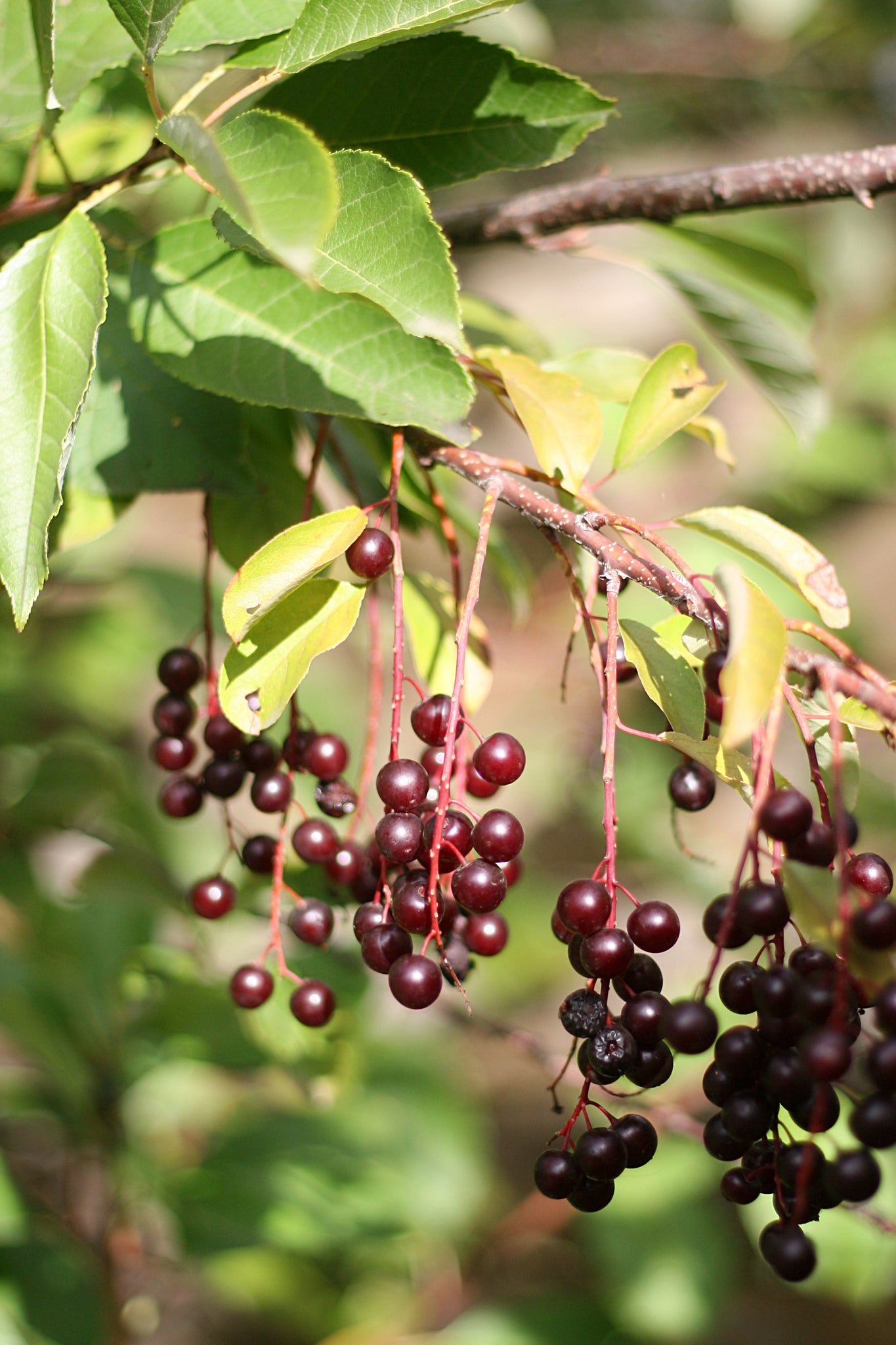
planting chokecherry seeds Common Chokecherry – Sparrowhawk Native PlantsPrunus virginiana Chokecherry is a small tree or large shrub (aka an arborescent shrub) with an upright form that provides year round interest in the habitat garden. Its deciduous foliage emerges dark and glossy in early spring from dark reddish, brown branches. By April or May, long cylindrical clusters of creamy white, pleasantly fragrant flowers dangle in the breeze, beckoning and supporting pollinators. In fall, the leaves offer hues of yellow,

Prunus virginiana

Chokecherry is a small tree or large shrub (aka an arborescent shrub) with an upright form that provides year-round interest in the habitat garden. Its deciduous foliage emerges dark and glossy in early spring from dark-reddish, brown branches. By April or May, long-cylindrical clusters of creamy white, pleasantly-fragrant flowers dangle in the breeze, beckoning and supporting pollinators. 

In fall, the leaves offer hues of yellow, gold and even red while its edible deep purple-to-black sour chokecherries are a beloved and nutrient-packed food source for birds, small mammals, and bears and an excellent (albeit sour) choice for jams and wine.

  • Plant type/canopy layer: deciduous, perennial, small tree or large shrub
  • Size at maturity: 15-35' tall, 15-20' wide
  • Light requirements: full sun, part-sun/part-shade
  • Moisture requirements: seasonally wet, moist to dry soil
  • Bloom time: April - July
  • Growth rate/ease: grows quickly, very easy to grow
  • Wildlife support: flowers attract and provide nectar to hummingbirds, adult butterflies (pale swallowtail, silvery blue, spring azure, and painted lady), bees and other insect pollinators; fruits are adored by and an important source of food for backyard birds (more than 30 species of birds are known to eat it in the Portland metro area), as well as small mammals, bears and humans; young twigs and foliage are grazed by deer and elk; overall plant attracts and supports beneficial and other pest eating insects and is a caterpillar host plant and larval food source for native butterflies and moths including Lorquin's Admiral and Tiger Swallowtail. 
  • Native habitat/range: found on rocky slopes, along streams, in wooded areas and forest edges, at low to mid-elevations, throughout western North America excluding Alaska. In the Pacific Northwest, although more common on the east side of the Cascades, it can be found west of the Cascades, often in drier, prairie habitats. Portland Plant List - yes. 
  • Special features & uses: hummingbird, pollinator and wildlife magnet; edible berries, though they contain trace amounts of cyanide that diminishes as they mature - so select the darkest ones, in moderation; medicinal; landscape uses include pollinator gardens, rock gardens, woodland gardens, erosion control, habitat hedgerows and windbreaks/screens 

Gardening with Common Chokecherry: This deciduous tree/shrub is exceptionally easy to grow and packs a formidable punch as a wildlife plant. It tolerates pretty much any soil type and moisture, as well as a range of light exposures except deep shade. That said, it will flower more with more sunlight. It also wants to become a small grove or thicket and will send up suckers that are a welcomed addition for folks trying to revegetate an oversized property and/or are interested in creating a large habitat-haven. On smaller, more tightly manicured properties, suckers can be controlled by cutting them back or ripping them out as they regularly emerge. 

Photo Credit 1: "Common Chokeberry (Prunus virginiana)" by wackybadger is licensed under CC BY-SA 2.0

Photo Credit 2 & 6: "Prunus virginiana" by Matt Lavin is licensed under CC BY-SA 2.0

Photo Credit 3: "Chokecherry - Prunus virginiana" by Rocky Mountain National Park is licensed under CC BY-ND 2.0

Photo Credits 4 & 5: Karli Del Biondo, Beetles and Bees

Photo Credit 6: "Prunus virginiana" by Matt Lavin is licensed under CC BY-SA 2.0

Shipping Notes
  • Free Standard Shipping on $100+ Orders to the USA.
  • Except Preorder products are shipped in 48 hours.
  • Delivery to the USA:
  1. Standard Shipping : 3-10 business days
  • If time is of the essence, please consider selecting expedited delivery for faster service.
Exchange/Return Notes
  • We offer a 30-day return/exchange service after receiving.
  • Final sale items are not eligible for returns or exchanges.
  • To process your return/exchange, please contact us at [email protected]
  • Please click here for more details>>> Return & Exchange Policy
SKU: 27216028278

Discover Niche Categories That Outsell planting chokecherry seeds

Top-Converting Item to Boost Your Average Order

4.4 ★★★★★
Based on 11 reviews
Sort
Highest Rating
Newest First
Oldest First
Product Reviews
R
Verified Purchase
Rob M.
Draper, US
★★★★★ 5
Worked as expected
Format: Spiral-bound
Worked great for my coding classes and I was able to use it for taking CCA certification exam as well.
WAS THIS REVIEW HELPFUL?YesReportShare
Reviewed in the United States on May 14, 2025
A
Verified Purchase
Amalia Millan
Carnegie, US
★★★★★ 4
Great, but Duct tape the ends of the spiral binding.
Format: Spiral-bound
Great. I like the tabs. The spiral starts to come off over time. With a book like this, that you're flipping back and forth so much a better binding would be good. Duct tape the ends of the spiral to keep it from coming off.
WAS THIS REVIEW HELPFUL?YesReportShare
Reviewed in the United States on February 19, 2025
O
Verified Purchase
Orlando L Pena
Massapequa, US
★★★★★ 5
CPT
Format: Spiral-bound
It has everyone you need to know about CPT
WAS THIS REVIEW HELPFUL?YesReportShare
Reviewed in the United States on September 11, 2025
C
Verified Purchase
Clay Werner
Dallas, US
★★★★★ 5
A Deep and Rich Resource on Christian Life
Format: Paperback
I've been waiting for this book for quite some time when I heard it would be coming out as part of the Dogmatics series. I really appreciate how he structures the book as God's Trinitarian actions towards us, the law-gospel distinction, and our response to Gods' love. Rich. A real treat to read, ponder, and reflect on.
WAS THIS REVIEW HELPFUL?YesReportShare
Reviewed in the United States on January 20, 2026
J
Jimmy R. Reagan
Cuba, US
★★★★★ 5
One of the Best!
Format: Paperback
Kelly Kapic is one of the best theological writers of our day. He gears his writings a bit toward scholars, but don’t let that stop you. Accept the challenge of this book and you won’t be sorry. The title of the series (“New Studies in Dogmatics”) might scare off some readers, but don’t allow that to camouflage a great read. Yes, scholars will likely eat it up as a book that shows an artisan at work in their trade, but I say pastors and thoughtful Bible students ought to claim this one as their own. The only part that might appeal more to scholars than the rest of us is how he loves to delve into some historical personage or creed to illustrate his point. That is only an issue because sometimes that takes more explanation than the point at large he is making. I doubt he can help it. He seems like a walking encyclopedia; a passionate one to be sure, but it is amazing the scope at which he views his subject. His clearly stated thesis is that “Christian life is a response to the love of God”. Not only does that make sense, especially as he develops it, but it also gave him free reign to write across most of the systematic theology corpus as he desired. That could easily degenerate in a muddled mess that said little, but in his skilled hands it became something really special. In fact, the first chapter on why we need a theology of Christian life shows his clear vision of the argument of this book. For the record, I was bought in part way through that first chapter. Part Two with its three chapters fills in “the love of God” part of his thesis. He approaches it as love, grace and fellowship. Those three are often thrown about with a perverse shallowness. Not here. It seems that the depths of the heinousness of sin that he so astutely explains is the key to bringing those three out in all their resplendent glory. Here they sparkle. Next, he has a section that he called an “interlude” on the Law-Gospel distinction. His Reformed orientation comes out strongest here and this section is likely to be the most controversial. In fact, even some Reformed thinkers might quibble with him. From there, he develops the “response to” part of his thesis. This last section covers Messiah, ego and ecclesia to great effect. That our Messiah is the key is painted with the right significance. The chapter on ego was profoundly done. I thought he brought in current thinking on ego and held it up to Scripture and came up with clear thinking in the process. The two chapters on ecclesia surprised me. I was sure that he was going to champion a certain strain of liturgy, but actually he explained that every worship style is a liturgy. It was convincing to me. I nominate this book as the theological title of the year. It is that good. I received this book free from the publisher. I was not required to write a positive review. The opinions I have expressed are my own. I am disclosing this in accordance with the Federal Trade Commission’s 16 CFR, Part 255.
WAS THIS REVIEW HELPFUL?YesReportShare
Reviewed in the United States on May 26, 2026

recommand products