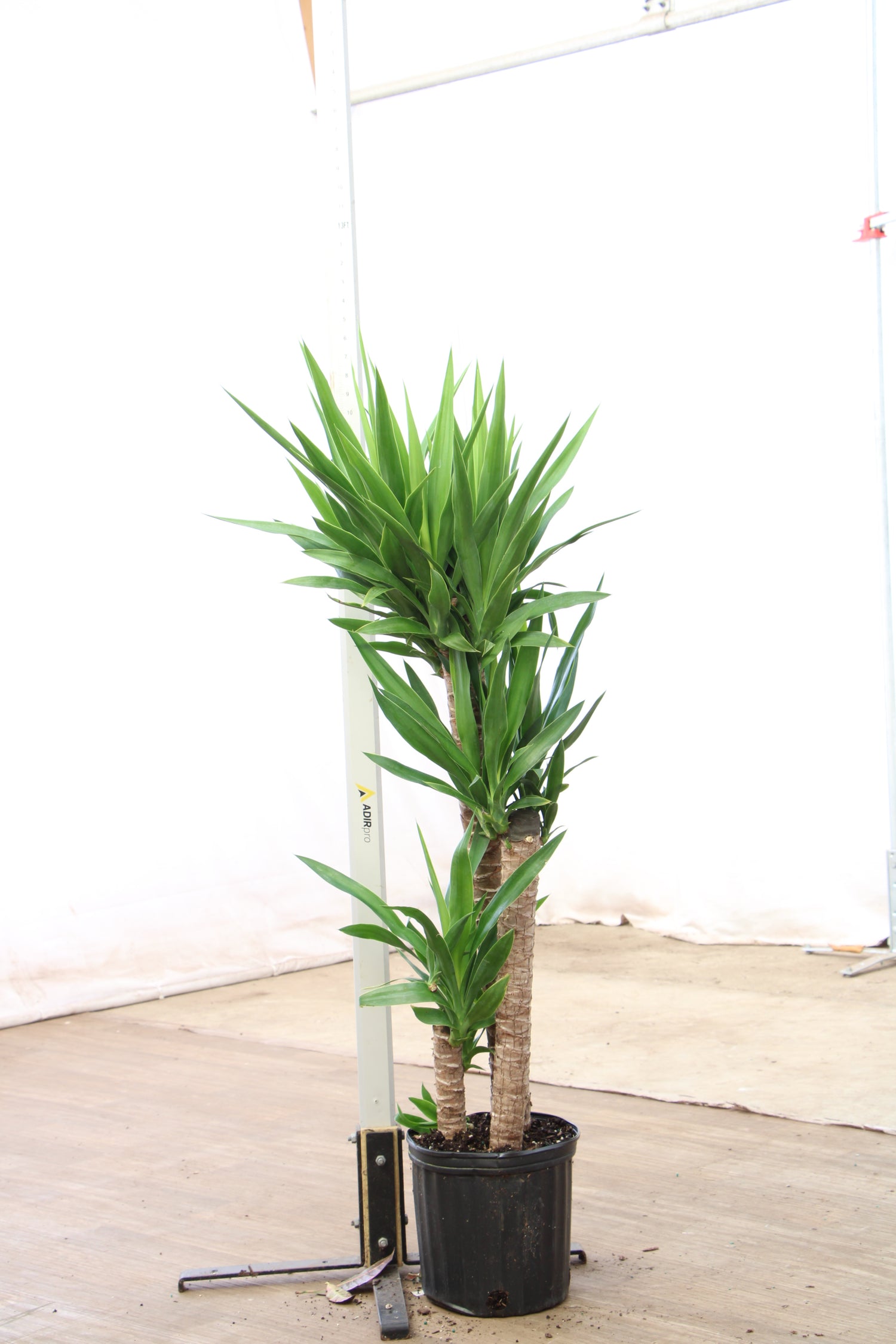
SKU: 27341486309
yucca cane home depot

yucca cane home depot Buy Large Yucca Cane Online | Large Indoor Plant

Sale price$22.61 Regular price$25.12
Save 10%

Pay in installments of $6.28 with ShopPay, AfterPay and Klarna

Shipping Estimate
USA
  • USA
  • CAN

Ships within 48 hours · Estimated delivery Sep 16 - Sep 21

Promo Codes Available:

For Your Every Summer RSVP, with Code: SUMMER15

Description

yucca cane home depot Buy Large Yucca Cane Online | Large Indoor PlantDescription The Yucca brings sculptural beauty and southwestern charm right into your home. With those distinctive sword shaped leaves arranged in perfect rosettes and the promise of towering Yucca flower spikes, this resilient beauty transforms any space into a desert inspired sanctuary. Native to the Americas and naturally adapted for easy living, your Yucca tree thrives with gentle care and understanding. We love how forgiving these plants are

Description

The Yucca brings sculptural beauty and southwestern charm right into your home. With those distinctive sword-shaped leaves arranged in perfect rosettes and the promise of towering Yucca flower spikes, this resilient beauty transforms any space into a desert-inspired sanctuary.

Native to the Americas and naturally adapted for easy living, your Yucca tree thrives with gentle care and understanding. We love how forgiving these plants are - they're wonderful companions for both new plant parents and experienced collectors who appreciate low-maintenance elegance. Whether you choose a smaller Yucca for your favorite corner or a statement-sized specimen for your living room, this plant will grow alongside you for decades, adding timeless beauty to your carefully curated space.

Care 

Are yuccas hard to care for?

Yuccas are wonderfully forgiving plants that make excellent choices for both beginners and experienced plant lovers. These resilient beauties adapt well to various conditions and don't mind if you occasionally forget to water them, requiring mainly bright light and patience.

We find that most plant parents quickly fall in love with how understanding these plants are. Think of your Yucca as that low-maintenance friend who always looks great - minimal fuss, maximum beauty, and always ready to brighten your day.


Do Yuccas like full sun or shade? 

Your Yucca absolutely thrives in bright light and loves soaking up full sun whenever possible, though it gracefully tolerates partial shade too. Indoors, we recommend placing it near your brightest window where it can enjoy optimal growing conditions.

The more sunshine your Yucca receives, the more likely you'll be rewarded with those spectacular sword-like leaves and potentially even those magnificent flower spikes that make these plants so special.


How often should you water yuccas?

Water your Yuccas every two to three weeks during spring and summer, allowing the top few inches of soil to dry completely between waterings. In winter, reduce watering to once monthly as these desert natives prefer staying dry.

When you do water, give it a thorough drink until water flows from the drainage holes, then let it rest. We always tell our customers that with Yucca plant care, it's better to underwater than overwater.


Where is the best place to keep a yucca plant?

The perfect home for your Yucca is near a bright, sunny window with good drainage and adequate air circulation. We love seeing them in entryways, living rooms, or anywhere their stunning silhouette can create a natural focal point.

Choose a spot where your plant can show off its striking beauty while staying safely away from cold drafts and heating vents. Your Yucca will reward you with steady, graceful growth in return.


What is the best fertilizer to use for yuccas?

Feed your Yucca with a balanced, all-purpose fertilizer diluted to half strength every few months during the spring and summer growing season. Skip fertilizing completely in fall and winter when your plant naturally rests and doesn't need extra nutrients.

We recommend keeping fertilizing simple and gentle. These plants evolved in nutrient-poor soils, so less is definitely more when it comes to feeding your beautiful Yucca.


Do yuccas need misting?

Yuccas don't need misting and actually prefer the dry indoor conditions that many other houseplants find challenging. These desert natives thrive in average home humidity and excessive moisture can sometimes lead to fungal issues on their leaves.

Save your spray bottle for other plants - your Yucca is perfectly content with the natural humidity levels in your home and will thank you for respecting its low-moisture preferences.


How long do yuccas live for?

Your Yucca can become a treasured long-term companion, often living for several decades with proper care and sometimes reaching fifty years or more. We love knowing that these plants can grow alongside families, becoming more beautiful with each passing year.

This makes them wonderful investments for anyone looking to create lasting beauty in their space. There's something deeply satisfying about nurturing a plant that can be part of your home for decades.


Are yuccas good indoor plants?

Yuccas make absolutely wonderful indoor plants thanks to their striking sculptural presence, remarkable resilience, and refreshingly low maintenance requirements. They bring that perfect combination of dramatic visual impact and easy-going personality that works beautifully in modern homes and offices.

We particularly appreciate how well they adapt to typical indoor conditions that challenge many other houseplants. Your Yucca will thrive in the dry air and bright light that most homes naturally provide.


Pet-friendly?

Yuccas are not pet friendly. They contain compounds called steroidal saponins that are harmful to pets if ingested. For the wellbeing of your furry family members, please keep these beautiful plants safely out of reach of curious paws and mouths.


Are yuccas poisonous to dogs?

Yuccas are toxic to dogs due to steroidal saponins found throughout the plant. If your pup decides to sample the foliage, they may experience drooling, vomiting, diarrhea, and weakness that requires immediate veterinary attention for their safety.

We always recommend positioning your Yucca where even the most curious dogs can't reach it - perhaps on a high plant stand or in a room that's typically off-limits to your four-legged friends.


Are yuccas toxic to cats?

Yuccas are definitely harmful to cats, potentially causing drooling, vomiting, diarrhea, and weakness if your feline friend decides to investigate with their teeth. Since cats are natural climbers and plant explorers, extra care is needed with placement.

Consider a high shelf or hanging arrangement where your kitty can admire your Yucca's beautiful form from a safe, non-nibbling distance. Your cat's safety is always worth the extra planning.


Factoids

What is a yucca plant?

A Yucca plant is a perennial evergreen with rosettes of sword-shaped leaves and occasional tall spikes of fragrant white or cream flowers. These beauties belong to the asparagus family and are native to arid regions throughout North and Central America.


Is a yucca a cactus?

A Yucca isn't actually a cactus, despite their shared appreciation for dry conditions and desert landscapes. While cacti belong to the Cactaceae family, Yuccas are proud members of the asparagus family, making them botanical cousins rather than siblings.


Is yucca a perennial or an annual?

Your Yucca is definitely a perennial plant, meaning it will grace your home for many years rather than completing its life cycle in just one season. This long-term commitment makes it such a rewarding choice for anyone wanting to build lasting relationships with their plants.


Are yuccas poisonous to humans?

Yuccas contain saponins that can cause stomach upset, vomiting, and diarrhea in humans if consumed in significant quantities. The naturally bitter taste usually prevents accidental consumption, but it's wise to keep them away from curious children and adults who might experiment.

We always recommend treating all houseplants as "look but don't taste" and washing hands after handling any plant, just to be safe and maintain good plant care habits.


Do yucca plants multiply?

Yucca plants naturally multiply by producing small offshoots or pups around the base of the mother plant. You can separate them when they're large enough. Many species spread through underground rhizomes, while others can grow from stem cuttings with patience.

This natural tendency to produce new plants makes them wonderful for sharing with friends or expanding your own collection over time. There's something magical about watching a single plant become many.


Can you eat yucca?

You cannot eat the Yucca plant root, which contains high levels of toxic saponins. It’s often confused with edible yuca or cassava. Some Yucca flower varieties are used in traditional Central American and Mexican cuisines when prepared by experienced cooks.

We always recommend leaving any food preparation involving plant materials to experts and treating your houseplant Yucca as purely ornamental for safety and peace of mind.


Do Yuccas purify the air?

Yuccas help improve your indoor air quality by naturally filtering toxins like formaldehyde and benzene from your environment, contributing to a healthier home atmosphere. Those broad leaves work quietly to process the air around them throughout the day and night.

While they're not the strongest air purifiers in the plant world, every little bit helps, and you get the added bonus of stunning architectural beauty alongside their air-cleaning benefits.


What part of yuccas are medicinal?

The root of certain Yucca species, particularly Yucca schidigera, contains beneficial compounds that have been studied for their anti-inflammatory properties. However, the raw root itself isn't safe for home consumption and requires professional preparation for any medicinal use.

We always recommend leaving medicinal plant preparation to qualified professionals and enjoying your beautiful houseplant Yucca purely for its ornamental qualities and air-purifying benefits.


Buy a Yucca

Your perfect Yucca is waiting to transform your space into something extraordinary. These remarkable plants bring decades of beauty with surprisingly little effort – exactly what busy plant lovers need.

We help you discover the Yucca that matches your vision perfectly. 

Our live video calls mean you'll actually see your chosen plant growing in our greenhouse before we carefully pack it for the journey to you. There's something wonderful about knowing exactly which plant will be arriving at your door. We believe the best plant relationships start with the right match, and we're excited to help you begin this beautiful, long-lasting partnership.

Shipping Notes
  • Free Standard Shipping on $100+ Orders to the USA.
  • Except Preorder products are shipped in 48 hours.
  • Delivery to the USA:
  1. Standard Shipping : 3-10 business days
  • If time is of the essence, please consider selecting expedited delivery for faster service.
Exchange/Return Notes
  • We offer a 30-day return/exchange service after receiving.
  • Final sale items are not eligible for returns or exchanges.
  • To process your return/exchange, please contact us at [email protected]
  • Please click here for more details>>> Return & Exchange Policy
SKU: 27341486309

Discover Niche Categories That Outsell yucca cane home depot

Top-Converting Item to Boost Your Average Order

4.6 ★★★★★
Based on 24 reviews
Sort
Highest Rating
Newest First
Oldest First
Product Reviews
C
Verified Purchase
Chongyean Cheang
Whiting, US
★★★★★ 5
An amazing book
Format: Paperback
Silent Spring by Rachel Carson is one book that has opened our minds to how much has gone wrong in the world. It is an immensely powerful scientific book for general readers packed full of verifiable research and data. Rachel Carson wrote the book about the widespread use of chemical pesticides that have wreaked havoc upon the water, the atmosphere, the soil, and the earth since the experiments conducted during World War II. Carson begins the book with a short chapter containing an imaginary scenario of a quiet American countryside in spring devoid of birds and other wildlife. Carson then asks a question which the book attempts to answer: "What has already silenced the voices of spring in many towns in America?" (Carson 1962) The other sixteen chapters fully detail how the use of chemical pesticides and herbicides impacts the environment and silences living species when people do not pay attention. In chapter two she makes the point that humans can alter nature. "The most alarming of all man's assaults upon the environment is the contamination of air, earth, rivers, and sea" (Carson 1962). The author demonstrates that people try to get a quick fix for their small problems but are often unaware of the consequences of their quick fix solutions. "We use the chemicals to kill weeds, insects, and pests…… They should not call insecticides but biocides" (Carson 1962). In the next chapter, "Elixirs of Death," she introduces chemicals which can harm health such as chlorinated hydrocarbons (e.g., DDT), organic phosphates, and other hydrocarbons that are more toxic than DDT such as dieldrin, Aldrin, and endrin. She tells the story of a child and family dog that was suddenly killed by the use on an endrin cockroach spray. When the chemicals are combined with one another, it leads to an unpredictable and harmful result in the atmosphere and living creatures. Carson continues in chapter 4 and five by describing the effect of pesticides in water and soil. Even though low concentrations of insecticide in the water is not detrimental, a habit of putting poison in water builds up and ends up passing into fishes, animals, and humans. DDD and DDE, the toxaphenes used in clear lakes destroy the human adrenal cortex (Carson 1962). Even though the chemicals had been deposited years ago, it was carried on in living species from generation to generation. Similarly, soil can be destroyed if it contains too many pesticides and these chemicals may remain in the ground for an extended period. The following chapter of the book mentioned that there are ways to avoid using insecticides to kill insects such as introducing different species of plants or by introducing plant-eating insects. Carson continues her analysis of the life-threatening consequences of pesticides on the surroundings in chapters 7, 8 and 9. She mentions that the entire population of living creatures, including birds and fish, was killed in sprayed areas. "Aldrin, one of the deadliest of all chemicals, was chosen to kill the Japanese beetles... After a few reports came in of dead birds everywhere…. Dogs and cats sickened" (Carson 1962). The author also provides excerpts of letters from people who lived in the areas saying that these pesticides changed the landscape of the areas in which they lived. One woman reported that the spraying of these chemicals had wiped out robins, chickadees, and cardinals. Other women from Alabama said the result of fire-ant spraying made the birds disappear overnight. Other people in Mississippi saw no land birds for miles after spraying. The author ends the chapter with the question, "Isn't it possible to help the balance of nature without destroying it? Who has the right to decide about the use of chemicals?" Chapter 10 details the death of wildlife when aerial spraying is conducted. She comments on the lack of precaution and foresight being used by the pesticide industry. "No research was done before the launch of million acres aerial campaign" (Carson 1962). It shows the lack of caution and general unawareness of the consequences of their actions. The following chapter examines the evidence that the widespread use of poisonous substances can cause the slow, prolonged destruction of human health. For example, she mentions, "DDT has been found everywhere in processed food and cooked restaurant meals" (Carson 1962). The cumulative effect of using different chemicals is that it is incorporated into our food. It is unpredictable how much it can cause harm. A huge amount of poison is everywhere; people exist in their day-to-day lives without knowing that it is even there. Carson calls it "the age of poison" (Carson 1962). Chapters 12, 13 and 14, Carson directs examines the chemicals harmful to human tissues and organs. Back in the days, we lived in fear of infectious diseases such as smallpox and cholera. Now, we are living with and facing new diseases that Carson calls "the environmental disease." The author gives many examples of the sources of the chemicals and how it reacts and is incorporated into the body. "Dieldrin can have long-term effects such as loss of memory, insomnia, nightmares, and mania" (Carson 1962). At the end of chapter 14, she mentions the statistic that one in every four Americans is developing cancer. The possible explanation is that the sale of chemicals in the market is an accepted part of our lives. She describes how she was slowly dying of cancer as she finished this book. In the next three chapters, Carson describes how insects have developed the ability to reproduce and resist the effects of the sprays. In other words, like the title of Chapter 15 states, "nature fights back." Finally, the final chapter, "The Other Road" presents alternatives to chemical control of pests. Chemical "solutions" should be stopped. Instead, an alternative way is biological solutions based on knowledge of living organisms. She gives examples such as insect sterilization, insect venom as a poison, insect killing microorganisms, and ultrasonic sound to kill mosquito larvae. "The choice, after all, is ours to make" (Carlson 1962). Overall, Silent Spring is all about how the world has changed because of our misguided actions of using harmful chemical pesticides in nature. The book opens our eyes and minds to the fact that these synthetic pesticides have poisoned all living species, destroyed the environment, and contaminated the world. I would recommend this book to all people that are interested in how much the earth is contaminated by humans and want to find a way to help keep the balance of nature without destroying it.
WAS THIS REVIEW HELPFUL?YesReportShare
Reviewed in the United States on February 12, 2018
L
Verified Purchase
Lisa D.
Los Angeles, US
★★★★★ 5
Book
Format: Paperback
Enjoyed the book
WAS THIS REVIEW HELPFUL?YesReportShare
Reviewed in the United States on April 27, 2026
S
Verified Purchase
SEONGJAE KIM
Natrona Heights, US
★★★★★ 5
[book review] Silent Spring
Format: Paperback
Author of Silent Spring Rachel Carson points out in Chapter 14 that cancer was increasing not only in the general public but also in youth: “The monthly report of the Office of Vital Statistics for July 1959 states that malignant growths, including those of the lymphatic and blood-forming tissues, accounted for 15 percent of the deaths in 1958 compared with only 4 percent in 1900. Judging by the present incidence of the disease, the American Cancer Society estimates that 45,000,000 Americans now living will eventually develop cancer. This means that malignant disease will strike two out of three families (221)”. “Today, more American school children die of cancer than from any other disease. So serious has this situation become that Boston has established the first hospital in the United States devoted exclusively to the treatment of children with cancer. Twelve percent of all deaths in children between the ages of one and fourteen are caused by cancer” (221). Why there were trends of increasing cancer? To answer the question, this paper delves into the 3 causes of cancers mentioned in this chapter - radiation, chemicals, and lack of oxygen for cells. Furthermore, it explores additional important questions it makes us ask. Cancer can be caused by natural sources such as ultraviolet radiation from the sun, radiation from certain rocks, and other similar sources. While Carson admits they are still a factor in producing malignancy, she argues that since these sources have existed for longer than life on Earth and only those who are resistant to them have survived over time, modern-day organisms must have adapted to living with them. In other words, there are likely other reasons for increasing cancer rates besides natural sources. Carson believed that it was especially due to the widespread use of man-made carcinogens in pesticides and insecticides. Compared to natural cancer-causing materials, man-made carcinogens were brand new forms of chemicals that had never existed in the natural environment before, so human beings’ slow biological evolution has not adapted to them yet. Carson not only suggested this logical process but also shared some real-life examples of how humans started to realize that man-made materials can cause cancer. Some of them were due to a lack of knowledge about carcinogens and were somehow inevitable because it was occupational exposure. For instance, in 1775, Sir Percivall Pott declared that scrotal cancer, which was so common among chimney sweeps, must be caused by the soot that accumulated on their bodies. “In the early 1920’s women who painted luminous figures on watch dials swallowed minute amounts of radium by touching the brushes to their lips; in some of these women bone cancers developed after a lapse of 15 or more years. A period of 15 to 30 years or even more has been demonstrated for some cancers caused by occupational exposures to chemical carcinogens” (226). At least these occupational carcinogen exposures were limited to relatively small populations. However, DDT which has produced suspicious liver tumors on animal subjects during laboratory tests and was given the definite rating of a chemical carcinogen by Dr. Huper of the National Cancer Institute, and other insecticides were widely used. Not only the direct exposure to those chemicals are problem but also they don't simply disappear after they're used. They keep following up the food chain, ending up in humans and potentially causing cancer. How do some chemicals cause cancer? German biochemist, Professor Otto Warburg has proposed a persuasive theory. He believes that these chemicals or radiation agents destroy the respiration of normal cells, depriving them of energy. This theory was confirmed in 1953 when other researchers were able to turn normal cells into cancer cells by depriving them of oxygen intermittently over long periods. The impact of these chemicals is not limited to existing organisms; they can also affect unborn babies. This is because babies have rapid cell divisions, making them more vulnerable to the effects of cancer-producing agents that penetrate the placenta and act on the rapidly developing fetal tissues. Dr. W. C. Hueper of the National Cancer Institute has suggested that congenital cancers and cancers in infants may be related to the action of cancer-producing agents to which the mother was exposed during pregnancy. The long latent period of most cancers is the time required for the infinite number of cell divisions during which fermentation gradually increases after the initial damage to respiration. However, since babies are in the process of rapid cell division, they may develop cancer faster when exposed to carcinogens compared to adults. How do we end up surrounded by chemicals that potentially cause cancers to not only living humans but even further unborn babies? Carson wrote - “The chemical agents of cancer have become entrenched in our world in two ways: first, and ironically, through man’s search for a better and easier way of life; second, because the manufacture and sale of such chemicals has become an accepted part of our economy and our way of life” (242). But we can’t just stop developing chemicals to pursue better and easier lives or change our lives back to primitive levels because unsatisfactory is human nature. Then what’s the practical solution? I’ll say regulators with expertise. Just like we are not using toxic chemicals that were used in the past thanks to regulations, regulations should keep monitoring such potential dangers. Therefore regulators must be experts. But this approach isn’t perfect. Moving legislation to phase out the use of such carcinogenic chemicals has been slow which makes “what the public is asked to accept as “safe” today may turn out tomorrow to be extremely dangerous” (224). It's hard to believe that toxic chemicals like DDT were widely used just a few generations ago. However, it's important to consider that similar practices may be occurring today in the world we live in right now. In Professor Handwerk’s words “Now You See It… Now You Don’t.” and we must keep asking what are the DDTs - something harmful but shocking widely used - nowadays. It’s the important question that Carson made us think further about the cause of the cancer.
WAS THIS REVIEW HELPFUL?YesReportShare
Reviewed in the United States on March 25, 2024
S
Verified Purchase
Sergio denny
Pawtucket, US
★★★★★ 4
A powerful and influential
Format: Kindle
This is an important and eye-opening read for anyone interested in nature, public health and environmental protection.
WAS THIS REVIEW HELPFUL?YesReportShare
Reviewed in the United States on January 31, 2026
L
Verified Purchase
Liz Cole
Houston, US
★★★★★ 5
A True Mystery Story
Silent Spring is as relevant today as it was 50 years ago. Our ground, our air, our food and we are bombarded with chemicals, carcinogens, products of all sorts to kill weeds and bugs and are capable of killing us. Rachel Carson, a biologist and talented writer, walks us through a litany of misuse and overuse of chemicals that have never been tested for safety to humans. Laws are on the books requiring this testing to be done, but it is disregarded because they make our grass greener, our bugs keel over dead and a lot of people rich. Carson is known best for revealing the reason that Bald Eagle eggs had such thin shells that they broke well before the required incubation before hatching. The drastic reduction is successful Eagle births was DDT. Because this is our national bird and is supported by activists in and out of government, DDT was banned and the eagles began producing young again. We have not been so lucky. This book is factual in a clear and understandable way, and it informs us of the human actions and choices that put us all at risk. No alarmist language is employed, but facts lead us to conclusions that are concerning. The stunning fact to me is that the book was written fifty years ago, and the same risks to humanity and our future are being taken today when we could find better ways of solving problems, more cautious ways of using chemicals and restricting their use in sensible ways. As I talk to people about the issues raised in this book, they have not heard of Rachel Carson and have heard nothing of the assured negative effects on our own health from the chemicals we expose ourselves to daily. We knew so much back then when Carson wrote this book. Why hasn't more been researched and shared with us, so we can have current knowledge of the facts and risks. It is important that Carson's writing not be buried on a dusty shelf. It is a real mystery story and we are the cast.
WAS THIS REVIEW HELPFUL?YesReportShare
Reviewed in the United States on November 23, 2016

recommand products