SKU: 27912887133
what is san pedro cactus

what is san pedro cactus Buy San Pedro Cactus Phoenix, AZ | Echinopsis pachanoi

Sale price$23.98 Regular price$26.64
Save 10%

Pay in installments of $6.66 with ShopPay, AfterPay and Klarna

Shipping Estimate
USA
  • USA
  • CAN

Ships within 48 hours · Estimated delivery Jul 26 - Jul 31

Promo Codes Available:

For Your Every Summer RSVP, with Code: SUMMER15

Description

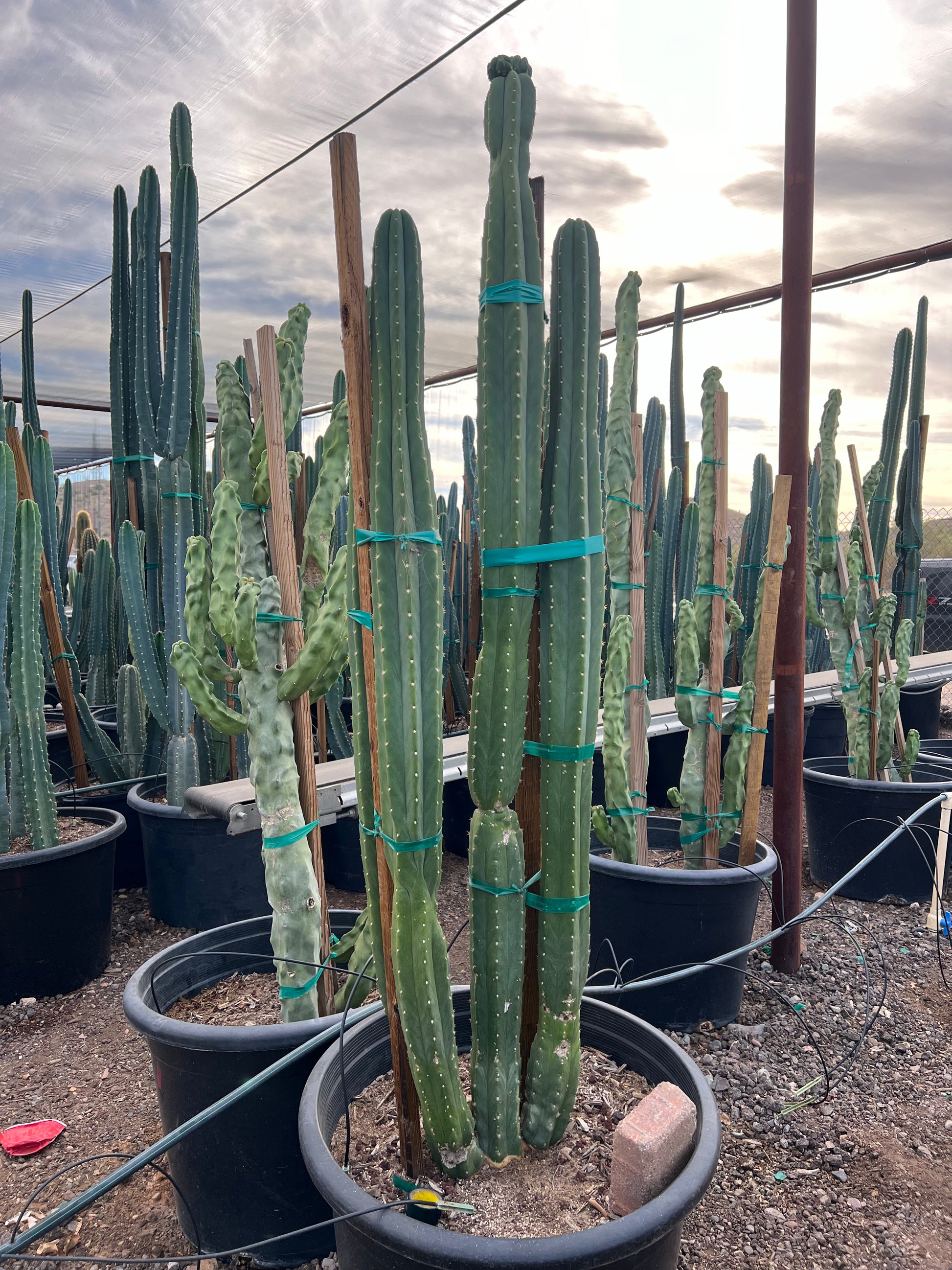
what is san pedro cactus Buy San Pedro Cactus Phoenix, AZ | Echinopsis pachanoiA Towering Columnar Cactus for Phoenix Desert Gardens San Pedro The San Pedro Cactus (Echinopsis pachanoi) is one of the fastest growing columnar cacti available for Phoenix landscapes. Native to the Andes Mountains, this striking blue green cactus grows tall, ribbed columns that branch with age into dramatic multi stemmed specimens. San Pedro can reach 1020 feet tall in the Phoenix Valley, adding bold vertical structure to xeriscape gardens,

A Towering Columnar Cactus for Phoenix Desert Gardens — San Pedro

The San Pedro Cactus (Echinopsis pachanoi) is one of the fastest-growing columnar cacti available for Phoenix landscapes. Native to the Andes Mountains, this striking blue-green cactus grows tall, ribbed columns that branch with age into dramatic multi-stemmed specimens. San Pedro can reach 10–20 feet tall in the Phoenix Valley, adding bold vertical structure to xeriscape gardens, courtyard plantings, and modern desert designs. It produces spectacular large white flowers that bloom at night during summer — a rare treat for any garden. Whether you’re creating a sculptural cactus garden in Scottsdale, anchoring a Chandler desert border, or adding architectural drama to a Mesa backyard — San Pedro delivers fast growth and jaw-dropping form.

San Pedro Cactus Plant Details

Attribute Detail
Scientific Name Echinopsis pachanoi (syn. Trichocereus pachanoi)
Common Names San Pedro Cactus, Saint Peter Cactus
Mature Height 10–20 feet
Mature Width 4–6 feet (multi-branched clump)
Growth Rate Fast for a cactus — 1–2 feet per year in Phoenix
Sun Full sun to light shade. Handles reflected heat well.
Water Low once established. Drought-tolerant but appreciates occasional deep watering.
USDA Zones 9–11 (Phoenix is Zone 9b–10a)
Soil Well-draining required. Thrives in sandy, rocky Arizona soils and handles caliche with drainage.
Foliage Evergreen — blue-green ribbed columns year-round
Bloom Large white nocturnal flowers in summer — fragrant and spectacular

San Pedro Cactus Uses in Phoenix Landscapes

Sculptural Focal Point & Cactus Gardens

San Pedro’s tall, ribbed columns create dramatic vertical architecture in any desert garden. Plant a single specimen as a living sculpture in a Scottsdale courtyard, or group 3–5 for a columnar cactus grove effect. Pair with Golden Barrel, Totem Pole Cactus, and Mexican Fencepost for an all-columnar desert statement garden.

Modern Desert Borders & Property Screens

Because San Pedro branches and fills in with age, it makes an effective living screen or border plant. Space 3–4 feet apart along a Chandler property line or Gilbert fence to create a striking green wall. The columns grow fast enough to provide meaningful screening within 3–5 years.

Pool-Friendly & Low-Litter Plantings

San Pedro is an excellent pool-adjacent plant — it produces virtually no leaf litter, requires minimal trimming, and its smooth columns and minimal spines make it safer than many cacti. Plant along Tempe and Mesa pool perimeters for a clean, architectural look with zero maintenance debris.

Best Time to Plant San Pedro Cactus in Phoenix

Spring (March–May) is the ideal planting window. Warm soil and rising temperatures promote fast root establishment and active growth. Fall (October–November) is the second-best option. Avoid planting in winter — San Pedro is slightly frost-sensitive and roots best in warm soil.

How to Plant San Pedro Cactus

  1. Dig wide, not deep — excavate 2x the root ball width at the same depth. Cacti have shallow root systems.
  2. Ensure excellent drainage — break through any caliche layer. San Pedro will rot in standing water.
  3. Backfill with native soil — no amendments needed. Sandy, rocky Arizona soil is ideal.
  4. Spacing — 3–4 feet apart for a border or screen; 5+ feet for standalone specimens.
  5. Let the cut callus — if transplanting a cutting, let the cut end dry and callus for 1–2 weeks before planting.
  6. Gravel mulch — 2–3 inches of decomposed granite or gravel. Never use organic mulch that retains moisture.

Watering San Pedro Cactus in Phoenix

First Year Watering Schedule

  • Weeks 1–2: Every 5–7 days, light watering to settle soil
  • Months 1–2: Every 7–10 days
  • Months 3–6: Every 10–14 days
  • After Year 1: Every 2–3 weeks in summer; monthly or less in winter

Drip Irrigation

Place 1 emitter (1–2 GPH) 12–18 inches from the base. San Pedro appreciates more water than most columnar cacti, which helps it maintain its fast growth rate. However, always let the soil dry completely between waterings. Overwatering causes root rot.

How fast does San Pedro grow in Phoenix?
San Pedro is one of the fastest-growing columnar cacti, adding 1–2 feet per year in Phoenix with regular summer watering. A 5-gallon plant can reach 6–8 feet within 3–4 years.

Is San Pedro frost-hardy in Phoenix?
San Pedro handles most Phoenix winters well, tolerating temps down to about 25°F. During rare hard freezes, drape frost cloth over the plant. Established specimens are more cold-hardy than young ones.

Does San Pedro bloom?
Yes — mature San Pedro cacti produce large, spectacular white flowers that open at night during summer. The blooms are fragrant and typically last one night, attracting moths and bats. Plants usually begin blooming once they reach 4–6 feet tall.

How does San Pedro compare to Totem Pole Cactus?
Both are tall columnar cacti, but San Pedro has visible ribs and small spines, while Totem Pole (Pachycereus schottii ‘Monstrosus’) is smooth and spineless with a knobby texture. San Pedro grows faster and produces showy flowers. Both are excellent choices for Phoenix desert gardens.

You May Also Like

  • Totem Pole Cactus — a smooth, spineless columnar cactus with a unique sculptural form.
  • Mexican Fence Post — a tall, columnar cactus often used as a living fence in desert landscapes.
  • Golden Barrel Cactus — a round, golden-spined cactus that contrasts beautifully with tall columnar species.
  • Ocotillo — a spindly desert native with fiery red spring blooms, perfect for adding movement to cactus gardens.

How Many San Pedro Cactus Do I Need?

San Pedro works two ways: as a single sculptural specimen, or branched together into a fast-growing columnar screen. For a focal point, plant one and give it 5 to 6 feet of clear space so the multi-stemmed form can spread. For a living screen along a wall or property line, space the columns 3 to 4 feet apart:

Run length Plants at 3.5 ft spacing
10 ft 3 plants
20 ft 6 plants
30 ft 9 plants
40 ft 11 plants

For a grove effect, group 3 to 5 columns in odd numbers, each 3 to 4 feet apart, so the ribbed stems read as one bold cluster.

San Pedro Cactus Season-by-Season in Phoenix

  • Spring (Feb-Apr): Prime planting window. Warm soil drives fast root establishment and the first flush of new column growth.
  • Summer (May-Sep): Peak growth season, adding 1 to 2 feet with regular deep watering. Large fragrant white flowers open at night and draw moths and bats. Handles full reflected heat off walls and pavement.
  • Fall (Oct-Nov): Second-best planting window and continued growth before cooling. Taper watering as temperatures drop.
  • Winter (Dec-Jan): Evergreen blue-green structure holds all winter. Hardy to about 25°F: during a hard freeze, drape frost cloth over the columns, especially on young plants.

At a Glance

✔ Heat-Loving (Reflected-Heat Tolerant)   ✔ Drought-Tolerant   ✔ Pollinator-Friendly   ✔ Pool-Friendly (Low-Litter)   ✔ Evergreen   ✔ Low-Maintenance   ✔ Deer & Rabbit-Resistant   ✔ Cold-Hardy to 25°F

Plant It With

Is San Pedro Cactus Right for Your Yard?

San Pedro thrives in full sun to light shade with fast-draining soil, and it tolerates reflected heat off walls and pavement better than most columnar cacti. Give it room to branch and break through any caliche layer so water never pools at the roots. It is not a fit if your spot stays wet or shaded, or if you cannot cover it during a rare hard freeze while it is young.

Shipping Notes
  • Free Standard Shipping on $100+ Orders to the USA.
  • Except Preorder products are shipped in 48 hours.
  • Delivery to the USA:
  1. Standard Shipping : 3-10 business days
  • If time is of the essence, please consider selecting expedited delivery for faster service.
Exchange/Return Notes
  • We offer a 30-day return/exchange service after receiving.
  • Final sale items are not eligible for returns or exchanges.
  • To process your return/exchange, please contact us at [email protected]
  • Please click here for more details>>> Return & Exchange Policy
SKU: 27912887133

Discover Niche Categories That Outsell what is san pedro cactus

Top-Converting Item to Boost Your Average Order

4.5 ★★★★★
Based on 9 reviews
Sort
Highest Rating
Newest First
Oldest First
Product Reviews
B
Verified Purchase
B. Marold
Alexandria, US
★★★★★ 5
Great Guide for Specialized Bible Study or Pastoral Use.
Format: Hardcover
`Commentary on the New Testament Use of the Old Testament', edited by G. K. Beale and D. A. Carson supports the idea that given any approach to the examination of the New Testament you may think of, someone has written a book about it. And a superb book it is, if you have need for an examination of this subject from almost every angle. I say almost, because there is actually one thing I would like to have seen in this book, and it is not there. More on this anon. For the lay reader, be aware that this is a scholarly book, with all the Greek, Hebrew, Aramaic, and (I suspect) even Coptic terms used freely, just when I've gotten in the habit of tracking down Greek, I have to deal with two even more difficult languages. I mention that primarily for those who are allergic to footnotes and phrases in languages other than English. Otherwise, I am delighted in how easy the reading is in all the contributions from eighteen (18) major scholars on the New Testament. Much of this is attributable to the marching orders given to the writers by the two editors. This list of guidelines makes the diverse contributions very uniform, which contributes to the value of this book as the guide to a specialized type of Bible study based on this book's subject. Anyone who has tracked down more than a handful of OT passages used in the NT will realize that the NT writers often take some liberties with their interpretations, reading in a prophesy about Jesus which, in the original text actually referred to something completely different. And, one has also run across a wide range of different ways in which OT texts are used, from `exact' quotes to paraphrases to allusions. The editors address this range by asking all authors to address their OT citations from at least five different points of view. These are: 1. What is the NT context of the citation? What is the genre and literary structure of the book or chapter? 2. What is the OT context of the citation? Do these Markan citations come directly from Exodus, for example, or are they quoted from Isaiah's use of Exodus verses? 3. How was the OT quote handled or interpreted by Second Temple Judaism, or early Judaism in general? 4. From what text is the OT quotation copied. The Septuagint (LXX), the Masoretic text, or a Targum (scripture translated into Aramaic or Coptic). 5. What is the ultimate use or connection being made by the NT author's use of the OT. Is it simply to emote a connection, is it a use of a common OT idiom, is it a parable use, shorthand to evoking an OT story, or is there a belief that events in NT times fulfill a specific OT prophecy. Of course, many commentaries on individual NT books do this as well, but most do not go into detail on points 2, 3, and 4. In looking at those parts of the NT I know best, I find this book delivers everything it promises on these five points, but that the book cannot replace good commentaries and study Bibles for NT books. In looking at one of the most famous uses of OT scripture in Luke, at 4:18 - 19, where Jesus teaches from Isaiah 61:1 - 2, the authors, David Pao and Eckhard Schnabel cover all the editors' points admirably, including references to important opinions by famous scholars such as Rudolph Bultmann. For this passage and for all others in this chapter on Luke, the actual passage is NOT presented in any translation. Therefore, one has to have a copy of the Bible open to the passage, as you read the authors' interpretation of it. Less important is the fact that the explanation of this section of Luke on Jesus' teaching in the Nazareth synagogue says nothing about the puzzling climax, where the congregation turns on Jesus. But that is a logical limitation of the approach, and is not relevant to the subject of the book. The introduction to Lucan passages was illuminating, as it tells us that even though one of Luke's primary objectives was to show the resolution of OT prophesies, Luke actually uses fewer OT quotes than Matthew. This is rarely discussed in commentaries on Luke. So, especially with regard to the synoptic Gospels, this would be an excellent book to use as a guide to OT references in the NT. For the scholar, there is the usual tower of bibliographical references after each article, plus the usual index to Biblical citations at the back of the book. There was just one thing I wanted which is missing. This is a `reverse' index, if you will, of OT books, with the number and locations of where verses are cited in the NT. The reason for wishing such an index is as a guide to selecting which OT books may best be studied together, as with Luke and Deuteronomy (some commentators claim the 10 chapter journey of Jesus to Jerusalem is patterned after Deuteronomy). Ultimately, this is a great reference if you make a habit of studying NT scriptures in depth, as either a pastor or bible study teacher.
WAS THIS REVIEW HELPFUL?YesReportShare
Reviewed in the United States on December 19, 2007
D
Verified Purchase
DJ
Bozeman, US
★★★★★ 5
Most Amazing
Format: Kindle
To look at the New Testament through the same thought process of those that wrote it is nothing short of ingenious. It takes nothing away from the Word being written by the Holy Spirit through men. In fact, it adds to the validity of the cohesion between the Old and New Testament while giving insights rooted in God’s Word written centuries before the coming of Christ. It does include the Apocryphal books as well and it’s citations of OT are well documented to work both from the OT to the NT or from the NT to the OT which is the purpose of this book. I would highly recommend this book to anyone who desires to dig deeper into the thought process of God and move beyond the regular commentary process that tends to be limited to the author’s insights and singular theological perspective. Further, if you desire to answer the question of why is this written or how did this come to be, many passages point to multiple references from the OT giving substance to Paul’s letter to encourage a young pastor to hold onto what has been given to him. Not a new teaching as we would assume, but a correct understanding of the Hebrew Testament in light of Jesus death, resurrection, and ascension into the Ancient of Days court as described in Daniel 7. Jesus is clearly more than a teacher when viewed through the eyes of the Hebrew Testament, He is the second person of the Holy Trinity for which this Old Testament confirms multiple times over. The downside of this extensive commentary is the use of technical jargon and the assumption that the reader has fluency in Hebrew and Greek. However, if you are a student who sits in the front of the classroom because you want to learn more and miss nothing (and not up there because the teacher desires to keep a closer eye on you) this book will not disappoint you. On the contrary, you will find it’s usefulness beyond sermon and Bible Study preparation. You will get the opportunity to sit in the dirt and learn from the Master as Mary did and will find it is hard to move onto the rest of your list that needs to get done for the day.
WAS THIS REVIEW HELPFUL?YesReportShare
Reviewed in the United States on August 9, 2022
F
Verified Purchase
Fnord Fjamily
Grantham, US
★★★★★ 5
Essential Commentary, I Use it Every Time
Format: Hardcover
I won't write an exhaustive review, but I can easily commend this commentary to any seminary student by saying this: it goes into my pile of reference books for nearly every paper I write, on any subject. It's always relevant. If I'm dealing with any New Testament text, it's worth looking up in this commentary to see if it has an OT basis, if it's an allusion, a quote, or something similar. This adds dimensionality and thoroughness to my treatment of the NT, putting it in perspective. There is a similar volume, which I use just as often, called 'Commentary on the Old Testament Use of the Old Testament.' For OT studies, I use it along with 'The Context of Scripture' (which is basically ANET with cross-indexed biblical passages and ancient texts). There have been a few times when I've followed the chain all the way from NT text -> NT use of OT -> OT text -> OT use of OT -> Context of Scripture. If you're a Bible nerd, you can imagine this is basically cause to run around the neighborhood six times shouting 'Hallelujah' while the neighbors scratch their heads or close their blinds. I use this book as much as NICNT for NT studies, which is to say, any time I study the NT. This commentary is amazing, it earns its footprint on my booksehelf. Absolutely recommend it.
WAS THIS REVIEW HELPFUL?YesReportShare
Reviewed in the United States on January 1, 2026
B
Verified Purchase
Brian
Natrona Heights, US
★★★★★ 5
A much needed resource!
Format: Hardcover
A phenomenal and much needed resources for the church today! I am delighted that it is now part of my theological library.
WAS THIS REVIEW HELPFUL?YesReportShare
Reviewed in the United States on March 2, 2026
I
Verified Purchase
InHisHand
Bozeman, US
★★★★★ 5
Pastoral Use of Beale's and Carson's Commentary
Format: Hardcover
This book was properly NOT entitled "Commentary on the New Testament Exegesis of the Old Testament." It is a well studied and scholarly look at how the New Testament writers made USE of the Old Testament Scriptures. And they did make use of those Scriptures is varied and instructive ways. Beale and Carson have compiled and edited articles from numerous trustworthy believing scholars which explain where, how, and why specific passages of Old Testament texts were employed by NT authors. These articles are careful to cite OT and NT contexts, predominant Middle Eastern scholastic thought prior to the 1st Century, and provide an analysis of what style was likely being used by the NT author (for example: typology, compare / contrast, poetic / emotive, prophetic fulfillment, simile, and at times even exegetical / interpretive). Such varied approaches by the NT authors to acquiring and working with OT passages begs the question of whether we ought to handle the OT in the same manner as did they. This commentary fairly well states that the answer is, "Yes...but." Yes, if we were to be as careful as they in understanding that we are not always merely quoting and interpreting the OT nor making absurd allegories of the OT texts but using them as instructive examples, poetic bursts of emotion, and historical typographic illustrations then we should indeed use the OT in the same way. Often the articles and entries in the commentary are long. This is not a dictionary and does not lend itself to quick reference lookups. Such attention to detail and depth enhances the experience of using this volume as it unearths elements and aspects of the Old Testament references that we rarely attempt to see from a 1st Century perspective today. Its overall format is rather straightforward. Identify a NT passage and look it up in the commentary in the passage's traditional Protestant biblical order. Generally only OT passages that are directly quoted, paraphrased, alluded to, or cited by the NT are expanded upon in the commentary. If an OT passage is merely somewhat similar to or has only surface resemblances with an OT passage (giving one the feeling that it is being brought to mind for evocative or emotive reasons alone) then the commentary may not touch on it. In general this is a very useful collection of articles. Its heart is not on being a commentary on the entire New Testament but is focused most narrowly on how the New Testament writers put the Old Testament to work to illustrate Jesus as the Christ, the evils of rebellion and sin, and the complex intricacies of God's epic sweeping salvific plan for humanity.
WAS THIS REVIEW HELPFUL?YesReportShare
Reviewed in the United States on September 28, 2012

recommand products