SKU: 29817210817
chinese monstera

chinese monstera Monstera

Sale price$21.35 Regular price$23.72
Save 10%

Pay in installments of $5.93 with ShopPay, AfterPay and Klarna

Shipping Estimate
USA
  • USA
  • CAN

Ships within 48 hours · Estimated delivery Sep 16 - Sep 21

Promo Codes Available:

For Your Every Summer RSVP, with Code: SUMMER15

Description

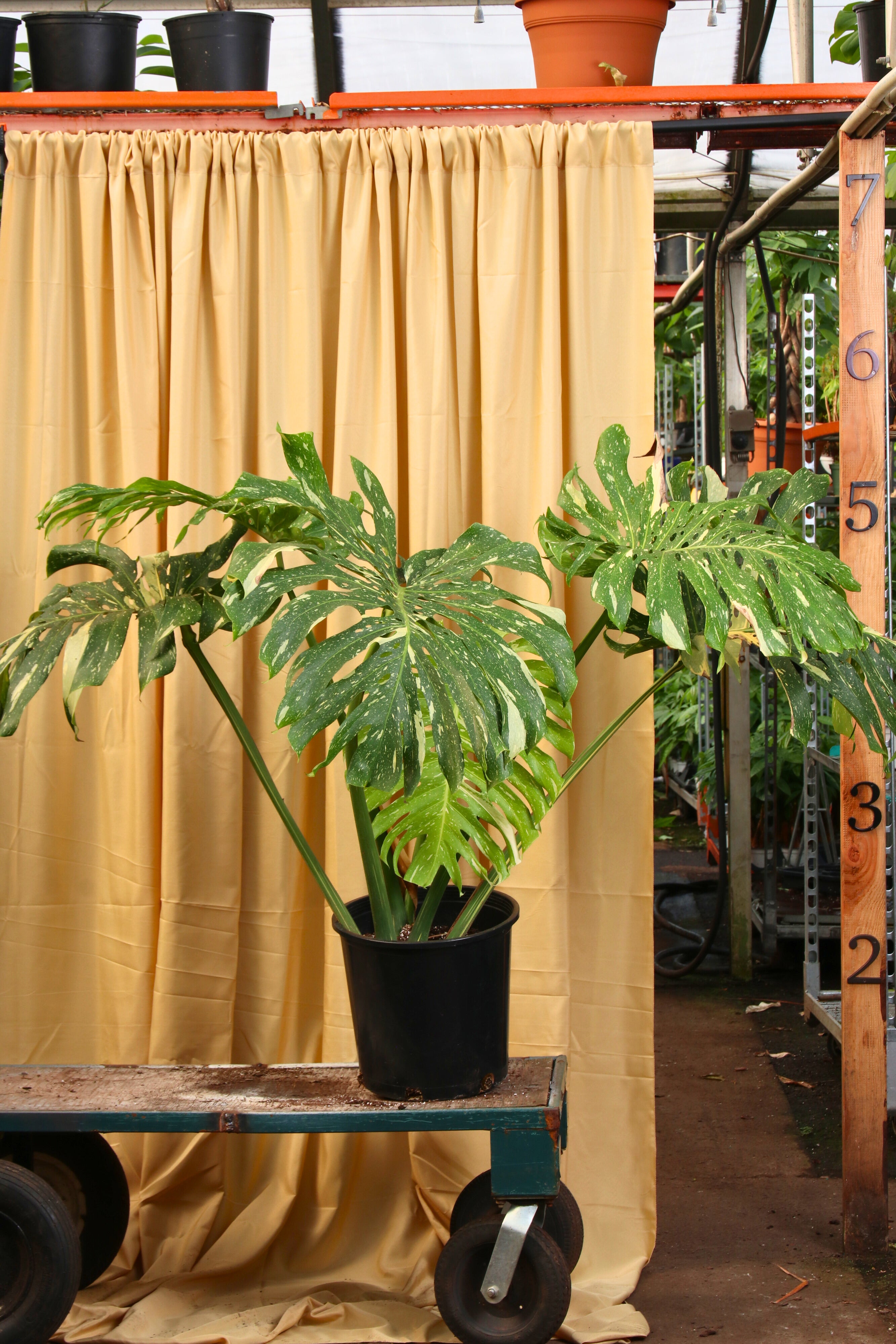
chinese monstera MonsteraDescription The Monstera Thai Constellation is a truly special treasurea gentle giant with creamy, star like variegation dancing across its dramatic leaves. Developed through tissue culture in Thailand, every leaf unfurls with its own unique galaxy of marbled patterns. Unlike some variegated plants that can revert to solid green, your Monstera Thai Constellation maintains its celestial beauty reliably over time. While it grows at a moderate pace, this

Description

The Monstera Thai Constellation is a truly special treasure—a gentle giant with creamy, star-like variegation dancing across its dramatic leaves. Developed through tissue culture in Thailand, every leaf unfurls with its own unique galaxy of marbled patterns.

Unlike some variegated plants that can revert to solid green, your Monstera Thai Constellation maintains its celestial beauty reliably over time. While it grows at a moderate pace, this stunning plant makes up for it with a bushy, full appearance that creates a breathtaking focal point in your home. 


Care 

Is Monstera Thai constellation hard to care for?

The Monstera Thai Constellation isn't difficult to care for, despite its elegant appearance. With a few simple nurturing habits, you can help your companion thrive in your home—well-draining soil, consistent moisture (never soggy roots!), bright indirect light, and good humidity.

The biggest consideration with your Monstera Thai Constellation is avoiding overwatering, which can lead to root issues. With a little attention to these basics, you can create the perfect environment for your Thai Constellation to unfurl its magical variegated leaves year after year.


What is Thai constellation monstera?

Your Thai constellation monstera is a carefully cultivated variegated version of Monstera deliciosa, developed through laboratory tissue culture in Thailand. Its stunning cream-colored marbled patterns spread across lush green leaves, resembling stars scattered through the night sky—hence its celestial name!

What makes this Monstera deliciosa Thai constellation truly special is its stable variegation. Unlike some variegated plants that might revert to plain green, your Thai constellation monstera maintains its beautiful starry patterns consistently as it grows, making it a reliable long-term companion for your plant collection.


Is Thai constellation a fast grower? 

The Monstera Thai Constellation grows at a moderate pace rather than rushing. Those beautiful cream-colored sections contain less chlorophyll than the green parts, so your plant needs to work a little harder to photosynthesize compared to its all-green cousins.

During the growing season, with proper care, your Monstera Thai Constellation might bless you with a new leaf every 4-6 weeks. We think this thoughtful pace is part of what makes each new leaf so special—like unwrapping a gift each time, with its own unique constellation of variegation patterns that's worth the wait.


What’s the best potting mix for Monstera Thai Constellation?

The best potting mix for your Monstera Thai Constellation balances drainage and moisture retention—a nurturing foundation for healthy roots. Blend regular potting soil, orchid bark, perlite, and perhaps some coco coir or sphagnum moss for that perfect balance.

This caring combination helps prevent the root issues these plants can be susceptible to while still holding enough moisture to keep those dramatic leaves looking their best. Remember, in nature, these plants climb trees in tropical forests, so they appreciate good airflow around their roots.


How often should I water my Monstera Thai Constellation?

Water your Monstera Thai Constellation when the top inch (2-4 cm) of soil feels dry to the touch. This is more reliable than following a strict schedule, as your plant's needs will change with the seasons and your home's conditions.

During winter's rest period, it's best to reduce watering to prevent root issues. Always ensure your pot has proper drainage—your plant appreciates good moisture but doesn't enjoy standing water. We find that listening to your plant's needs rather than imposing a rigid watering schedule leads to the healthiest growth.


How much light does a Thai Constellation need? 

Your Monstera Thai Constellation thrives when it's in bright, indirect light—a generous amount that can nourish those beautiful variegated sections. Because the creamy portions contain less chlorophyll, they need ample light to photosynthesize effectively without getting sunburned.

Direct sunlight can damage those precious variegated areas (and once damaged, they won't recover), while too little light might slow growth. Finding that sweet spot near a window with filtered light will help your celestial companion develop those stunning star-patterned leaves that make it so special.


Where to put Thai Constellation Monstera?

Place your Thai Constellation Monstera near an east-facing window for gentle morning sun, or a few feet back from a south or west-facing window. This positioning helps your plant receive the nourishment it needs while protecting its sensitive leaves.

It's best to keep your botanical treasure away from drafty areas, air conditioning vents, and heating elements that might cause stress. And considering its value we recommend placing it where curious pets or children can't reach it, protecting both your plant and your loved ones.


Does the Monstera Thai Constellation need a moss pole? 

Your Monstera Thai Constellation benefits wonderfully from a moss pole or similar support structure. In their natural habitat, these plants climb trees using their aerial roots, and recreating this environment helps your plant grow in a healthy, natural way.

A good support system encourages larger leaves with more dramatic splits and holes as your plant matures. The moss pole also provides structure while helping your Monstera Thai Constellation grow upward rather than outward, allowing you to showcase its magnificent foliage without it taking over your living space.


Do Thai Constellations like direct sunlight? 

Thai Constellations are sensitive to direct sunlight, which can quickly damage their delicate variegated sections. Those beautiful creamy portions are more susceptible to burning than the green areas, and once their damaged, they cannot heal or regenerate.

Bright, indirect light is the perfect balance for your Monstera Thai Constellation. Think of it as providing a protective filter between your treasured plant and the harsh sun—just enough light to energize those spectacular leaves without risking harm. Your care in finding this balance will be rewarded with healthy, vibrant growth.


Can you put a Thai Constellation outside? 

You can place your Monstera Thai Constellation outdoors only in warm, humid climates (USDA zones 9-11) and with careful protection from direct sun, wind, and other elements. For most plant parents, this botanical treasure thrives best as an indoor companion.

If you'd like to give your plant some outdoor time during warm months, consider a sheltered patio with dappled light. Remember to bring it back inside if temperatures drop below 60°F (15°C).


Pet-friendly?

The Monstera Thai Constellation contains calcium oxalate crystals throughout its beautiful leaves, making it unsafe for pets despite its friendly, starry appearance. These compounds can cause irritation and discomfort if curious cats, dogs, or other pets decide to take a taste.

Are Monsteras toxic to dogs? 

Monsteras, including the Thai Constellation, are toxic to dogs if they decide to nibble on them. The plant contains insoluble calcium oxalate crystals that can cause oral discomfort, excessive drooling, and upset stomach if your canine companion decides to investigate.

While rarely serious, it's certainly not a pleasant experience for your four-legged family member. We recommend keeping your Monstera Thai Constellation in a room your pets don't access or elevated on a plant stand where they can't reach it—protecting both your botanical treasure and your furry friend.


Is the Monstera Thai Constellation toxic to cats? 

Yes, the Monstera Thai Constellation is toxic to cats due to the calcium oxalate crystals it contains. If your feline friend decides to nibble on the leaves, these compounds can cause irritation to their mouth, tongue, and digestive tract.

Since cats are natural climbers and explorers, finding a safe placement requires extra thought. Consider a dedicated plant room that remains off-limits to your kitty, or a very high shelf that even the most athletic cats can't reach. We care about helping you create harmony between your plant collection and your animal companions.


Factoids

How rare is the Thai Constellation Monstera?

The Monstera Thai Constellation sits in that sweet spot of being special without being impossible to find. Its distinctive variegation, moderate growth rate, and specific propagation needs have kept it relatively uncommon despite its popularity among collectors and plant enthusiasts.

The good news is that tissue culture production is gradually making this botanical treasure more available to bring joy to more homes. While it remains a premium plant, we're delighted to help connect more plant lovers with this spectacular variegated beauty.


How often does a Monstera produce a new leaf? 

A healthy Monstera Thai Constellation typically develops a new leaf every 4-6 weeks during spring and summer. This cosmic beauty grows a bit more slowly than its all-green relatives, but each new leaf is a special moment worth celebrating.

Your plant's growth pace depends on environmental conditions—bright indirect light, proper watering, and higher humidity will encourage more consistent leaf development. We encourage you to enjoy this thoughtful growth rhythm; your Monstera Thai Constellation is creating something beautiful with each new leaf, each with its own unique variegation pattern.


What is the lifespan of the Monstera plant?

With thoughtful care, your Monstera Thai Constellation can be a lifelong companion, often thriving for 40+ years! These remarkable plants grow steadily more magnificent over time, with each year bringing more impressive foliage and character to your home.

Think of your Thai Constellation as a botanical friend that will journey through life alongside you—potentially even becoming a cherished family heirloom passed down through generations. We love helping plant parents establish these lasting connections with plants that bring joy and natural beauty to their homes for decades.


Why are the leaves of the Thai Constellation marbled with white and cream? 

The Thai Constellation's signature marbled leaves result from a genetic mutation that reduces chlorophyll in certain leaf areas. This creates those stunning constellation-like patterns that make each leaf a unique masterpiece—nature's artistry ensuring no two leaves are ever exactly alike.

Unlike some variegated plants that occur randomly in nature, the Thai Constellation's mutation was carefully developed and stabilized through laboratory tissue culture in Thailand. This thoughtful cultivation ensures that the celestial patterning remains consistent from leaf to leaf, giving you reliable beauty with every new growth.


Why did the Thai Constellation get its name? 

The Thai Constellation earned its celestial name from those distinctive creamy-white speckles across its leaves, which resemble stars scattered throughout the night sky. Combined with its origin in Thailand, the name perfectly captures both its appearance and heritage.

We find that the name beautifully reflects what makes this plant so special—each leaf unfurling like its own galaxy of stars, creating a sense of wonder and bringing a touch of the cosmos into your home. It's this magical quality that has made the Monstera Thai Constellation such a beloved addition to so many plant collections.


Buy a Monstera ‘Thai Constellation’

Ready to welcome this stellar beauty into your home? Our Monstera Thai Constellation plants are carefully selected and nurtured for beauty and health. Each one arrives with its own unique pattern of creamy star-like splashes across dramatic, fenestrated leaves.

This remarkable plant transforms your space, creating a focal point that brings natural wonder into your everyday moments. Your guests will pause to admire its beauty, and you'll find yourself appreciating new details in its leaves each day. We're here to support you through every step of your journey with this special botanical companion. Bring home your own Monstera Thai Constellation today, and let's grow something beautiful together.

Shipping Notes
  • Free Standard Shipping on $100+ Orders to the USA.
  • Except Preorder products are shipped in 48 hours.
  • Delivery to the USA:
  1. Standard Shipping : 3-10 business days
  • If time is of the essence, please consider selecting expedited delivery for faster service.
Exchange/Return Notes
  • We offer a 30-day return/exchange service after receiving.
  • Final sale items are not eligible for returns or exchanges.
  • To process your return/exchange, please contact us at [email protected]
  • Please click here for more details>>> Return & Exchange Policy
SKU: 29817210817

Discover Niche Categories That Outsell chinese monstera

Top-Converting Item to Boost Your Average Order

4.4 ★★★★★
Based on 30 reviews
Sort
Highest Rating
Newest First
Oldest First
Product Reviews
C
Verified Purchase
Chongyean Cheang
Waukegan, US
★★★★★ 5
An amazing book
Format: Paperback
Silent Spring by Rachel Carson is one book that has opened our minds to how much has gone wrong in the world. It is an immensely powerful scientific book for general readers packed full of verifiable research and data. Rachel Carson wrote the book about the widespread use of chemical pesticides that have wreaked havoc upon the water, the atmosphere, the soil, and the earth since the experiments conducted during World War II. Carson begins the book with a short chapter containing an imaginary scenario of a quiet American countryside in spring devoid of birds and other wildlife. Carson then asks a question which the book attempts to answer: "What has already silenced the voices of spring in many towns in America?" (Carson 1962) The other sixteen chapters fully detail how the use of chemical pesticides and herbicides impacts the environment and silences living species when people do not pay attention. In chapter two she makes the point that humans can alter nature. "The most alarming of all man's assaults upon the environment is the contamination of air, earth, rivers, and sea" (Carson 1962). The author demonstrates that people try to get a quick fix for their small problems but are often unaware of the consequences of their quick fix solutions. "We use the chemicals to kill weeds, insects, and pests…… They should not call insecticides but biocides" (Carson 1962). In the next chapter, "Elixirs of Death," she introduces chemicals which can harm health such as chlorinated hydrocarbons (e.g., DDT), organic phosphates, and other hydrocarbons that are more toxic than DDT such as dieldrin, Aldrin, and endrin. She tells the story of a child and family dog that was suddenly killed by the use on an endrin cockroach spray. When the chemicals are combined with one another, it leads to an unpredictable and harmful result in the atmosphere and living creatures. Carson continues in chapter 4 and five by describing the effect of pesticides in water and soil. Even though low concentrations of insecticide in the water is not detrimental, a habit of putting poison in water builds up and ends up passing into fishes, animals, and humans. DDD and DDE, the toxaphenes used in clear lakes destroy the human adrenal cortex (Carson 1962). Even though the chemicals had been deposited years ago, it was carried on in living species from generation to generation. Similarly, soil can be destroyed if it contains too many pesticides and these chemicals may remain in the ground for an extended period. The following chapter of the book mentioned that there are ways to avoid using insecticides to kill insects such as introducing different species of plants or by introducing plant-eating insects. Carson continues her analysis of the life-threatening consequences of pesticides on the surroundings in chapters 7, 8 and 9. She mentions that the entire population of living creatures, including birds and fish, was killed in sprayed areas. "Aldrin, one of the deadliest of all chemicals, was chosen to kill the Japanese beetles... After a few reports came in of dead birds everywhere…. Dogs and cats sickened" (Carson 1962). The author also provides excerpts of letters from people who lived in the areas saying that these pesticides changed the landscape of the areas in which they lived. One woman reported that the spraying of these chemicals had wiped out robins, chickadees, and cardinals. Other women from Alabama said the result of fire-ant spraying made the birds disappear overnight. Other people in Mississippi saw no land birds for miles after spraying. The author ends the chapter with the question, "Isn't it possible to help the balance of nature without destroying it? Who has the right to decide about the use of chemicals?" Chapter 10 details the death of wildlife when aerial spraying is conducted. She comments on the lack of precaution and foresight being used by the pesticide industry. "No research was done before the launch of million acres aerial campaign" (Carson 1962). It shows the lack of caution and general unawareness of the consequences of their actions. The following chapter examines the evidence that the widespread use of poisonous substances can cause the slow, prolonged destruction of human health. For example, she mentions, "DDT has been found everywhere in processed food and cooked restaurant meals" (Carson 1962). The cumulative effect of using different chemicals is that it is incorporated into our food. It is unpredictable how much it can cause harm. A huge amount of poison is everywhere; people exist in their day-to-day lives without knowing that it is even there. Carson calls it "the age of poison" (Carson 1962). Chapters 12, 13 and 14, Carson directs examines the chemicals harmful to human tissues and organs. Back in the days, we lived in fear of infectious diseases such as smallpox and cholera. Now, we are living with and facing new diseases that Carson calls "the environmental disease." The author gives many examples of the sources of the chemicals and how it reacts and is incorporated into the body. "Dieldrin can have long-term effects such as loss of memory, insomnia, nightmares, and mania" (Carson 1962). At the end of chapter 14, she mentions the statistic that one in every four Americans is developing cancer. The possible explanation is that the sale of chemicals in the market is an accepted part of our lives. She describes how she was slowly dying of cancer as she finished this book. In the next three chapters, Carson describes how insects have developed the ability to reproduce and resist the effects of the sprays. In other words, like the title of Chapter 15 states, "nature fights back." Finally, the final chapter, "The Other Road" presents alternatives to chemical control of pests. Chemical "solutions" should be stopped. Instead, an alternative way is biological solutions based on knowledge of living organisms. She gives examples such as insect sterilization, insect venom as a poison, insect killing microorganisms, and ultrasonic sound to kill mosquito larvae. "The choice, after all, is ours to make" (Carlson 1962). Overall, Silent Spring is all about how the world has changed because of our misguided actions of using harmful chemical pesticides in nature. The book opens our eyes and minds to the fact that these synthetic pesticides have poisoned all living species, destroyed the environment, and contaminated the world. I would recommend this book to all people that are interested in how much the earth is contaminated by humans and want to find a way to help keep the balance of nature without destroying it.
WAS THIS REVIEW HELPFUL?YesReportShare
Reviewed in the United States on February 12, 2018
L
Verified Purchase
Lisa D.
Grantham, US
★★★★★ 5
Book
Format: Paperback
Enjoyed the book
WAS THIS REVIEW HELPFUL?YesReportShare
Reviewed in the United States on April 27, 2026
S
Verified Purchase
SEONGJAE KIM
Los Angeles, US
★★★★★ 5
[book review] Silent Spring
Format: Paperback
Author of Silent Spring Rachel Carson points out in Chapter 14 that cancer was increasing not only in the general public but also in youth: “The monthly report of the Office of Vital Statistics for July 1959 states that malignant growths, including those of the lymphatic and blood-forming tissues, accounted for 15 percent of the deaths in 1958 compared with only 4 percent in 1900. Judging by the present incidence of the disease, the American Cancer Society estimates that 45,000,000 Americans now living will eventually develop cancer. This means that malignant disease will strike two out of three families (221)”. “Today, more American school children die of cancer than from any other disease. So serious has this situation become that Boston has established the first hospital in the United States devoted exclusively to the treatment of children with cancer. Twelve percent of all deaths in children between the ages of one and fourteen are caused by cancer” (221). Why there were trends of increasing cancer? To answer the question, this paper delves into the 3 causes of cancers mentioned in this chapter - radiation, chemicals, and lack of oxygen for cells. Furthermore, it explores additional important questions it makes us ask. Cancer can be caused by natural sources such as ultraviolet radiation from the sun, radiation from certain rocks, and other similar sources. While Carson admits they are still a factor in producing malignancy, she argues that since these sources have existed for longer than life on Earth and only those who are resistant to them have survived over time, modern-day organisms must have adapted to living with them. In other words, there are likely other reasons for increasing cancer rates besides natural sources. Carson believed that it was especially due to the widespread use of man-made carcinogens in pesticides and insecticides. Compared to natural cancer-causing materials, man-made carcinogens were brand new forms of chemicals that had never existed in the natural environment before, so human beings’ slow biological evolution has not adapted to them yet. Carson not only suggested this logical process but also shared some real-life examples of how humans started to realize that man-made materials can cause cancer. Some of them were due to a lack of knowledge about carcinogens and were somehow inevitable because it was occupational exposure. For instance, in 1775, Sir Percivall Pott declared that scrotal cancer, which was so common among chimney sweeps, must be caused by the soot that accumulated on their bodies. “In the early 1920’s women who painted luminous figures on watch dials swallowed minute amounts of radium by touching the brushes to their lips; in some of these women bone cancers developed after a lapse of 15 or more years. A period of 15 to 30 years or even more has been demonstrated for some cancers caused by occupational exposures to chemical carcinogens” (226). At least these occupational carcinogen exposures were limited to relatively small populations. However, DDT which has produced suspicious liver tumors on animal subjects during laboratory tests and was given the definite rating of a chemical carcinogen by Dr. Huper of the National Cancer Institute, and other insecticides were widely used. Not only the direct exposure to those chemicals are problem but also they don't simply disappear after they're used. They keep following up the food chain, ending up in humans and potentially causing cancer. How do some chemicals cause cancer? German biochemist, Professor Otto Warburg has proposed a persuasive theory. He believes that these chemicals or radiation agents destroy the respiration of normal cells, depriving them of energy. This theory was confirmed in 1953 when other researchers were able to turn normal cells into cancer cells by depriving them of oxygen intermittently over long periods. The impact of these chemicals is not limited to existing organisms; they can also affect unborn babies. This is because babies have rapid cell divisions, making them more vulnerable to the effects of cancer-producing agents that penetrate the placenta and act on the rapidly developing fetal tissues. Dr. W. C. Hueper of the National Cancer Institute has suggested that congenital cancers and cancers in infants may be related to the action of cancer-producing agents to which the mother was exposed during pregnancy. The long latent period of most cancers is the time required for the infinite number of cell divisions during which fermentation gradually increases after the initial damage to respiration. However, since babies are in the process of rapid cell division, they may develop cancer faster when exposed to carcinogens compared to adults. How do we end up surrounded by chemicals that potentially cause cancers to not only living humans but even further unborn babies? Carson wrote - “The chemical agents of cancer have become entrenched in our world in two ways: first, and ironically, through man’s search for a better and easier way of life; second, because the manufacture and sale of such chemicals has become an accepted part of our economy and our way of life” (242). But we can’t just stop developing chemicals to pursue better and easier lives or change our lives back to primitive levels because unsatisfactory is human nature. Then what’s the practical solution? I’ll say regulators with expertise. Just like we are not using toxic chemicals that were used in the past thanks to regulations, regulations should keep monitoring such potential dangers. Therefore regulators must be experts. But this approach isn’t perfect. Moving legislation to phase out the use of such carcinogenic chemicals has been slow which makes “what the public is asked to accept as “safe” today may turn out tomorrow to be extremely dangerous” (224). It's hard to believe that toxic chemicals like DDT were widely used just a few generations ago. However, it's important to consider that similar practices may be occurring today in the world we live in right now. In Professor Handwerk’s words “Now You See It… Now You Don’t.” and we must keep asking what are the DDTs - something harmful but shocking widely used - nowadays. It’s the important question that Carson made us think further about the cause of the cancer.
WAS THIS REVIEW HELPFUL?YesReportShare
Reviewed in the United States on March 25, 2024
S
Verified Purchase
Sergio denny
Lowell, US
★★★★★ 4
A powerful and influential
Format: Kindle
This is an important and eye-opening read for anyone interested in nature, public health and environmental protection.
WAS THIS REVIEW HELPFUL?YesReportShare
Reviewed in the United States on January 31, 2026
L
Verified Purchase
Liz Cole
Lake Worth, US
★★★★★ 5
A True Mystery Story
Silent Spring is as relevant today as it was 50 years ago. Our ground, our air, our food and we are bombarded with chemicals, carcinogens, products of all sorts to kill weeds and bugs and are capable of killing us. Rachel Carson, a biologist and talented writer, walks us through a litany of misuse and overuse of chemicals that have never been tested for safety to humans. Laws are on the books requiring this testing to be done, but it is disregarded because they make our grass greener, our bugs keel over dead and a lot of people rich. Carson is known best for revealing the reason that Bald Eagle eggs had such thin shells that they broke well before the required incubation before hatching. The drastic reduction is successful Eagle births was DDT. Because this is our national bird and is supported by activists in and out of government, DDT was banned and the eagles began producing young again. We have not been so lucky. This book is factual in a clear and understandable way, and it informs us of the human actions and choices that put us all at risk. No alarmist language is employed, but facts lead us to conclusions that are concerning. The stunning fact to me is that the book was written fifty years ago, and the same risks to humanity and our future are being taken today when we could find better ways of solving problems, more cautious ways of using chemicals and restricting their use in sensible ways. As I talk to people about the issues raised in this book, they have not heard of Rachel Carson and have heard nothing of the assured negative effects on our own health from the chemicals we expose ourselves to daily. We knew so much back then when Carson wrote this book. Why hasn't more been researched and shared with us, so we can have current knowledge of the facts and risks. It is important that Carson's writing not be buried on a dusty shelf. It is a real mystery story and we are the cast.
WAS THIS REVIEW HELPFUL?YesReportShare
Reviewed in the United States on November 23, 2016

recommand products