Pay in installments of $5.34 with
 ,
,
 and
and

Shipping Estimate
USA
- USA
- CAN
- USA
- CAN
Ships within 48 hours · Estimated delivery Oct 20 - Oct 25
 Promo Codes Available:
For Your Every Summer RSVP, with Code: SUMMER15
Description
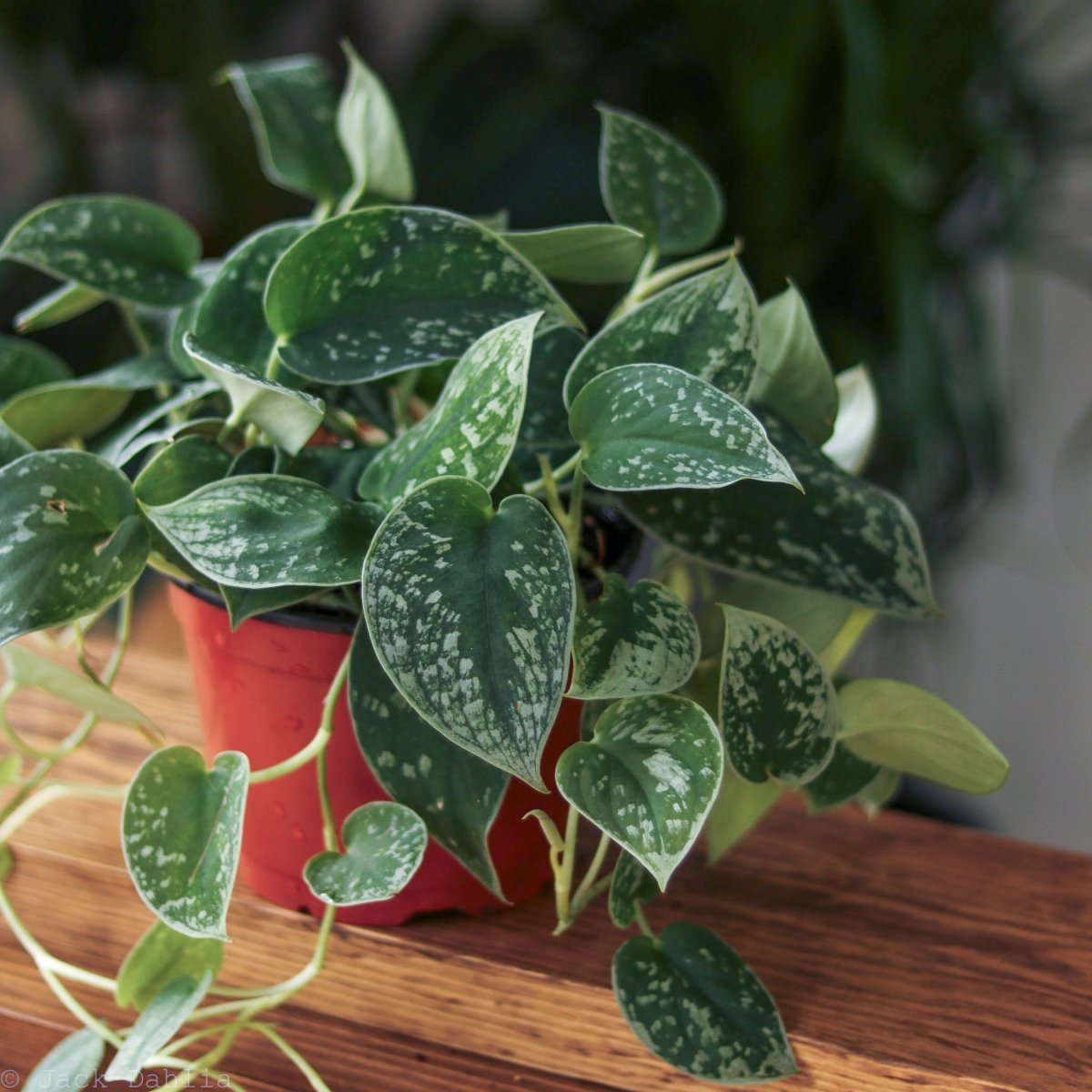
hanging silver pothos 4" Nursery PotMeet the Elegant Silvery Ann The Silvery Ann Scindapsus (Scindapsus pictus Silvery Ann) stands out in the world of Scindapsus pictus varieties due to its delicate, irregular silver variegation and smaller, more heart shaped leaves. Unlike its relatives such as Exotica or Argyraeus, the Silvery Ann features a softer, more ethereal appearance, with large silver patches that often cover entire sections of its foliage. Perfect for collectors who value
Meet the Elegant Silvery Ann
The Silvery Ann Scindapsus (Scindapsus pictus ‘Silvery Ann’) stands out in the world of Scindapsus pictus varieties due to its delicate, irregular silver variegation and smaller, more heart-shaped leaves. Unlike its relatives such as ‘Exotica’ or ‘Argyraeus,’ the Silvery Ann features a softer, more ethereal appearance, with large silver patches that often cover entire sections of its foliage. Perfect for collectors who value variety, this cultivar offers a refined yet low-maintenance addition to any plant collection.
What Sets Silvery Ann Apart?
Distinctive Silver Variegation
The Silvery Ann is known for its high levels of silver variegation. Unlike Scindapsus pictus ‘Exotica,’ which has broader leaves with bold silver streaks, Silvery Ann features smaller, more delicate leaves with irregular, silvery splashes that can appear almost entirely silver in some cases.
Leaf Shape and Texture
Silvery Ann leaves are more petite and heart-shaped compared to the larger, oval-shaped leaves of ‘Exotica.’ The texture is velvety, adding a tactile elegance to its visual appeal.
Growth Habit
While ‘Exotica’ tends to grow larger and longer, Silvery Ann is slightly more compact, making it a great choice for small spaces or intricate displays.
Adaptability
Silvery Ann is highly adaptable and thrives in a variety of lighting conditions, much like its Scindapsus pictus relatives, but it truly shines in bright, indirect light where its silver patches are most pronounced.
Plant Profile
- Botanical Name: Scindapsus pictus ‘Silvery Ann’
- Common Names: Silvery Ann, Silver Anne, Silver Pothos
- Family: Araceae
- Native Range: Southeast Asia
Care Guide for Silvery Ann Scindapsus
Light:
- Prefers bright, indirect light to maintain vibrant silver variegation.
- Tolerates medium light but may develop greener leaves under lower light conditions.
Watering:
- Allow the top inch of soil to dry out between waterings.
- Overwatering can lead to root rot; ensure proper drainage.
Humidity:
- Thrives in average household humidity but appreciates higher levels (50%+).
- Consider misting or using a pebble tray to boost humidity in drier climates.
Temperature:
- Ideal range: 60-85°F.
- Avoid sudden temperature fluctuations and cold drafts.
Soil:
- Use a well-draining potting mix, such as a blend of peat moss, perlite, and orchid bark.
Fertilizing:
- Feed monthly during the growing season (spring and summer) with a diluted water-soluble fertilizer.
Pruning and Propagation:
- Prune to remove yellow or damaged leaves and encourage bushier growth.
- Easily propagated via stem cuttings; root cuttings in water or soil.
How to Differentiate Silvery Ann from Exotica and Other Varieties
‘Exotica’
Features larger, broader leaves with bold silver streaks and a more defined mottled appearance. The growth habit is more vigorous, making it better for large displays.
‘Argyraeus’
Smaller leaves with fine, speckled silver spots and a more uniform pattern. Argyraeus is less variegated than Silvery Ann, making the latter a standout for its dramatic silver patches.
Silvery Ann
Combines the compact, heart-shaped leaves of ‘Argyraeus’ with the high silver coverage of ‘Exotica,’ offering a softer, more delicate aesthetic.
Why Collectors Love Silvery Ann Scindapsus
- Unique Appearance: Its high silver coverage and irregular patterns make it a standout among Scindapsus pictus varieties.
- Space-Friendly: Ideal for small spaces, hanging baskets, or trailing arrangements.
- Low-Maintenance Beauty: Thrives with minimal care, making it accessible to all levels of plant enthusiasts.
- Perfect Pairing: Complements other Scindapsus varieties like ‘Exotica’ or ‘Silver Satin,’ creating a visually dynamic collection.
Native Habitat and History
Silvery Ann originates from the tropical forests of Southeast Asia, where it grows as a climbing or trailing plant in the forest understory. Its silver markings are an adaptation to low-light conditions, reflecting light to maximize photosynthesis. In cultivation, this variety has become a favorite for its stunning foliage and easy-care nature.
Shipping Notes
- Free Standard Shipping on $100+ Orders to the USA.
- Except Preorder products are shipped in 48 hours.
- Delivery to the USA:
- Standard Shipping : 3-10 business days
- If time is of the essence, please consider selecting expedited delivery for faster service.
Exchange/Return Notes
- We offer a 30-day return/exchange service after receiving.
- Final sale items are not eligible for returns or exchanges.
- To process your return/exchange, please contact us at [email protected]
- Please click here for more details>>> Return & Exchange Policy