SKU: 31706082439
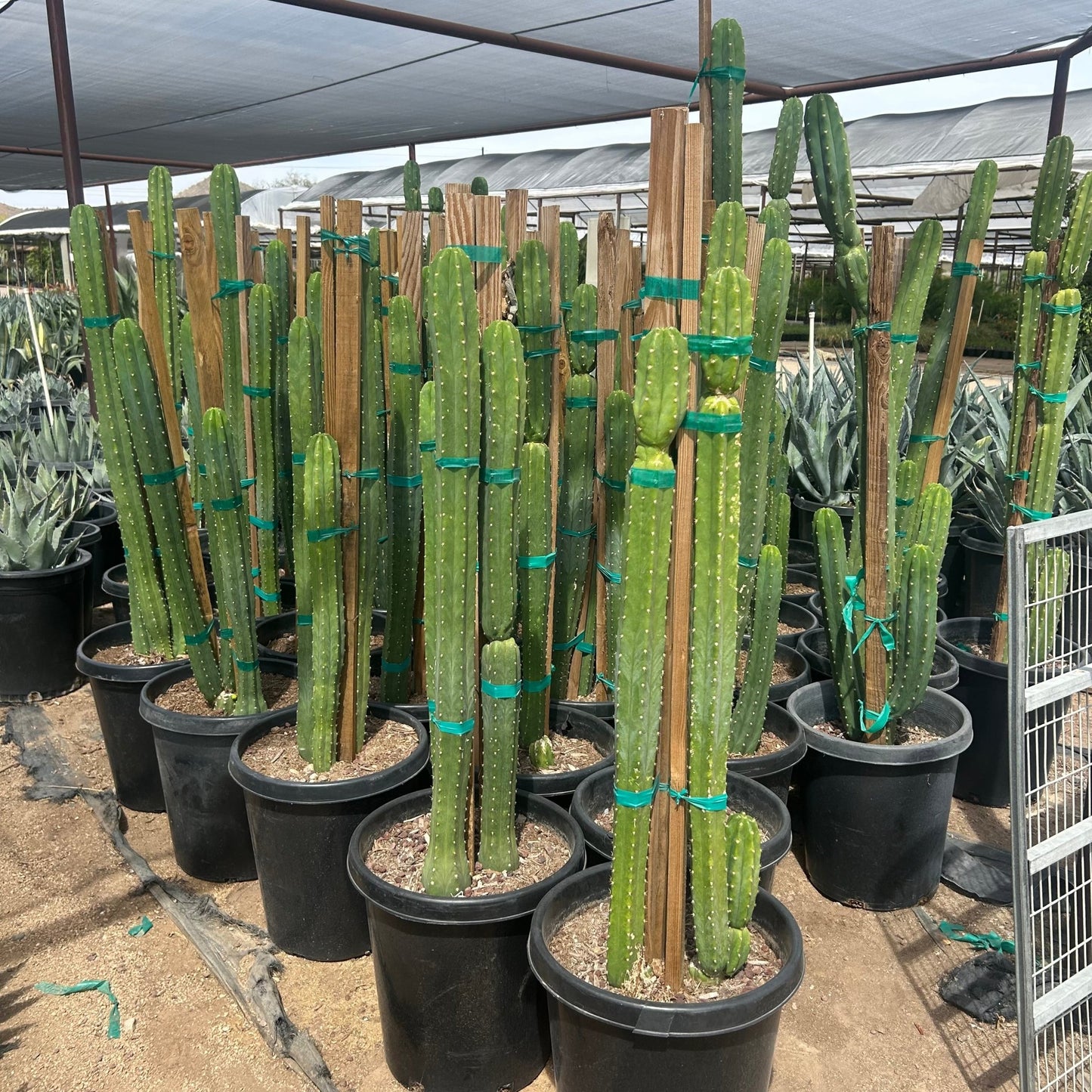
san pedro torch cactus

san pedro torch cactus Buy San Pedro Cactus Phoenix, AZ | Echinopsis pachanoi

Sale price$23.98 Regular price$26.64
Save 10%

Pay in installments of $6.66 with ShopPay, AfterPay and Klarna

Shipping Estimate
USA
  • USA
  • CAN

Ships within 48 hours · Estimated delivery Sep 15 - Sep 20

Promo Codes Available:

For Your Every Summer RSVP, with Code: SUMMER15

Description

san pedro torch cactus Buy San Pedro Cactus Phoenix, AZ | Echinopsis pachanoiA Towering Columnar Cactus for Phoenix Desert Gardens San Pedro The San Pedro Cactus (Echinopsis pachanoi) is one of the fastest growing columnar cacti available for Phoenix landscapes. Native to the Andes Mountains, this striking blue green cactus grows tall, ribbed columns that branch with age into dramatic multi stemmed specimens. San Pedro can reach 1020 feet tall in the Phoenix Valley, adding bold vertical structure to xeriscape gardens,

A Towering Columnar Cactus for Phoenix Desert Gardens — San Pedro

The San Pedro Cactus (Echinopsis pachanoi) is one of the fastest-growing columnar cacti available for Phoenix landscapes. Native to the Andes Mountains, this striking blue-green cactus grows tall, ribbed columns that branch with age into dramatic multi-stemmed specimens. San Pedro can reach 10–20 feet tall in the Phoenix Valley, adding bold vertical structure to xeriscape gardens, courtyard plantings, and modern desert designs. It produces spectacular large white flowers that bloom at night during summer — a rare treat for any garden. Whether you’re creating a sculptural cactus garden in Scottsdale, anchoring a Chandler desert border, or adding architectural drama to a Mesa backyard — San Pedro delivers fast growth and jaw-dropping form.

San Pedro Cactus Plant Details

Attribute Detail
Scientific Name Echinopsis pachanoi (syn. Trichocereus pachanoi)
Common Names San Pedro Cactus, Saint Peter Cactus
Mature Height 10–20 feet
Mature Width 4–6 feet (multi-branched clump)
Growth Rate Fast for a cactus — 1–2 feet per year in Phoenix
Sun Full sun to light shade. Handles reflected heat well.
Water Low once established. Drought-tolerant but appreciates occasional deep watering.
USDA Zones 9–11 (Phoenix is Zone 9b–10a)
Soil Well-draining required. Thrives in sandy, rocky Arizona soils and handles caliche with drainage.
Foliage Evergreen — blue-green ribbed columns year-round
Bloom Large white nocturnal flowers in summer — fragrant and spectacular

San Pedro Cactus Uses in Phoenix Landscapes

Sculptural Focal Point & Cactus Gardens

San Pedro’s tall, ribbed columns create dramatic vertical architecture in any desert garden. Plant a single specimen as a living sculpture in a Scottsdale courtyard, or group 3–5 for a columnar cactus grove effect. Pair with Golden Barrel, Totem Pole Cactus, and Mexican Fencepost for an all-columnar desert statement garden.

Modern Desert Borders & Property Screens

Because San Pedro branches and fills in with age, it makes an effective living screen or border plant. Space 3–4 feet apart along a Chandler property line or Gilbert fence to create a striking green wall. The columns grow fast enough to provide meaningful screening within 3–5 years.

Pool-Friendly & Low-Litter Plantings

San Pedro is an excellent pool-adjacent plant — it produces virtually no leaf litter, requires minimal trimming, and its smooth columns and minimal spines make it safer than many cacti. Plant along Tempe and Mesa pool perimeters for a clean, architectural look with zero maintenance debris.

Best Time to Plant San Pedro Cactus in Phoenix

Spring (March–May) is the ideal planting window. Warm soil and rising temperatures promote fast root establishment and active growth. Fall (October–November) is the second-best option. Avoid planting in winter — San Pedro is slightly frost-sensitive and roots best in warm soil.

How to Plant San Pedro Cactus

  1. Dig wide, not deep — excavate 2x the root ball width at the same depth. Cacti have shallow root systems.
  2. Ensure excellent drainage — break through any caliche layer. San Pedro will rot in standing water.
  3. Backfill with native soil — no amendments needed. Sandy, rocky Arizona soil is ideal.
  4. Spacing — 3–4 feet apart for a border or screen; 5+ feet for standalone specimens.
  5. Let the cut callus — if transplanting a cutting, let the cut end dry and callus for 1–2 weeks before planting.
  6. Gravel mulch — 2–3 inches of decomposed granite or gravel. Never use organic mulch that retains moisture.

Watering San Pedro Cactus in Phoenix

First Year Watering Schedule

  • Weeks 1–2: Every 5–7 days, light watering to settle soil
  • Months 1–2: Every 7–10 days
  • Months 3–6: Every 10–14 days
  • After Year 1: Every 2–3 weeks in summer; monthly or less in winter

Drip Irrigation

Place 1 emitter (1–2 GPH) 12–18 inches from the base. San Pedro appreciates more water than most columnar cacti, which helps it maintain its fast growth rate. However, always let the soil dry completely between waterings. Overwatering causes root rot.

How fast does San Pedro grow in Phoenix?
San Pedro is one of the fastest-growing columnar cacti, adding 1–2 feet per year in Phoenix with regular summer watering. A 5-gallon plant can reach 6–8 feet within 3–4 years.

Is San Pedro frost-hardy in Phoenix?
San Pedro handles most Phoenix winters well, tolerating temps down to about 25°F. During rare hard freezes, drape frost cloth over the plant. Established specimens are more cold-hardy than young ones.

Does San Pedro bloom?
Yes — mature San Pedro cacti produce large, spectacular white flowers that open at night during summer. The blooms are fragrant and typically last one night, attracting moths and bats. Plants usually begin blooming once they reach 4–6 feet tall.

How does San Pedro compare to Totem Pole Cactus?
Both are tall columnar cacti, but San Pedro has visible ribs and small spines, while Totem Pole (Pachycereus schottii ‘Monstrosus’) is smooth and spineless with a knobby texture. San Pedro grows faster and produces showy flowers. Both are excellent choices for Phoenix desert gardens.

You May Also Like

  • Totem Pole Cactus — a smooth, spineless columnar cactus with a unique sculptural form.
  • Mexican Fence Post — a tall, columnar cactus often used as a living fence in desert landscapes.
  • Golden Barrel Cactus — a round, golden-spined cactus that contrasts beautifully with tall columnar species.
  • Ocotillo — a spindly desert native with fiery red spring blooms, perfect for adding movement to cactus gardens.

How Many San Pedro Cactus Do I Need?

San Pedro works two ways: as a single sculptural specimen, or branched together into a fast-growing columnar screen. For a focal point, plant one and give it 5 to 6 feet of clear space so the multi-stemmed form can spread. For a living screen along a wall or property line, space the columns 3 to 4 feet apart:

Run length Plants at 3.5 ft spacing
10 ft 3 plants
20 ft 6 plants
30 ft 9 plants
40 ft 11 plants

For a grove effect, group 3 to 5 columns in odd numbers, each 3 to 4 feet apart, so the ribbed stems read as one bold cluster.

San Pedro Cactus Season-by-Season in Phoenix

  • Spring (Feb-Apr): Prime planting window. Warm soil drives fast root establishment and the first flush of new column growth.
  • Summer (May-Sep): Peak growth season, adding 1 to 2 feet with regular deep watering. Large fragrant white flowers open at night and draw moths and bats. Handles full reflected heat off walls and pavement.
  • Fall (Oct-Nov): Second-best planting window and continued growth before cooling. Taper watering as temperatures drop.
  • Winter (Dec-Jan): Evergreen blue-green structure holds all winter. Hardy to about 25°F: during a hard freeze, drape frost cloth over the columns, especially on young plants.

At a Glance

✔ Heat-Loving (Reflected-Heat Tolerant)   ✔ Drought-Tolerant   ✔ Pollinator-Friendly   ✔ Pool-Friendly (Low-Litter)   ✔ Evergreen   ✔ Low-Maintenance   ✔ Deer & Rabbit-Resistant   ✔ Cold-Hardy to 25°F

Plant It With

Is San Pedro Cactus Right for Your Yard?

San Pedro thrives in full sun to light shade with fast-draining soil, and it tolerates reflected heat off walls and pavement better than most columnar cacti. Give it room to branch and break through any caliche layer so water never pools at the roots. It is not a fit if your spot stays wet or shaded, or if you cannot cover it during a rare hard freeze while it is young.

Shipping Notes
  • Free Standard Shipping on $100+ Orders to the USA.
  • Except Preorder products are shipped in 48 hours.
  • Delivery to the USA:
  1. Standard Shipping : 3-10 business days
  • If time is of the essence, please consider selecting expedited delivery for faster service.
Exchange/Return Notes
  • We offer a 30-day return/exchange service after receiving.
  • Final sale items are not eligible for returns or exchanges.
  • To process your return/exchange, please contact us at [email protected]
  • Please click here for more details>>> Return & Exchange Policy
SKU: 31706082439

Discover Niche Categories That Outsell san pedro torch cactus

Top-Converting Item to Boost Your Average Order

4.5 ★★★★★
Based on 29 reviews
Sort
Highest Rating
Newest First
Oldest First
Product Reviews
D
Verified Purchase
D. Lakin
Charlottesville, US
★★★★★ 5
Perfectly fits what I needed for my espresso habit!
Color: Black&Silver
This Maestri House mini coffee scale is a great little tool for espresso and pour-over. The size is compact enough to fit under a portafilter or cup, and the 0.1g accuracy makes dialing in coffee much easier. I like the built-in timer, rechargeable USB-C battery, and clean black-and-silver look. It feels precise, practical, and easy to keep near the espresso machine. Great value for anyone who wants more consistent coffee.
WAS THIS REVIEW HELPFUL?YesReportShare
Reviewed in the United States on June 2, 2026
B
Verified Purchase
B. Swenson
Chelsea, US
★★★★★ 5
Maestro House Mini Coffee Scale
I have begun to drink tea, pu’erh tea to be specific. I have several varieties and I have had a problem with getting consistent results. The varieties can be very different in size depending on when the leaves are harvested (leaves harvested in spring are much smaller). So the easiest way to get consistent results is by weight. This scale is very easy to use with a ceramic tea scoop, set the tea scoop on the scale, zero it out and add tea leaves. This has made my results much better, without the wild swings in strength I had been getting before trying to eyeball even measures. This scale gives me accurate measurements to one tenth of a gram.
WAS THIS REVIEW HELPFUL?YesReportShare
Reviewed in the United States on April 15, 2026
B
Verified Purchase
bicyclemayhem
Whiting, US
★★★★★ 4
Mostly great, except one little annoyance
Color: Black&Silver, Color: Black&Silver
Pros- lightweight, small, very accurate, easy to clean, timer included. Cons- I use this to brew espresso on my Breville Touch and to get an accurate reading, you have to place something flat (structured) under the scale. Otherwise the reading just jumps all over the place. I know lot of espresso machines have the same base, so this might be an issue for some! This is my reason for 4/5 stars. It’s an easy fix, it’s just kind of annoying. Value for the price seems to be on point. It’s easy to clean. It has a timer as well as scale (nice for espresso). Buttons work the first time you push them. That’s it that’s all
WAS THIS REVIEW HELPFUL?YesReportShare
Reviewed in the United States on January 31, 2026
T
Verified Purchase
T
Houston, US
★★★★★ 5
Smooth taste and blends nicely
Size: 1.4 Ounce (Pack of 1)
This is probably one of the smoothest matchas I've ever bought. The tea blends out nicely without any clumps - no sifting required! I have bought from expensive brands that still have clumps despite sifting and whisking, so I was extremely pleased to see that this one doesn't have any of those problems. The price is also on point! Taste: 4.5/5 I would say on par if not better than most cafes where you're paying $7-8 a cup. It's not bitter at all and has a mild grassy note. It's tasty on its own or as a latte. Blendability: 5/5 Doesn't need sifting at all. A bamboo whisk is enough. Color: 4.5/5 A nice high quality green color. I'd say it's a tier down premium green, but still pretty vibrant and the quality can't be beat for this price point. Overall thoughts: It's the perfect budget brand if you're looking for a high quality matcha experience. It's great for everyday use and a good starting point for beginners.
WAS THIS REVIEW HELPFUL?YesReportShare
Reviewed in the United States on January 31, 2026
N
Verified Purchase
Number8
Natrona Heights, US
★★★★★ 4
Side-by-Side Comparison of Chinese Matcha on Amazon
Size: 1.4 Ounce (Pack of 1), Size: 1.4 Ounce (Pack of 1)
A few weeks ago, I decided to purchase several of the top-selling Chinese matcha products on Amazon to conduct a side-by-side comparison. My intention was to test them under the same conditions and share my honest experience for anyone considering these products. **A Little Background About Me** As a daily matcha drinker, I consider myself somewhat of a matcha snob. I've tried various mid- to high-end Japanese brands and a few Western-Japanese ones, mainly from Amazon. I enjoy my matcha without sweeteners, typically having a latte and an usucha each day, with an occasional koicha if the quality is good. This routine gives me a sensitive palate, which might bias my reviews. Given the current matcha shortage in Japan, I wanted to explore Chinese matcha available on Amazon for daily lattes, though I wasn't looking for something for usucha. After testing nine different Chinese matcha products, I found none suitable for my taste. However, beginners or those who enjoy sweetened drinks might appreciate some of these options. I have tried higher-quality Chinese matcha from other sources that I would consider for lattes and even usucha, but those aren't typically found on Amazon, similar to high-end Japanese matcha. **How I Evaluated These Matchas** My ratings are based on the following criteria: - Color (dry powder and prepared) - Texture and fineness - Aroma - Whisking and microfoam quality - Mouthfeel - Bitterness and astringency - Overall balance and drinkability 👉 These ratings are comparative only among the Chinese matcha products sold on Amazon, not against Japanese matcha as a whole. **A Quick Note on Flavor Descriptors** You’ll notice that I frequently mention “grassy,” so it’s important to clarify what I mean by that. In this context, a grassy note in matcha is different from the vegetal characteristics commonly referenced when describing matcha's flavor. For me, vegetal notes can feel fresh, green, and clean, whereas grassy notes refer to a muddy, astringent, sometimes dirt-like mouthfeel, especially when unbalanced. Some Japanese matchas may have grassy notes, but they are generally balanced with other flavor profiles like umami, nuttiness, and creaminess. In many of the products I tested here, grassiness dominated the flavor, and I couldn't detect much umami or other tastes. It's also worth mentioning that many of these matchas seem to originate from the same region and possibly the same factories. Some may be white-label products with different quality standards from the same factory. I can confidently say that none of these matchas were true stone-milled matcha, regardless of what the sellers advertised. The powders were generally coarser and grainier than high-quality Japanese matcha. Lastly, please note that the photos may not accurately reflect the true color of the matcha due to lighting and oversaturated imaging from my iPhone. # Individual Rankings (From Worst to Best) **9. MatchaAdmire** ⭐ 1 / 5 This was the most difficult matcha for me to drink. The powder had a noticeably brownish tone, with very high bitterness and astringency, resulting in a muddy mouthfeel. Even when used as a latte base, it felt harsh and unbalanced. I wasn’t able to finish the cup. **8. Efoofan** ⭐ 1 / 5 This matcha had the weakest color in the group and a very coarse texture. While it was slightly less harsh than the previous entry, it remained highly astringent, muddy, and grassy. I found it unenjoyable without heavy masking. **7. VenturePal** ⭐ 1.5 / 5 VenturePal had better color and slightly improved frothing compared to the two below it, but bitterness and astringency were still high. The texture remained coarse, and overall balance was lacking. **6. MatchAiA – Ceremonial Grade** ⭐ 2 / 5 The color was a few shades better than the lower-ranked products, and bitterness was reduced, but the powder was still grainy and strongly grassy with noticeable astringency. This seems to be a white-label product from the same source as Emerail, but at a lower quality tier. **5. CHAYEAH** ⭐ 2.5 / 5 This was a noticeable step up. The color improved, and it finally smelled like actual matcha. However, grassy green tea notes still dominated the flavor. I could see this being enjoyable for beginners or those who prefer sweeteners, but the marketing claims about usucha or koicha seem unrealistic at this quality level. **4. Chaism – Ceremonial Grade (Single Origin)** ⭐ 2.5 / 5 Chaism had promising color and excellent frothing. The first few sips were acceptable, but the aftertaste became muddy and unpleasant for me. This may come down to personal preference, but despite its better appearance, the finish was not enjoyable. **3. Chaism Premium Harvest** ⭐ 3 / 5 This was an improvement over the Single Origin version, with better balance, less bitterness, and a more approachable flavor overall. It remained grassy but was less aggressive, making it workable for daily lattes with moderate sweetener. **2. Emerail Matcha** ⭐ 4 / 5 Emerail was one of the strongest performers in this comparison. The powder felt fresher, had a cleaner aroma, and exhibited lower bitterness and astringency. It whisked easily with water, creating a pleasant matcha experience.good microfoam. Still grassy, but better controlled and smoother than most competitors. It’s clear this brand keeps the better material for its own label. ** 1. Jiuyu Matcha** ⭐ 4 / 5 The best overall performer among the Chinese matcha I tested on Amazon. It had the best color, a strong and pleasant green-tea aroma, smoother texture, and lower bitterness. While slightly grassier than Emerail, it was less grainy and had a better overall mouthfeel. Final Thoughts I wouldn't use any of these matchas for my daily latte. That said, this doesn’t mean they won’t work for others. These matchas can be suitable if: 1- You’re new to matcha 2- You primarily drink matcha lattes with syrups 3- And you want an affordable daily option Lastly, I wanted to mention that I’ve had excellent Chinese matcha outside of Amazon, including some I would happily drink daily and even use for usucha. Based on this comparison, those higher-end options simply aren’t what’s commonly available on Amazon right just as is the case for well-known Japanese-owned brands. This review reflects my personal palate and preparation style, and I hope it helps others choose a product that best fits how they enjoy matcha.
WAS THIS REVIEW HELPFUL?YesReportShare
Reviewed in the United States on December 18, 2025

recommand products