Pay in installments of $5.64 with
 ,
,
 and
and

Shipping Estimate
USA
- USA
- CAN
- USA
- CAN
Ships within 48 hours · Estimated delivery Sep 3 - Sep 8
 Promo Codes Available:
For Your Every Summer RSVP, with Code: SUMMER15
Description
euphorbia potting mix Euphorbia abyssinicaEuphorbia abyssinica Euphorbia abyssinica is a large, tree forming succulent euphorbia with thick green stems, paired spines and a candelabra like branching habit. In habitat it can become a substantial succulent tree, while in a pot it develops slowly into an upright, ribbed plant with water storing stems. The plants outline comes from succulent stem tissue that stores water and carries out photosynthesis through the green surface. Its visible shape
Euphorbia abyssinica
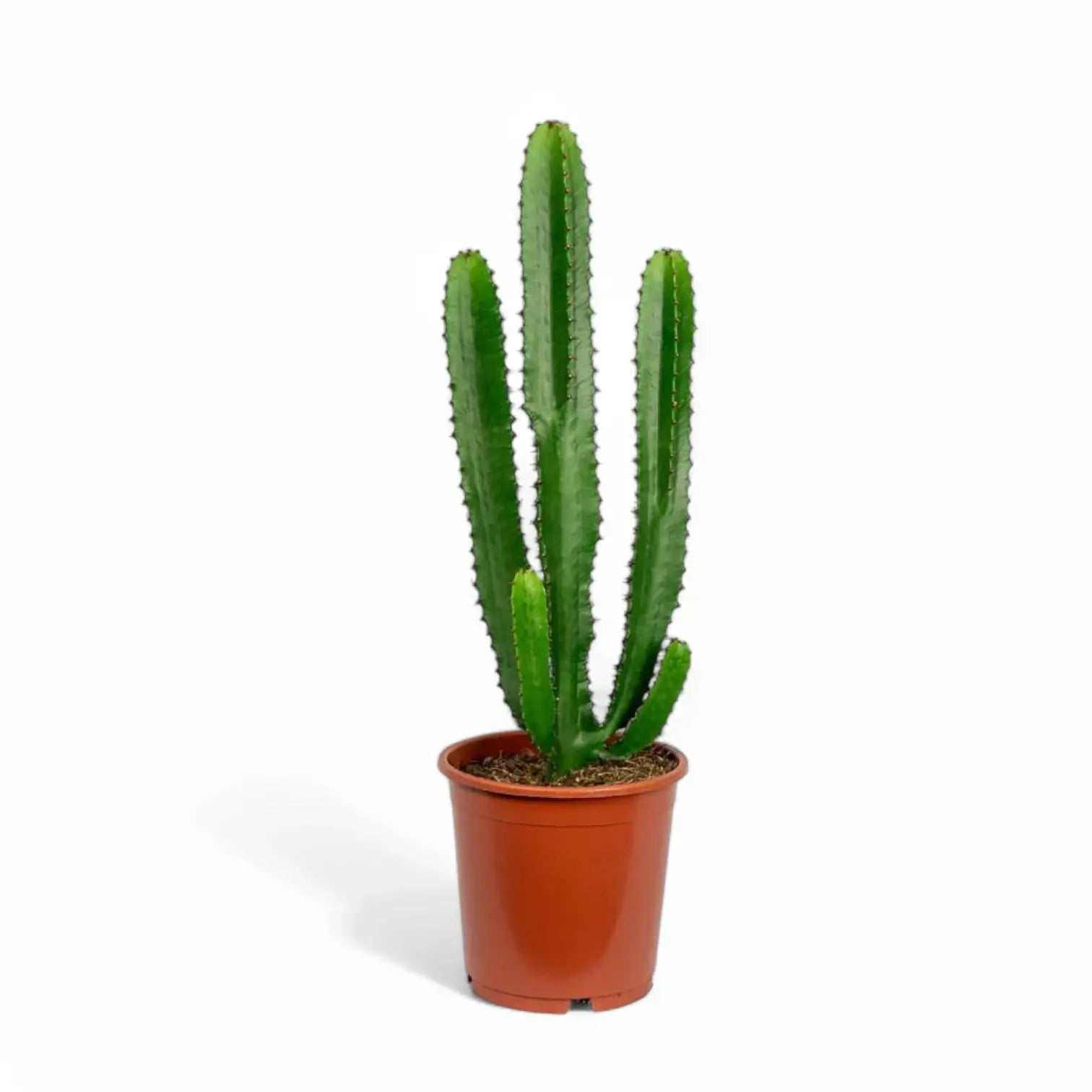
Euphorbia abyssinica is a large, tree-forming succulent euphorbia with thick green stems, paired spines and a candelabra-like branching habit. In habitat it can become a substantial succulent tree, while in a pot it develops slowly into an upright, ribbed plant with water-storing stems.
The plant’s outline comes from succulent stem tissue that stores water and carries out photosynthesis through the green surface. Its visible shape is built by upright, angular, often dark green branches, with shallow teeth along the ribs and paired spines emerging from the spine shields. Short-lived leaves can appear near new growth during warm active periods, then drop as the plant continues through its leafless stem growth.
What stands out on Euphorbia abyssinica
- Growth habit: Tree-like succulent euphorbia with a central woody base and upright branching stems as it matures.
- Stem detail: Ribbed green branches store water and carry paired spines along the angles.
- Seasonal leaves: Small leaves may appear on young growth during active periods and are naturally short-lived.
- Container behaviour: Slow, vertical growth in pots, with height developing gradually under strong light.
- Flowering: Mature plants may produce small yellowish cyathia, the specialised flower structure typical of Euphorbia.
Stem growth and northeast African dryland habitat
Euphorbia abyssinica is native from northeastern Sudan to Somalia, where it grows primarily in desert or dry shrubland. Its thick stems act as water-storage organs, and the green surface tissue can photosynthesise even when leaves are absent. These traits align with strong light, mineral drainage and dry intervals between thorough waterings.
Older plants develop a woody trunk-like base, while the green branches remain the active succulent parts of the plant. The ribs are more than a visual trait: they allow the stem to expand and contract slightly as stored water changes through wet and dry periods. In containers, this makes a stable pot, gritty substrate and careful handling more important than frequent repotting or heavy feeding.
Care for Euphorbia abyssinica
- Light: Give very bright light with direct sun where the plant has been acclimated. Strong light keeps new stem growth firmer and better proportioned.
- Watering: Water thoroughly, then let the substrate dry out before watering again. In cool, low-light periods, keep watering sparse.
- Humidity and airflow: Average indoor humidity is enough. Good airflow around the stems lets damaged spots and old spine bases dry cleanly.
- Substrate: Use a gritty cactus or succulent mix with a high mineral fraction such as pumice, lava grit, coarse sand or fine gravel.
- Pot choice: Choose a pot with drainage holes and enough weight to balance the upright stems. A slightly snug pot lets the mix dry more predictably.
- Repotting: Repot only when the plant is unstable, rootbound or sitting in tired substrate. Handle the root ball gently and keep the plant dry for a short period after repotting if roots or stems were damaged.
- Temperature: Keep warm and frost-free. Avoid cold, wet substrate, especially during cool, low-light periods.
- Feeding: Feed lightly during active growth with a diluted cactus or succulent fertiliser. Avoid high-nitrogen feeding that pushes soft, weak growth.
- Growth rate: Growth is slow in containers, with height and branching developing gradually over several years.
- Pruning: Prune only to remove damaged or unsafe growth. Wear gloves, protect your eyes and let cuts dry before the plant is watered again.
- Propagation: Stem cuttings can root after the cut surface has dried and callused, but the latex is irritating and cut material must be handled carefully.
- Semi-hydroponics: Long-term culture in fully mineral or semi-hydro substrates can work only with a very airy setup, careful watering and excellent drying around the crown and stem base.
- Placement: Place it where the stems have room and will not be brushed often, as spines, rib edges and fresh scars can be damaged by contact.
- Handling: Move and rotate the plant carefully, as spines and rib edges can scar when stems knock against furniture, walls or other plants.
Problems to check on Euphorbia abyssinica
- Soft base or dark patches: Usually points to excess moisture around the roots. Check drainage, stop watering until dry and inspect the base for rot.
- Thin, stretched new growth: Often follows weak light. Move gradually into a brighter position so the stems adjust without scorch.
- Corky scars on ribs: Often caused by physical knocks, old spine bases or previous stress. Check that the area is dry and firm.
- Wet or spreading stem damage: Damaged tissue that stays damp can invite rot. Keep the area dry, improve airflow and remove softened tissue only with protected hands and clean tools.
- Mealybugs, scale or spider mites: Look along ribs, spine shields and stem junctions. Remove early with a cotton bud and repeat checks weekly.
- Wrinkled stems: Can come from normal dryness or root loss. Check substrate moisture first, then inspect roots if watering no longer restores firmness.
Latex and handling safety
Euphorbia abyssinica contains white latex sap that can irritate skin, eyes and mucous membranes. Wear gloves when pruning, repotting or cleaning damaged tissue, and keep the plant away from children and pets that may touch or chew the stems. If sap touches skin, wash it off promptly; if it reaches the eyes, rinse with clean water and seek medical advice.
Name origin and classification
Euphorbia abyssinica belongs to the family Euphorbiaceae and was first published by Johann Friedrich Gmelin in 1791. The genus name Euphorbia is traditionally connected with Euphorbus, physician to King Juba II of Mauretania. The epithet abyssinica refers to Abyssinia, a historical name associated with Ethiopia and the wider region where this species occurs.
Over time, Euphorbia abyssinica builds a tall ribbed structure with paired spines and a clearly upright succulent-tree outline.
Shipping Notes
- Free Standard Shipping on $100+ Orders to the USA.
- Except Preorder products are shipped in 48 hours.
- Delivery to the USA:
- Standard Shipping : 3-10 business days
- If time is of the essence, please consider selecting expedited delivery for faster service.
Exchange/Return Notes
- We offer a 30-day return/exchange service after receiving.
- Final sale items are not eligible for returns or exchanges.
- To process your return/exchange, please contact us at [email protected]
- Please click here for more details>>> Return & Exchange Policy