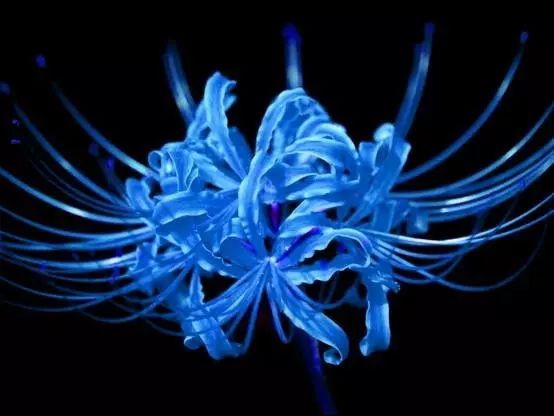
SKU: 33422614427
were there blue spider lilies

were there blue spider lilies Rare Blue Lycoris Spider Lilies Bulbs Radiata Hurricane Lily Cluster Amayllis Growing Bonsai Roots Rhizomes Corms Tubers Potted Planting Reblooming Fragrant Garden Species Blooms Flower Seeds Plant Gardening

Sale price$18.08 Regular price$20.09
Save 10%

Pay in installments of $5.02 with ShopPay, AfterPay and Klarna

Shipping Estimate
USA
  • USA
  • CAN

Ships within 48 hours · Estimated delivery Jul 26 - Jul 31

Promo Codes Available:

For Your Every Summer RSVP, with Code: SUMMER15

Description

were there blue spider lilies Rare Blue Lycoris Spider Lilies Bulbs Radiata Hurricane Lily Cluster Amayllis Growing Bonsai Roots Rhizomes Corms Tubers Potted Planting Reblooming Fragrant Garden Species Blooms Flower Seeds Plant GardeningAbout this item What is Lycoris? Lycoris has a few common names; Spider Lily, Hurricane Lily and Cluster Amayllis are just a few. Lycoris aurea (Yellow flower) Lycoris radiata (Red flower) comes from the Amaryllidaceae family and originates from China. Lycoris is a bulbous perennial with a clumping habit. These hardy members of the Amaryllis family are dormant during the Summer months and bear their beautiful flowers during Autumn before growing

About this item

  • What is Lycoris?

    Lycoris has a few common names; Spider Lily, Hurricane Lily and Cluster Amayllis are just a few. Lycoris aurea (Yellow flower) Lycoris radiata (Red flower) comes from the Amaryllidaceae family and originates from China. Lycoris is a bulbous perennial with a clumping habit. These hardy members of the Amaryllis family are dormant during the Summer months and bear their beautiful flowers during Autumn before growing foliage in the cooler months. Flowers are presented on a tall stem with 4 to 5 flowers. The flowers are made of narrow ruffled petals of brilliant golden-yellow or striking red depending on the variety with long whiskery stamens. Flat greyish-green leaves appear after flowering has finished. They like a hot sunny position during the warmer months, and grow best when they are left undisturbed. Shelter from the wind would also be recommend.

  • Benefits of Growing Lycoris

    Lycoris are a good source of low maintenance Autumn and Winter colour. They are fantastic for borders, rockeries or shrubberies. Lycoris can even be kept in pots and containers. The bulbs are best left in the ground to naturalise. If they are left undisturbed, they will produce more flowers. Lycoris make excellent cut flowers. Cut flowers will last up to 3 weeks in water.

  • Where to Plant lycoris

    Lycoris grow best in conditions where the soil drains well, and they will receive plenty of sun. They will survive with 5âââ€? hours of direct sun per day, but more sun encourages prolific flowering. If you notice water puddles 5âââ€? hours after a hard rain, scout out another site or amend the soil with organic material.

  • When to Plant lycoris

    The ideal time to plant Lycoris bulbs is between late summer and early fall. The roots will form in the autumn, with leaves developing in spring and flowers following roughly 6 weeks thereafter.

  • How to Plant lycoris

    For outdoor landscape planting, find a spot with well-drained soil where your Lycoris will receive full sun. Dig holes and plant your bulbs 6âââ€?" apart with their necks above the surface and their pointed tops facing upwards.
    For container planting, locate a vessel large enough to support your plants with adequate drainage holes and fill it with a commercial potting mix that drains well. Dig holes and plant your bulbs 6âââ€?" apart with their necks above the surface and their pointed tops facing upwards. Place your container where it will get full to three-quarters day direct sun.
    Water thoroughly to settle the soil around the bulbs.

  • How to Grow lycoris

    Water as needed during active growth periods, with no more than 1" of water per week as an estimate.
    Leave the foliage in place after blooming has finished for the season. The leaves gather sunlight, create food through photosynthesis, and strengthen the plant for the future.
    Remove the foliage when it turns yellow and withers.
    Withhold water after removing the foliage and allow your Lycoris to rest for a few months before beginning the next growing cycle.

  • Lycoris Tips & Tricks

    Amend soil with compost, finely ground bark, or decomposed manure to raise the level 2âââ€?" to improve the drainage.
    Feel free to cut flowers when in bloom for dramatic bouquet additions, as doing so will not hurt your plants.
    Ensure that your Lycoris plant never sits for long periods in waterlogged soil.
    Plant in trios or add other bulbs, annuals, or perennials, around your Lycoris to fill out container plantings and create a lush display.

Why Seedsplant ?

  • Experts in the field
  • Family owned and operated - 100 years
  • Rigorous quality control
  • We strive for your success by offering the bulb size you need
  • Affordable quality

Flower Bulb Facts of Life

Bulbs: Beauty In a Bottle:

Bulbs are a natural product. And, as such, follow a natural cycle of growth and rebirth. Enjoying their fabulous flowers means planting ahead in one season then results the next. Bulbs are among the easiest flowers to grow, not only are they affordable, but bulbs offer the most stunning colors available. Even the most novice gardener can create a breathtakingly beautiful spring garden with bulbs.

What's a Bulb?

A flower bulb is really a self-contained flower factory. Within this marvelous little package is nearly everything the flower needs to come to life! Split a bulb open, for instance, and you'll see its baby flower bud, leaves, roots, stem and food supply. All bulbs need from you is to be placed in the ground at the appropriate season of year, given a liberal drink of water then left to work their magic.

Variety:

Flower bulbs come in seemingly limitless varieties which makes them perfectly suitable for any garden design you can dream up.

Is It a bulb ?

The Difference Between Bulbs, Corms, Tubers, Roots,Today, people commonly us the term 'bulb' to refer to any plant that stores its own food underground. But, in truth, many popular 'bulbs' are not true bulbs at all. These include corms, tubers and roots and, while they all produce beautiful flowers, technically the plants are different

When To Plant

In fall, after soil temperatures are below 50ºF/10ºC. These bulbs bloom the following spring and require the cold winter temperatures for development. But let's say winter arrives and your bulbs are still in their bag. Not to worry! Bulbs are pre-programmed to grow so even if you have to plant through snow, plant your bulbs!

How To Plant

Most bulbs thrive in either full or partial sun and in almost any location with good drainage. Avoid planting at the base of hills or under drainage pipes where water collects and will rot the bulbs.

  • Dig a hole
  • Drop in the bulb
  • Water thoroughly

Tips For success

  • A larger grouping of flower bulbs are far more fab than just a few planted here and there. Think clumps of color.
  • Buy the largest bulbs you can find.
  • Note the flowering times. Not all bulbs will bloom at the same time. A little planning will greatly increase the number of months you will enjoy bulb flowers.

Passionate About bulbs

Generally speaking, the best predictor for gardening success is bulb size. Almost always, the larger the initial bulb size planted, the larger and stronger the plants will be, producing more flowers. The first year end result will be noticeable to anyone.The best predictor for gardening success is bulb size.

Shipping

All items are shipped usually within 2 working days (usually sooner) except plug plants. Plants only dispatch Monday-Thursday to avoid problems with live plants sitting in a postal depot over the weekend. During busy periods , due to the nature of product and extra care needed when packing and preparing for post, please allow up to 7 days for delivery (depending on day purchased). Plants are only dispatched when crops are ready to travel , therefore some multi orders may be delivered separately and occasionally it may be necessary to hold back dispatch until plants are ready. Shipping is either via Post  or 24/48 Hour courier depending on order size/weight etc. at our discretion. Please be patient when ordering plants as you cannot rush nature. Please be aware delivery dates shown by Seedsplant are estimates only and do not apply to live plant orders. Any orders returned to us by Post or Courier will incur a further postage charge to resend.

Returs

You may return all unopened items within 14 days of delivery for a full refund less P&P charges. Any items received damaged in transit must be notified in writing/email within 24 hours of receipt. Live plants should arrive in perfect condition , If however for some reason they do not please contact us immediately upon receipt. A full refund including original P&P will be made for any items not as described or wrong part no etc. All returns must include your full details with a copy of original receipt. You may cancel any transaction as long as notice is received before item(s) are / have been dispatched.

Contact us

You can message us through Seedsplant messages , otherwise You can write to us by email :[email protected]

Shipping Notes
  • Free Standard Shipping on $100+ Orders to the USA.
  • Except Preorder products are shipped in 48 hours.
  • Delivery to the USA:
  1. Standard Shipping : 3-10 business days
  • If time is of the essence, please consider selecting expedited delivery for faster service.
Exchange/Return Notes
  • We offer a 30-day return/exchange service after receiving.
  • Final sale items are not eligible for returns or exchanges.
  • To process your return/exchange, please contact us at [email protected]
  • Please click here for more details>>> Return & Exchange Policy
SKU: 33422614427

Discover Niche Categories That Outsell were there blue spider lilies

Top-Converting Item to Boost Your Average Order

4.3 ★★★★★
Based on 7 reviews
Sort
Highest Rating
Newest First
Oldest First
Product Reviews
C
Verified Purchase
C.J.
Lake Worth, US
★★★★★ 4
Pretty Good... Not amazing.... But pretty good.
Format: Paperback
Before taking a stab at my first real story I have decided to read two books on the art of writing fiction; "Techniques of the Selling Writer" by Dwight Swain, and the book I am reviewing now, "Plot and Structure" by James Bell. While Swain's book was more of an all inclusive manual on writing interesting fiction, Bell's book is focused strictly on, as the name suggests, plot and structure. What this book is not... This is not a 'how to write a novel' book; if you are going to just read one book on writing a fiction novel then "Techniques of the Selling Writer" may be the more appropriate choice. If you are looking for a book that deals with anything outside of plot and structure, this book will be of no help there either. This book is designed to be supplemental to an already moderately educated reader. If you read Swain's book first, then you will instantly recognize the principles of this book. What this book is... This is a great book on, you guessed it, Plot and Structure. It's actually a fairly concentrated look into the subject. The chapters... Ch 1: What's a plot, anyway? Ch 2: Structure: What holds your plot together. Ch 3: How to explode with plot ideas. Ch 4: Beginning strong. Ch 5: Middles. Ch 6: Endings. Ch 7: Scenes. Ch 8: Complex Plots. Ch 9: The character arc in plot. Ch 10: Plotting Systems. Ch 11: Revising your plot. Ch 12: Plot Patterns. Ch 13: Common plot problems and cures. Ch 14: Tips and Tools for plot and structure. I found the specificity of this book very helpful with each principle being illustrated by a paragraph or so of a known author's work. Bell handpicks excerpts from authors varying from Dean Koontz to Herman Melville, brilliantly pulling text from these masters and showing us how they went about the relevant technique. This easy to read nature and well outlined subject matter means I will be using several of its chapters as a personal reference guide in the future. I'm certain it will keep me from making many of the mistakes beginning writers make and possibly save me weeks in rewrites. I will say this though... "Techniques of the Selling Writer" is a better book and covers plot quite well too; so if you are only going to read one book on writing, that is a damn good place to start. If you want to supplement that reading further, "Plot and Structure" comes highly recommended. [...]
WAS THIS REVIEW HELPFUL?YesReportShare
Reviewed in the United States on May 26, 2010
F
Verified Purchase
fernando pedernera
Lowell, US
★★★★★ 5
Have no fear!, or The writer's Victorinox.
Format: Kindle
You can't praise this book enough. There are a ton of how-to books out there, but this one really made a difference for me. Think of writing as a journey through the woods: You set up, you get in the muddle, and you come out (hopefully) on the other side. When doing this, we try to use as many tools and resources as we can to make it to the other side, but most of the time you fail (or tools fail on you) and you end up starving or being eaten by some wild animal in the muddle of the story. What James Scott Bell wants you to have in clear is that the most useful tool you can have out there is YOU. And all of his tips, advice and excercises are aimed to one thing and one thing only: how to unleash and harness the power of your story (and survive). It provides clear, straight-forward tools and tips, adressing many aspects of the writing process you won't find in many of them. It is a must-read for anyone interested in the study of plots and storytelling. Relevant examples that take in consideration a wide array of writer profiles, and Bell does not abuse with film examples (and most of the movies it references are also books i.e.: the maltesse falcon, the godfather, etc.). It contains useful excercises at the end of each chapter to help you put the tehcniques in practice and bring the best out of your learning experience. It really helped me overcome several issues I had with my novel-writing and opened my mind to a new scope on plot and str.. This is a wonderful book, written in the same gripping style that the author suggests to use, and with great success. I think this is a wonderful book because it does not give infalible advice. To me that is very important. Let me ilustrate how I felt by giving you the following example: (after developing content) -Regular book: so just do This (and fail, miserably). -Bell's book: Many writers had this problem before and by doing This you might also find a solution for it. In case That doesn't work, you could maybe try This, or come back at it again later on with a fresh view and give it another try.
WAS THIS REVIEW HELPFUL?YesReportShare
Reviewed in the United States on August 18, 2017
N
Verified Purchase
Nancy C. Beck
Lowell, US
★★★★★ 5
Excellent resource
Format: Paperback
Two novel ideas ago, I had to put that one aside because I stuffed it to the point where the story made no sense. I intend to go back to it at some point, but for now, it's collecting dust. Also collecting dust is my more recent idea. I started with an outline (of sorts), wrote and rewrote it a few times...only to get stuck on Chapter 8 or so. I didn't know where to take the story. This one will probably never get resurrected...but you never know. Which leads me to one of the best things in this book: outlining with index cards. There's at least one other book touting this, but I'm sure there are others that do. What sets this one apart, in my mind, is his suggestions on how to set it up. This doesn't comprise a huge part of the book, but it made enough sense to me that I decided to give it a whirl. Almost 50,000 words later, I'm still chugging along, taking into mind his ideas (I'd never heard it put quite this way) about doorways of no return (more on that in a moment). Sure, I've made some changes, throwing out cards, rearranging cards, adding cards. That's the beauty of this system: it's not set in granite. If your muse takes you in a way that's different from what you originally wrote, go for it! Mr. Bell explains the doorways simply, at first, as transitions - from beginning to middle and then middle to ending. The first doorway gets your Main Character from beginning to middle; the idea is to create a scene where the MC is thrust into conflict in a way that keeps him/her there. With the second doorway (middle to ending), something has to happen to set up the final confrontation. It's usually a huge clue, a big piece of information, or a major crisis that sends the MC hurtling towards the conclusion. Mr. Bell explains these in greater detail, and I found his explanations quite understandable. But there's more to this book than that. Mr. Bell gets into how to come up with plot ideas, character arcs, revising, plot problems and cures, scenes, and tips and tools. I wasn't bothered by his reusing some of the same good writing examples, but it may make you cringe or roll your eyes. Other than that minor quibble, I think everything else about this book makes it shine as a writer's resource.
WAS THIS REVIEW HELPFUL?YesReportShare
Reviewed in the United States on December 1, 2006
C
Verified Purchase
Corwin
Pawtucket, US
★★★★★ 5
Most Helpful Book I've Read on Plot and Structure
Format: Paperback
This is a well-organized, easy-to-read guide to techniques used to develop plots and sound story structure. It includes 14 chapters and two appendices. They cover such topics as what a plot is, how structure holds plot together, how to get ideas, and how to handle/interweave plot into all the levels of a novel (from whole sections such as the Beginning or middle of the work, down to the micro level of individual scenes). He includes discussion of different "plotting systems" (from writing by "the seat of your pants" to types/methods of creating outlines of various levels of "thoroughness" for those interested in mild outlining to someone with full-blown OCD). It discusses complex plots and sub plots, character arcs in relation to plot, common problems and solutions, revision, and more. Every chapter ends with a few exercises to reinforce the topic covered. The two appendices are a checklist for reminding you of major plot components as you write, and how to create "back cover" (aka the blurbs on the back of your book, or the summaries on the inside flap of dust jackets). As a writer, I am a "seat of the pants" guy, who's reluctantly recognized it isn't working for me (a major motivation for getting this book). Bell's discussion of different styles of outlining, though brief, gave me ideas of how to proceed. While I've often read books that include exercises, I confess to rarely doing them -- Bell is an exception (no, I didn't do *all* of them, but.... :) ). His text uses plenty of examples, drawn from movies and well-known novels. I've read other works on plot and structure (both general books and at least two dedicated to these topics), and have found this one to be by far the most readable, instructive, easy-to-digest, and *helpful.*
WAS THIS REVIEW HELPFUL?YesReportShare
Reviewed in the United States on June 17, 2017
C
Verified Purchase
Cora L. Foerstner
Bozeman, US
★★★★★ 5
I have a few instructional writing books I reread; this is one of them.
Format: Paperback
Plot & Structure: Techniques and Exercises for Crafting a Plot That Grips Readers from Start to Finish by James Scott Bell may be the best book for plotting and creating structure in fiction stories that I’ve read. I have a few instructional writing books I reread; this is one of them. Plot & Structure works for writers who don’t use outlines and for those who do. Throughout Bell acknowledges and addresses how his ideas about plot and structure can be used by all writers. This isn’t a “my way or the highway” kind of book. Bell gives practical advice for all writers. What’s so great about Plot & Structure? The biggest plus is Bell’s practical and down to earth strategies and clear explanations. Here are the other greats: Bell’s approach isn’t a how-to formula; it’s more of a guide. His genre is thrillers, but he addresses the needs of other genres as well as those of literary fiction. He provides many strategies writers can use to approach plot and structure; plus, he encourages readers to find their own way of working. The exercises at the end of the chapters are practical. If you try some of them, you’ll discover that they aren’t busywork but helpful approaches to solving writing issues. Unless you’re a pro with so many publications behind you that you don’t need help, this isn’t a book to read once and put away. It’s a book you’ll come back to and get more out of with a second or third reading. If you want a formula or step-by-step program, this isn’t a book for you. He gives choices so you can find you own style and way of working. Which is one of the things like I about the book. It’s like going to a writer buffet and choose the strategies that work for you. If you are someone who writes without an outline, you are going to be surprised because Bell doesn’t leave you out of any of the equations. He has strategies for all writers.
WAS THIS REVIEW HELPFUL?YesReportShare
Reviewed in the United States on November 13, 2014

recommand products