SKU: 33944885074
stratum potting mix

stratum potting mix Bio Leaf Stratum Active Aqua Soil

Sale price$25.78 Regular price$28.64
Save 10%

Pay in installments of $7.16 with ShopPay, AfterPay and Klarna

Shipping Estimate
USA
  • USA
  • CAN

Ships within 48 hours · Estimated delivery Sep 4 - Sep 9

Promo Codes Available:

For Your Every Summer RSVP, with Code: SUMMER15

Description

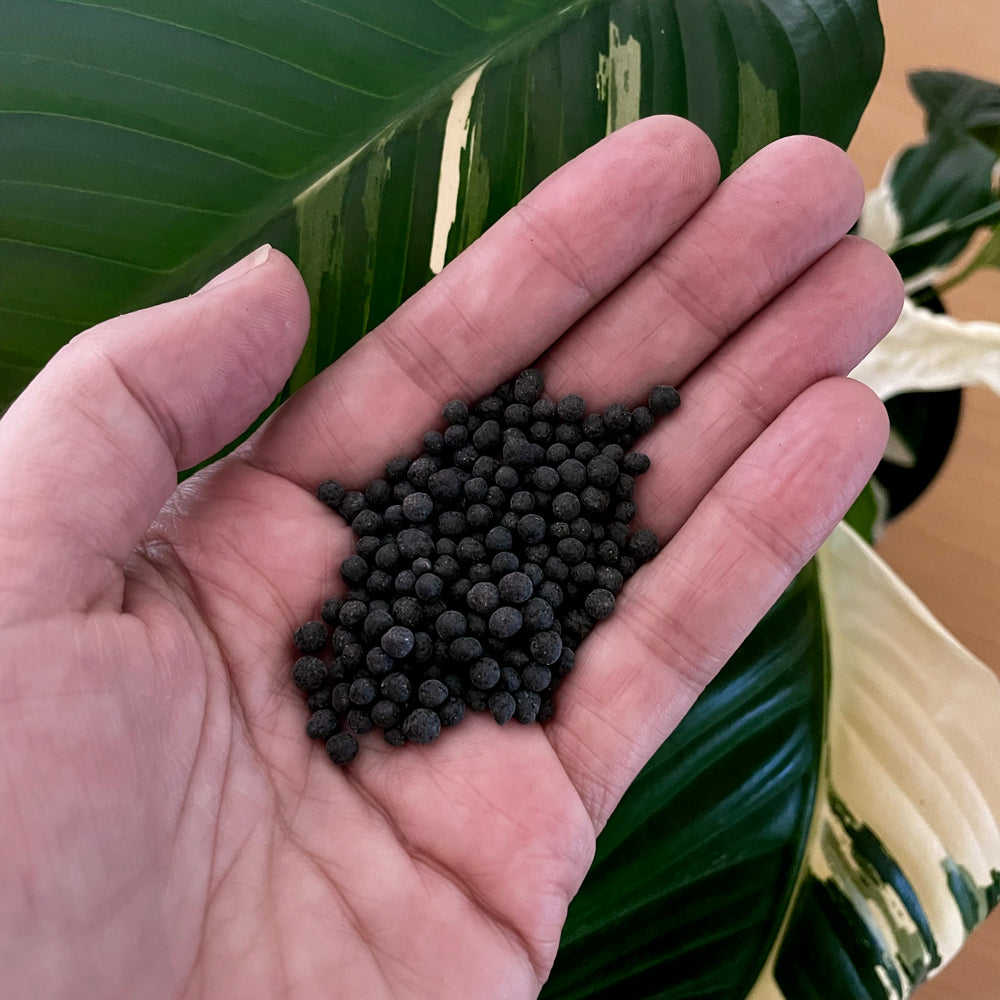
stratum potting mix Bio Leaf Stratum Active Aqua SoilBio Leaf Stratum is an active aqua soil for houseplants. This is a propagation substrate unlike anything else. Superb for mature alocasia and alocasia corms, for hard to root cuttings as well as recovery after root rot or root damage. This might be your new favourite substrate PS: Need LOTS of substrate potting mix? Orders over 15 litres total sometimes get too big or heavy for standard shipping rates. If your order goes over into overweight oversize

Bio Leaf Stratum is an active aqua soil for houseplants. This is a propagation substrate unlike anything else. Superb for mature alocasia and alocasia corms, for hard-to-root cuttings as well as recovery after root rot or root damage. This might be your new favourite substrate...


PS: Need LOTS of substrate / potting mix? Orders over 15 litres total sometimes get too big or heavy for standard shipping rates. If your order goes over into overweight / oversize rates I will be in touch to let you know. I won't incur any costs without your okay - Anna :) 


Why use Bio Leaf Stratum?


  • Faster propagation of corms and hard-to-root cuttings,

  • Made from volcanic earth, naturally high in organic humic and fulvic acids,

  • Increases root growth and helps protect from root rot and fertiliser burn,

  • Naturally unlocks nutrients, keeping them available to roots,

  • Increases nutrient transfer from substrate to roots,

  • Naturally buffers pH into the 'Goldilocks Zone' roots love (not too acidic, not too alkaline, just right!),

  • Readily uptakes nutrients and holds onto them, slowly releasing them over time,

  • Able to be recharged with fertiliser,

  • Plus no prep! 


Is this the same as Fluval Stratum?


Fluval Stratum is the most well-known brand of aqua soil in the houseplant hobby. Very popular with planty content creators overseas. Fluval is the brand name, Stratum is what they call their aqua soil. Bio Leaf Stratum Active Aqua Soil is the closest match we can get here since Fluval Stratum isn't available in New Zealand. Bio Leaf's Stratum Active Aqua Soil is a similar size at 3mm to 5mm, also made from volcanic earth, and offers all the same overall benefits as Fluval Stratum (listed above), BUT it's better in three ways


1: HARDER

Bio Leaf Stratum is harder, making it longer-lasting. All aqua soils break down slowly over time but Fluval Stratum is one of the softer and shorter-lasting aqua soils.


2: MORE NUTRIENTS 

Bio Leaf Stratum is also higher in nutrients than Fluval Stratum, making it better for terrestrial plants (that includes our houseplants), whereas Fluval Stratum is lower in nutrients including ammonia in particular. Ammonia is a source of nitrogen for plants, but low-ammonia is better for fish in planted aquariums as ammonia is toxic to fish.


3: LONGER-LASTING

Bio Leaf Stratum also releases those nutrients over a longer period of time. 


Do you still use fertiliser when using aqua soil? 


Yes, you will still need to fertilise. Aqua soil is naturally rich in nutrients but not at high enough levels to replace the need for fertiliser, not long-term anyway. It's enough by itself to get roots started, but once your corm / cutting starts to root, use your usual rooting fertiliser, like GT CCS >


Is aqua soil like leca or pon?


Aqua soil is a similar size to pon (a little larger), and has the same round ball appearance as leca (but much smaller), but no, aqua soil is different to plant substrates like leca and pon.

Leca and pon are soil-free, sterile, don't break down and can be reused almost indefinitely. Aqua soil is made from soil, usually a nutrient-rich mix of volcanic soil, volcanic ash, clay and peat. It's organic, naturally high in humic and fulvic acids and able to buffer pH. Aqua soil will slowly break down over time and the nutrients can be recharged with fertiliser but it won't last forever. 


Should you use aqua soil by itself or mixed with other substrates?


Both. You can use aqua soil by itself, or mix aqua soil with other substrates, most often combined about 50/50 with perlite. Mixing with perlite keeps costs down and increase the amount of air to further reduce the risk of root rot. A popular method is to start with a 50/50 mix of stratum and perlite, then top with a thin layer of straight perlite. Once rooted, you don't need to remove any attached aqua soil from the roots as it will naturally break down over time.


How do you prep aqua soil before use?


You don't need to and shouldn't rinse aqua soil before use. No prep required. You will find when you water that 'fines' will be washed out. That's the soil. Ideally you want to water gently using a mister or gentle flow of water to reduce soil loss. Rinsing before use just washes away soil and nutrients. 


What containers do you use with aqua soil? 


Two popular options: Either use in a container without drainage (those little clear plastic pots takeaway sauce comes in are great for corms in particular), or use mini pots like the Teku Mini and Rain 7.

I like to use two mini pots stacked together and I twist the bottom pot to 'close' the drainage holes to make them much smaller so I don't lose any aqua soil out the holes. If you use a container with no drainage make sure to water just to the point a little water starts to pool at the bottom. I'm also loving the self-watering 'pup cups' from The Rare Plantation >


How do you water when using aqua soil?


Aqua soil will change colour when dry (from black to a dusty charcoal). If you use a clear container, it's also easy to tell when the aqua soil dries out based on condensation. Water gently and lightly. Watering aqua soil too heavily can increase soil loss and speed up the breakdown of aqua soil (aqua soil becomes a little softer when wet and naturally breaks down slowly over time).

Aqua soil is quick to absorb water and holds on to it for a good amount of time depending on on airflow and humidity. If using a container without drainage, stop watering as soon as just a little water starts to pool in the bottom. Unlike leca or pon, you do not need a water reservoir as being soil-based, aqua soil holds a lot more water than leca or pon do.


Shipping Notes
  • Free Standard Shipping on $100+ Orders to the USA.
  • Except Preorder products are shipped in 48 hours.
  • Delivery to the USA:
  1. Standard Shipping : 3-10 business days
  • If time is of the essence, please consider selecting expedited delivery for faster service.
Exchange/Return Notes
  • We offer a 30-day return/exchange service after receiving.
  • Final sale items are not eligible for returns or exchanges.
  • To process your return/exchange, please contact us at [email protected]
  • Please click here for more details>>> Return & Exchange Policy
SKU: 33944885074

Discover Niche Categories That Outsell stratum potting mix

Top-Converting Item to Boost Your Average Order

4.3 ★★★★★
Based on 10 reviews
Sort
Highest Rating
Newest First
Oldest First
Product Reviews
R
Verified Purchase
Richard Burkey Lifelong Learner
Boise, US
★★★★★ 5
Awakening My Heart for the Poor
"I would like to believe that a heart for the poor `sleeps' down in a Christian's soul until it is awakened" says Tim Keller in Generous Justice. He then adds, "when justice for the poor is connected not to guilt but to grace and to the gospel, this `pushes the button' down deep in believers' souls, and then begin to wake up. For me, Generous Justice, pushed the button, one that God has been pushing the past year or so, to see the world, to see the challenges of the poor and other 3rd world issues, with a desire to make a difference. What I like about Keller's theology and writing is an understanding of grace. Guilt can motivate, but it's not God's way to motivate. Guilt can push for a moment, grace can drive for a lifetime. And the issues of the poor will take a lifetime of grace to deal with in this world. Keller does a great job of digging into a Biblical sense of justice. For most people justice works us to just what they think it should be. Justice in the Biblical sense is more then punishment for what's wrong, it's upholding the needs of the poor and powerless. Justice protects their rights and their value before God. In the Parable of the Good Samaritan, the Samaritan man shows justice and kindness to the Jewish man in need. He provides Generous Justice. But Keller picks it up a notch, by pointing out, what if the Good Samaritan travels that road often and keeps finding Jewish men mugged, beaten, left for dead? What does he do then? Generous Justice would be that he works to change the systemic issues. Generous Justice is not simply how I respond, but how we respond to those in needs as individuals, congregations, and yes, in the political process as well. You may not always agree with Keller, but he will make you think and lay out the possible options to work through. One of my favourite stories Keller includes is about the Roman Emperor Julian, who was not a big fan of Christians. Yet Julian says about these Christians he despises that they take care of their poor and ours as well. That love, that Generous Justice in action, transformed the world for Christ. We need such a transformation of Generous Justice in our day. I highly recommend Generous Justice. It is more then a theological / theoretical book of what could be. Generous Justice is a theological / practical book of what by God's grace we can do as we empowered by God to serve the powerless with the power of God's love at work.
WAS THIS REVIEW HELPFUL?YesReportShare
Reviewed in the United States on February 20, 2012
W
Verified Purchase
WDC
Massapequa, US
★★★★★ 5
Justice and Grace, God's desire for our lives
Format: Kindle
Tim Keller does another great job in writing a book that will be helpful for Pastors and laymen. He takes the issue of God's Justice and guides us through a discussion of what it justice means Biblically and how do we apply it today. There are many verses about justice and especially about helping the poor in the Old and New Testament. Many are in the Old Testament and people often dismiss them thinking that the Old Testament has been done away with and replaced with the New Testament. But the bottom line is this, the poor we will have with us always and how do we deal with them? How do we help them with their issues of hunger, lack of resources, lack of advocates standing up for them with the judicial system and society at large. What also do we do with the "year of jubilee" where the debts of the poor are forgiven and they are given a fresh start. What should we do with that today. Keller takes us through a discussion of the definition of Justice, why the Old Testament is still valid, what does Jesus say and how do we treat our neighbors. He reminds us that the Old Testament, specifically the nation of Israel, was a Theocracy style of government. So how do we in a democracy deal with the poor since it is a completely different style of government than a Theocracy. What is the point of justice? What should we do about standing in the gap for our neighbors who are poor, or do we ignore them and let the government deal with them through welfare? There are deep theological issues here and deep moral issues as well. How do you respond to the poor? How do you handle your resources? What do you do regarding Charity? Why do you act charitably? Keller also talks a good bit about how our young people are moving back into a culture of "volunteerism" and the benefits that has on society as well as on themselves. But the real issue comes down to the heart issue of why do they volunteer to help the poor. Wrapped in all of this is a discussion also about "God's Grace". Because some people feel that justice might just mean that we let people suffer in their poverty because they bring it on themselves. But the Bible is clear. Our task is to help the poor, the widow, the orphan, etc. These people are precious to God and thus should be precious to us. This is a quick read, but a very needed read for the "Western Church" today. You will be forced to look at the role of "Deacon" in the church and how that role was put together to serve the poor. You will be left with this question, how does my church stack up in regards to reaching the poor? How would God feel we have done in serving the poor and providing "justice" for them. Enjoy!
WAS THIS REVIEW HELPFUL?YesReportShare
Reviewed in the United States on November 3, 2010
S
Verified Purchase
Snorting Horses
Omaha, US
★★★★★ 5
A Slim Book with a Big Message
The book is an attempt, Keller writes, to connect a person's Christian faith with the desire to help people in need and do justice in all aspects of one's life. He is writing for four groups of people, he says. These are: -- Those, especially the young, who are active in volunteering and want to help the poor but their concern does not affect how they spend money or plan their careers. -- Those who don't see, as Jonathan Edwards said, that when the Spirit enables us to understand what Christ has done for us, "the result is a life poured out in deeds of justice and compassion for the poor." -- Younger evangelicals who have expanded their mission to include social justice along with evangelism. -- People like the atheist Christopher Hitchins who believe that religion "poisons everything." This book, Keller writes, is for "the orthodox (Christian) to see how central to the Scripture's message is justice for the poor and marginalized. I also want to challenge those who do not believe in Christianity to see the Bible not as a repressive text, but as the basis for the modern understanding of human rights." Keller spends the early parts of his book discussing how justice for the poor, the immigrant, the widow and orphan was central to the concept of mercy (in Hebrew, chesedh), justice (mishpat) and righteousness (tzadeqah). Mercy has to do with aligning our attitude with that of a merciful God. Justice is aligning our actions -- equitable dealings with people -- with a just God's. Righteousness in the Hebrew context has more to do with right relationships than obeying a set of rules, as modern Christians often think of it. Someone who is "right with God (is) therefore committed to putting right all other relationships in life." (Alec Motyer) Righteousness is "day to day living in which a person conducts all relationships in family and society with fairness.While tzadeqah is primarily about being in a right relationship with God, the righteous life that results is profoundly social. (See Job 29:12-17, 31-13-28. Keller details the Hebrew law's provision for exercising justice. These are: -- Shemitta, or release. The practice of the Sabbath year, every seventh year releasing people from debts or servitude. Deut. 15:1-2 -- Gleanings. The practice of not harvesting fields to their borders. Keller suggests that modern businesses could imitate this practice by not maximizing profits, thus giving price relief to their customers, and not paying workers the lowest possible wages. Leviticus 19:9-10, 23:22 -- Tithing for the priests and the upkeep of the temple. Every third year the tithe was put in public storehouses for the poor, "the aliens, the fatherless, and the widows." Deut. 14:28-29. This makes me think that churches should practice this in some form by systematically committing a portion of its receipts to serving the poor and needy. -- Year of Jubilee. The practice of every 49th or 50th year of forgiving debts and returning land to its ancestral owner. Leviticus 25:10, 23, 27:21. These practices helped meet the needs of the poor and helped prevent permanent cycles of poverty. The three causes of poverty, according to the Law are oppression, calamity and personal moral failure. The biblical emphasis is usually on the larger structural factors -- corruption, oppressive economic systems and natural disasters. The exercise of justice, however, never distinguishes between the three. That is, no matter why a person is poor, the righteous person should care for him. Well, that's the Old Testament,, some might say. But Jesus showed the same concern for the poor and disadvantaged, if not more so. His response to John in Matthew 11:4-5, and the beginning of his ministry in Luke 4. As Eugene Peterson writes in The Message, the Word became flesh and moved into the neighborhood. He identified himself with the poor and showed special concern for children, aliens, women. Jesus and the prophets all "leveled the charge that while the people attended worship, observed all religious regulations and took pride in their biblical knowledge, nevertheless they took advantage of the weak and vulnerable." Vulnerable people need three levels of help -- relief, development and social reform. Relief is the immediate problem (paying the rent, for instance); development is to help then move beyond dependency (job training); social reform is correcting systemic injustice (redlining).Social reform likely requires the creation of extra-church or parachurch organizations. Churches also can partner with existing organizations or churches that operate in vulnerable populations. Evangelism and social justice "should exist in an asymmetrical, inseparable relationship. Evangelism is the most basic and radical ministry possible to a human being ... not because the spiritual is more important than the physical, but because the eternal is more important than the temporal. If there is a God, and if life with him for eternity is based on having a saving relationship with him, then the most loving thing anyone can do for one's neighbor is help him or her to a saving faith in that God, Keller writes. Doing justice is inseparably connected to preaching grace. One way is that the gospel produces a concern for the poor. The other is that deeds of justice gain credibility for the preaching of the gospel. This book is a slim one that carries a heavy message. It challenges us comfortable churchgoers to examine our community and ask whether we are of any importance to the wider community. If our "church" ceased to exist, would anyone miss us? What are we doing in obedience to God's commands to serve the poor, the widow, the orphan, the prisoner, the hungry? There is a lot here to reflect on and for a small group(s) to discuss and apply. Unfortunately, I contacted the publisher and there is no accompanying study guide. Keller is pastor of Redeemer Presbyterian Church in New York City.
WAS THIS REVIEW HELPFUL?YesReportShare
Reviewed in the United States on October 12, 2011
C
Verified Purchase
Consumer
Lake Worth, US
★★★★★ 4
Four Stars
Format: Paperback
Interestin.
WAS THIS REVIEW HELPFUL?YesReportShare
Reviewed in the United States on November 15, 2017
C
Verified Purchase
Cheyenne Harmon
Houston, US
★★★★★ 5
Taste good
These are great
WAS THIS REVIEW HELPFUL?YesReportShare
Reviewed in the United States on March 28, 2026

recommand products