SKU: 34172005493
pre emergent herbicide for lawn

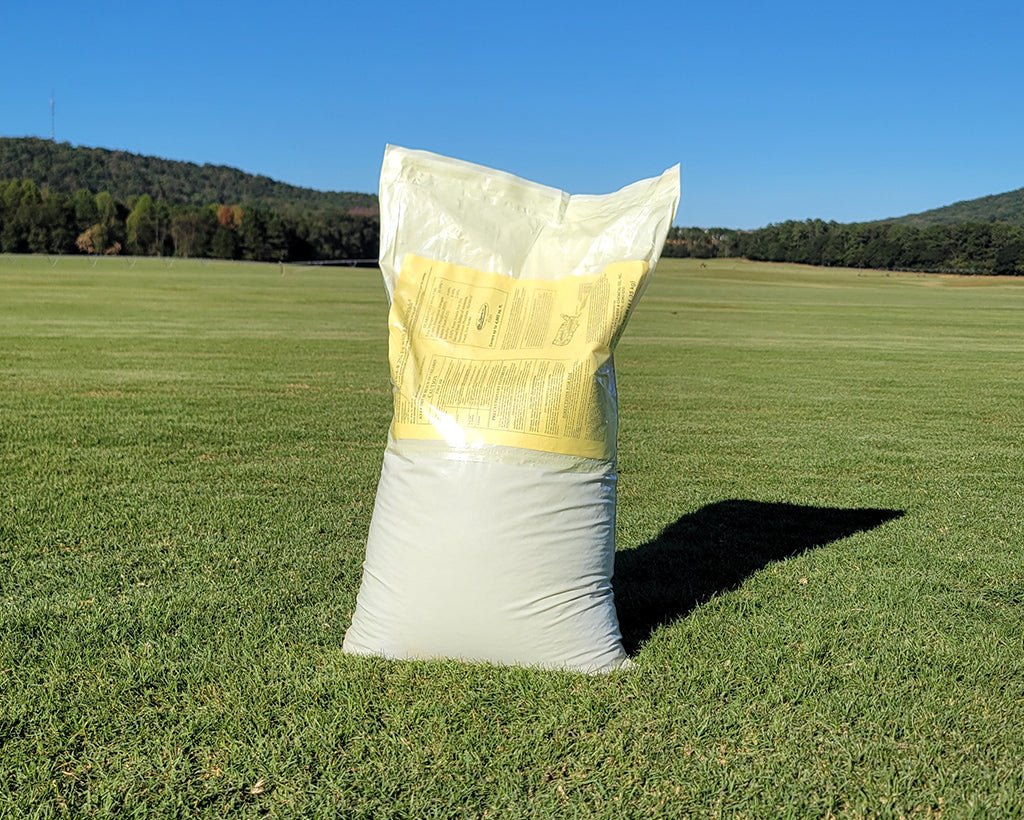
pre emergent herbicide for lawn 16-4-8 Fertilizer + Pre-Emergent Herbicide

Sale price$19.51 Regular price$21.68
Save 10%

Pay in installments of $5.42 with ShopPay, AfterPay and Klarna

Shipping Estimate
USA
  • USA
  • CAN

Ships within 48 hours · Estimated delivery Sep 8 - Sep 13

Promo Codes Available:

For Your Every Summer RSVP, with Code: SUMMER15

Description

pre emergent herbicide for lawn 16-4-8 Fertilizer + Pre-Emergent HerbicidePre emergent herbicide, when applied at the right times of year, will control weed populations before you see them. They do this by inhibiting seeds from forming roots, thus killing them as they germinate. Eradicating weeds when they germinate is the most efficient way to control weed populations is lawns, flower beds, and even gravel driveways and walkways. Its time efficient and cost effective, saving you months of combating weeds by mowing, weed

Pre-emergent herbicide, when applied at the right times of year, will control weed populations before you see them. They do this by inhibiting seeds from forming roots, thus killing them as they germinate.

Eradicating weeds when they germinate is the most efficient way to control weed populations is lawns, flower beds, and even gravel driveways and walkways. It’s time-efficient and cost-effective, saving you months of combating weeds by mowing, weed whacking, hand pulling, digging, and from using costlier products to spray out weeds.

  • 25 lb. bag covers up to 4,000 sq. ft.
  • 50 lb. bag covers up to 8,000 sq. ft.
  • Contains 16-4-8 + Iron plus Barricade pre-emergent herbicide
  • This pre-emergent contains a high amount of Nitrogen, so review the "when not to apply" exceptions below for your type of lawn.


Apply only at the recommended rate.

Use our yellow walk-behind spreader to distribute this granular product.

When to apply pre-emergent herbicide:

  • Apply 16-4-8 with Barricade to established Tall Fescue lawns in late winter and early spring to feed and prevent weeds. If you've already fertilized your Tall Fescue with nitrogen, then choose 0-0-7 with pre-emergent because it doesn't contain nitrogen.
  • Apply 16-4-8 with Barricade to established Bermuda and Zoysia lawns in spring during "green up" to feed and prevent weeds, usually from mid to late April.
  • Apply in the morning before temperatures rise above 80 degrees; do not apply during the heat of the day.
  • Apply it after one full growing season when your lawn in fully rooted in and you can no longer pull up areas of the sod, after you’ve mowed it at least three times, and after you can no longer see the seams.


When NOT to apply pre-emergent herbicide:

  • When seeding new lawns: Do not apply this product or any pre-emergent herbicide if you're planning on reseeding your lawn because it will inhibit germination of that seed too. If you have applied pre-emergent, wait 3-4 months before planting seeds, depending on climate conditions.
  • When laying new sod: Do not apply pre-emergent when laying sod because it will inhibit root formation if applied too soon. Likewise, do not apply pre-emergent before laying new sod - if you have applied pre-emergent, wait 3-4 months (depending on climate conditions) before laying new sod.
  • Don't apply 16-4-8 with Barricade to Tall Fescue in late spring or summer; apply it only during cool months; due to high Nitrogen, don't apply to Tall Fescue during warm months.
  • Do not apply to Centipede due to the high nitrogen; choose 0-0-7 with pre-emergent instead
  • Don't apply 16-4-8 with Barricade to warm-season lawns like Bermuda, Zoysia, and St. Augustine in fall when going dormant or in winter or spring before green up; due to high Nitrogen apply it only when these lawns are actively growing in late spring. Instead, apply 0-0-7 with pre-emergent in fall and winter.
  • Don't apply too soon: If you laid warm season sod in autumn, chances are it will need one full growing season (summer) to root in and fill in the seams, thus skipping the winter and spring applications. If you laid sod in the autumn, here is a general application timetable:
    • Zoysia - Safe to apply after Zoysia sod is 12 months old
    • St. Augustine Safe to apply after St. Augustine sod is 12 months old
    • Centipede - Due to high nitrogen, not safe for Centipede at all
    • Bermuda - Safe to apply after *Bermuda sod is 6 months old
    • Tall Fescue - Safe to apply after Tall Fescue is 4 months old


*TifTuf Bermudagrass is the quickest sod to establish and beats expectations for filling in the seams. If you lay the TifTuf Bermudagrass variety late summer and it’s fully rooted in and no seams are visible, it’s safe to apply the winter application of pre-emergent herbicide.

Shipping Notes
  • Free Standard Shipping on $100+ Orders to the USA.
  • Except Preorder products are shipped in 48 hours.
  • Delivery to the USA:
  1. Standard Shipping : 3-10 business days
  • If time is of the essence, please consider selecting expedited delivery for faster service.
Exchange/Return Notes
  • We offer a 30-day return/exchange service after receiving.
  • Final sale items are not eligible for returns or exchanges.
  • To process your return/exchange, please contact us at [email protected]
  • Please click here for more details>>> Return & Exchange Policy
SKU: 34172005493

Discover Niche Categories That Outsell pre emergent herbicide for lawn

Top-Converting Item to Boost Your Average Order

4.4 ★★★★★
Based on 14 reviews
Sort
Highest Rating
Newest First
Oldest First
Product Reviews
G
Verified Purchase
Glitter
Port Orchard, US
★★★★★ 5
Very nice! Glad I ordered it ☺️
It's a very nice product. I'm glad I ordered it
WAS THIS REVIEW HELPFUL?YesReportShare
Reviewed in the United States on March 10, 2026
C
Verified Purchase
Curt Blattman
Louisville, US
★★★★★ 5
A simple book with a powerful message!
Format: Paperback
A simple book with a powerful message! If you are looking for a laymen’s guide on the arguments for the resurrection of Jesus, from every conceivable angle, then this book is for you. Habermas and Licona are two Bible scholars that have joined forces to provide both new and mature believer with everything they need to know to share their faith and knowledge on the resurrection of Jesus. One of the great strengths of the book is that right from the start Habermas and Licona give us what they believe is a very powerful strategy for sharing the story of the resurrection which they call a “minimal facts approach.” The great advantage of this approach is that we can stick to the topic of the resurrection and not get sidetracked to issues on the reliability of the Bible. In addition this approach considers only those data that are so strongly attested historically that almost every scholar (including the skeptical ones) accept their truthfulness. Under this approach the authors suggest that the first four facts below are almost universally accepted by all types of scholars while the fifth fact is accepted by a majority of scholars: 1. Jesus died by crucifixion. 2. Jesus’ disciples believed that he rose and appeared to them. 3. The church persecutor Paul was suddenly changed. 4. The skeptic James, brother of Jesus, was suddenly changed. 5. The tomb was empty. The book also discusses the many different theories that skeptics have used down through the centuries to debunk the resurrection of Jesus. Some of the most popular theories include: the resurrection being a legend, the disciples stole the body, the witnesses went to the wrong tomb, the apparent death theory and the hallucination hypotheses. One by one Habermas and Licona give detailed reasons why each theory fails to align with the five minimal facts shared above. Throughout the book the authors appeal to both biblical and extra-biblical sources to make their case. I especially enjoyed reading Chapter 8 – Naturally Speaking. In this chapter science, miracles and near-death experiences are discussed and the reader comes away with the realization that God does indeed exist. Throughout the book a myriad of charts help to summarize each different idea and theory making it easy to remember the main arguments used to equip the believer with everything they need to make the case for the resurrection of Jesus. I also found the chapter on People Skills especially practical in helping to prepare us with the wisdom we need to share everything we have learned in the book with skeptics and non-believers. The appendix provides a very detailed outline of all the arguments and is the perfect refresher course for the book. The many pages of notes are an excellent source for anyone desiring to go deeper into the material. Finally the interactive game CD is a great way to reinforce many of the ideas from the book and is a fun way to help remember important themes.
WAS THIS REVIEW HELPFUL?YesReportShare
Reviewed in the United States on September 29, 2016
E
Verified Purchase
E. C. Tozer
Los Angeles, US
★★★★★ 5
An Excellent Book that Appeals to All Levels of Inquiry
Format: Paperback, Format: Paperback
The Case for the Resurrection of Jesus by Gary R. Habermas and Michael R Licona makes a persuasive case for the historical resurrection of Jesus. What I like about this book is that it is structured for different levels of interest. The first 150 pages gives the basic facts surrounding the resurrection and addresses the major objections to the resurrection. The next seventy pages deals with the lesser known objections and offers some suggestions on how to dialog with objectors. The Appendix is almost thirty pages of a detailed outline of information provided which leads to the uniqueness of this book. It does more than gives you information; it makes a valent attempt for the reader to remember this information. The authors helps the reader remember the information provided by providing nineteen flow charts which outline each major point (very helpful), the appendix, highlighted summaries, and a DVD game. The flow charts allowed me to quickly see the flow and the connection of each major point. The highlight summary sections quickly state the main points. The DVD game is imaginative and fun and is divided into ten categories with some two hundred questions which reinforced the material. The appendix is another avenue to gain quick access to the information. The material and arguments are from a minimalist approach. The authors focus on information that almost all historians agree upon and how a historian determines the likelihood of an event. The mindset of a historian is not to say that something is true or false but to determine a scale or gradient to determine if something ranges from very doubtful to very certain. Some of the criteria of evaluating an event include multiple independent witnesses, attestation by enemies, embarrassing admissions, eyewitness testimonies, and early testimonies supporting the historical claims. When it comes to the resurrection of Jesus there are at least four and possibly five facts that land in the “very certain” category. The historical claims that are graded in the very certain category are these four. One, Jesus died by crucifixion which is supported by five non-Christian sources. Two, the disciples of Jesus believed that He rose and appeared to them which is supported by nine sources in three categories pointing to a multiple and very early eyewitness testimony. Not only did the disciples of Jesus believe that they personally saw the resurrected Jesus, but they were willing to suffer for that belief which is attested to by seven ancient sources. Three, the church persecutor, Paul, was suddenly changed and became a martyr for this testimony which is supported by seven ancient sources. Four, Jesus’ skeptic brother, James, was converted and became a follower of Jesus which resulted in him becoming a martyr for this belief as reported by Josephus, Hegesippus, and Clement of Alexandria. Finally, the empty tomb is in a separate category from “very certain” (75% of scholars accept the empty tomb as a historical fact). The reasons that most scholars accept the empty tomb as a historical is because of the attestation of enemies, the culturally embarrassing testimony of the women, and the Jerusalem factor. After establishing the historical events that are accepted by historians, the authors simply compare these facts against various alternate theories that have been floated over time. The question is, do these theories deal with the facts and which theory clearly stands out from all the other ideas because it deals with the facts? In short, there is but one idea that stands alone. “Therefore, Jesus’ resurrection is more than the most plausible explanation to account for the data. It is the only explanation that accounts adequately for all of the facts.”
WAS THIS REVIEW HELPFUL?YesReportShare
Reviewed in the United States on July 16, 2019
R
Verified Purchase
Ronald C. Payne
Port Orchard, US
★★★★★ 5
Great Apologetic Resource
Format: Paperback
This is a great introductory resource for Christians who want to defend the hope that is within them. Habermas and Licona outline and defend a strong "minimal fact" argument for the resurrection of Jesus. In short, this historical argument argues for certain facts concerning the events surrounding the resurrection such as Jesus dying on a cross, the disciples claiming to have seen him risen, and Paul having a transforming experience of the risen Christ on the road to Damascus, etc. After arguing for all these alleged facts, the authors argue that a bodily resurrection fits the evidence better than any other theory. The strength of this argument is that it relies on multiple points each of which has a good body of evidential support. One can still claim agnosticism on the resurrection I suppose but I think that if one is honest (and philosophically open at least to be possibility of God acting in history via miracles) he or she would have to conclude that Jesus rose from the dead. As I said above, this is a great introductory work. Someone who wants to delve further should read N.T. Wright's The Resurrection of the Son of God, and works by William Lane Craig on the subject. Read the other side as well both online at Internet Infidels and through books by Christian deconverts. Both authors quote other prominent New Testament scholars to back up their points while citing the original sources behind their alleged facts, ensuring that one who is earnestly seeking can check their work and investigate the matter for herself. The book also contains charts that visually summarize the points being made in the text which makes the material easier to remember. The book deals with alternative theories and then discusses the philosophy of Naturalism. I have read better critiques of Naturalism but this book does a good job of refuting pop-Naturalism I suppose. The next part contains brief chapters defending the bodily resurrection view against the heavenly appearance view and that Jesus claimed divinity. I think these sparse chapters could have been lengthened, especially the chapter on Jesus' self-understanding to make a stronger case. The next chapter on Intelligent Design is really out of place in this book and should have been left out. If the authors wanted to give props to ID they should have done so in an Afterward or an appendix. The book is mainly about Jesus, what he was about and what happened to him, not about ID. Lastly, the book has many endnotes which I much appreciate along with an extensive bibliography which I appreciate even more. Overall this was a very edifying read and can help you when someone challenges you about the evidential basis for your faith.
WAS THIS REVIEW HELPFUL?YesReportShare
Reviewed in the United States on July 21, 2010
E
Verified Purchase
EB
Natrona Heights, US
★★★★★ 5
Recommended for Pastors
Format: Kindle
Knowing why you believe what you believe is one of the hardest parts of being a Christian. Just as parents answer a child's endless supply of "why?" questions and usually run out of answers, The Case for the Resurrection of Jesus by Gary Habermas ensures that we Christians don't. It begins with "why" it is important for us to know the information provided in this book. The answer is found in God's Holy Word, I Peter 3:15, "Sanctify Christ as Lord in your hearts, always being ready to make a defense to everyone who asks you to give an account of the hope that is in you, yet with gentleness and reverence." This book takes several arguments disputing the resurrection of Christ and tears them to shreds. It demonstrates that the very sources used against the resurrection are biased and partial. The amount of information and biblical knowledge contained within is astounding. It includes a CD-ROM which is pure genius, educating the public about the resurrection. Habermas dissects common questions that argue against Jesus' resurrection, making it an easy reference for the future. For example, say the person you are witnessing to says, "The disciples stole the body;" it is easy to find the information to refute that false belief. Every known argument for why the resurrection didn't happen is accounted for in this book, and proven wrong. This book is an excellent learning tool for every Christian. I recommend it for pastors as a reference tool and a study guide, regardless of where they are in their walk with the Lord. All of life is a time to learn, and learning never stops. We can never know too much about God. With the inclusion of a detailed outline of the arguments contained in this book, the notes taken to write the book ( listed by individual chapter),and the bibliography of other reference books used in this one, there is an limitless supply of Bible studies and/or sermons. What pastor could not use this book? This book is by far one of the most useful books on the Christian faith. -- Tammy Hornbeck, Christian Book Previews.com
WAS THIS REVIEW HELPFUL?YesReportShare
Reviewed in the United States on March 28, 2016

recommand products