Pay in installments of $6.68 with
 ,
,
 and
and

Shipping Estimate
USA
- USA
- CAN
- USA
- CAN
Ships within 48 hours · Estimated delivery Oct 19 - Oct 24
 Promo Codes Available:
For Your Every Summer RSVP, with Code: SUMMER15
Description
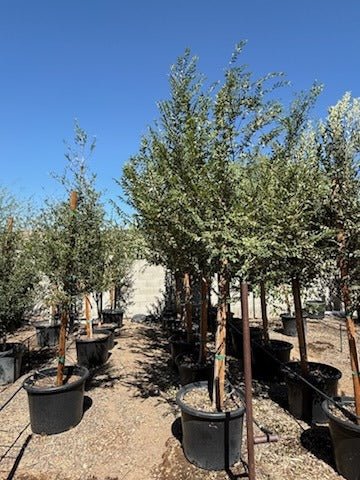
planting oak trees in pots Buy Southern Live Oak Phoenix, AZ | Quercus virginianaPhoenix's Best Evergreen Shade Tree Southern Live Oak Southern Live Oak (Quercus virginiana) is the most iconic evergreen shade tree you can plant in a Phoenix landscape. Unlike most oaks, it keeps its leaves year round, delivering a dense, sweeping canopy of dark green foliage through every season. Once established, it's remarkably drought tolerant and handles the Valley's brutal summers without flinching. Whether you're shading a backyard in
Phoenix's Best Evergreen Shade Tree — Southern Live Oak
Southern Live Oak (Quercus virginiana) is the most iconic evergreen shade tree you can plant in a Phoenix landscape. Unlike most oaks, it keeps its leaves year-round, delivering a dense, sweeping canopy of dark green foliage through every season. Once established, it's remarkably drought-tolerant and handles the Valley's brutal summers without flinching. Whether you're shading a backyard in Scottsdale, creating a grand canopy along a driveway in Gilbert, or anchoring a large residential landscape in Chandler — Southern Live Oak is the shade tree Phoenix homeowners plant once and enjoy for generations.
Southern Live Oak Plant Details
| Attribute | Detail |
|---|---|
| Scientific Name | Quercus virginiana |
| Common Names | Southern Live Oak, Live Oak, Virginia Live Oak |
| Mature Height | 40–60 feet |
| Mature Width | 60–100 feet |
| Growth Rate | Moderate — 1–2 feet per year in Phoenix once established |
| Sun | Full sun (6+ hrs). Handles reflected heat from walls and pavement. |
| Water | Moderate to low once established. More drought-tolerant than most oaks. |
| USDA Zones | 7–11 (Phoenix is Zone 9b–10a) |
| Soil | Well-draining. Adapts to Arizona caliche soils with proper establishment. |
| Foliage | Evergreen — holds dark green leaves year-round (rare for an oak) |
| Canopy Form | Broad, spreading, arching — one of the widest shade canopies available |
Southern Live Oak Uses in Phoenix Landscapes
Backyard Shade and Cooling
Few trees match the Southern Live Oak's ability to transform a hot Phoenix backyard into a shaded retreat. Its massive spreading canopy — often twice as wide as it is tall — casts dense, cooling shade over patios, lawn areas, and outdoor living spaces. A single mature specimen can drop summer temperatures underneath by 10–15 degrees, dramatically reducing cooling costs and making your outdoor spaces usable even in the hottest months.
Driveway and Property Entrance Canopy
Southern Live Oak's wide, arching form makes it one of the most impressive choices for lining driveways and grand entrances in the Phoenix Valley. Plant trees 20–30 feet apart along a long driveway and within 10–15 years you'll have a beautiful canopy tunnel. Its evergreen nature ensures the entrance looks polished year-round — no leaf drop in winter like deciduous alternatives.
Large Residential and Estate Landscaping
For larger lots in Scottsdale, Paradise Valley, and the East Valley, Southern Live Oak delivers the scale and presence that most trees can't match. Its wide-spreading form creates natural zones in the landscape, providing shade, visual anchor, and year-round structure for the entire property. Pair with Texas Sage, Ruellia, or Agave at the base for a naturalistic, low-maintenance groundplane.
Lawn and Turf Area Specimen Tree
Southern Live Oak is one of the best choices for planting in or near turf areas in Phoenix — its deep root system is less likely to heave pavement or disrupt irrigation than many other large shade trees. Give it ample space (30+ feet from structures) and it will become the dominant focal point and shade provider for the entire yard.
Best Time to Plant Southern Live Oak in Phoenix
Fall (October–November) is the ideal planting window for Southern Live Oak. Warm soil encourages deep root development while cooler air temperatures reduce transplant stress — giving the tree 6–8 months to establish before its first Phoenix summer. Spring (February–April) is the second-best option. Avoid planting during June–September if possible; if you must plant in summer, consistent deep watering every 1–2 days is essential during the first 4–6 weeks.
How to Plant Southern Live Oak
- Dig wide, not deep — 2–3x the root ball width, same depth as the container
- Check for caliche — break through any hardpan layer with a bar or pick to ensure drainage
- Backfill with native soil — a light 20% organic amendment helps establishment in heavy clay or caliche soils
- Spacing — 20–30 ft apart for canopy lanes; 30–40 ft from structures for individual specimens
- Water basin — build a 4–6 inch soil ring well beyond the drip line to direct water deep to roots
- Mulch — 3–4 inches of bark mulch over the root zone retains moisture and moderates soil temperature
Watering Southern Live Oak in Phoenix
First Year Watering Schedule
- Weeks 1–2: Every 1–2 days, deep and slow (30–45 min per session for larger sizes)
- Month 1–2: Every 3–4 days
- Month 3–6: Every 7–10 days (5–7 days in peak summer heat)
- After Year 1: Every 10–14 days in summer; every 3–4 weeks in winter
Drip Irrigation
Place drip emitters 24–36 inches from the base, using 4–6 GPH emitters per tree for larger sizes. As the tree grows, move emitters further out toward the drip line — roots follow water and expanding the irrigation zone encourages the deep, wide root system that makes Southern Live Oak so resilient in Phoenix. Once established, it can go 2–3 weeks between deep watering cycles in summer.
How fast does Southern Live Oak grow in Phoenix?
Southern Live Oak is a moderate grower in Phoenix, adding 1–2 feet per year once established. Growth can be faster in the first few years with consistent deep watering and proper establishment. It's not the quickest shade tree in the Valley, but its exceptional longevity — these trees live for centuries — makes it one of the highest-value investments in any Phoenix landscape.
Is Southern Live Oak truly drought tolerant in Phoenix?
Yes, once fully established (typically after 2–3 years). Southern Live Oak develops a deep, wide root system that allows it to access soil moisture unavailable to most other trees. During establishment it needs regular deep watering, but mature trees handle Phoenix summers very well with infrequent supplemental irrigation. It's significantly more drought-tolerant than many deciduous oaks.
Does Southern Live Oak drop its leaves in Phoenix?
Southern Live Oak is semi-evergreen to fully evergreen in the Phoenix climate. Unlike the deciduous oaks common in cooler climates, it holds most of its leaves through winter and only briefly sheds in late winter/early spring as new growth pushes out old foliage. You'll see a brief "leaf exchange" period but the tree rarely looks bare — making it far more appealing year-round than deciduous alternatives.
How far should it be planted from a house or pool?
Allow at least 20–30 feet from any structure, pool, or underground plumbing. Southern Live Oak has an extensive root system and a very wide mature canopy — planting too close creates long-term maintenance issues. For pools and patios it does produce some leaf and catkin litter, so a 20+ foot buffer is recommended.
What sizes are available and which should I choose?
Three Timbers carries Southern Live Oak in 3/5 gallon through 48-inch box sizes. For most homeowners wanting noticeable shade within 3–5 years, the 24"/25 gallon or 36" box size gives a great head start. Smaller 3/5 and 10/15 gallon sizes establish quickly and are more economical for planting multiple trees.
You May Also Like
- Evergreen Elm — A fast-growing evergreen shade tree with a graceful, rounded canopy — a great option for quicker shade while the Live Oak matures.
- African Sumac — An evergreen medium shade tree with a dense canopy and excellent drought tolerance — ideal for smaller yards where a Live Oak would be oversized.
- Mastic Tree — A beautiful, long-lived evergreen shade tree with a dense rounded canopy — one of the finest medium shade trees for the Phoenix Valley.
- Shamel Ash — A large, fast-growing evergreen shade tree that provides quick canopy cover while slower-maturing oaks establish.
- Desert Museum Palo Verde — A stunning, fast-growing native shade tree with green bark and spectacular yellow blooms — pairs beautifully with Southern Live Oak in a layered canopy design.
How Many Southern Live Oak Do I Need?
Southern Live Oak is a massive 60 to 100 foot wide canopy tree, so it is planted as a specimen or in a widely spaced row, never as a hedge. Use this guide for the Phoenix Valley:
| Planting Goal | Spacing | Example |
|---|---|---|
| Single estate specimen | 30 to 40 ft from structures, pools, and plumbing | 1 tree anchors a large backyard |
| Driveway / entrance canopy lane | 20 to 30 ft on center | A 120 ft drive needs 4 to 6 trees |
| Open-park grove | Groups of 3, 30 ft apart | Reads as a mature shaded grove |
Give this tree room. Its canopy is often wider than it is tall, and the root system spreads broadly, so keep it well back from walls, walks, and pool decks.
Southern Live Oak Season-by-Season in Phoenix
- Spring (Feb-Apr): A brief leaf exchange pushes old foliage off as new growth flushes, so you may see light litter for a few weeks. A solid second planting window once nights warm.
- Summer (May-Sep): Peak value. The dense evergreen canopy can drop temperatures beneath it by 10 to 15 degrees and shrugs off extreme and reflected heat. Established trees need only deep watering every 2 to 3 weeks. Monsoon storms (Jul-Sep) can drop limbs on young trees, so stake and prune for structure early.
- Fall (Oct-Nov): Prime planting season in Phoenix. Warm soil and cooling air give roots months to establish.
- Winter (Dec-Jan): Holds its dark green canopy through winter. Fully cold-hardy for the Valley (USDA zone 7 and up), so no frost protection is needed.
At a Glance
✔ Evergreen ✔ Shade-Providing ✔ Drought-Tolerant ✔ Heat-Loving (Reflected-Heat Tolerant) ✔ Low-Maintenance ✔ Cold-Hardy to 10°F
Plant It With
- Evergreen Elm: a faster-growing evergreen that delivers shade while the oak matures.
- Mastic Tree: a tough evergreen for smaller corners where a Live Oak would overwhelm.
- Shamel Ash: a large fast-growing evergreen for quick canopy cover in a layered design.
- Desert Museum Palo Verde: a flowering desert tree that contrasts the oak's dense canopy with airy green-bark structure.
Is Southern Live Oak Right for Your Yard?
Southern Live Oak is the right choice for large lots and estate landscapes with full sun and well-drained soil where you want a permanent, evergreen, deep-shade canopy that will outlive everyone who plants it. Break through any caliche so roots can establish, and budget for 30-plus feet of clearance in every direction. Not a fit for small yards, tight setbacks, or right next to a pool, since the mature spread, surface roots, and seasonal leaf and catkin litter need real space.
Shipping Notes
- Free Standard Shipping on $100+ Orders to the USA.
- Except Preorder products are shipped in 48 hours.
- Delivery to the USA:
- Standard Shipping : 3-10 business days
- If time is of the essence, please consider selecting expedited delivery for faster service.
Exchange/Return Notes
- We offer a 30-day return/exchange service after receiving.
- Final sale items are not eligible for returns or exchanges.
- To process your return/exchange, please contact us at [email protected]
- Please click here for more details>>> Return & Exchange Policy