SKU: 36126189297
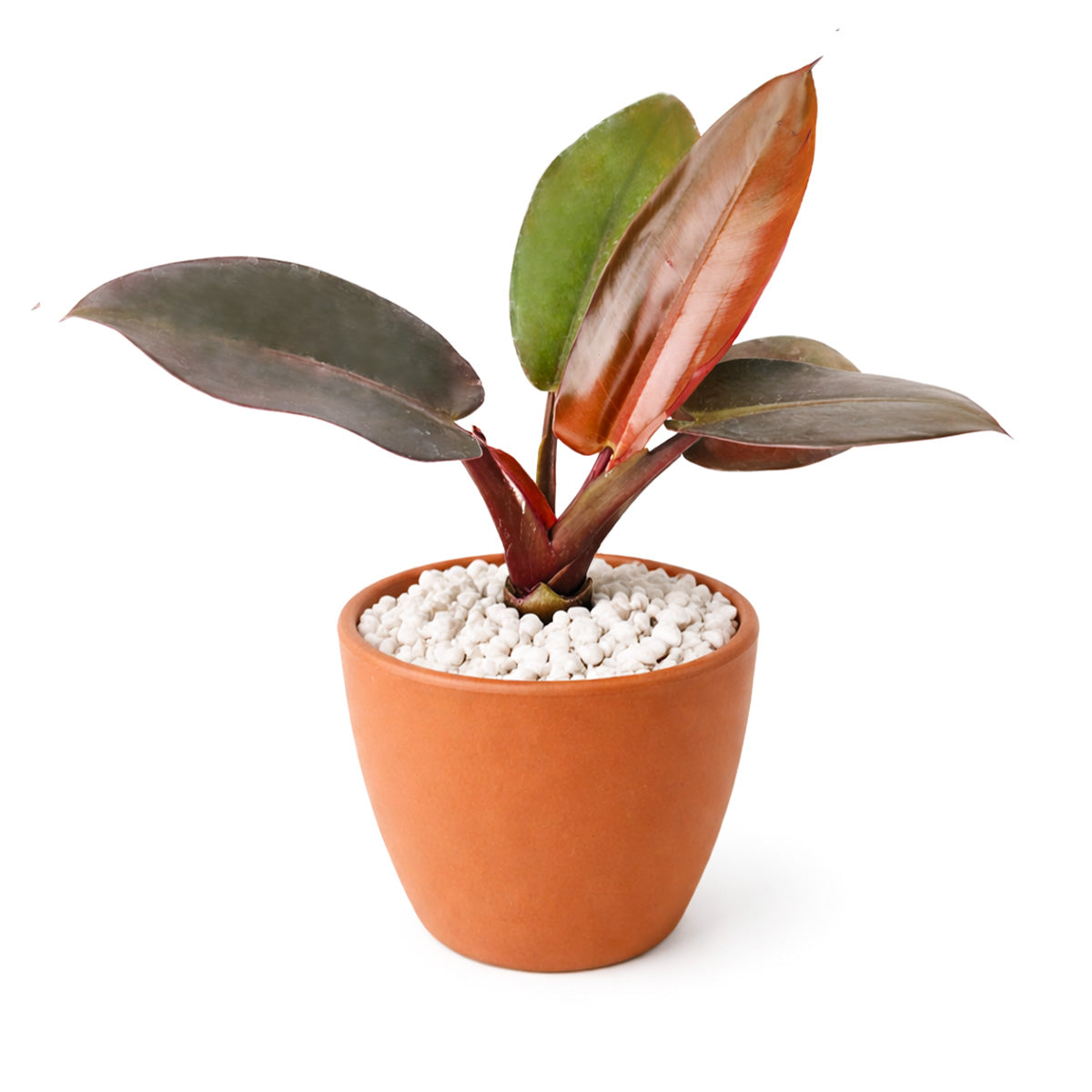
philodendron congo rojo flower

philodendron congo rojo flower Philodendron Rojo Congo

Sale price$25.07 Regular price$27.85
Save 10%

Pay in installments of $6.96 with ShopPay, AfterPay and Klarna

Shipping Estimate
USA
  • USA
  • CAN

Ships within 48 hours · Estimated delivery Jul 26 - Jul 31

Promo Codes Available:

For Your Every Summer RSVP, with Code: SUMMER15

Description

philodendron congo rojo flower Philodendron Rojo CongoDescription Light Soil Water Hardiness Philodendron Rojo Congo is native to South America, specifically regions in Brazil and neighboring countries. Its natural habitat is the rainforests, where it thrives in the warm and humid climate. This philodendron typically grows upright with a bushy habit, making it a fantastic choice for enhancing interior decor or filling a corner that needs a dramatic touch. Rojo Congo's most notable feature is its deep,

  • Philodendron Rojo Congo is native to South America, specifically regions in Brazil and neighboring countries. Its natural habitat is the rainforests, where it thrives in the warm and humid climate. This philodendron typically grows upright with a bushy habit, making it a fantastic choice for enhancing interior decor or filling a corner that needs a dramatic touch.

    Rojo Congo's most notable feature is its deep, velvety, burgundy-red leaves. These large, heart-shaped leaves have a glossy sheen, adding a touch of luxury to any space. The contrast between the red foliage and the plant's green stems creates an exquisite visual display.


    As with many Philodendrons, the Rojo Congo contributes to improved indoor air quality by helping to remove common pollutants and toxins, making your home a healthier place to live. It's also considered relatively easy to care for, making it a good choice for both novice and experienced plant enthusiasts.

    Philodendron Rojo Congo is not primarily grown for its flowers, and it is relatively rare for it to produce blooms when cultivated as a houseplant. However, when it does flower, the blooms are typically inconspicuous and pale in color.


  • Rojo Congo prefers bright, indirect sunlight, but it also tolerates medium light conditions.It needs at least a few hours of light daily. Avoid harsh direct sun to prevent scorching leaves.

    This plant prefers slightly moist but not waterlogged soil. Water thoroughly and drain well after each watering. Check the soil twice per week and only water when the top 1" of the soil is dry to the touch.

    Rojo Congo likes rich soil that can retain some moisture, but the soil should also drain well to prevent root rot. It is recommended that you mix some peat with general houseplant soil to improve drainage.

    This plant grows best in normal room temperatures (between 65°F-80°F). It does not grow well in temperatures below 50°F and over 90°F. Red Congo thrives in normal indoor humidity, and it is recommended that you mist your plant and use a humidifier when the environment is too dry (humidity level falls below 50%).


    This plant should be fertilized once during the growing season (spring/summer) with diluted houseplant fertilizer.


    Rojo Congo plant is toxic if ingested, so keep it out of reach of pets and children.

  • USDA Zone 9-11

    USDA Zone 9b: to -3.8 °C (25 °F)

    USDA Zone 10a: to -1.1 °C (30 °F)

    USDA Zone 10b: to 1.7 °C (35 °F)

    USDA Zone 11: above 4.5 °C (40 °F)


Shipping Notes
  • Free Standard Shipping on $100+ Orders to the USA.
  • Except Preorder products are shipped in 48 hours.
  • Delivery to the USA:
  1. Standard Shipping : 3-10 business days
  • If time is of the essence, please consider selecting expedited delivery for faster service.
Exchange/Return Notes
  • We offer a 30-day return/exchange service after receiving.
  • Final sale items are not eligible for returns or exchanges.
  • To process your return/exchange, please contact us at [email protected]
  • Please click here for more details>>> Return & Exchange Policy
SKU: 36126189297

Discover Niche Categories That Outsell philodendron congo rojo flower

Top-Converting Item to Boost Your Average Order

4.8 ★★★★★
Based on 14 reviews
Sort
Highest Rating
Newest First
Oldest First
Product Reviews
W
Verified Purchase
Wilbur F. Pierce
Draper, US
★★★★★ 5
An Excellent Choice
Format: Paperback
Excellent introduction, notes and translation.
WAS THIS REVIEW HELPFUL?YesReportShare
Reviewed in the United States on June 8, 2017
D
Verified Purchase
David Lemberg
San Leandro, US
★★★★★ 5
Five Stars
Format: Paperback
Professor Cornford's translation with running commentary is definitive.
WAS THIS REVIEW HELPFUL?YesReportShare
Reviewed in the United States on November 5, 2015
J
Jordan Bell
Cuba, US
★★★★★ 5
Plato's dialogue about the physical world
Format: Paperback
The two biggest topics in the Timaeus are astronomy and the elements of bodies, which are constructed using triangles and the tetrahedron, octahedron, icosahedron, and cube. I would like to see a translation of the Timaeus that uses it as a way to introduce all the astronomy that appears in the dialogue. Introducing the astronomy does not mean just talking in words about spheres or the zodiac or the ecliptic, but actually explaining how these were used by astronomers. Cornford has much to say, but to someone who has not learned any Greek astronomy his commentary will be opaque and hard to use. I didn't know the astronomy well enough to readily understand Cornford's explanations. I plan to learn more classical Greek astronomy, perhaps using Evans' , and then read Waterfield's translation of the Timaeus . Before reading this you should have read the Republic and know some classical Greek natural philosophy, mathematics, and astronomy. Although Cornford's commentary makes the dialogue staccato, I am glad for it because I wouldn't otherwise have understood much of what Plato says. The Timaeus and the Parmenides are the two dialogues of Plato that one needs commentary to understand; the Parmenides demands the commentary because so much of what is happening depends on the original language, and the Timaeus demands the commentary because of all the things the reader is supposed to be familiar with. The following is a list of topics I kept while reading the dialogue: theory of Forms 27d-28a, 51a-52a; harmonics 35b-36b; time 37c-38e, 39b-e; vision 45b-46c, 67c-68d; space 52b; surfaces 53c; weight 62d-63e; sound 67a-67c; physiology 70c-79e, 80d-86a; antiperistasis 79e-80c.
WAS THIS REVIEW HELPFUL?YesReportShare
Reviewed in the United States on December 12, 2015
S
Steve Lookner
Belleville, US
★★★★★ 4
Helpful, but Waterfield is better for an intro
Format: Paperback
This is basically a scholarly paragraph-by-paragraph commentary on the Timaeus. It's really good for what it is, but I don't recommend it as your first introduction to the Timaeus -- rather, I recommend Waterfield: http://www.amazon.com/Timaeus-Critias-Oxford-Worlds-Classics-ebook/dp/B006NTMD16 A problem with using Cornford as an introduction is that he comments on everything, and it's hard to figure out what the main themes are. I tried reading Cornford as an intro and gave it up, but once I'd read Waterfield I found Cornford extremely helpful both in elucidating passages further than Waterfield does, and in interpreting passages Waterfield doesn't cover. So if you're looking to learn about the Timaeus, I'd suggest Waterfield first and Cornford second (or Cornford alongside Waterfield).
WAS THIS REVIEW HELPFUL?YesReportShare
Reviewed in the United States on February 24, 2014
B
Brian Chrzastek
Houston, US
★★★★★ 5
Cornford's running commentary is arguably the best suited to fulfill this desire
Readers of any of Plato's works are bound to feel they might profit from various commentaries. His Timaeus, in particular, may be said to elicit such a hope because of number and intricacy of its details. Cornford's running commentary is arguably the best suited to fulfill this desire: it helps make clear the integrity of the dialogue as a whole and illumines the specific points along the way. Although this work is certainly dated, originally published in 1937, it is certainly one of the best full commentaries on the Timaeus.
WAS THIS REVIEW HELPFUL?YesReportShare
Reviewed in the United States on November 4, 2014

recommand products