Pay in installments of $5.40 with
 ,
,
 and
and

Shipping Estimate
USA
- USA
- CAN
- USA
- CAN
Ships within 48 hours · Estimated delivery Sep 16 - Sep 21
 Promo Codes Available:
For Your Every Summer RSVP, with Code: SUMMER15
Description
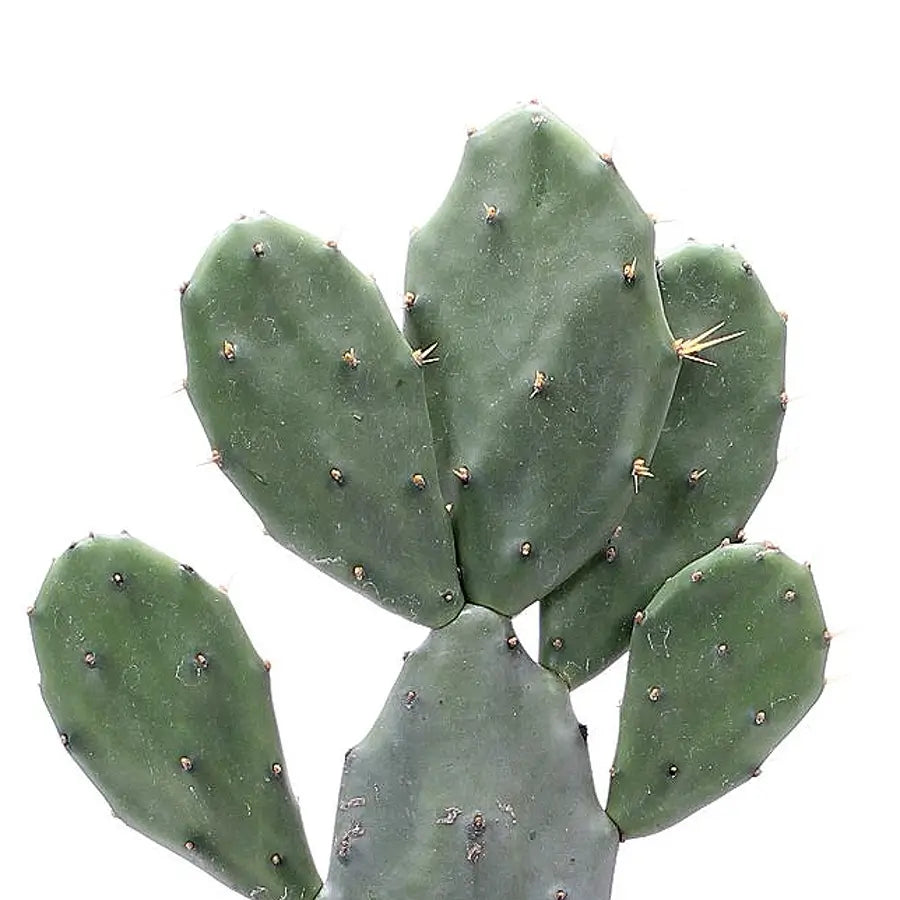
prickly pear cactus leaves Opuntia ficus-indica – Prickly Pear CactusOpuntia ficus indica Prickly Pear Cactus Opuntia ficus indica, commonly known as the prickly pear, is one of the most important domesticated cacti in human history. Cultivated for thousands of years, it is valued both for its fleshy fruits and as a forage plant in arid landscapes. In cultivation it forms a large, shrubby to tree like succulent with a woody trunk and broad, flattened pads, reaching 1 6 meters in height. With its iconic silhouette and
Opuntia ficus-indica – Prickly Pear Cactus
Opuntia ficus-indica, commonly known as the prickly pear, is one of the most important domesticated cacti in human history. Cultivated for thousands of years, it is valued both for its fleshy fruits and as a forage plant in arid landscapes. In cultivation it forms a large, shrubby to tree-like succulent with a woody trunk and broad, flattened pads, reaching 1 – 6 meters in height. With its iconic silhouette and long agricultural history, this species is as practical as it is ornamental.
Key Features of Opuntia ficus-indica
- Growth Form: Large perennial cactus, shrubby to tree-like, often with a definite trunk.
- Pads: Flattened cladodes (pads) that function as stems, used traditionally as food and forage.
- Flowers: Large, showy yellow to orange blooms along the pad margins.
- Fruit: The edible “prickly pear,” varying in color from green to red or purple, with sweet, juicy pulp.
Origin and Domestication
The exact origin of Opuntia ficus-indica is unknown, though most evidence points to central Mexico, where it has been cultivated for at least 8,000 years. From there it spread across the Americas before the arrival of Europeans. After Columbus, it was introduced to Europe and beyond, becoming established in the Mediterranean, around the Red Sea, in southern Africa, and in Australia. Today it is naturalized in many dry regions worldwide.
Cultivation Guidelines
- Light: Requires full sun for strong growth and flowering.
- Watering: Extremely drought-tolerant; water sparingly and allow soil to dry fully between waterings.
- Soil: Prefers sandy, mineral-rich, free-draining soil.
- Temperature: Hardy to mild frost but prefers warm to hot climates; unsuitable for prolonged freezing.
- Feeding: Light fertilizer during active growth can support flowering and fruiting.
Uses and Cultural Importance
This species is a cornerstone of arid agriculture. Its pads (nopales) are used as a vegetable, while its fruits (tunas) are widely eaten fresh or processed into jams, juices, and sweets. In many regions, it has also served as drought fodder for livestock. Beyond agriculture, it is grown ornamentally for its striking form and vibrant flowers.
Possible Challenges
- Overwatering: Susceptible to root rot if soil remains wet for long periods.
- Spines and Glochids: Fine, barbed hairs can irritate skin; handle with care.
- Invasiveness: In some regions it spreads aggressively and is managed as an invasive plant.
Etymology of Opuntia ficus-indica
The genus name Opuntia refers to the ancient Greek city of Opus in the region of Locris, where Theophrastus described a plant with rooting leaves, though its true identity remains debated. The species epithet ficus-indica combines a resemblance to the fig (Ficus carica) with the mistaken belief that the Americas were the Indies–an error dating back to Columbus. The fruits were introduced to Europe by the Spanish in the mid-1500s following the conquest of the New World.
Why Grow Opuntia ficus-indica?
Few plants combine history, beauty, and utility as well as Opuntia ficus-indica. Whether valued for its fruits, striking flowers, or bold desert form, it remains a living link between ancient cultivation and modern horticulture.
Shipping Notes
- Free Standard Shipping on $100+ Orders to the USA.
- Except Preorder products are shipped in 48 hours.
- Delivery to the USA:
- Standard Shipping : 3-10 business days
- If time is of the essence, please consider selecting expedited delivery for faster service.
Exchange/Return Notes
- We offer a 30-day return/exchange service after receiving.
- Final sale items are not eligible for returns or exchanges.
- To process your return/exchange, please contact us at [email protected]
- Please click here for more details>>> Return & Exchange Policy