Pay in installments of $6.86 with
 ,
,
 and
and

Shipping Estimate
USA
- USA
- CAN
- USA
- CAN
Ships within 48 hours · Estimated delivery Sep 9 - Sep 14
 Promo Codes Available:
For Your Every Summer RSVP, with Code: SUMMER15
Description
ficus alii indoor plant 100Ficus binnendijkii Alii, also known as Ficus Alii or Narrow Leaf Fig, is an elegant and easy to care for houseplant belonging to the Moraceae family. Native to Southeast Asia, it is popular for its long, slender, deep green leaves and graceful, upright growth habit. Unlike the common Ficus benjamina, Ficus Alii is less prone to leaf drop and adapts well to indoor environments. Leaves The leaves of Ficus binnendijkii Alii are long, narrow, and slightly
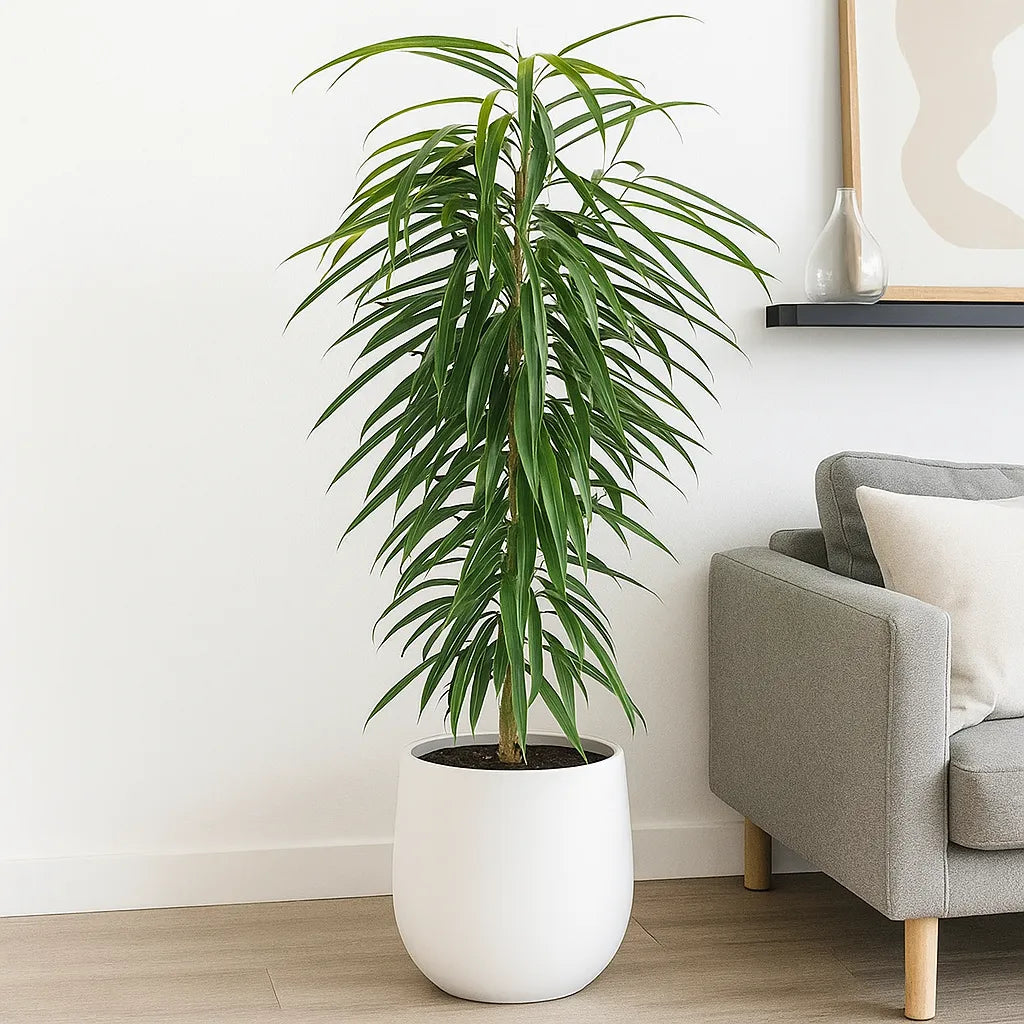
Ficus binnendijkii ‘Alii’, also known as Ficus Alii or Narrow-Leaf Fig, is an elegant and easy-to-care-for houseplant belonging to the Moraceae family. Native to Southeast Asia, it is popular for its long, slender, deep green leaves and graceful, upright growth habit. Unlike the common Ficus benjamina, Ficus Alii is less prone to leaf drop and adapts well to indoor environments.
Leaves
The leaves of Ficus binnendijkii ‘Alii’ are long, narrow, and slightly curved, resembling a willow tree. They are deep green with a glossy surface, growing in an upward arching fashion. This ficus has a bushy, compact appearance and can be grown as a small tree, bush, or braided-trunk plant.
Growth Habit
This ficus is a slow-to-moderate grower, reaching heights of 1.5–3 meters (5–10 feet) indoors. It grows in an upright, tree-like form, with multiple thin stems supporting a lush canopy of leaves. If grown in ideal conditions, it can reach its full height in a few years, making it a statement plant for homes or offices.
Care Guide
Light Requirements
- Prefers bright, indirect light but can tolerate medium light conditions.
- Too much direct sun can scorch the leaves, while too little light may cause slower growth.
- Best placed near an east- or west-facing window or a south-facing window with sheer curtains.
- If grown in low-light conditions, supplement with a grow light to maintain healthy foliage.
Temperature & Humidity
- Temperature: Prefers warm indoor temperatures between 18–27°C (65–80°F). Avoid exposure to cold drafts or temperatures below 10°C (50°F).
- Humidity: Thrives in normal household humidity (40-60%), but appreciates occasional misting in dry environments. If the air is too dry, use a humidifier or pebble tray to increase moisture.
Watering
- Water when the top 2-5 cm of soil feels dry.
- Ensure the pot has good drainage, as overwatering can cause root rot.
- Reduce watering in winter, as the plant’s growth slows.
- Use room-temperature, filtered water to prevent leaf stress from chlorine or fluoride.
Soil & Potting Mix
A well-draining, aerated mix is essential for healthy root growth. A good mix includes:
- High-quality potting soil (for nutrients)
- Perlite or pumice (for aeration and drainage)
- Coconut coir or peat moss (for moisture retention)
- Activated charcoal (to prevent fungal growth)
Fertilisation
- Feed with a balanced liquid fertiliser (10-10-10 or 20-20-20) every 4 weeks during the growing season (spring and summer).
- Reduce feeding in autumn and winter.
- For lush foliage, a nitrogen-rich fertiliser can be used occasionally.
Potting & Repotting
- Repot every 2-3 years, or when the plant becomes root-bound.
- Use a pot with drainage holes to prevent overwatering.
- If the plant is too large to repot, replace the top layer of soil with fresh soil annually.
Pruning & Maintenance
- Prune to shape the plant and encourage bushier growth.
- Remove yellowing or damaged leaves to maintain a neat appearance.
- Wipe leaves with a damp cloth to remove dust and improve photosynthesis.
Propagation
Propagation is best done through stem cuttings:
- Cut a healthy stem with at least one node and a few leaves.
- Dip in rooting hormone (optional) for faster rooting.
- Place in water or soil, keeping it warm and humid until roots develop.
- Once roots are 5 cm or longer, transfer to a pot with well-draining soil.
Common Problems & Solutions
- Yellowing Leaves – Overwatering is the most common cause. Allow soil to dry between waterings.
- Leaf Drop – Normal when adjusting to a new environment, but sudden changes in light, temperature, or watering can cause excessive leaf loss.
- Brown Leaf Tips – Usually due to low humidity or inconsistent watering. Increase moisture levels and check watering habits.
- Slow Growth – Caused by low light or nutrient deficiency. Move to a brighter spot and fertilise as needed.
- Pests (Spider Mites, Mealybugs, Scale, Aphids) – Clean leaves with neem oil or insecticidal soap to prevent infestations.
Shipping Notes
- Free Standard Shipping on $100+ Orders to the USA.
- Except Preorder products are shipped in 48 hours.
- Delivery to the USA:
- Standard Shipping : 3-10 business days
- If time is of the essence, please consider selecting expedited delivery for faster service.
Exchange/Return Notes
- We offer a 30-day return/exchange service after receiving.
- Final sale items are not eligible for returns or exchanges.
- To process your return/exchange, please contact us at [email protected]
- Please click here for more details>>> Return & Exchange Policy