Pay in installments of $7.11 with
 ,
,
 and
and

Shipping Estimate
USA
- USA
- CAN
- USA
- CAN
Ships within 48 hours · Estimated delivery Sep 8 - Sep 13
 Promo Codes Available:
For Your Every Summer RSVP, with Code: SUMMER15
Description
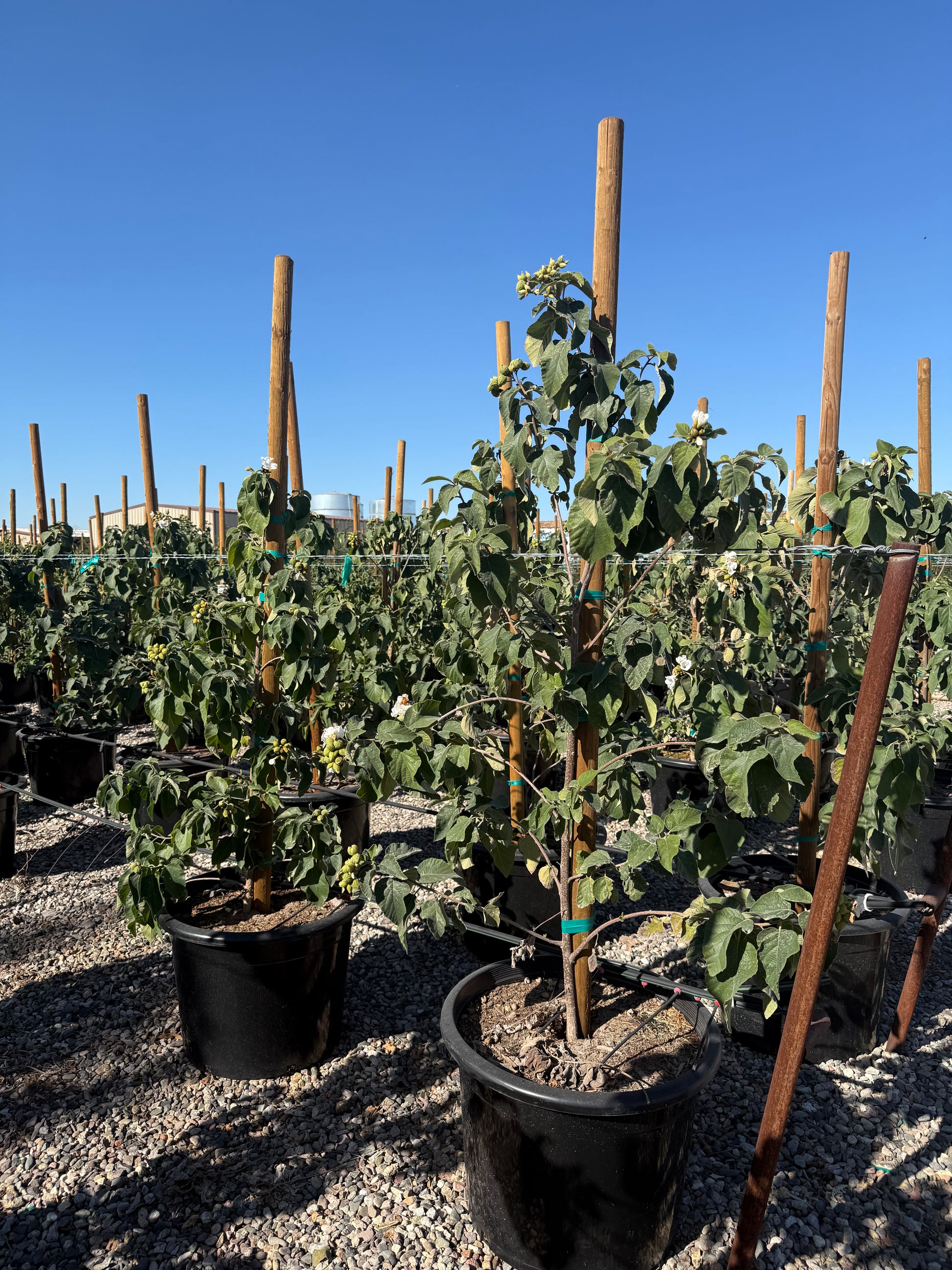
texas outdoor potted plants Buy Texas Olive Phoenix, AZ | Cordia boissieriArizona's Best White Flowering Privacy Tree Texas Olive Texas Olive (Cordia boissieri) is the most versatile flowering privacy tree for Phoenix Valley landscapes. With a dense, rounded canopy and nonstop white trumpet blooms from spring through fall, it delivers both visual privacy and stunning year round beauty. Once established, it's remarkably drought tolerant and heat resistant. Whether you're landscaping a backyard screen in Scottsdale, adding a
Arizona's Best White-Flowering Privacy Tree — Texas Olive
Texas Olive (Cordia boissieri) is the most versatile flowering privacy tree for Phoenix Valley landscapes. With a dense, rounded canopy and nonstop white trumpet blooms from spring through fall, it delivers both visual privacy and stunning year-round beauty. Once established, it's remarkably drought-tolerant and heat-resistant. Whether you're landscaping a backyard screen in Scottsdale, adding a pollinator-friendly focal point in Chandler, or creating a lush tropical feel in Mesa or Gilbert — Texas Olive gets the job done.
Texas Olive Plant Details
| Attribute | Detail |
|---|---|
| Scientific Name | Cordia boissieri |
| Common Names | Texas Olive, Wild Olive, Anacahuita |
| Mature Height | 15–20 feet |
| Mature Width | 10–15 feet |
| Growth Rate | Moderate — 2–3 feet per year in Phoenix |
| Sun | Full sun (6+ hrs). Handles reflected heat from walls and pavement. |
| Water | Low once established. Highly drought-tolerant. |
| USDA Zones | 8–11 (Phoenix is Zone 9b–10a) |
| Soil | Well-draining. Adapts to Arizona caliche soils. |
| Foliage | Semi-evergreen — holds leaves year-round in mild winters; may briefly drop after frost |
| Flower Color | White with yellow throat, 2–3 inches across; attracts bees, butterflies & hummingbirds |
| Native Origin | South Texas and northern Mexico (Chihuahuan Desert) |
Texas Olive Uses in Phoenix Landscapes
Flowering Privacy Screen
Texas Olive's dense, rounded canopy fills in quickly to create a living privacy wall that blooms continuously from spring through fall. Its 10–15 ft spread means you need fewer plants than many alternatives to achieve solid screening. For a 20-foot fence line, plant 2–3 trees spaced 6–8 feet apart; for a 40-foot boundary, plant 5–6 trees. Pair with Desert Spoon or Texas Sage along the base for a layered, low-water privacy planting.
Specimen Accent Tree for Patios & Courtyards
With its compact, rounded form and non-invasive root system, Texas Olive is an ideal specimen tree for patios, courtyards, and small spaces. The white trumpet blooms create a soft, almost tropical feel that pairs beautifully with flagstone, gravel, and concrete — all common in Phoenix modern desert design. Its moderate height (15–20 ft) provides filtered afternoon shade without overwhelming small areas.
Pollinator Garden Anchor
Texas Olive is one of the best pollinator trees available in Arizona, attracting native bees, painted lady butterflies, sphinx moths, and hummingbirds with its generous nectar production. Plant it as the centerpiece of a water-wise pollinator garden and surround it with Ruellia, Salvia greggii, and Desert Marigold for season-long wildlife activity. This makes it a natural fit for desert habitats and HOA-approved wildlife-friendly landscapes.
Low-Water Windbreak & Noise Buffer
Texas Olive's dense broadleaf canopy provides meaningful wind and noise buffering along property lines, streets, and pool areas. Unlike thorny alternatives, it's entirely safe around children and pets. Its semi-evergreen foliage keeps the windbreak effective even through Phoenix's mild winters. Plant in a staggered double row for maximum wind protection along exposed fence lines in Peoria, Surprise, or Goodyear.
Best Time to Plant Texas Olive in Phoenix
Fall planting (October–November) is ideal for Texas Olive in Phoenix. Warm soil encourages fast root development, while cooler air temperatures reduce transplant stress. A fall-planted Texas Olive gets 6–8 months of root establishment before facing its first Phoenix summer. Spring planting (February–April) is the second-best window — trees planted in spring will need consistent watering through the first summer. Avoid planting in June–August if possible, as summer heat significantly stresses new transplants.
How to Plant Texas Olive
- Dig wide, not deep — excavate a hole 2–3x the width of the root ball but no deeper than the root ball height.
- Check for caliche — probe the bottom of the hole for hardpan. If found, break through it with a breaker bar to ensure proper drainage.
- Backfill with native soil — Texas Olive thrives in unamended desert soil. A light 20% organic blend is fine but not required.
- Spacing — plant 8–10 ft apart for a privacy hedge; 12–15 ft apart as individual specimen trees.
- Build a water basin — create a 3–4 inch earthen ring around the drip line to concentrate water at the roots.
- Mulch — apply 2–3 inches of bark mulch or decomposed granite to retain moisture and moderate soil temperature.
Watering Texas Olive in Phoenix
First Year Watering Schedule
Texas Olive needs regular deep watering during its first year to establish a strong root system:
- Weeks 1–2: Water every 1–2 days, slowly and deeply (20–30 minutes with a slow drip)
- Months 1–2: Water every 3–4 days
- Months 3–6: Water every 7–10 days (every 5–7 days in peak summer)
- After Year 1: Every 10–14 days in summer; every 3–4 weeks in winter
Drip Irrigation
Position drip emitters 18–24 inches from the trunk, directly under the canopy edge. Use 2–4 GPH emitters and run them for 45–60 minutes per cycle to achieve deep soil penetration. Once fully established (after 2–3 years in Phoenix), Texas Olive is highly drought-tolerant and may need supplemental irrigation only during the hottest summer months.
How fast does Texas Olive grow in Phoenix?
Texas Olive grows at a moderate rate of 2–3 feet per year under Phoenix conditions with regular irrigation. In its first year, growth may be slower as the tree focuses on root development. By year 3–4, a well-established tree can put on 3+ feet of growth annually during the warm season.
Is Texas Olive drought-tolerant once established?
Yes — Texas Olive is considered highly drought-tolerant once established (typically after 2 full growing seasons in Phoenix). Native to the Chihuahuan Desert, it evolved to survive long dry periods. In Phoenix, mature trees generally need supplemental irrigation only in summer (June–August). During fall, winter, and spring, natural rainfall is often sufficient.
How does Texas Olive compare to regular olive trees?
Despite the common name, Texas Olive is not related to true olives (Olea europaea). Texas Olive (Cordia boissieri) has larger, showier white flowers, a denser rounded form, and is completely fruitless — no olive mess. True olives are also banned or restricted in many Phoenix-area jurisdictions due to allergy-causing pollen. Texas Olive is a superior, mess-free alternative with far more ornamental value.
Can Texas Olive handle Phoenix summer heat?
Absolutely. Texas Olive is extremely heat-tolerant and performs well in Phoenix's intense summer conditions. It handles full sun, reflected heat from block walls, and temperatures well above 110°F. Adequate watering during the first summer is critical, but established trees sail through Phoenix summers with minimal intervention.
Does Texas Olive work near pools?
Texas Olive is a great choice near pools. It has a non-invasive root system, drops minimal debris (mostly small spent flower petals), and provides beautiful filtered shade without overwhelming the pool area. Its clean, compact growth habit makes it one of the more pool-friendly flowering trees available in Phoenix landscapes.
You May Also Like
- Green Hopseed Bush — Fast-growing evergreen privacy shrub/tree, ideal for dense screening along fence lines.
- White Oleander Tree — Long-blooming white-flowering privacy tree with fast growth and extreme heat tolerance.
- Desert Willow — Native Arizona flowering tree with trumpet blooms in pink, purple, and white; excellent pollinator plant.
- Texas Ebony — Dense, thorny evergreen tree for ultimate privacy screening; extremely drought-tolerant.
- Indian Laurel Ficus — Classic dense evergreen screening tree for formal hedges and privacy walls.
How Many Texas Olive Do I Need?
Texas Olive matures 10 to 15 ft wide, so space trees about 8 ft on center for a solid flowering privacy screen, or give them 12 to 15 ft as individual specimens. Use this guide for a screen planting:
| Run length | Trees needed (8 ft on center) |
|---|---|
| 16 ft | 2 to 3 trees |
| 24 ft | 3 to 4 trees |
| 40 ft | 5 to 6 trees |
| 60 ft | 8 trees |
As a patio or courtyard focal point, plant one tree where it can spread freely, or set a matched pair to frame an entry or driveway.
Texas Olive Season-by-Season in Phoenix
- Spring (Feb to Apr): A strong flush of white trumpet blooms opens as temperatures warm. Prime second window for planting so roots settle before summer.
- Summer (May to Sep): Peak bloom season. Texas Olive thrives in extreme and reflected heat above 110°F and flowers heaviest with monsoon humidity (Jul to Sep). Keep first-year trees on deep, regular water.
- Fall (Oct to Nov): Best planting season in Phoenix and a continued flush of bloom. Warm soil drives root growth ahead of winter.
- Winter (Dec to Jan): Holds its leaves through mild Valley winters and stays semi-evergreen. Hard frost below about 20°F can nip foliage and cause brief leaf drop; mature trees rebound quickly in spring. Cover young trees on hard-freeze nights.
At a Glance
✔ Pollinator-Friendly ✔ Hummingbird-Friendly ✔ Heat-Loving (Reflected-Heat Tolerant) ✔ Drought-Tolerant ✔ Pool-Friendly (Low-Litter) ✔ Shade-Providing ✔ Low-Maintenance ✔ Cold-Hardy to 20°F
Plant It With
- Green Hopseed: fast evergreen backdrop that thickens the lower screen below the Texas Olive canopy.
- White Oleander Tree: another long-blooming white-flowering privacy tree to extend the screen line.
- Desert Willow: native trumpet-flowered tree that layers contrasting bloom and pollinator value.
- Texas Ebony: dense evergreen anchor for the toughest part of a privacy boundary.
Is Texas Olive Right for Your Yard?
Texas Olive is an excellent fit for full-sun Phoenix yards, including hot spots against block walls and pavement, as long as the planting hole drains and any caliche layer is broken through. Its non-invasive roots and low litter make it one of the safer flowering trees to plant near pools, patios, and walkways. It is not the best choice if you need a fully evergreen screen through a cold winter or live in a frost pocket that regularly drops below the low 20s, where it may drop leaves and need frost protection while young.
Shipping Notes
- Free Standard Shipping on $100+ Orders to the USA.
- Except Preorder products are shipped in 48 hours.
- Delivery to the USA:
- Standard Shipping : 3-10 business days
- If time is of the essence, please consider selecting expedited delivery for faster service.
Exchange/Return Notes
- We offer a 30-day return/exchange service after receiving.
- Final sale items are not eligible for returns or exchanges.
- To process your return/exchange, please contact us at [email protected]
- Please click here for more details>>> Return & Exchange Policy