Pay in installments of $7.11 with
 ,
,
 and
and

Shipping Estimate
USA
- USA
- CAN
- USA
- CAN
Ships within 48 hours · Estimated delivery Sep 9 - Sep 14
 Promo Codes Available:
For Your Every Summer RSVP, with Code: SUMMER15
Description
peperomia hanging plant care Shop 'Peperomia ruby cascade' Care & Growing GuideThe Peperomia Ruby Cascade, commonly known as the Ruby Cascade Plant, is a stunning trailing houseplant prized for its cascading vines adorned with small, round leaves that showcase an eye catching contrast of deep green on the top and rich burgundy red underneath. Its elegant trailing nature makes it a favorite for hanging baskets, shelves, and indoor gardens, where it can spill beautifully over the edges. Native to the tropical rainforest of Central
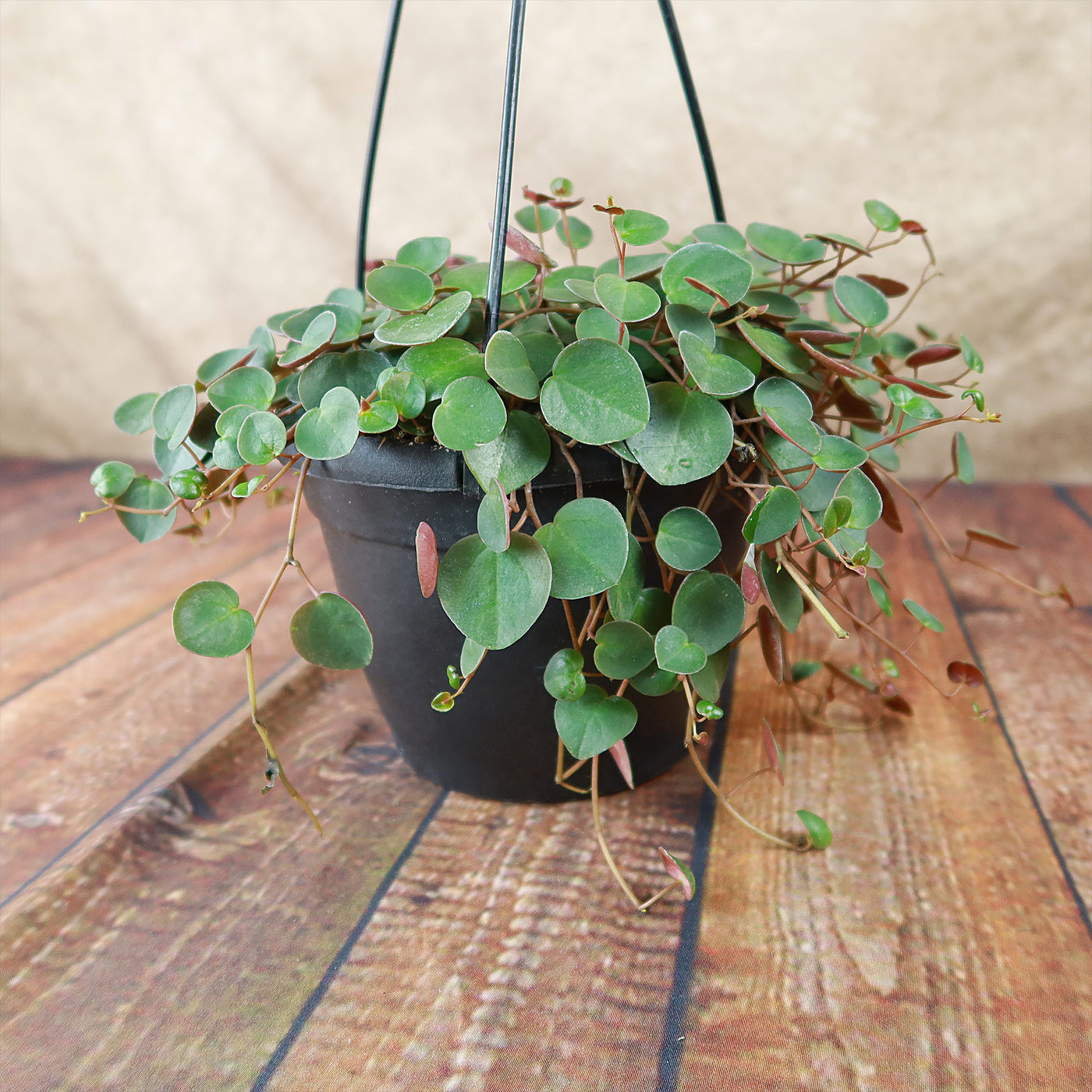
The Peperomia ‘Ruby Cascade’, commonly known as the Ruby Cascade Plant, is a stunning trailing houseplant prized for its cascading vines adorned with small, round leaves that showcase an eye-catching contrast of deep green on the top and rich burgundy-red underneath. Its elegant trailing nature makes it a favorite for hanging baskets, shelves, and indoor gardens, where it can spill beautifully over the edges.
Native to the tropical rainforest of Central and South America, this trailing Peperomia has thick, succulent-like leaves that are round to oval-shaped. The dark green upper surface contrasts beautifully with the deep red or ruby-colored underside, creating an elegant two-tone effect.
The Ruby Cascade plant's vines can grow long and cascading, making it an excellent choice for hanging pots or as a trailing feature in mixed plant arrangements.
Additionally, like many Peperomias, this variety is known for its ability to store moisture in its leaves, giving it some drought tolerance compared to other tropical houseplants.
When grown indoors as a houseplant, Peperomia ‘Ruby Cascade’ can grow up to 3 feet long when allowed to trail freely.
If grown in optimal conditions, it may extend even further.
The leaves remain relatively small, but their dense arrangement along the vines gives the plant a lush and full appearance.
The flowers of Peperomia Ruby Cascade are small and inconspicuous, appearing as thin, elongated spikes that resemble those of other Peperomia species. These flowers are typically light green to yellowish and do not have a strong fragrance.
Flowering is more common when the plant is grown in bright, indirect light and maintained in warm temperatures.
When and How to Water Your Peperomia Ruby Cascade
The Peperomia ‘Ruby Cascade’ is a drought-tolerant succulent-like plant that thrives with minimal watering. It stores water in its thick, trailing leaves, allowing it to withstand periods of dryness. Overwatering is one of the biggest threats to this plant, as it is highly susceptible to root rot. Despite its semi-succulent nature, it benefits from occasional misting in dry indoor environments.
In the spring and summer, during the active growing period, it requires more frequent watering—typically once every 7 to 10 days, depending on the humidity and temperature. As always, you should check for drainage holes in your pot because if they aren't, too much water will collect and lead to root rot. This is the most popular and quickest method for killing any plant.
Basically, the succulent-like leaves of the Peperomia plant should fold easily if it needs water. Otherwise, if the leaf is difficult to fold, it isn't ready to water.
During fall and winter, the Ruby Cascade Plant enters a semi-dormant phase where its growth slows down. At this time, watering should be significantly reduced—about once every 2 to 3 weeks, depending on environmental conditions. Overwatering during dormancy can cause root rot due to slower water absorption.
Light Requirements – Where to Place Your Ruby Cascade Plant
The Peperomia ‘Ruby Cascade’ thrives best indoors in bright, indirect light.
A spot near an east- or west-facing window is ideal, as it provides a balance of sunlight without direct exposure to intense midday rays.
If natural light is limited, supplement with a grow light to ensure it receives at least 8 to 10 hours of light daily.
While the plant can tolerate lower light conditions, prolonged exposure to dim environments may lead to leggy growth and faded foliage.
When grown outdoors, the Ruby Cascade Plant prefers partial shade or filtered sunlight.
It can tolerate the direct morning sun but should be protected from the harsh afternoon heat, especially in hotter climates.
Ideal outdoor placement includes a shaded patio, under taller plants, or near a trellis where it receives 4 to 6 hours of indirect sunlight daily. If grown in a hanging basket, ensure it is positioned where light is evenly distributed to promote symmetrical growth.
Optimal Soil & Fertilizer Needs
The Ruby Cascade thrives in well-drained soil that mimics its natural growing conditions. A mix of peat-based potting soil with added perlite or orchid bark works well, ensuring aeration and moisture control. Instead, make or buy a well-draining potting mix, or ideally use our specialized potting mix, opens in a new tab that contains 5 natural substrates and mycorrhizae to promote the development of a strong root system that helps your Peperomia plant to thrive.
For fertilization, use a liquid NPK fertilizer with a ratio of about 5-10-5, once a year during the growing season, typically in the spring. During fall and winter, avoid fertilizing as the plant enters dormancy.
Hardiness Zones & More
When grown indoors, the Ruby Cascade Plant prefers temperatures between 65°F to 75°F. It thrives best indoors in moderate humidity levels around 40-60%, making it well-suited for most home environments. If indoor air is too dry, occasional misting or a humidity tray can help maintain moisture. Light should be bright but indirect to prevent leaf scorching. Avoid placing it near cold drafts or heating vents, as extreme temperature fluctuations can stress the plant.
In the United States, this Peperomia is mostly an indoor plant, but if you live in southern Florida or Hawaii, then you can cultivate it outdoors in USDA zones 10-11.
It cannot tolerate frost and should be brought indoors if temperatures drop below 50°F.
Outdoor humidity levels should remain moderate, as excessive dryness or high humidity can impact growth.
If growing in pots, ensure they are placed in partial shade to avoid excessive sun exposure.
Wildlife – Ruby Peperomia Attracts the Following Friendly Pollinators
The small, delicate flowers of the Ruby Cascade Plant attract beneficial pollinators, including bees, butterflies, and hummingbirds. While its blooms are not as showy as some other flowering plants, their presence supports local pollinator populations.
According to the ASPCA, Peperomia ‘Ruby Cascade’ is non-toxic to cats, dogs, and other household pets. This makes it a safe choice for pet owners looking to add greenery to their homes without the risk of toxicity concerns.
How to Propagate Your Peperomia Ruby Cascade
The Peperomia ‘Ruby Cascade’ can be propagated through stem cuttings. Select a healthy vine with at least two to three nodes, and cut just below a node using clean, sharp scissors. Remove the lower leaves and place the cutting in either water or moist soil. If you propagate it in water, change the water every few days to prevent rot. If propagating in soil, keep the substrate slightly damp but not soggy. Roots should develop within 2 to 4 weeks, after which the cutting can be transplanted into a pot with well-draining soil.
Key Takeaways
- This trailing peperomia has cascading vines, making it an excellent choice for hanging planters, shelves, or macramé hangers.
- With its semi-succulent leaves, Ruby Cascade can store moisture, allowing it to withstand occasional dry periods.
- The plant features deep green leaves on top with a striking ruby-red underside, creating an eye-catching contrast.
- Unlike most compact Peperomia species, Ruby Cascade produces long, trailing stems that can grow up to 3 feet indoors.
- This non-toxic plant is safe for cats and dogs, making it a great choice for pet-friendly households.
The Bottom Line
Overall, the Peperomia ‘Ruby Cascade’ is a versatile, visually striking, and low-maintenance plant that adds a touch of elegance to any indoor space. Its lush, cascading vines, unique bi-colored leaves, and compact growth habit make it a fantastic choice for both beginners and experienced plant lovers. Whether displayed in a hanging basket, a decorative planter, or trailing along a shelf, this plant is sure to become a standout feature in any collection. With the right care—providing indirect light, well-draining soil, and occasional watering—it can thrive for years, bringing beauty and greenery to indoor spaces. Order your very own Peperomia ‘Ruby Cascade’ for sale today!
Shipping Notes
- Free Standard Shipping on $100+ Orders to the USA.
- Except Preorder products are shipped in 48 hours.
- Delivery to the USA:
- Standard Shipping : 3-10 business days
- If time is of the essence, please consider selecting expedited delivery for faster service.
Exchange/Return Notes
- We offer a 30-day return/exchange service after receiving.
- Final sale items are not eligible for returns or exchanges.
- To process your return/exchange, please contact us at [email protected]
- Please click here for more details>>> Return & Exchange Policy