Pay in installments of $7.38 with
 ,
,
 and
and

Shipping Estimate
USA
- USA
- CAN
- USA
- CAN
Ships within 48 hours · Estimated delivery Sep 6 - Sep 11
 Promo Codes Available:
For Your Every Summer RSVP, with Code: SUMMER15
Description
philodendron longilobatum vs golden dragon Philodendron Longilobatum 'Lelano Miyano'There are plants that collectors spend years tracking down, and then there is the Philodendron Longilobatum 'Lelano Miyano' long considered one of the holy grail species of the entire genus. Named in honour of Leland Miyano, the celebrated Hawaiian naturalist, landscape designer, and tropical plant authority whose influence shaped the cultivation of rare aroids across the Pacific, this is a plant whose reputation is entirely earned by its leaves. The
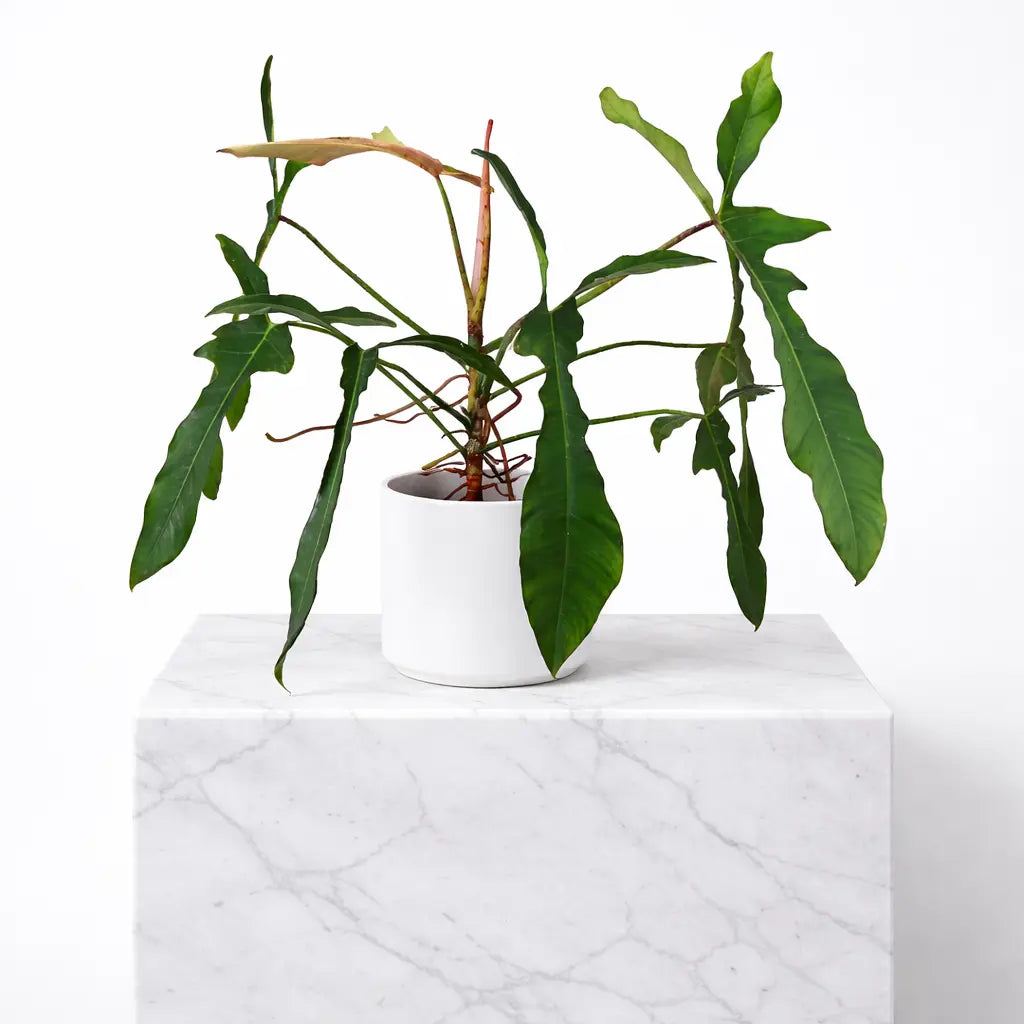
There are plants that collectors spend years tracking down, and then there is the Philodendron Longilobatum 'Lelano Miyano' — long considered one of the holy grail species of the entire genus. Named in honour of Leland Miyano, the celebrated Hawaiian naturalist, landscape designer, and tropical plant authority whose influence shaped the cultivation of rare aroids across the Pacific, this is a plant whose reputation is entirely earned by its leaves. The name longilobatum tells the story in Latin — "long-lobed" — but the reality exceeds the description. Each mature leaf is a narrow, elongated blade, deep glossy green, that can reach 90 centimetres to over a metre in length, held out on an unusually elongated petiole that stretches the leaf away from the stem with elegant, almost theatrical reach. At the base of the blade, two short but pronounced lobes flare outward like the wings of a dragonfly — which is exactly what gave this plant its collector trade name, the Great Dragonfly Philodendron. Native to Brazil's Atlantic Rainforest, it is a hemiepiphytic climber — beginning its life in the soil, then ascending into the canopy on aerial roots that proliferate visibly in high humidity, adding a dramatic textural dimension to a plant that already has no shortage of drama.
Light
▾
Bright indirect light — 4–6 hours of bright, filtered light daily is ideal. An east or west-facing window is excellent; a south-facing window with a sheer curtain works well. In bright light the leaf blades develop their maximum length and the glossy surface is at its most reflective. In lower light growth slows, the leaves remain smaller, and the characteristic elongated petioles become even more stretched as the plant reaches for light. No direct harsh afternoon sun — it scorches the glossy blade surface. A grow light at 12–14 hours is excellent for consistent, large-leaf growth year-round.
Watering
▾
Keep the soil consistently moist but never waterlogged — allow only the top 2–3 cm of the chunky mix to dry slightly before watering again. The Lelano Miyano comes from a consistently humid rainforest environment and does not want to dry out significantly between waterings. Water thoroughly with filtered or room-temperature water and empty the saucer after each watering. In winter reduce frequency slightly but maintain consistent moisture. Bottom-watering is a good option where the pot allows — it delivers moisture evenly without disturbing the aerial roots.
Humidity
▾
60–80% — high humidity is one of the most important factors for this species. A humidifier is strongly recommended. In higher humidity the aerial roots proliferate visibly, the leaves develop their maximum size, and the glossy surface takes on an exceptional depth. Keep away from cold AC drafts and heating vents. Do not mist directly onto the leaf blades — mist only the aerial roots and moss pole. India's tropical outdoor climate is naturally adequate; indoors in AC-heavy environments a humidifier makes a very visible difference to leaf quality and size.
Growing Media
▾
Chunky, well-aerated aroid mix — 40% orchid bark, 25% perlite, 20% coco coir, 15% quality potting soil or worm castings. pH 5.5–6.5. The mix must hold some moisture between waterings while draining freely — the Lelano Miyano needs more consistent moisture than desert-preference aroids but roots must never sit waterlogged. A large, robust moss pole or coco coir totem is essential — the plant actively climbs and produces its largest, most impressive leaves when provided support. Repot every 1–2 years in spring, one size up.
Feeding
▾
Balanced liquid fertilizer at half strength every 3–4 weeks during the growing season. The large leaves and active climbing habit mean the plant benefits from consistent, moderate feeding during active growth. Worm castings worked into the potting medium at repotting provide excellent sustained release. Apply to moist soil only. Flush every 3 months to clear mineral salt build-up. Stop feeding in winter. Avoid high-nitrogen formulas — they push rapid soft growth that is more susceptible to disease.
Leaves Staying Small or Short — Not Elongating
▾
Insufficient light, low humidity, or no climbing support. The Lelano Miyano produces its longest, most dramatic leaves when climbing a moss pole in good bright indirect light with humidity above 60%. Move to a brighter position, provide a large moss pole, boost humidity, and maintain consistent moisture and feeding. The leaves grow progressively larger with each successive cycle as the plant climbs — patience combined with ideal conditions is the key.
Yellow Leaves
▾
Overwatering or waterlogged soil. The Lelano Miyano wants consistent moisture — not soggy roots. Allow the top 2–3 cm to dry slightly and ensure the mix drains freely. Widespread yellowing with persistently wet soil: unpot, trim any soft roots, repot in fresh chunky mix with more bark and perlite, and adjust watering going forward.
Brown Leaf Tips or Crispy Edges
▾
Low humidity or tap water minerals — the two most common causes. Boost humidity above 60% with a humidifier, switch to filtered water, and flush the soil to clear salt build-up. Keep away from AC vents and cold drafts. Existing brown tips are permanent — trim neatly; new growth in improved conditions will be clean.
Is This a Golden Dragon? ID Confusion
▾
The Lelano Miyano and the Golden Dragon Narrow Form are frequently confused in the market. The key distinction: Lelano Miyano has a narrower, more elongated strap-shaped blade with two pronounced basal lobes and an unusually long petiole; the Golden Dragon tends to have wider, more irregularly shaped and deeply pinnate leaves. The Lelano Miyano is also typically a uniform deep green with no variegation; some Golden Dragon specimens show irregular light patterning. If in doubt, look at the petiole length and the basal lobe shape — the Lelano Miyano's elongated petiole and clean basal wings are distinctive.
Thrips, Spider Mites, or Mealybugs
▾
Inspect leaf surfaces, undersides, and aerial root junctions regularly. Thrips: silver streaking or distorted new growth — spinosad spray every 5–7 days for 4 weeks, quarantine immediately. Spider mites in dry conditions: boost humidity and treat with neem oil or insecticidal soap every 5–7 days for 3 weeks. Mealybugs: isopropyl alcohol on a cotton swab for small infestations; neem oil spray for larger ones.
Quick Plant Profile
▾
| Botanical Name | Philodendron longilobatum 'Lelano Miyano' |
| Name Meaning | longilobatum = Latin for "long-lobed" — the elongated basal lobes; 'Lelano Miyano' honours Leland Miyano, Hawaiian naturalist and tropical plant authority |
| Common Names | Lelano Miyano, Great Dragonfly Philodendron |
| Family | Araceae |
| Origin | Brazil; Atlantic Rainforest; hemiepiphytic climber — begins in soil, climbs to forest canopy |
| Collector Status | Long considered a holy grail species of the Philodendron genus |
| Leaf Shape | Long, narrow strap-shaped blade; two pronounced basal lobes ("dragonfly wings"); up to 90–120 cm at maturity |
| Petioles | Unusually elongated — the plant stretches its leaves outward on long petioles to access light |
| Aerial Roots | Proliferate in high humidity — a healthy sign; mist the roots and pole; do not remove |
| vs. Golden Dragon | Lelano Miyano: narrower strap blade, long petiole, clean basal lobes, deep uniform green; Golden Dragon: wider, more pinnately lobed, sometimes shows light patterning |
| Growth Habit | Climbing; hemiepiphytic; moss pole essential for maximum leaf size and mature form |
| Light | Bright indirect; 4–6 hours daily; no direct harsh sun; grow light excellent |
| Watering | Top 2–3 cm dry between waterings; consistently moist; never waterlogged; filtered water preferred |
| Humidity | 60–80%; humidifier strongly recommended; mist aerial roots only, not leaf blades |
| Temperature | 18°C–28°C; no cold drafts; consistent warmth essential |
| Mature Leaf Size | Up to 90–120 cm on a well-established climbing plant; grows larger with each successive growth cycle |
| Propagation | Stem cuttings with at least one node; root in sphagnum moss or water; high humidity essential |
| Ideal For | Collectors, Holy Grail Aroids, Moss Pole Displays, Statement Indoor Plants, Rare Plant Enthusiasts |
| Care Level | Intermediate — bright light, consistent moisture, high humidity, and a moss pole are the four essentials |
Shipping Notes
- Free Standard Shipping on $100+ Orders to the USA.
- Except Preorder products are shipped in 48 hours.
- Delivery to the USA:
- Standard Shipping : 3-10 business days
- If time is of the essence, please consider selecting expedited delivery for faster service.
Exchange/Return Notes
- We offer a 30-day return/exchange service after receiving.
- Final sale items are not eligible for returns or exchanges.
- To process your return/exchange, please contact us at [email protected]
- Please click here for more details>>> Return & Exchange Policy