SKU: 40337246234
parlor palm ikea

parlor palm ikea Chamaedorea elegans

Sale price$24.98 Regular price$27.75
Save 10%

Pay in installments of $6.94 with ShopPay, AfterPay and Klarna

Shipping Estimate
USA
  • USA
  • CAN

Ships within 48 hours · Estimated delivery Jul 23 - Jul 28

Promo Codes Available:

For Your Every Summer RSVP, with Code: SUMMER15

Description

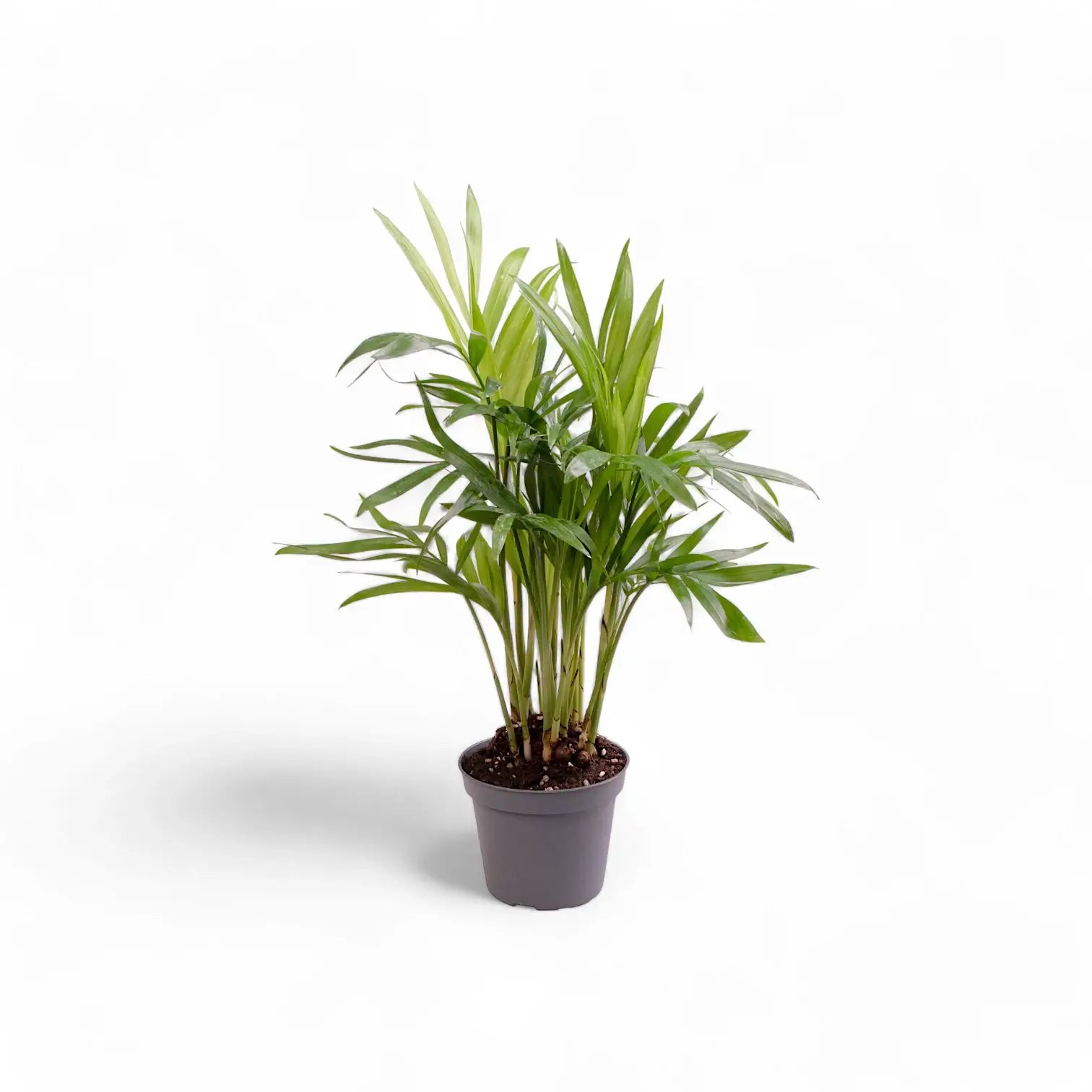
parlor palm ikea Chamaedorea elegansChamaedorea elegans Chamaedorea elegans, widely known as the Parlour Palm, is a small understory palm with fine, feathered fronds and a naturally compact habit. Slender green stems carry narrow leaflets along arching fronds, giving the plant a soft layered outline as it matures. Several young plants are often grown together in one pot to create a fuller crown from an early stage. Growth is slow and steady: older stems gain height gradually while fresh

Chamaedorea elegans

Chamaedorea elegans, widely known as the Parlour Palm, is a small understory palm with fine, feathered fronds and a naturally compact habit. Slender green stems carry narrow leaflets along arching fronds, giving the plant a soft layered outline as it matures.

Several young plants are often grown together in one pot to create a fuller crown from an early stage. Growth is slow and steady: older stems gain height gradually while fresh fronds rise from the crown. Indoors, Chamaedorea elegans stays manageable for many years when the root zone remains lightly moist, airy, and protected from cold stress.

Fine fronds and parlour palm habit

  • Small palm with fine, pinnate green fronds and a soft upright crown
  • Slow-growing container plant, often grown as several young stems together
  • Native to Mexico and Central America, where it grows as an understory palm
  • Adapts to bright indirect light and lighter shade indoors
  • Pet-friendly according to ASPCA listings for cats and dogs

Growth habit, origin and frond detail

Chamaedorea elegans belongs to the palm family, Arecaceae. Its native range extends from Mexico into Central America, where it grows below taller vegetation. Its slim stems, shade-tolerant fronds and steady response to filtered indoor light match that understory habitat.

The fronds are pinnate, with narrow leaflets arranged along a central axis. Each new frond adds height and width gradually, so the plant develops by layering fresh leaves above older ones. Mature plants may flower under good conditions, producing small yellowish inflorescences, although indoor flowering depends on plant age, light and overall growth.

Keeping Chamaedorea elegans evenly green

  • Light: Keep in bright indirect light to light shade. Direct midday sun can scorch the thin leaflets.
  • Watering: Allow the top layer to partly dry before the next thorough watering. Keep the root ball lightly moist, then let excess water drain fully.
  • Substrate: Use a loose houseplant mix with good drainage. Fine bark, coco fibre, perlite, or mineral particles help keep oxygen around the roots.
  • Temperature: Hold temperatures above 15°C for steady indoor growth. Protect from cold draughts, cold windowsills, and sudden temperature drops.
  • Humidity: Average indoor humidity is usually tolerated, but dry air can increase brown leaf tips. A humidifier or grouped plants can help during heated months.
  • Feeding: A diluted balanced fertiliser every 4–6 weeks in spring and summer is enough for this slow palm.
  • Repotting: Move up only once the pot is well filled with roots. Move up by one pot size and keep the stem bases at the same level.
  • Pruning: Remove fully dry lower fronds at the base. Keep cuts away from the central growing point of each active stem.
  • Warm-season outdoor placement: A sheltered, shaded position can suit it during warm weather above 15°C. Acclimate gradually and bring it indoors before cool nights return.
  • Propagation: Commercial propagation is mainly by seed. Multi-planted pots can be separated when stems divide cleanly with their own roots.

Brown tips, yellow fronds and mite checks

  • Brown leaflet tips: Often linked to dry air, irregular watering, salts in the substrate, or cold draughts. Check the watering pattern and flush the pot occasionally with clean water.
  • Yellowing lower fronds: A single ageing frond is normal. Several yellow fronds at once point to waterlogged roots, cold substrate, or depleted conditions.
  • Pale, stretched growth: Very low usable light produces weaker, looser fronds. Move the plant closer to a bright window with filtered light.
  • Fine webbing or speckled leaves: Check for spider mites, especially in warm dry air. Rinse foliage and treat early before damage spreads.

Cane clump and pruning notes

Young Chamaedorea elegans plants are often planted in groups for a fuller pot. In a shared container, stronger stems may gain more light and space while smaller stems slow down. This is a normal part of how grouped palms develop over time.

Pet safety and handling

ASPCA lists Chamaedorea elegans as non-toxic to cats and dogs. Chewed fronds can still upset sensitive stomachs, so trim damaged growth and discourage pets from grazing.

Name origin and species background

The accepted botanical name is Chamaedorea elegans Mart., in the family Arecaceae. The genus name Chamaedorea is derived from Greek elements commonly interpreted as “ground” and “gift”, referring to the low stature of many species in the genus. The species epithet elegans means elegant, matching the plant’s fine fronds and restrained growth habit.

Chamaedorea elegans shows soft feathered fronds, slender green stems and a compact palm profile.

Shipping Notes
  • Free Standard Shipping on $100+ Orders to the USA.
  • Except Preorder products are shipped in 48 hours.
  • Delivery to the USA:
  1. Standard Shipping : 3-10 business days
  • If time is of the essence, please consider selecting expedited delivery for faster service.
Exchange/Return Notes
  • We offer a 30-day return/exchange service after receiving.
  • Final sale items are not eligible for returns or exchanges.
  • To process your return/exchange, please contact us at [email protected]
  • Please click here for more details>>> Return & Exchange Policy
SKU: 40337246234

Discover Niche Categories That Outsell parlor palm ikea

Top-Converting Item to Boost Your Average Order

4.9 ★★★★★
Based on 11 reviews
Sort
Highest Rating
Newest First
Oldest First
Product Reviews
L
Verified Purchase
Lovechunk
Fort Morgan, US
★★★★★ 5
The Best Gift Ever!
Denomination: 0, Design Name: You're the best. (Animated)
Easy Peasy! Who doesn't like to get an Amazon eGift Card!
WAS THIS REVIEW HELPFUL?YesReportShare
Reviewed in the United States on May 17, 2026
T
Verified Purchase
Tim M.
Cuba, US
★★★★★ 5
Great gift idea!
Denomination: 0, Design Name: You're the best. (Animated)
Always a great gift for anyone and easy to purchase and redeem.
WAS THIS REVIEW HELPFUL?YesReportShare
Reviewed in the United States on May 12, 2026
M
Verified Purchase
Madison
Alexandria, US
★★★★★ 5
Quick delivery, Naturally a great and easy gift.
Denomination: 0, Design Name: You're the best. (Animated)
Always a great way to say thank you.
WAS THIS REVIEW HELPFUL?YesReportShare
Reviewed in the United States on June 6, 2026
D
Verified Purchase
Daniel Myers
Charlottesville, US
★★★★★ 5
A Foundling's Felicity
This book or novel or whatever you may deem fit to call it has so many points in its favour that it's difficult to know where to begin. I think a rundown of a few of the myriad of characters that delight me personally might do for starters: Tom Jones - A young fellow with many "imperfections" if so they may be called, but a robust fellow with a "good heart." Prudence and what is commonly called virtue are not his strong suit - But may I remind the reader that virtue comes from the Latin word for "manliness"- Tom is certainly possessed of the word's etymological origins, if not of its modern usage (particularly in amorous matters)--And a good thing too, or we should have no story here to delight us! Squire Western- Another rambunctious character, who, for me, typifies all that is Eighteenth Century England. Every time he appeared in this book, whether it was to comment on wenching, wine, or riding to hounds a smirk would immediately cross my face followed invariably by chuckling by the end of the chapter. Henry Fielding - The author plays as much a part of the book as any of the characters with many prologues and prefaces and etc. For these, and for much of the rest of the book, I might add, the reader who has not had four years of Latin inculcated into him at an English boarding school would do well to buy the Oxford edition, which fully explains all the learned quotes - Also, as one who was thus inculcated but is inclined to laziness, the Oxford edition's notes prove extremely helpful also. Fielding also gives us a lively picture of the literary life of his time, which the Oxford footnotes do a deft job of explaining- In short, buy the Oxford edition. This review can not be comprehensive. There are simply too many characters to even make a go at encompassing them all. I'm merely describing some of the, to me, more delightful ones. The book as a whole is simply a joy to read, in its comic descriptions of all who will deign to admit that they are human, and of some priggish sorts who will not so deign. I can put it no better than Fielding Himself at the beginning of Book XV: "There are a set of religious, or rather moral writers, who teach that virtue is the certain road to happiness, and vice to misery, in this world. A very wholesome and comfortable doctrine, and to which we have but one objection, namely, that is not true." In short, this is a delightful ramble of a book which, while entertaining the reader not too attached to Sunday School, sheds light on how unvirtuous the virtuous can be, and how kind and good-natured the roguish can be as well as giving us as good a history lesson on the state of affairs in Eighteenth century England (with attention given to the Jacobite Rebellion etc.) as many a "proper" history does. Who, I ask myself, would not delight in this book? ---Well...for the priggish, there's always Jane Austen.
WAS THIS REVIEW HELPFUL?YesReportShare
Reviewed in the United States on January 24, 2007
A
Verified Purchase
Alexander Kobulnicky
Draper, US
★★★★★ 4
The Sidekick in Early-Modern Literature.
Tom Jones is probably the most influential novel in English history, pioneering elements like complex characterization, social criticism and authorial interjection. But you already knew that. What you want to know is, is this a good book for us in the 21st century. And here, it's not so clear. The dialogue is pretty brisk, and some of the exchanges (the stereotypical Whig Mrs. Western arguing with her Jacobite brother is a particular treat) are actually funny. The latter part of the novel evolves into a farce, with a dozen characters engaged in scheming against one another, while Tom and Sophia helplessly go along. Farce works better in drama, where it has a faster pace, but it's always a welcome mode of comedy. You don't see enough farces. Some of the characters are evocative (why do I picture Blifil as looking like Ted Cruz?) but some are not: Dowling is just a lawyer, and Mrs. Miller is a good woman, like thousands who have come since, and that's all there is to it. It's not as if every character needs to, or can, be a fully realized person, but the parts of the novel spent with these human plot devices do feel mechanical. But Mr. Partridge, Tom's traveling companion, is in a different category altogether, and he just poisons the parts of the novel that he features in (chiefly the middle third). Eighteenth Century literature has a depressing reliance on goofy loose-lipped sidekicks: Mr. Partridge, Hugh Strap, Humphrey Clinker, Andrew Fairservice, Friday. Sometimes they're servants, but sometimes they're just stupid friends. Part of this must be practical: It's difficult to follow a wandering hero (and why are the heroes of these novels always wandering? But that's a different question altogether) without giving him a friend to talk to. Maybe early novelists had a hard time sketching characters who didn't have a way to discuss the ongoing action. But mostly, I think this is the bad influence of Don Quixote, which was becoming increasingly popular in England during this period. Sancho Panza is OK, and he's certainly the funniest element of that leaden tome. But Mr. Partridge *is* Sancho Panza, cowardice, superstition and all, and one Sancho Panza was more than enough. You know? There's a limited number of things that a silly, selfless, lazy pal can do, and it's hard to read about the same old doofus, yet again.
WAS THIS REVIEW HELPFUL?YesReportShare
Reviewed in the United States on April 28, 2016

recommand products