SKU: 41197257151
bulk flower seed

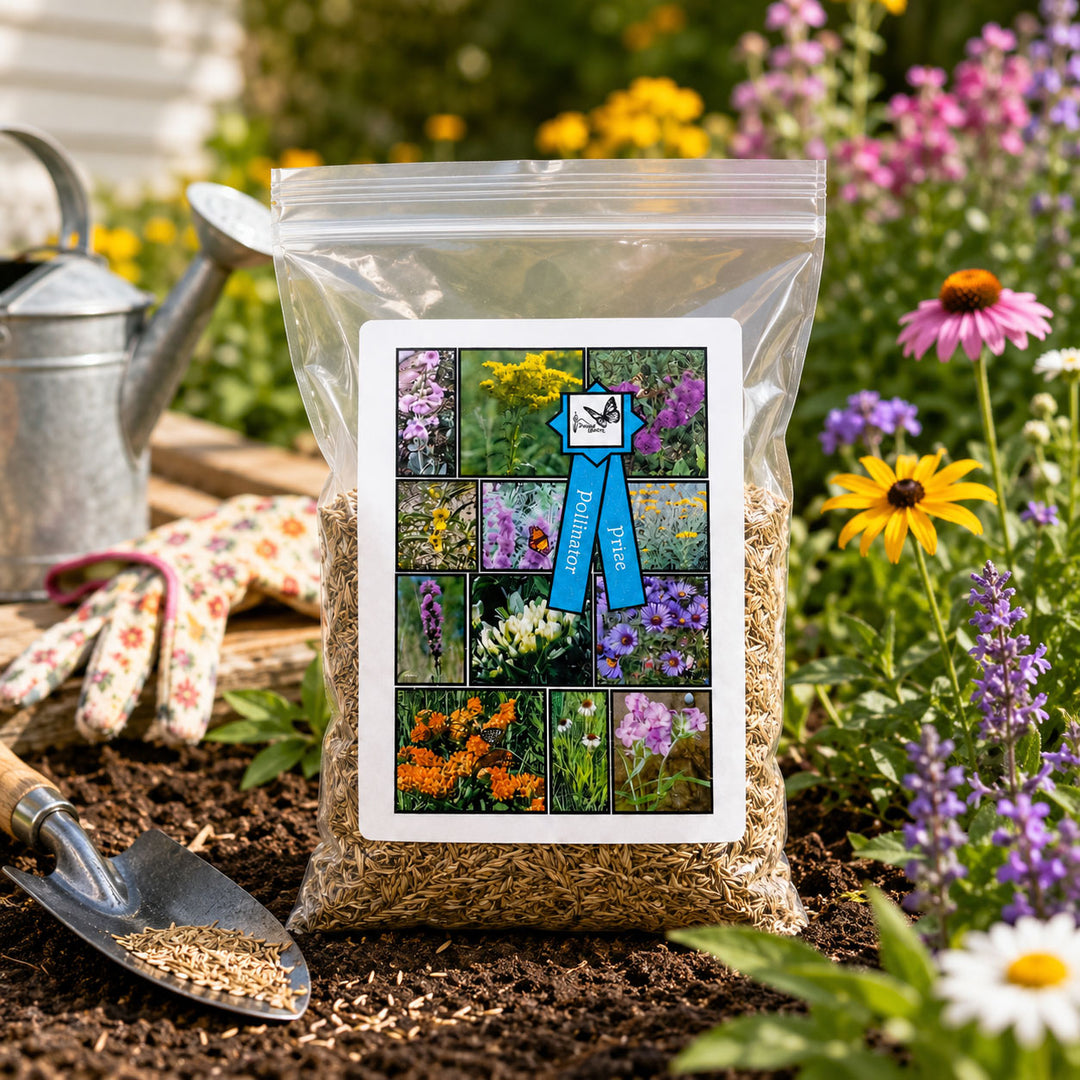
bulk flower seed Pollinator Prize Native Nebraska Flower Seed Mix | 2.03 oz

Sale price$26.56 Regular price$29.51
Save 10%

Pay in installments of $7.38 with ShopPay, AfterPay and Klarna

Shipping Estimate
USA
  • USA
  • CAN

Ships within 48 hours · Estimated delivery Sep 4 - Sep 9

Promo Codes Available:

For Your Every Summer RSVP, with Code: SUMMER15

Description

bulk flower seed Pollinator Prize Native Nebraska Flower Seed Mix | 2.03 ozAll seeds are packaged with born on dates based on the year of purchase. Product images are for reference only and may not reflect the exact packaging, label details, or born on date of the item received. The Pollinator Prize Seed Mix is one of our most diverse native wildflower blends, featuring more than 65 species selected for their exceptional value to pollinating insects. Developed using species recognized by both the Natural Resources

All seeds are packaged with born-on dates based on the year of purchase. Product images are for reference only and may not reflect the exact packaging, label details, or born-on date of the item received.

The Pollinator Prize Seed Mix is one of our most diverse native wildflower blends, featuring more than 65 species selected for their exceptional value to pollinating insects. Developed using species recognized by both the Natural Resources Conservation Service (NRCS) and the Xerces Society, this mix contains plants rated as having high or very high pollinator value.

With blooms spanning from early spring through late fall, this mix provides a continuous source of nectar and pollen throughout the growing season. The blend includes a wide variety of native wildflowers, including several uncommon species, creating a vibrant and ecologically rich habitat for bees, butterflies, moths, and other beneficial pollinators.

Some species will germinate and bloom during the first growing season, while others may require additional time to establish. Patience is essential when creating a native pollinator planting, with optimum establishment typically occurring within two to three years.

This mix contains approximately 160 seeds per square foot, providing twice the recommended broadcast seeding rate for quicker and denser establishment. Minimum seeding rates are 40 seeds per square foot when drilling and 80 seeds per square foot when broadcasting.

Key Features:

  • Contains 65+ native species of high or very high pollinator value
  • Based on NRCS and Xerces Society pollinator plant recommendations
  • Bloom period from early spring through late fall
  • Includes a greater number of uncommon native species
  • Supports a wide diversity of pollinators and beneficial insects
  • Optimum establishment typically occurs within 2–3 years

Coverage: Up to 500 Square Feet
Seeding Density: Approximately 160 Seeds per Square Foot

Disclaimer: While every effort is made to include the species listed, substitutions of comparable native species may be necessary due to seed availability.

Common Name Scientific Name % by Weight
sideoats grama Bouteloua curtipendula 24.92
showy partridge-pea Chamaecrista fasciculata 9.97
blue grama Bouteloua gracilis 6.23
Virginia wild-rye Elymus virginicus 6.23
easter white prairie-clover Dalea candida 4.98
Canada milk-vetch Astragalus canadensis 3.74
purple prairie-clover Dalea purpurea 3.74
tall dropseed Sporobolus compositus 2.49
Slimflower scurfpea Pediomelum tenuifolium 2.49
gray-prairie-coneflower Ratibida pinnata 2.49
pale purple coneflower Echinacea pallida 1.99
hoary vervain Verbena stricta 1.50
plains coreopsis Coreopsis tinctoria 1.25
wild licorice Glycyrrhiza lepidota 1.25
wild prairie rose Rosa arkansana 1.25
narrow-leaf coneflower Echinacea angustifolia 1.06
purple poppymallow Callirhoe involucrata 1.00
New Jersey tea Ceanothus americanus 1.00
redroot New Jersey tea Ceanothus herbaceus 1.00
sawtooth sunflower Helianthus grosseserratus 1.00
sensitive brier Mimosa nuttallii 1.00
cobaea penstemon Penstemon cobaea 1.00
pitcher sage Salvia azurea 1.00
rosinweed Silphium integrifolium 1.00
western ironweed Vernonia baldwinii 1.00
tall boneset Eupatorium altissimum 0.87
Lemon beebalm Monarda citriodora 0.78
Sullivant's milkweed Asclepias sullivantii 0.75
butterfly milkweed Asclepias tuberosa 0.75
Canada tick-clover Desmodium canadense 0.75
rough gayfeather Liatris aspera 0.75
wild-bergamot Monarda fistulosa 0.75
long-beak sedge Carex sprengelii 0.62
purple lovegrass Eragrostis spectabilis 0.62
Junegrass Koeleria macrantha 0.62
spider milkweed Asclepias viridis 0.62
thick-spike gayfeather Liatris pycnostachya 0.62
false boneset Brickellia eupatorioides 0.50
Illinois tick-clover Desmodium illinoense 0.50
dotted gayfeather Liatris punctata 0.50
shell-leaf penstemon Penstemon grandiflorus 0.50
tube penstemon Penstemon tubaeflorus 0.50
prairie phlox Phlox pilosa 0.50
American germander Teucrium canadense 0.50
western spiderwort Tradescantia bracteata 0.37
Missouri goldenrod Solidago missouriensis 0.31
candle anemone Anemone cylindrica 0.25
Joe Pye weed Eutrochium purpureum 0.25
Virginia mountain mint Pycnanthemum virginianum 0.25
New England aster Symphyotrichum novae-angliae 0.25
grey goldenrod Solidago nemoralis 0.20
showy-wand goldenrod Solidago speciosa 0.20
bushy seedbox Ludwigia alternifolia 0.15
meadow anemone Anemone canadensis 0.12
ground-plum Astragalus crassicarpus 0.12
tall cinquefoil Drymocallis arguta 0.12
Curly cup gumweed Grindelia squarrosa 0.12
everlasting Pseudognaphalium obtusifolium 0.12
heath aster Symphyotrichum ericoides 0.12
silky aster Symphyotrichum sericeum 0.12
plains wild indigo Baptisia leucophaea 0.10
Culver's root Veronicastrum virginicum 0.10
golden alexander Zizia aurea 0.10
plains evening primrose Oenothera serrulatus 0.06


Prairie Legacy dedicated to preserving and restoring native plant communities through exceptional botanical and environmental consulting services. Owner Kay Kottas has provided botanical education for more than 20 years, leaving a lasting legacy through university teaching, research projects, and professional collaboration with public and private agencies. Through Prairie Legacy Inc., Kay shares her deep expertise in native plants with clients and communities alike. Based in Western, Nebraska.

Shipping Notes
  • Free Standard Shipping on $100+ Orders to the USA.
  • Except Preorder products are shipped in 48 hours.
  • Delivery to the USA:
  1. Standard Shipping : 3-10 business days
  • If time is of the essence, please consider selecting expedited delivery for faster service.
Exchange/Return Notes
  • We offer a 30-day return/exchange service after receiving.
  • Final sale items are not eligible for returns or exchanges.
  • To process your return/exchange, please contact us at [email protected]
  • Please click here for more details>>> Return & Exchange Policy
SKU: 41197257151

Discover Niche Categories That Outsell bulk flower seed

Top-Converting Item to Boost Your Average Order

4.6 ★★★★★
Based on 9 reviews
Sort
Highest Rating
Newest First
Oldest First
Product Reviews
J
Verified Purchase
JetsYankees1971
Battle Creek, US
★★★★★ 5
Really enjoyed this book and found it helpful
Format: Kindle
The first night after starting this diet I found myself eating a juicy half pound hamburger without the bread, a sweet potato with butter, a small salad with fresh lemons squeezed on top and some sparkling water. Life could be a lot worse!!!! This book was written by 2 Harvard educated scientists. It is thoroughly researched and made a ton of sense to me. I've dieted a lot in my life. I always lost weight and always gained it back. That's a pretty frustrating way to live. The weight gain and loss roller coaster is awful. Over the last 20 years I've tried Atkins, Paleo Diet, Zone Diet, Weight Watchers, Nutrisystem, South Beach Diet, Mediterranean Diet, Blood type Diet etc etc etc....They all work and they all have flaws which ultimately caused me to stray from them for one reason or another. As an example Nutrisystem is convenient but I don't want to eat that food forever. Atkins and Paleo cut out major food groups PERMANENTLY! They are way too extreme for me. Zone Diet was too much work. Weight watchers with the points was too time consuming. South Beach Diet was a nice fad but I got tired of that also. Anyway, without dragging on too much longer I want to say that the best part of the Perfect Health Diet is its SIMPLICITY! This way of eating doesn't require much thought, planning, or effort. The authors give you a list of foods to eat without asking you to eliminate carbs, fatty foods, meat or dairy. I was taught what carbs to eat and avoid and in what portions. I learned what fatty foods to eat and how often to eat them. I learned about about protein and was taught the right amounts of protein to eat. Most importantly i never feel hungry on the Perfect Health Diet! This diet WILL reduce your food cravings. You are fed well. You eat a lot of fatty foods and still lose weight. You can have dairy in the form of yogurt. You can have starches. You eat fruits and veggies along with lots of eggs, meat, and some fish. Basically you feel healthy because your body gets everything it NEEDS to make you feel GOOD! This diet is the only one I've tried that eliminates food cravings and hunger. I'd give this book 10 stars if I could
WAS THIS REVIEW HELPFUL?YesReportShare
Reviewed in the United States on June 8, 2015
C
Verified Purchase
CelticPhoenix
Chelsea, US
★★★★★ 5
The Best, Readable Single-Source Book On Diet and Health
Format: Hardcover
As other reviewers have said, this is really the best "Paleo 2.0 book" available. For those who haven't yet jumped on the bandwagon, eating like our ancient Paleolithic (and Mesolithic) ancestors will help us avoid many of our chronic diseases and feel good doing it! And yet, the Jaminets also take the approach that a straight meat and veggies diet is simply too low in carbs for a properly functioning immune system and proper thyroid level (carbs are required for basic immune functions like phagocytic attack and mucus secretion, as well as neurological and immune energy which feeds back to thyroid output). They like carb sources found in the paleolithic and mesolithic cultures such as tubers, fruit, dairy (for some) and low-in-antinutrient white rice. Now, to the practical: on this diet my family and I have seen an increased level of energy and overall spunk (skin shine, sleep quality, etc.) compared to when we were on, in sequence, a paleo Zone type of diet (Barry Sears' Zone diet using paleo foodstuffs), and a lower carb Mark Sisson-style primal diet. Basically, this has more saturated fat than the former and more carbs than the latter. We are as lean as we were, but feeling better and without any problems, whatsoever. For those who have chronic infections (read: "lingering health issues"), this book also explains how you can fine-tune your diet and supplementation to fight these infections, whether they are viral, fungal, or bacterial (a different approach for each). The same for athletes. My only criticism is that they only give 1 sentence to the classes of diseases which fare better avoiding starch and, instead, getting their carbs from fruit and honey (such as Ankylosing Spondylitis, Psoriatic Spondylitis, and other within the class; as well as some other diseases). While this diet/lifestyle is very easy to combine with a GAPS approach, with carbs from simply sugars and not starch, this goes unsaid and the authors tend to prefer starches for most. In short, this is the best book out there for a well-researched, unbiased view on diet and how it impacts our lives and health. I actually recommend for those who really care to read their blog, and then go buy the book for the relatives who probably won't read the blog on their own.
WAS THIS REVIEW HELPFUL?YesReportShare
Reviewed in the United States on January 17, 2013
V
Verified Purchase
V. Toniolo
Massapequa, US
★★★★★ 3
One of the better food, diet, and health books available, but with significant drawbacks
Format: Kindle
Paul and Shou-Ching Jaminet present the most cogent argument in favor of ancestral-style eating that I have ever read. In fact, I never really understood the logic behind Paleo until I read Perfect Health Diet. I applaud their scientific rigor and willingness to challenge dietary dogma, Paleo or otherwise. There is no question that removing all grains and legumes from one's diet is incredibly effective for people with autoimmune diseases and some other chronic, intractable health conditions. But when taking the evolutionary perspective on human diets it's also important to recognize that many cultures have thrived on grains and legumes for millennia, and humans have evolved some clever ways to extract nutrients from foods that would otherwise be toxic through the use of prolonged soaking, sprouting, and fermentation, all techniques that are very effective at reducing seed toxicity. I think that properly prepared grains and legumes can be a nutritious part of our diets, at least for those of us who do not suffer from autoimmunity. Stephen Guyenet has written excellent posts on legumes (wholehealthsource.blogspot.com/2013/11/beans-lentils-and-paleo-diet.html) and grains (wholehealthsource.blogspot.com/search/label/lectins). I also wish that the Jaminets had delved a little bit deeper into the subject of fatty fish from a sustainability standpoint. They recommend that we eat fatty fish, but make no mention of seafood sustainability and the importance of avoiding farmed fish, especially farmed (aka "Atlantic") salmon. Farmed fish are fed soy, corn, and pellets made of smaller fatty fish like anchovies and sardines. Entire small fish fisheries off the coast of Western South America are being destroyed in order to feed our hunger for farmed salmon, while we have plenty of small fatty fish we can eat (but choose not to) here on the west coast of North America (herring, sardines, anchovies, etc.). I bet that the fat profile (3:6 ratio) of farmed salmon is not nearly as good as that of wild salmon and smaller cold water fish. That said, I highly respect and follow their writing and will continue to look forward to their excellent work.
WAS THIS REVIEW HELPFUL?YesReportShare
Reviewed in the United States on January 28, 2014
J
Verified Purchase
Jean
Omaha, US
★★★★★ 5
Understanding and Making the Best of Our Emotions
I am honored to write a review on this book, as I am heartfully thankful for how my mind was opened to a better consciousness of emotions. It was amazing to realize that our emotions are not an innate part of us, but have been established from interactions with others, especially early in our life by learning from our parents and siblings. Learning emotions is a part of our thinking process. With this knowledge, my approach to emotions has fundamentally changed. Emotions are how we react and how we perceive truth. Emotions become a part of who we are and how others perceive us. The book enlightened my perception and gave me a whole new way of viewing myself and how my emotions may not have matured. With this understanding, the book gives us advice on how to learn to improve (mature) our emotions. First by knowing and followed by determination to learn. The presentation of methods to make improvements with planning and accountability to oneself gives hope and is reassuring. We can learn to mature our emotions. When we have achieved our goals of self-emotional maturity, the book further has methods to share with others (especially family) to bring us together in a positive open way. This book has been a real eye-opening to me. I recommend the reading of this book to spread this awareness. A positive way forward with means to achieve a better life. The book is very thorough and provides documented ways to do the planning and accountability to accomplish goals. Always thinking positively. My thanks to the Author.
WAS THIS REVIEW HELPFUL?YesReportShare
Reviewed in the United States on September 30, 2025
C
Verified Purchase
chumpo
Lowell, US
★★★★★ 5
Parenting is not easy, but this book certainly helps to do it right!
I am glad I read ths book. Parenting is not easy. There is no cookbook for parenting. Each child is unique. What I enjoyed about the book is that it is very practical. It describes real scenarios about child paret interactions and lays out the problems and solutions to address them. There seems to be a fair amount of incorporation of approaches used in twelve step programs which stress taking personal inventory and analyzing my role in each situation. Seeking help from different sources is key, therapists, literature. I wish this book had come out earlier. I am definitely going to use the steps suggested in the book.
WAS THIS REVIEW HELPFUL?YesReportShare
Reviewed in the United States on September 24, 2025

recommand products