SKU: 43403476413
buying lavender plants

buying lavender plants Buy French Lavender Phoenix, AZ | Lavandula stoechas

Sale price$22.45 Regular price$24.94
Save 10%

Pay in installments of $6.24 with ShopPay, AfterPay and Klarna

Shipping Estimate
USA
  • USA
  • CAN

Ships within 48 hours · Estimated delivery Sep 4 - Sep 9

Promo Codes Available:

For Your Every Summer RSVP, with Code: SUMMER15

Description

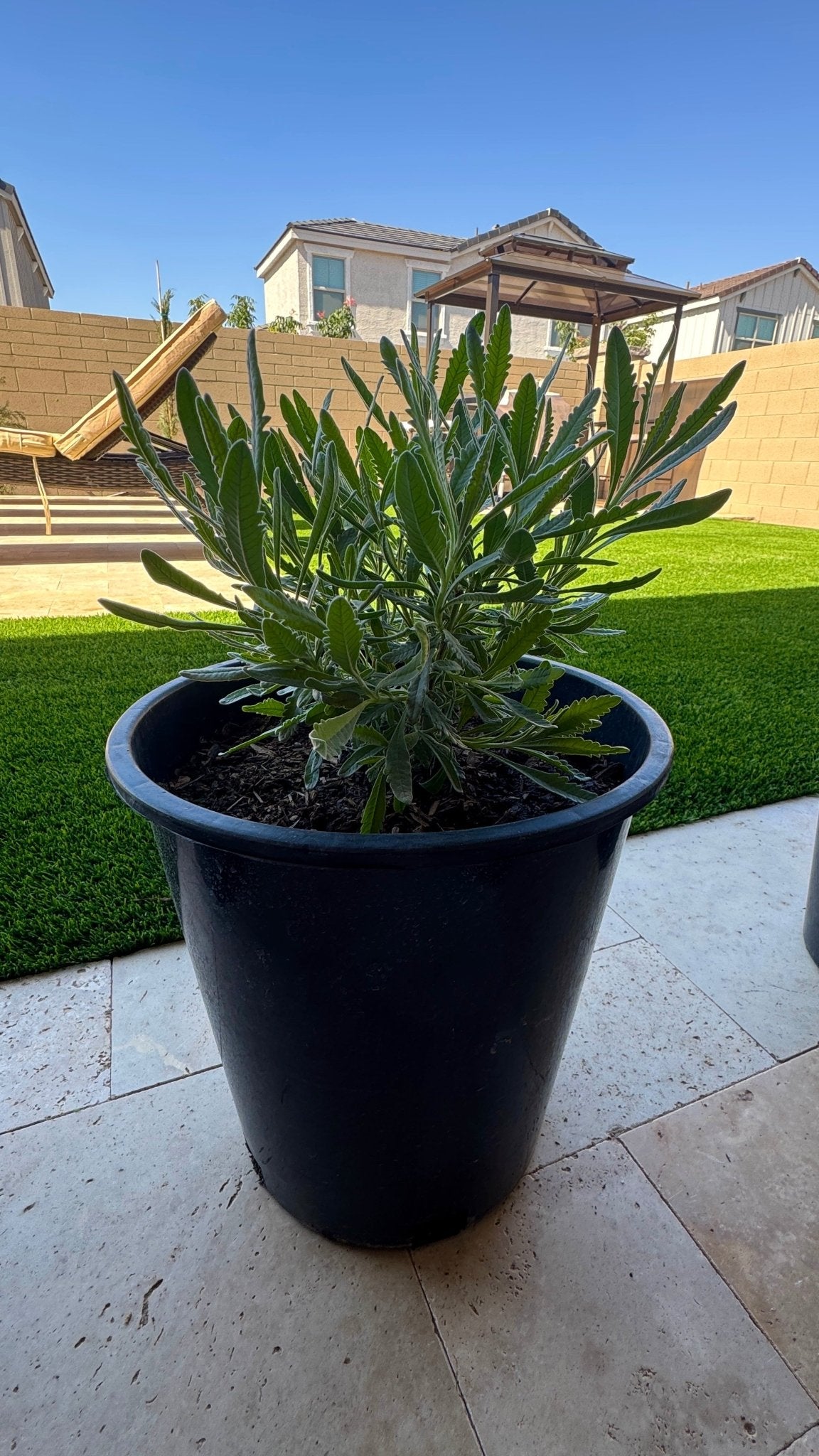
buying lavender plants Buy French Lavender Phoenix, AZ | Lavandula stoechasFragrant French Lavender for Phoenix & Scottsdale Gardens Lavandula stoechas, commonly known as French Lavender, is one of the most distinctive and fragrant perennials you can grow in the Phoenix Valley. Famous for its unique "rabbit ear" flower bracts that crown each bloom spike, French Lavender delivers waves of purple flowers from early spring through late fall. This compact evergreen perennial grows just 13 feet tall, thrives in full Arizona sun,

Fragrant French Lavender for Phoenix & Scottsdale Gardens

Lavandula stoechas, commonly known as French Lavender, is one of the most distinctive and fragrant perennials you can grow in the Phoenix Valley. Famous for its unique "rabbit ear" flower bracts that crown each bloom spike, French Lavender delivers waves of purple flowers from early spring through late fall. This compact evergreen perennial grows just 1–3 feet tall, thrives in full Arizona sun, and laughs at drought once established. Whether you're lining a walkway in Scottsdale, building a fragrant herb garden in Chandler, or filling a sunny border in Mesa — French Lavender adds color, scent, and Mediterranean charm with minimal care.

French Lavender Plant Details

Attribute Detail
Scientific Name Lavandula stoechas
Common Names French Lavender, Spanish Lavender, Butterfly Lavender
Mature Height 1–3 feet
Mature Width 1–3 feet
Growth Rate Moderate — reaches full size in 1–2 seasons in Phoenix
Sun Full sun (6+ hrs). Handles reflected heat from walls.
Water Low once established. Highly drought-tolerant.
USDA Zones 7–10 (Phoenix is Zone 9b–10a)
Soil Well-draining. Adapts to Arizona caliche soils. Avoid heavy clay.
Foliage Evergreen — silvery-green aromatic foliage year-round
Bloom Season Spring through fall (March–November in Phoenix)
Bloom Color Purple with distinctive "rabbit ear" bracts
Wildlife Attracts bees and butterflies; deer-resistant

French Lavender Uses in Phoenix Landscapes

Fragrant Walkway & Border Planting

French Lavender is perfect for lining walkways, driveways, and garden paths throughout the Phoenix Valley. Space plants 18–24 inches apart for a continuous aromatic border that releases fragrance every time someone brushes past. The compact 1–3 foot size keeps edges neat without constant pruning, and the silvery-green foliage looks elegant even between bloom cycles.

Pollinator & Butterfly Gardens

The showy purple blooms are magnets for bees, butterflies, and other pollinators. Pair French Lavender with Salvia, Gaura, and Desert Marigold for a drought-tolerant pollinator garden in Gilbert or Tempe that buzzes with activity from spring through fall. The distinctive "rabbit ear" bracts add visual interest that sets it apart from other lavender varieties.

Mediterranean & Herb Gardens

Combine French Lavender with rosemary, thyme, and sage for an aromatic herb garden that thrives in Phoenix heat. All these Mediterranean plants share the same love of full sun, fast-draining soil, and minimal water — making them ideal companions in Peoria and Glendale landscapes. French Lavender's flowers can be harvested for sachets, arrangements, and crafts.

Best Time to Plant French Lavender in Phoenix

Fall (October–November) is the ideal planting window for French Lavender in Phoenix. Warm soil promotes fast root establishment while cooler air reduces transplant stress. Your plant gets 6–8 months of root development before its first summer. Spring (February–March) is also an excellent window — just make sure to stay on top of watering as temperatures climb. Avoid planting in summer if possible.

How to Plant French Lavender

  1. Dig wide, not deep — 2–3x the root ball width, same depth
  2. Check for caliche — break through any hardpan layer for drainage. Lavender absolutely requires fast-draining soil.
  3. Backfill with native soil — add perlite or coarse sand if your soil holds water. Skip heavy compost.
  4. Spacing — 18–24 inches apart for a hedge or border; 2–3 feet for individual specimens
  5. Water basin — build a shallow ring to direct water to roots during establishment
  6. Mulch — 1–2 inches of gravel mulch (not bark). Gravel reflects heat and keeps the crown dry, which lavender prefers.

Watering French Lavender in Phoenix

First Year Watering Schedule

  • Weeks 1–2: Every 1–2 days, deep and slow (15–20 min)
  • Month 1–2: Every 3–4 days
  • Month 3–6: Every 7–10 days (5–7 days in peak summer)
  • After Year 1: Every 10–14 days summer; every 3–4 weeks winter

Drip Irrigation

Place 1 emitter 6–12 inches from the base, delivering 1 GPH. Lavender is extremely sensitive to overwatering — err on the dry side. Established plants in Phoenix need very little supplemental water. If leaves yellow or the plant looks leggy, you're likely watering too much.

How fast does French Lavender grow in Phoenix?
Moderate growth — most plants reach their full 1–3 foot size within 1–2 growing seasons. Regular light pruning after bloom cycles encourages bushier, denser growth and more flowers.

Is French Lavender drought tolerant?
Very much so. Once established (after the first year), French Lavender thrives on minimal water in Phoenix. Overwatering is actually the most common cause of lavender failure in Arizona — keep it dry and it will reward you with years of blooms.

What's the difference between French Lavender and English Lavender?
French Lavender (Lavandula stoechas) has distinctive "rabbit ear" bracts on top of each flower spike and tends to bloom longer in Phoenix heat. English Lavender (Lavandula angustifolia) has a more classic lavender wand shape and stronger fragrance but can struggle in extreme Phoenix summer heat. French Lavender is generally the better choice for Valley gardens.

Does French Lavender attract pests?
No — it's naturally deer-resistant and rabbit-resistant. The strong essential oils actually repel most common garden pests. It's one of the most trouble-free perennials you can plant in Phoenix.

You May Also Like

  • Fernleaf Lavender — unique cut-leaf variety with blue-violet flower spikes
  • Ghostly Princess Spanish Lavender — stunning silver-white lavender cultivar
  • Russian Sage — tall, airy purple blooms that pair beautifully with lavender
  • Bush Germander — compact purple-flowering Mediterranean shrub for borders
  • Gaura White — delicate white blooms that complement lavender plantings

How Many French Lavender Do I Need?

French Lavender matures at 1 to 3 feet wide, so space plants 18 to 24 inches apart for a fragrant border, or 2 to 3 feet for individual specimens. Use this guide for a continuous border or mass at 20 inch spacing:

Planting Run / Area Plants Needed (at 20 in spacing)
10 ft border 6 plants
20 ft border 12 plants
25 sq ft bed 9 to 11 plants
50 sq ft bed 18 to 22 plants

Plant along a path edge so foot traffic brushes the foliage and releases the fragrance.

French Lavender Season-by-Season in Phoenix

  • Spring (Feb to Apr): Heavy flush of purple "rabbit ear" blooms and the best second planting window. A light shear after the first flush keeps it dense.
  • Summer (May to Sep): Handles reflected heat and keeps blooming on little water. The monsoon's humidity is the main risk: keep the crown dry and the soil draining fast to prevent rot.
  • Fall (Oct to Nov): Prime planting season and a strong late bloom as nights cool.
  • Winter (Dec to Jan): Stays evergreen and silvery. Cold-hardy through Valley winters; only a hard freeze well below 10°F would damage it.

At a Glance

✔ Pollinator-Friendly   ✔ Heat-Loving (Reflected-Heat Tolerant)   ✔ Drought-Tolerant   ✔ Evergreen   ✔ Low-Maintenance   ✔ Deer & Rabbit-Resistant   ✔ Cold-Hardy to 10°F

Plant It With

  • Fernleaf Lavender: a heat-tough cut-leaf lavender that extends the purple bloom season.
  • Ghostly Princess Spanish Lavender: a silver-white cultivar that layers beautifully in the same border.
  • Bush Germander: an evergreen Mediterranean shrub with purple flowers and silver foliage to anchor the planting.
  • Gaura White: airy white butterfly flowers that soften the structured lavender mounds.

Is French Lavender Right for Your Yard?

French Lavender thrives in full sun and reflected heat with fast-draining, lean soil. Break through caliche and top with gravel mulch so the crown stays dry. It is ideal for fragrant walkway borders, pollinator beds, and Mediterranean or herb gardens. It is not a fit for shady spots or heavy clay that holds water, where overwatering and poor drainage will rot the roots, the most common cause of lavender failure in Arizona.

Shipping Notes
  • Free Standard Shipping on $100+ Orders to the USA.
  • Except Preorder products are shipped in 48 hours.
  • Delivery to the USA:
  1. Standard Shipping : 3-10 business days
  • If time is of the essence, please consider selecting expedited delivery for faster service.
Exchange/Return Notes
  • We offer a 30-day return/exchange service after receiving.
  • Final sale items are not eligible for returns or exchanges.
  • To process your return/exchange, please contact us at [email protected]
  • Please click here for more details>>> Return & Exchange Policy
SKU: 43403476413

Discover Niche Categories That Outsell buying lavender plants

Top-Converting Item to Boost Your Average Order

4.8 ★★★★★
Based on 20 reviews
Sort
Highest Rating
Newest First
Oldest First
Product Reviews
G
Verified Purchase
Glitter
West Palm Beach, US
★★★★★ 5
Very nice! Glad I ordered it ☺️
It's a very nice product. I'm glad I ordered it
WAS THIS REVIEW HELPFUL?YesReportShare
Reviewed in the United States on March 10, 2026
C
Verified Purchase
Curt Blattman
Fort Morgan, US
★★★★★ 5
A simple book with a powerful message!
Format: Paperback
A simple book with a powerful message! If you are looking for a laymen’s guide on the arguments for the resurrection of Jesus, from every conceivable angle, then this book is for you. Habermas and Licona are two Bible scholars that have joined forces to provide both new and mature believer with everything they need to know to share their faith and knowledge on the resurrection of Jesus. One of the great strengths of the book is that right from the start Habermas and Licona give us what they believe is a very powerful strategy for sharing the story of the resurrection which they call a “minimal facts approach.” The great advantage of this approach is that we can stick to the topic of the resurrection and not get sidetracked to issues on the reliability of the Bible. In addition this approach considers only those data that are so strongly attested historically that almost every scholar (including the skeptical ones) accept their truthfulness. Under this approach the authors suggest that the first four facts below are almost universally accepted by all types of scholars while the fifth fact is accepted by a majority of scholars: 1. Jesus died by crucifixion. 2. Jesus’ disciples believed that he rose and appeared to them. 3. The church persecutor Paul was suddenly changed. 4. The skeptic James, brother of Jesus, was suddenly changed. 5. The tomb was empty. The book also discusses the many different theories that skeptics have used down through the centuries to debunk the resurrection of Jesus. Some of the most popular theories include: the resurrection being a legend, the disciples stole the body, the witnesses went to the wrong tomb, the apparent death theory and the hallucination hypotheses. One by one Habermas and Licona give detailed reasons why each theory fails to align with the five minimal facts shared above. Throughout the book the authors appeal to both biblical and extra-biblical sources to make their case. I especially enjoyed reading Chapter 8 – Naturally Speaking. In this chapter science, miracles and near-death experiences are discussed and the reader comes away with the realization that God does indeed exist. Throughout the book a myriad of charts help to summarize each different idea and theory making it easy to remember the main arguments used to equip the believer with everything they need to make the case for the resurrection of Jesus. I also found the chapter on People Skills especially practical in helping to prepare us with the wisdom we need to share everything we have learned in the book with skeptics and non-believers. The appendix provides a very detailed outline of all the arguments and is the perfect refresher course for the book. The many pages of notes are an excellent source for anyone desiring to go deeper into the material. Finally the interactive game CD is a great way to reinforce many of the ideas from the book and is a fun way to help remember important themes.
WAS THIS REVIEW HELPFUL?YesReportShare
Reviewed in the United States on September 29, 2016
E
Verified Purchase
E. C. Tozer
Dallas, US
★★★★★ 5
An Excellent Book that Appeals to All Levels of Inquiry
Format: Paperback, Format: Paperback
The Case for the Resurrection of Jesus by Gary R. Habermas and Michael R Licona makes a persuasive case for the historical resurrection of Jesus. What I like about this book is that it is structured for different levels of interest. The first 150 pages gives the basic facts surrounding the resurrection and addresses the major objections to the resurrection. The next seventy pages deals with the lesser known objections and offers some suggestions on how to dialog with objectors. The Appendix is almost thirty pages of a detailed outline of information provided which leads to the uniqueness of this book. It does more than gives you information; it makes a valent attempt for the reader to remember this information. The authors helps the reader remember the information provided by providing nineteen flow charts which outline each major point (very helpful), the appendix, highlighted summaries, and a DVD game. The flow charts allowed me to quickly see the flow and the connection of each major point. The highlight summary sections quickly state the main points. The DVD game is imaginative and fun and is divided into ten categories with some two hundred questions which reinforced the material. The appendix is another avenue to gain quick access to the information. The material and arguments are from a minimalist approach. The authors focus on information that almost all historians agree upon and how a historian determines the likelihood of an event. The mindset of a historian is not to say that something is true or false but to determine a scale or gradient to determine if something ranges from very doubtful to very certain. Some of the criteria of evaluating an event include multiple independent witnesses, attestation by enemies, embarrassing admissions, eyewitness testimonies, and early testimonies supporting the historical claims. When it comes to the resurrection of Jesus there are at least four and possibly five facts that land in the “very certain” category. The historical claims that are graded in the very certain category are these four. One, Jesus died by crucifixion which is supported by five non-Christian sources. Two, the disciples of Jesus believed that He rose and appeared to them which is supported by nine sources in three categories pointing to a multiple and very early eyewitness testimony. Not only did the disciples of Jesus believe that they personally saw the resurrected Jesus, but they were willing to suffer for that belief which is attested to by seven ancient sources. Three, the church persecutor, Paul, was suddenly changed and became a martyr for this testimony which is supported by seven ancient sources. Four, Jesus’ skeptic brother, James, was converted and became a follower of Jesus which resulted in him becoming a martyr for this belief as reported by Josephus, Hegesippus, and Clement of Alexandria. Finally, the empty tomb is in a separate category from “very certain” (75% of scholars accept the empty tomb as a historical fact). The reasons that most scholars accept the empty tomb as a historical is because of the attestation of enemies, the culturally embarrassing testimony of the women, and the Jerusalem factor. After establishing the historical events that are accepted by historians, the authors simply compare these facts against various alternate theories that have been floated over time. The question is, do these theories deal with the facts and which theory clearly stands out from all the other ideas because it deals with the facts? In short, there is but one idea that stands alone. “Therefore, Jesus’ resurrection is more than the most plausible explanation to account for the data. It is the only explanation that accounts adequately for all of the facts.”
WAS THIS REVIEW HELPFUL?YesReportShare
Reviewed in the United States on July 16, 2019
R
Verified Purchase
Ronald C. Payne
Bozeman, US
★★★★★ 5
Great Apologetic Resource
Format: Paperback
This is a great introductory resource for Christians who want to defend the hope that is within them. Habermas and Licona outline and defend a strong "minimal fact" argument for the resurrection of Jesus. In short, this historical argument argues for certain facts concerning the events surrounding the resurrection such as Jesus dying on a cross, the disciples claiming to have seen him risen, and Paul having a transforming experience of the risen Christ on the road to Damascus, etc. After arguing for all these alleged facts, the authors argue that a bodily resurrection fits the evidence better than any other theory. The strength of this argument is that it relies on multiple points each of which has a good body of evidential support. One can still claim agnosticism on the resurrection I suppose but I think that if one is honest (and philosophically open at least to be possibility of God acting in history via miracles) he or she would have to conclude that Jesus rose from the dead. As I said above, this is a great introductory work. Someone who wants to delve further should read N.T. Wright's The Resurrection of the Son of God, and works by William Lane Craig on the subject. Read the other side as well both online at Internet Infidels and through books by Christian deconverts. Both authors quote other prominent New Testament scholars to back up their points while citing the original sources behind their alleged facts, ensuring that one who is earnestly seeking can check their work and investigate the matter for herself. The book also contains charts that visually summarize the points being made in the text which makes the material easier to remember. The book deals with alternative theories and then discusses the philosophy of Naturalism. I have read better critiques of Naturalism but this book does a good job of refuting pop-Naturalism I suppose. The next part contains brief chapters defending the bodily resurrection view against the heavenly appearance view and that Jesus claimed divinity. I think these sparse chapters could have been lengthened, especially the chapter on Jesus' self-understanding to make a stronger case. The next chapter on Intelligent Design is really out of place in this book and should have been left out. If the authors wanted to give props to ID they should have done so in an Afterward or an appendix. The book is mainly about Jesus, what he was about and what happened to him, not about ID. Lastly, the book has many endnotes which I much appreciate along with an extensive bibliography which I appreciate even more. Overall this was a very edifying read and can help you when someone challenges you about the evidential basis for your faith.
WAS THIS REVIEW HELPFUL?YesReportShare
Reviewed in the United States on July 21, 2010
E
Verified Purchase
EB
Draper, US
★★★★★ 5
Recommended for Pastors
Format: Kindle
Knowing why you believe what you believe is one of the hardest parts of being a Christian. Just as parents answer a child's endless supply of "why?" questions and usually run out of answers, The Case for the Resurrection of Jesus by Gary Habermas ensures that we Christians don't. It begins with "why" it is important for us to know the information provided in this book. The answer is found in God's Holy Word, I Peter 3:15, "Sanctify Christ as Lord in your hearts, always being ready to make a defense to everyone who asks you to give an account of the hope that is in you, yet with gentleness and reverence." This book takes several arguments disputing the resurrection of Christ and tears them to shreds. It demonstrates that the very sources used against the resurrection are biased and partial. The amount of information and biblical knowledge contained within is astounding. It includes a CD-ROM which is pure genius, educating the public about the resurrection. Habermas dissects common questions that argue against Jesus' resurrection, making it an easy reference for the future. For example, say the person you are witnessing to says, "The disciples stole the body;" it is easy to find the information to refute that false belief. Every known argument for why the resurrection didn't happen is accounted for in this book, and proven wrong. This book is an excellent learning tool for every Christian. I recommend it for pastors as a reference tool and a study guide, regardless of where they are in their walk with the Lord. All of life is a time to learn, and learning never stops. We can never know too much about God. With the inclusion of a detailed outline of the arguments contained in this book, the notes taken to write the book ( listed by individual chapter),and the bibliography of other reference books used in this one, there is an limitless supply of Bible studies and/or sermons. What pastor could not use this book? This book is by far one of the most useful books on the Christian faith. -- Tammy Hornbeck, Christian Book Previews.com
WAS THIS REVIEW HELPFUL?YesReportShare
Reviewed in the United States on March 28, 2016

recommand products