Pay in installments of $7.15 with
 ,
,
 and
and

Shipping Estimate
USA
- USA
- CAN
- USA
- CAN
Ships within 48 hours · Estimated delivery Oct 19 - Oct 24
 Promo Codes Available:
For Your Every Summer RSVP, with Code: SUMMER15
Description
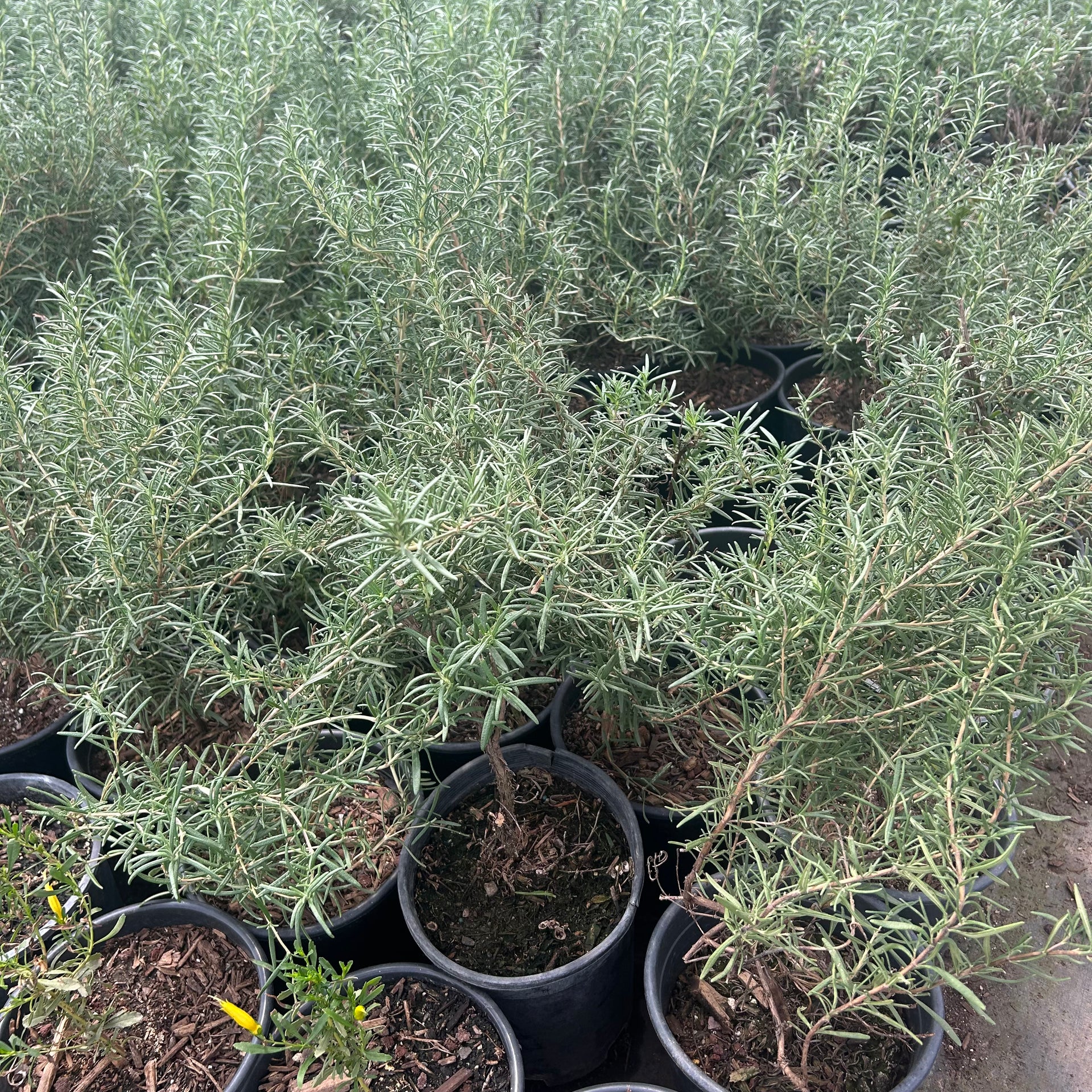
rosemary potted plant Rosemary 'Tuscan Blue' AZ | Rosmarinus officinalisPhoenix's Most Fragrant Edible Herb & Landscape Shrub Rosemary 'Tuscan Blue' Rosemary 'Tuscan Blue' (Salvia rosmarinus 'Tuscan Blue') is one of the Phoenix Valley's most versatile plants a culinary herb, a stunning landscape shrub, and an extraordinarily drought tolerant evergreen that thrives with minimal care in Zone 9b10a. Its bold upright form, intensely fragrant needle like foliage, and vivid blue violet spring blooms make it as attractive as any
Phoenix's Most Fragrant Edible Herb & Landscape Shrub — Rosemary 'Tuscan Blue'
Rosemary 'Tuscan Blue' (Salvia rosmarinus 'Tuscan Blue') is one of the Phoenix Valley's most versatile plants — a culinary herb, a stunning landscape shrub, and an extraordinarily drought-tolerant evergreen that thrives with minimal care in Zone 9b–10a. Its bold upright form, intensely fragrant needle-like foliage, and vivid blue-violet spring blooms make it as attractive as any ornamental shrub. Whether you're creating a fragrant herb garden in Scottsdale, adding evergreen structure to a border in Chandler, or planting a low-water hedge in Mesa, Rosemary 'Tuscan Blue' delivers beauty, fragrance, and function year-round. Available in 1 Gallon, 3/5 Gallon, and 10/15 Gallon sizes.
Rosemary 'Tuscan Blue' Plant Details
| Attribute | Detail |
|---|---|
| Scientific Name | Salvia rosmarinus 'Tuscan Blue' (formerly Rosmarinus officinalis) |
| Common Names | Rosemary Tuscan Blue, Upright Rosemary, Tuscan Blue Rosemary |
| Mature Height | 4–6 ft |
| Mature Width | 3–5 ft |
| Growth Rate | Moderate — 1–2 ft per year in Phoenix |
| Sun | Full sun (6+ hrs). Handles reflected heat from walls and pavement. |
| Water | Very low once established. One of the most drought-tolerant landscape shrubs available. |
| USDA Zones | 8–11 (Phoenix is Zone 9b–10a) |
| Soil | Well-draining essential. Adapts to Arizona caliche soils with proper drainage amendment. |
| Foliage | Evergreen — intensely fragrant needle-like silver-green leaves year-round |
| Bloom Color | Vivid blue-violet; primary bloom in spring, occasional rebloom in fall |
| Culinary Use | Yes — fully edible; one of the most flavorful culinary rosemary varieties |
| Wildlife Value | Attracts bees and butterflies; deer-resistant |
Rosemary 'Tuscan Blue' Uses in Phoenix Landscapes
Informal Privacy Hedge & Evergreen Screen
At 4–6 feet tall and 3–5 feet wide, 'Tuscan Blue' makes a distinctive informal hedge that's both fragrant and beautiful. Its dense, upright form provides solid visual screening when planted 3–4 feet apart, and the aromatic foliage means every breeze carries fragrance into outdoor living areas. Plant along a south- or west-facing fence line for a low-water screen that also functions as a kitchen herb garden — a uniquely Southwestern dual-purpose planting.
Culinary Herb Garden Centerpiece
'Tuscan Blue' is widely considered one of the most flavorful culinary rosemary varieties, with stronger aromatic oils than many other cultivars. It grows large enough to supply a household with rosemary for cooking year-round while remaining a beautiful landscape plant. Pair it with lavender, thyme, and sage in a dedicated herb garden or Mediterranean-inspired planting for a fragrant, edible border that thrives in Phoenix's climate.
Low-Water Border Accent & Foundation Planting
The bold upright form and silver-green needle foliage of 'Tuscan Blue' provide strong structural year-round presence in borders and foundation plantings. It works beautifully as a corner anchor in xeriscape beds, planted alongside Agave, Desert Spoon, and Texas Sage for a polished desert-Mediterranean landscape design. As a specimen plant, space 5 feet from neighbors; in a border planting, 3–4 feet apart.
Pollinator & Butterfly Garden
The vivid blue-violet spring blooms of 'Tuscan Blue' are among the best bee and butterfly forage plants available in the Phoenix Valley. They're particularly valuable as an early-season bloom when few other plants have flowered, providing critical nectar for native bees and monarch butterflies just emerging from winter dormancy. Plant in groups of 3–5 for maximum pollinator impact.
Best Time to Plant Rosemary 'Tuscan Blue' in Phoenix
Fall planting (October–November) is ideal — cool air reduces transplant stress while warm soil encourages fast root development. Rosemary that establishes over fall and winter is prepared for its first Phoenix summer. Spring planting (February–April) is also excellent, particularly if you want to enjoy the first bloom season shortly after planting. Avoid summer planting in June–August; newly planted rosemary needs consistent watering that can be challenging to maintain in peak heat.
How to Plant Rosemary 'Tuscan Blue'
- Dig wide, not deep — 2–3x the root ball width, same depth. Rosemary roots establish outward; a wide planting hole improves long-term performance.
- Check for caliche and drainage — this is critical for rosemary. Break through any hardpan layer and test drainage by filling the hole with water; it should drain within 30 minutes. Rosemary will not tolerate waterlogged roots.
- Backfill with native soil plus grit — mix native soil with 20–30% coarse sand or pea gravel to improve drainage in clay or caliche-heavy sites. Rosemary prefers lean, well-draining soils over rich amended ones.
- Spacing — 3–4 ft apart for hedges; 5 ft apart for individual specimens or foundation plantings.
- Water basin — build a 3–4 inch ring of soil around the plant to direct irrigation to roots during establishment.
- Mulch — 2–3 inches of gravel or decomposed granite (not wood chips). Rock mulch improves drainage around the crown and reflects warmth — conditions rosemary loves.
Watering Rosemary 'Tuscan Blue' in Phoenix
First Year Watering Schedule
- Weeks 1–2: Every 2–3 days, deep and slow
- Month 1–2: Every 4–5 days
- Month 3–6: Every 7–14 days (deep watering, letting soil dry between cycles)
- After Year 1: Every 2–3 weeks in summer; monthly or less in winter. Rosemary is highly drought-tolerant once established — overwatering is a more common problem than underwatering.
Drip Irrigation
Place drip emitters 18–24 inches from the base. Use 1 GPH emitters and run deeply but infrequently. Rosemary thrives with the "deep and infrequent" approach — soggy soil causes root rot, the plant's primary vulnerability in Phoenix landscapes. Ensure soil dries out between watering cycles.
How big does Rosemary 'Tuscan Blue' get in Phoenix?
In Phoenix's warm climate, 'Tuscan Blue' can reach 4–6 feet tall and 3–5 feet wide at maturity. It grows moderately fast — expect 1–2 feet of new growth per year in good conditions — and can be pruned to any desired size.
Can rosemary survive Phoenix summer heat?
Yes — 'Tuscan Blue' is one of the more heat-tolerant rosemary varieties and handles Zone 9b–10a summers well with deep, infrequent watering. The key is excellent drainage; rosemary that sits in wet soil during summer monsoons can develop root rot.
Does it need pruning?
Light annual pruning after the spring bloom (April–May) keeps 'Tuscan Blue' dense and compact. Never cut into old woody stems — prune only the green growth tips. Heavy shearing into woody growth will damage the plant.
Can I use 'Tuscan Blue' as a culinary rosemary?
Absolutely — it's one of the best culinary rosemary varieties available, with intensely flavored aromatic leaves used in cooking year-round. Just make sure you haven't applied any non-food-safe pesticides or fertilizers if you're harvesting for kitchen use.
How do I keep it from getting leggy?
Prune lightly after spring bloom — cutting soft green stem tips back by one-third keeps the plant bushy and prevents the leggy, open growth that can develop if rosemary is left unpruned for years. Don't skip pruning for more than 1–2 seasons.
You May Also Like
- Mediterranean Carpet — Low spreading groundcover for sunny Phoenix xeriscape beds
- Moss Verbena — Fine-textured purple blooming groundcover for desert borders
- Purple Trailing Lantana — Drought-tolerant purple bloomer for slopes and borders
- Ground Morning Glory — Silver-foliaged sprawling groundcover for naturalistic Phoenix landscapes
How Many Rosemary 'Tuscan Blue' Do I Need?
For a fragrant informal hedge or kitchen-herb screen, space plants about 4 ft apart (its mature width runs 3 to 5 ft). For specimens and foundation anchors, give each plant 5 ft of clearance so the upright form stands clean.
| Hedge / screen run | Plants needed (4 ft spacing) |
|---|---|
| 8 ft | 2 plants |
| 12 ft | 3 plants |
| 20 ft | 5 plants |
| 40 ft | 10 plants |
Rosemary 'Tuscan Blue' Season-by-Season in Phoenix
- Spring (Feb to Apr): Primary bloom season. Vivid blue-violet flowers cover the plant and feed early native bees and butterflies. Best second window to plant, and the right time for a light tip-prune right after flowering.
- Summer (May to Sep): Handles full reflected heat from walls and pavement with deep, infrequent water. The biggest risk in summer is soggy soil during monsoon rains, so keep drainage sharp and let the soil dry between cycles. Harvest sprigs anytime for the kitchen.
- Fall (Oct to Nov): Prime planting season and an occasional light rebloom. Roots establish fast in warm soil ahead of winter.
- Winter (Dec to Jan): Stays fully evergreen and fragrant. Cold-hardy well below Valley winter lows, so no frost protection is needed in Phoenix.
At a Glance
✔ Heat-Loving (Reflected-Heat Tolerant) ✔ Drought-Tolerant ✔ Evergreen ✔ Pollinator-Friendly ✔ Edible ✔ Low-Maintenance ✔ Deer & Rabbit-Resistant ✔ Cold-Hardy to 15°F
Plant It With
- French Lavender: classic Mediterranean herb-garden partner with matching low-water, full-sun needs.
- Bush Germander: silvery evergreen foliage and blue bloom that echoes rosemary in a xeriscape border.
- Texas Sage: tough flowering shrub that anchors the back of a low-water bed behind the rosemary.
- Desert Spoon: architectural native accent that contrasts rosemary's fine needle texture.
Is Rosemary 'Tuscan Blue' Right for Your Yard?
Plant it in full sun with sharp drainage, including hot reflected-heat spots along south- and west-facing walls. It shrugs off Phoenix summers and winters once established and doubles as a kitchen herb. Not a fit if your bed holds water or sits on unamended caliche that stays wet, since soggy roots are the one thing rosemary will not tolerate.
Shipping Notes
- Free Standard Shipping on $100+ Orders to the USA.
- Except Preorder products are shipped in 48 hours.
- Delivery to the USA:
- Standard Shipping : 3-10 business days
- If time is of the essence, please consider selecting expedited delivery for faster service.
Exchange/Return Notes
- We offer a 30-day return/exchange service after receiving.
- Final sale items are not eligible for returns or exchanges.
- To process your return/exchange, please contact us at [email protected]
- Please click here for more details>>> Return & Exchange Policy