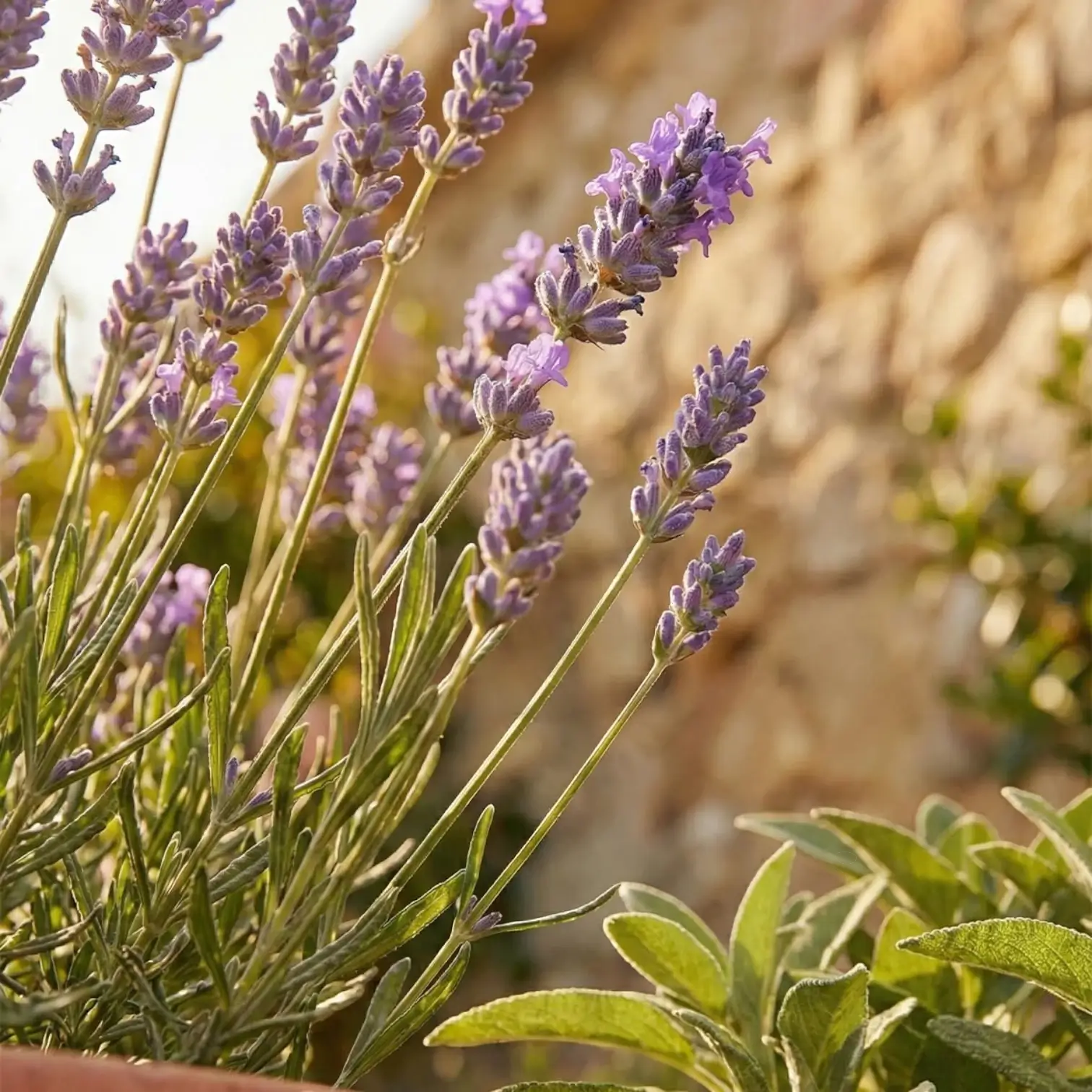
SKU: 43918569963
lavender plants that stay small

lavender plants that stay small Lavandula angustifolia 'Munstead' | Outdoor Plant

Sale price$25.71 Regular price$28.57
Save 10%

Pay in installments of $7.14 with ShopPay, AfterPay and Klarna

Shipping Estimate
USA
  • USA
  • CAN

Ships within 48 hours · Estimated delivery Jul 16 - Jul 21

Promo Codes Available:

For Your Every Summer RSVP, with Code: SUMMER15

Description

lavender plants that stay small Lavandula angustifolia 'Munstead' | Outdoor PlantClassic compact lavender with Lavandula angustifolia 'Munstead' Lavandula angustifolia 'Munstead' is a compact English lavender with violet blue flower spikes and a strong, familiar scent. It forms a neat mound that reads cleanly as edging or as a repeated accent through sunny beds and container plantings. The plant keeps a woody framework, so it offers structure beyond flowering. With consistent, light shaping, the outline stays dense and the foliage

Classic compact lavender with Lavandula angustifolia 'Munstead'

Lavandula angustifolia 'Munstead' is a compact English lavender with violet-blue flower spikes and a strong, familiar scent. It forms a neat mound that reads cleanly as edging or as a repeated accent through sunny beds and container plantings.

The plant keeps a woody framework, so it offers structure beyond flowering. With consistent, light shaping, the outline stays dense and the foliage remains an active part of the display rather than a background layer.

Munstead growth and seasonal shape

Spring growth starts from the woody base and quickly fills out into a rounded mound. Flower stems rise above the foliage in summer, then the plant settles back into evergreen texture once spent stems are removed.

A mature plant usually reaches around 45-60 cm in height with a spread around 60 cm, depending on root space and pruning. In pots, growth tends to stay more restrained, which can be useful when you want a compact lavender shape close to seating.

Sunny placement and soil texture

Open sun supports firm growth and better flowering. A lean, well-drained root zone is the main requirement; lavender copes with a wide pH range when drainage is good and the crown is not kept damp.

If soil is heavy, improve structure with grit through the planting area and avoid thick organic mulch against the base. In gravel-style planting, the foliage and flowers read especially well against stone and pale mineral surfaces.

Reading pot moisture by depth

Use a pot with generous drainage and a gritty outdoor mix. Water thoroughly when needed, then allow the mix to dry back so roots regain air.

A simple check is the top third of the pot: when it feels dry and the container is noticeably lighter, water deeply and let excess drain away. Avoid keeping the centre constantly moist, especially during cool or wet spells.

Pruning Munstead after flowering

Light shaping after bloom keeps the mound tight and helps prevent woody gaps forming. Keep cuts in green growth where leafy buds are present.

  • After flowering: cut off spent stems and lightly round the mound.
  • Spring tidy: remove winter damage once new shoots are moving.
  • Cut depth: avoid cutting back into bare wood with no leafy growth.
  • Feeding: keep nutrition light; overly rich growth softens stems and scent.

Munstead issue signals

A dull, soft centre is usually a drainage signal rather than a drought signal. In containers, repeated rain plus a heavy mix can trigger quick decline unless excess water can escape freely.

Reduced flowering most often links to reduced sun or pruning that was too late in the season. If the plant looks open and leggy, a slightly earlier trim and brighter exposure usually restores density.

Practical uses for Munstead

Lavandula angustifolia 'Munstead' suits herb gardens, path edging, small sunny beds, and container groups where you want a compact lavender mound with reliable summer colour. It pairs easily with rosemary, thyme, salvias, and fine grasses, and it holds its place in a scheme beyond peak flowering.

Shipping Notes
  • Free Standard Shipping on $100+ Orders to the USA.
  • Except Preorder products are shipped in 48 hours.
  • Delivery to the USA:
  1. Standard Shipping : 3-10 business days
  • If time is of the essence, please consider selecting expedited delivery for faster service.
Exchange/Return Notes
  • We offer a 30-day return/exchange service after receiving.
  • Final sale items are not eligible for returns or exchanges.
  • To process your return/exchange, please contact us at [email protected]
  • Please click here for more details>>> Return & Exchange Policy
SKU: 43918569963

Discover Niche Categories That Outsell lavender plants that stay small

Top-Converting Item to Boost Your Average Order

4.8 ★★★★★
Based on 27 reviews
Sort
Highest Rating
Newest First
Oldest First
Product Reviews
T
Verified Purchase
True Crime Reader
Massapequa, US
★★★★★ 5
Well Researched and a Terrific Read
Format: Kindle
Thank you Rachel! I enjoyed this so much, it was an eye-opener. So much I didn't know.
WAS THIS REVIEW HELPFUL?YesReportShare
Reviewed in the United States on February 12, 2026
D
Verified Purchase
dmh65016
Louisville, US
★★★★★ 5
5 Star
Format: Hardcover
Rachel is a very fine writer.
WAS THIS REVIEW HELPFUL?YesReportShare
Reviewed in the United States on April 19, 2026
T
Verified Purchase
THOMAS KAVANAGH
Draper, US
★★★★★ 5
Informative
Format: Hardcover
Good read
WAS THIS REVIEW HELPFUL?YesReportShare
Reviewed in the United States on March 28, 2026
E
Verified Purchase
Elizabeth Bennett
Dallas, US
★★★★★ 5
If we care about racism and white privilege, what should we do?
Format: Kindle
One hundred and fifty-two years ago, slavery ended in the United States. And yet the tentacles of that time touch lives every day, all these years later. What can be done to make things better? Michael Eric Dyson, a sociology professor at Georgetown University, and an ordained Baptist minister, suggests that white people who care about the lives of black people should make individual reparations. In his book, Tears We Cannot Stop …A Sermon to White America, Dyson says, “{Black people} built a legacy of excellence and struggle and pride amidst one of the most vicious assaults on humanity in recorded history. That assault may have started with slavery, but it didn’t end there. The legacy of that assault, its lingering and lethal effect, continues to this day. It flares in broken homes and blighted communities, in low wages and social chaos, in self-destruction and self-hate too. But so much of what ails us—black people. That is—is tied up with what ails you—white folk, that is. We are tied together in what Martin Luther King Jr. called a single garment of destiny. Yet sewed into that garment are pockets of misery and suffering that seem to be filled with a disproportionate number of black people.” The book, unlike Dyson’s other scholarly works, takes the form of a worship service, and uses the concept of an extended sermon, or jeremiad, to lead the reader through confession, repentence, and redemption “through the long night of despair to the bright day of hope.” In Dysons’s view, “whiteness is a problem to be struggled with,” and his book is of inestimable value in grappling with the struggle. The book speaks at length of police brutality against black people, and fervently tries to create empathy in white readers. It includes an extraordinary bibliography of books which give insight and voice to black history, oppression, pain, achievement, and lives. And it speaks of reparations, and our responsibility as white beneficiaries of an unequal system, to take concrete actions to right the wrong, the change our country and the lives of our black sisters and brothers and their children. Dyson is imaginative, and has many suggestions for how an individual or group “I.R.A.”—an Individual Reparations Account. We could buy books for black college students, overpay our black accountant or hairdresser, pay the black person who cuts our grass double the amount on the bill, give to the United Negro College Fund, and more. He suggests that faith groups consider giving 10% of their revenues to a church I.R.A. In an interview in the New York Times Magazine, Dyson says, “If the sermon ain’t making you a little bit uncomfortable, it ain’t effective. Look, if it doesn’t cost you anything, you’re not really engaging in change: you’re engaging in convenience. I’m asking you to do stuff you wouldn’t ordinarily do. I’m asking you to think more seriously and strategically about why you possess and what you possess…..you ain’t got to ask the government, you don’t have to ask your local politician—this is what you, an individual, conscientious, ‘woke’ citizen can do. I have read many—though surely not all—of the books Dyson recommends. I have grappled with white privilege as a mother of black children, a fighter against apartheid, a civil rights activist, a human being. I have never read anything which more cogently offers “woke whites” a path to being a part of the change. I urge you to read Tears We Cannot Stop …A Sermon to White America, and to take your place in the pantheon of people who help this country grow beyond its racist past.
WAS THIS REVIEW HELPFUL?YesReportShare
Reviewed in the United States on January 23, 2017
A
Verified Purchase
Anita Miles Cary
Phoenix, US
★★★★★ 5
Powerful and especially so read aloud by the author.
Format: Audio CD
Hearing this powerful book read by Dr Tyson made it doubly understandable and enlightening. I needed to hear the experience, hurt and anger expressed so incredibly honestly and with the power of his emotion. I saw the CDs here at a reasonable price and I am so much more aware hearing rather than reading this book. Dr Tyson teaches powerful historic and current systemic racial experience such as every white person will do well to encounter. If you want to learn more than you already know, listen to these CDs on Black experience from Dr Tyson. Could be disturbing to anyone who does not want to learn the truth he teaches. It’s so packed with truth I will listen to it more than once more. Thank you, Dr Tyson.
WAS THIS REVIEW HELPFUL?YesReportShare
Reviewed in the United States on July 3, 2025

recommand products