SKU: 4475555495
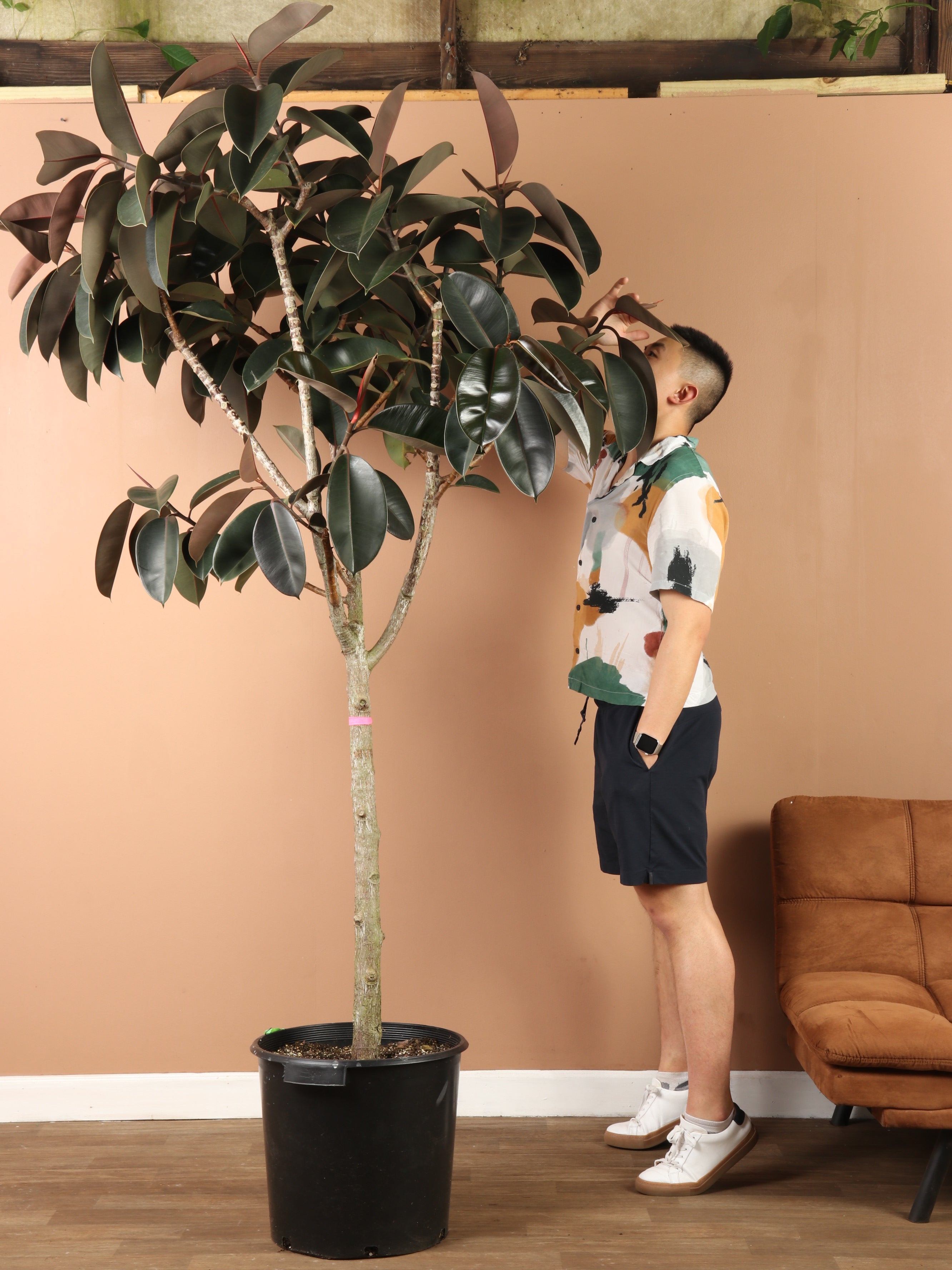
image of a rubber tree

image of a rubber tree Buy Huge Rubber Tree Std Online | Rare Indoor Plant

Sale price$23.33 Regular price$25.92
Save 10%

Pay in installments of $6.48 with ShopPay, AfterPay and Klarna

Shipping Estimate
USA
  • USA
  • CAN

Ships within 48 hours · Estimated delivery Sep 9 - Sep 14

Promo Codes Available:

For Your Every Summer RSVP, with Code: SUMMER15

Description

image of a rubber tree Buy Huge Rubber Tree Std Online | Rare Indoor PlantDescription Looking for a plant that brings authentic rainforest beauty into your home? Then we cant wait to introduce you to the magnificent Rubber Tree a stunning statement piece that will turn your space into a peaceful botanical retreat. Native to the Amazon rainforests, the Hevea brasiliensis gave the world natural latex. We're here to help you bring this tree into your home, where its impressive presence will definitely be a conversation

Description

Looking for a plant that brings authentic rainforest beauty into your home? Then we can’t wait to introduce you to the magnificent Rubber Tree - a stunning statement piece that will turn your space into a peaceful botanical retreat.

Native to the Amazon rainforests, the Hevea brasiliensis gave the world natural latex. We're here to help you bring this tree into your home, where its impressive presence will definitely be a conversation starter. With smooth bark and wonderfully glossy leaves, this beauty deserves a special (large) place in your plant collection.

Care 

Is a rubber tree a good indoor plant?

The rubber tree needs more space than many houseplants, but we believe it's absolutely worth it for the joy it brings! If you have the ceiling height, this beautiful specimen will become the heart of your room.

Are rubber trees hard to keep alive? 

Your rubber tree will thrive with consistent, loving attention to its basic needs. But it only needs regular care with steady temperatures, watering, and bright light. We promise it's not overwhelming! With our guidance, it will flourish.

This Amazonian beauty rewards dedicated care with years of green happiness, becoming a cherished part of your home and daily routine.

How often should I water a rubber plant? 

We recommend watering your rubber tree when the top 2-3 inches (5-8 cm) of soil feel dry. Think of recreating that perfect rainforest environment - consistently moist but never waterlogged. Check regularly whether it has just the right amount of moisture.

Where should I place a rubber tree in my house? 

Your rubber tree is happiest near an east- or south-facing window with bright, indirect light. We suggest avoiding direct afternoon sun, which can stress the leaves. Finding the perfect spot for your new giant friend is part of the joy! 

Can rubber tree plants live in bathrooms? 

Bathrooms can be wonderful homes for rubber trees! If your bathroom has bright light and enough space for growth, your plant will love the almost-tropical humidity. Make sure there’s proper ventilation, and you’re good to go!

What fertilizer should I use for a rubber tree? 

We recommend feeding your rubber tree with a balanced liquid fertilizer monthly during spring and summer. Think of it as providing loving nutrition for steady, healthy growth. Regular feeding helps your gentle giant plant stay strong and vibrant!

What does rubber tree plant care involve? 

Caring for your rubber tree involves providing bright indirect light, consistent moisture, regular feeding, and occasional leaf cleaning. We see plant care as being a beautiful relationship - the more attention you give, the more your plant flourishes!

Does a rubber tree need sunlight? 

Your rubber tree needs bright, indirect sunlight for at least 6 hours daily to stay healthy and happy. We always recommend filtered light similar to its rainforest home - gentle but consistent throughout the day. Direct afternoon sun can damage leaves.

Pet-friendly?

We care deeply about all family members, including pets. Unfortunately, the rubber tree isn't pet-friendly due to its latex sap containing ficin and other compounds. 

Are rubber tree plants toxic to dogs? 

Rubber trees are toxic to dogs, as their latex sap contains ficin compounds that can cause gastrointestinal upset and oral irritation. If your dog has ingested any part of your rubber tree plant, please contact your veterinarian immediately.

We're here to help you choose pet-safe alternatives if needed, ensuring both your plants and pets can coexist safely.

How toxic is a rubber plant to cats? 

The rubber tree is toxic to cats, potentially causing oral irritation, drooling, and digestive issues. If your cat has chewed on your rubber tree, please seek veterinary care right away. We understand how important pet safety is.

We can recommend beautiful cat-friendly plants that provide a similar impact while keeping your feline friends completely safe.


Factoids

What is the difference between a rubber plant and a rubber tree? 

The rubber tree (Hevea brasiliensis) is the authentic latex-producing species that grows impressively large, while the rubber plant (Ficus elastica) is its smaller ornamental cousin. We're proud to offer you the genuine rubber tree with Amazonian heritage!

Do rubber trees make rubber? 

Your rubber tree (Hevea brasiliensis) is the very species that produces commercial latex for countless products. So you're nurturing a piece of industrial history in your home - a plant that’s shaped the world (and looks great while doing it)!

Does a rubber tree purify air? 

Your rubber tree contributes to air purification through its large leaves, creating oxygen and improving humidity levels. While not the most efficient air purifier, it brings a piece of the Amazon's natural air-cleaning power into your space.

What is the lifespan of a rubber tree? 

With proper care, your indoor rubber tree can live for a truly long time, even several decades! Wild specimens can reach 100 years. We're honored to help you start this long-term relationship with a truly special gentle giant.

Do they still use rubber trees to make rubber? 

Hevea brasiliensis remains the world's primary natural rubber source, with plantations across Southeast Asia producing latex for tires, medical supplies, and so much more. It’s amazing that your houseplant shares DNA with the trees that keep the world moving.

What is the spiritual meaning of a rubber tree? 

The rubber tree symbolizes resilience, adaptability, and abundance - qualities we admire deeply. Indigenous Amazonian peoples considered it sacred because it represented the forest's generosity, while modern interpretations connect it to flexibility in life's challenges and personal growth.

Is the rubber tree fruit edible? 

The rubber tree fruit isn't edible - really they're seed capsules that explode when ripe, naturally dispersing seeds. Your indoor rubber tree rarely fruits, rather focusing its energy on producing those beautiful leaves we all love so much.


Buy a Rubber Tree

We'd love to help you welcome a magnificent rubber tree into your home! This stunning plant brings authentic Amazonian beauty and creates a truly special atmosphere in any large space. Our team is passionate about perfect matches.

Let us guide you through our video shopping experience to find your ideal rubber tree. We'll be with you every step of the way, from selection to delivery to ongoing care. Your space deserves this living piece of botanical history, and we're here to make sure it thrives under your loving care!

Shipping Notes
  • Free Standard Shipping on $100+ Orders to the USA.
  • Except Preorder products are shipped in 48 hours.
  • Delivery to the USA:
  1. Standard Shipping : 3-10 business days
  • If time is of the essence, please consider selecting expedited delivery for faster service.
Exchange/Return Notes
  • We offer a 30-day return/exchange service after receiving.
  • Final sale items are not eligible for returns or exchanges.
  • To process your return/exchange, please contact us at [email protected]
  • Please click here for more details>>> Return & Exchange Policy
SKU: 4475555495

Discover Niche Categories That Outsell image of a rubber tree

Top-Converting Item to Boost Your Average Order

4.2 ★★★★★
Based on 29 reviews
Sort
Highest Rating
Newest First
Oldest First
Product Reviews
S
Verified Purchase
Stone Dog
Pawtucket, US
★★★★★ 5
Exciting reinterpretation of ancient history.
Format: Paperback
In "Pharoahs And Kings", author David Rohl offers the reader a stunning new interpretation of the events of the ancient world in Egypt and the Levant. In doing so, he ties in Biblical events to their proper place in history. This is a stunning reordering of events and personalities and brings both Egyptian and Biblical history to a much closer synchronization. The book begins in Egypt where Rohl lays out his evidence for condensing the chronology of Egypt. Though we use AD/BC as a method of numbering our years, the ancients did not do so and used regnal dates ("In the third year of Pharoah So-And-So's reign, something happened."). By counting all Pharoahs and their reign lengths, historians felt they had a handle on when, according to our dating system, things happened. When they did so, they discovered the events portrayed in the Bible didn't match. When they date Solomon's reign in Israel to the Iron Age, for example, they find economic development to be poor - a far cry from the Biblical accounts of Solomon's reign as a flowering of culture and rich in trade. Likewise, Jericho's walls did not fall in the time period most historians would place the Exodus and entrance into the Levant of the Hebrews. Therefore, the Biblical accounts are simply myth, nothing more. David Rohl is a historian, not a religious believer and his point of view is as a historian. His focus is to find a more accurate timeline for the events in the ancient Middle East. He begins in Egypt because that is his area of expertise and he gives convincing arguements for re-ordering the events of Egypt. The clincher, for me, was the tombs of Tanis (among other inconsistencies in the conventional dating such as the number of Apis Bulls) in which the tomb of Psusennes I cuts into the tomb of King Oskoron II and was obviously built after the tomb of Oskoron II. The problem? Oskoron II was from the 22nd dynasty while Psusennes was from the 21st! It is quite obviously reversed! Rohl's conclusion is that two dynasties were contemporary and that about 140 years needs to be removed from the timeline of Egypt. When this is done, events in the Levant match the events in the Old Testament very closely. In the New Chronology, Jericho falls just when the Hebrews are entering Canaan according to the Bible. Solomon's Israel is now placed in the Late Bronze Age where there is evidence of prosperous cities and flourishing trade. There is evidence of mentions of both Saul and David in the Amarna Letters. This was a page turner and Rohl's work, although controversial, is backed up by fact and evidence. There is less evidence for some of his conclusions than others (in my mind), but it is well researched and never strays from a scholarly interpretation of the evidence written and on the ground. I actually enjoyed this book! David Rohl writes in a very engaging fashion, often using humor. His writing skill keeps subjects that may seem dull very frsh and exciting. He often uses humor and engages the reader, challenges the reader and forces the reader to think. This is not the usual dry tome on archeology that puts you to sleep! He assists the reader with many and high quality photos and drawings of the evidence and includes "side bars" with definitions and explanations in the margins to help the layman navigate the technical aspects of history and archeology without getting bogged down and overwhelmed. This is a fine book and more than deserving of five stars. It's a very eye-opening and interesting read that doesn't seem like a college textbook. Instead, he challenges the reader while entertaining at the same time. I recommend this book with five stars!
WAS THIS REVIEW HELPFUL?YesReportShare
Reviewed in the United States on September 29, 2012
A
Verified Purchase
Amazon Customer
Lowell, US
★★★★★ 5
Great book. Not an easy read but worth going ...
Format: Hardcover
Wish I had known about this book when it was published! Great book. Not an easy read but worth going thru more than once with great info. I have long held the belief of the early exodus date due to the Great Pyramid dating. Have read in many books about the confusion of the Egyptian chronology but this is the first one I've seen that really opens it up for examination.
WAS THIS REVIEW HELPFUL?YesReportShare
Reviewed in the United States on February 13, 2016
P
Verified Purchase
PhiloX
Birmingham, US
★★★★★ 4
A Lost Book doesn't Make Up for Lost Time
Format: Paperback
I bought the hard back copy of this book years ago & what an interesting read with great time lines & beautiful color photos. Someone borrowed the book & I forgot who I loaned it to. After years of trying to remember where it went, I at last bought it again as a paper back through Amazon.com. It's a used book with no marks & only a slight indentation on a few pages on the side. Now that I am looking into it & remembering it once again, I am over loaded with too many historical theories. Maybe it's my fault for being a book reader rather than an Egyptologist. I am going to write down some simple time frame theories & you will see what this book is about: General View: The Hebrews came into Egypt through reuniting Joseph & his brothers. They experienced the Amarna period of primitive Monotheism. Akhenaton was over thrown & polytheism was reinstated as the Hebrews were enslaved. Moses came during Rameses II & the Exodus was during the last years of Rameses II or the Pharaoh Marneptah. Amarna period of Akhenaton 1352-1337/1334 BC Rameses II 1279-1213 BC Exodus last years of Rameses II or Marneptah. Problems: Biblical History is off by 180 years if counted back from the creation of Solomon's temple. Rameses II was a great conquer, & both he & his son Marneptah never wrote of 10 plagues or an Exodus. Both died as old men & their mummys are still with us. David Rohl's Theory: revised Egyptian history by shortening the 3rd Intermediate Period by almost 300 years. Tutimaios known as Dudimose is the Pharaoh of the Exodus Exodus 1447 BC Amarna period of Akhenaton = time of King David approx. 1000 BC. Proof: letters written between an Egyptian Pharaoh & King of Israel during that period. Rameses II = Shishak of 921 BC sack of Jerusalem. Proof: Rameses II used a monogram that comes close to Shishak. Problems: goes against establish Egyptian time frames or "If the Bible doesn't fit the Egyptian time frames then make the Egyptian time frames fit the Bible". Akhenaton is no longer the 1st political monotheist & seems out of place not influencing Moses & writing letters to King David. From Another Book I Read - "Akhenaton & Moses" by Ahmed Osman Ahmed Osman's Theory: Akhenaton is the same person as Moses Amarna period of Akhenaton 1352-1337/1334 BC Exodus after the overthrow of Akhenaton by Rameses I Problems: Moses doesn't die overlooking the Promise land of Canaan as stated in Deuteronomy 34 but dies without a known grave as did Akhenaton. Moses monotheism doesn't deal with a solar disc as a symbol of the one God or a replacement of a lesser Egyptian God, but is from an inherited convent. Other Dates of the Exodus: Josephus 1552 BC Sedar Olam Rabbah 1440 BC Book of Jubilees 2410 BC Early Church Fathers 1570 to 1320 BC I need to research Immanuel Velikovsky ideas on this subject matter. I just bought the book & will review it.
WAS THIS REVIEW HELPFUL?YesReportShare
Reviewed in the United States on January 23, 2013
A
Verified Purchase
Amazon Customer
Grantham, US
★★★★★ 5
Correcting the Biblical Chronology
Format: Hardcover
When I first begin my study of the Bible, I had purchased another book on archaeology and the first thing I realized is that nothing fit. The time of Solomon was impoverishment in Israel. When you read the Bible Solomon was the richest king ever. David Rohl's book Pharaohs and Kings changed all that. He persuasively shows where the chronology is wrong and when corrected things fall into place. What is commonly called the old testament comes to life. It is the greatest book on Biblical Archaeology ever written. Thank you David !!!
WAS THIS REVIEW HELPFUL?YesReportShare
Reviewed in the United States on March 10, 2019
T
Verified Purchase
The Weez
Natrona Heights, US
★★★★★ 5
High quality for a slightly used book!!!!!
Format: Hardcover
Lots of pics and charts ... Egyptologists will love it
WAS THIS REVIEW HELPFUL?YesReportShare
Reviewed in the United States on March 12, 2024

recommand products