Pay in installments of $5.28 with
 ,
,
 and
and

Shipping Estimate
USA
- USA
- CAN
- USA
- CAN
Ships within 48 hours · Estimated delivery Sep 4 - Sep 9
 Promo Codes Available:
For Your Every Summer RSVP, with Code: SUMMER15
Description
fertilizing heuchera plants Palace Purple Coral Bells – Heuchera ‘Palace Purple’The Heuchera Palace Purple Coral Bells is a cold hardy perennial drought tolerant plant that is well known for its deep, dramatic burgundy purple star shaped leaves. The plant is a popular choice in gardens due to its versatility, serving as both a ground cover and a companion plant in mixed borders. Native to North America, the Heuchera Palace Purple is also known as Palace Purple Alumroot, coral bells purple palace, and Alum Root Palace Purple. The
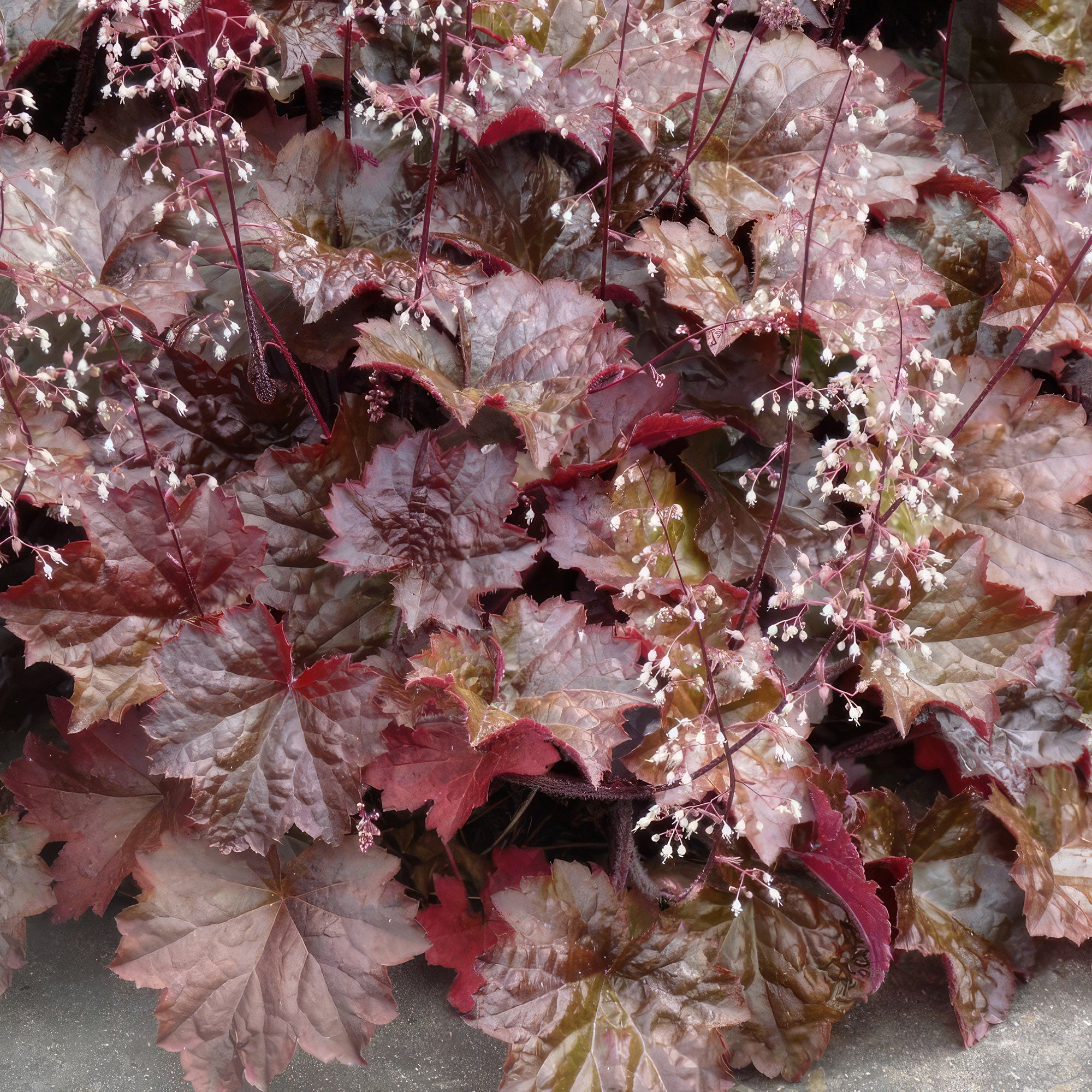
The Heuchera Palace Purple ‘Coral Bells’ is a cold-hardy perennial drought-tolerant plant that is well-known for its deep, dramatic burgundy-purple star-shaped leaves. The plant is a popular choice in gardens due to its versatility, serving as both a ground cover and a companion plant in mixed borders.
Native to North America, the Heuchera Palace Purple is also known as Palace Purple Alumroot, coral bells purple palace, and Alum Root ‘Palace Purple’.
The name “Palace Purple” highlights its regal leaf color, which resembles the deep, rich shades associated with royal hues.
This specific cultivar is renowned for its unique foliage color and was awarded the Perennial Plant of the Year in 1991, which significantly boosted its popularity.
The foliage of Palace Purple Coral Bells is its main attraction, displaying striking deep purple to burgundy tones that can shift slightly with the seasons.
The star-shaped leaves are glossy with a slightly ruffled edge, adding texture and dimension to any planting area.
Mature plants typically reach a height of 18 inches with a spread of about 24 inches, making it a compact yet impactful addition to the garden. The dense clumps of foliage create a lush ground cover, particularly effective in filling out shady areas or borders where other plants may struggle.
Palace Purple Coral Bells blooms in late spring to early summer, featuring delicate bell-shaped flowers with tiny white to pale pink clusters at the top of stems. These airy blooms not only enhance the visual appeal but also attract pollinators like butterflies and hummingbirds to the garden, adding both beauty and ecological value.
Palace Purple Coral Bells’ unique color and texture make it an excellent choice for garden borders, containers, and mass plantings. Its versatility allows it to blend effortlessly into woodland gardens, shaded beds, rock gardens, and even as an understory plant in partially shaded perennial beds. It is a great companion plant to other shade loving plants, while also contrasting beautifully with brightly colored flowers like yellow coreopsis or white astilbe.
When and How to Water Your Palace Purple Coral Bells
Once established, the Palace Purple Coral Bells are known for their drought tolerance, making them a resilient addition to gardens with varying water conditions. Although they can withstand periods of dryness, consistent moisture during their initial establishment helps develop a robust root system. In well-drained soil, mature plants generally require less frequent watering, especially as they adapt to dryer conditions.
In the spring and summer, during the growing season, aim to water regularly—about once a week or when the top inch of soil feels dry to the touch. Increase watering during prolonged hot or dry spells, as this helps maintain foliage health and promotes vibrant color. However, avoid overwatering, as Coral Bells are sensitive to soggy roots and can suffer from root rot if their soil remains overly moist.
In the fall and winter months, water requirements decrease significantly, as plants enter a period of dormancy. It’s best to allow the soil to dry out slightly between waterings. The drought-tolerant nature of Heuchera ‘Palace Purple’ means it can survive with minimal moisture, though providing an occasional drink during extended dry winter periods will help keep the roots hydrated and healthy.
Light Requirements – Where to Place Your Heuchera Palace Purple
When grown indoors, Palace Purple Coral Bells thrive best in bright, indirect light for at least 4–6 hours per day. Place them near a north or east-facing window where they can receive ample filtered sunlight without direct exposure, as direct light may scorch their leaves.
In low-light conditions, plants may experience slower growth and muted foliage color, so supplementary lighting can help enhance their vibrant hue and maintain healthy growth.
For outdoor cultivation, these Coral Bells perform beautifully in partial shade for almost 6 hours daily.
Full sun conditions encourage vivid foliage color, but in warmer climates, morning sun combined with afternoon shade is ideal to prevent leaf scorch while encouraging deep color.
In cooler areas, Heuchera can tolerate more extended sun exposure, though midday shade is recommended to keep leaves from wilting or developing sunburn. This combination allows the plant to flourish, enhancing both its foliage and floral display.
Optimal Soil & Fertilizer Needs
The Heuchera ‘Palace Purple’ Coral Bells prefer well-draining soil that is rich in organic matter. A loose, airy soil mix with components like compost, perlite, or bark is ideal, ensuring roots have access to necessary oxygen and reducing the risk of rot. Coral Bells thrive in slightly acidic to neutral soil with pH 6.0–7.0 but can tolerate a range of soil conditions. Instead, make or buy a well-draining potting mix, or ideally use our specialized potting mix, opens in a new tabGo to soil cactus mix blend 1 gal 4 qt cacti succulent dirt compost growing media that contains 5 natural substrates and mycorrhizae to promote the development of a strong root system that helps your Heuchera plants to thrive.
When it comes to fertilizer, apply a balanced NPK fertilizer at the start of the growing season typically once a year in early spring. Use the 5-10-5 NPK ratio which will support leaf color and plant health without overwhelming the roots. Avoid overfertilizing, as this can result in excessive foliage growth at the expense of flowering.
Hardiness Zones & More
When grown indoors, Heuchera ‘Palace Purple’ thrives in average household temperatures between 60–75°F with bright, indirect light. While adaptable, avoid placing the plant in locations with extreme temperature fluctuations like near heating or cooling vents, which can stress the foliage. Moderate humidity is generally sufficient for indoor growth, but an occasional misting or a nearby humidifier can provide added comfort in especially dry environments, helping to keep leaves lush and vibrant.
For outdoor cultivation, Palace Purple Heuchera flourishes in partial shade to full sun and is ideal for USDA zones 4–9, where it tolerates a wide range of temperatures—from frosty winters to hot summers. This variety also tolerates high humidity levels well, but ensures good air circulation around the plant to prevent fungal issues, especially in wet or humid climates. Proper airflow is essential for keeping foliage dry and healthy, which helps in maintaining disease resistance.
Wildlife – Palace Purple Coral Bells Attract the Following Friendly Pollinators
The Palace Purple Coral Bells is known for attracting friendly pollinators, including bees, butterflies, hummingbirds, and other insects which are drawn to its airy sprays of small, bell-shaped flowers. This plant makes an excellent choice for pollinator-friendly gardens, as it adds both beauty and ecological value.
According to ASPCA, the Palace Purple Coral Bells is non-toxic to humans, cats, dogs, and horses. It is safe to touch or handle the plant without fear of causing harm to yourself or your pets.
How to Propagate Your Palace Purple Coral Bells
To propagate your Palace Purple Coral Bells, you can divide the plant in early spring or late summer. Gently separate the root ball into smaller sections and replant them in well-draining soil. Water thoroughly and keep the newly divided plants consistently moist until they become established. Additionally, you can also propagate Palace Purple Coral Bells through stem cuttings by taking 3–4-inch cuttings from healthy stems, removing the lower leaves, and placing them in a container with moist soil until roots develop.
Key Takeaways
- Heuchera 'Palace Purple' is a cold-hardy down to USDA zone 4, an adaptable plant suitable for gardens in regions with cold winters, enhancing its popularity in mild and colder climates.
- Palace Purple Coral Bells' glossy burgundy-purple leaves add depth and drama to garden beds and borders, contrasting with traditional green foliage.
- Purple Palace Coral Bells, a dense, clumping ground cover, effectively fills gaps and spreads, providing lush coverage and weed suppression in shaded or partially shaded areas.
- Once established, it is moderately drought-tolerant and requires only infrequent watering.
- It is a low-maintenance plant with resilience and disease resistance, suitable for gardeners of all levels, requiring only occasional watering, deadheading, and mulching.
The Bottom Line
Overall, the Palace Purple Coral Bells (Heuchera ‘Palace Purple’) is a standout choice for any garden, bringing dramatic, burgundy-purple foliage that holds its color through the seasons, creating year-round visual interest. This cold-hardy, moderately drought-tolerant plant thrives in partial shade to full sun, particularly in cooler climates, and serves as an attractive ground cover or border plant. With delicate, pollinator-friendly flowers in late spring, it not only adds beauty but also supports local ecosystems. It is a low-maintenance, disease-resistant addition that requires only occasional watering, mulching, and deadheading, making it an excellent choice for gardeners looking for beauty without the hassle.
Shipping Notes
- Free Standard Shipping on $100+ Orders to the USA.
- Except Preorder products are shipped in 48 hours.
- Delivery to the USA:
- Standard Shipping : 3-10 business days
- If time is of the essence, please consider selecting expedited delivery for faster service.
Exchange/Return Notes
- We offer a 30-day return/exchange service after receiving.
- Final sale items are not eligible for returns or exchanges.
- To process your return/exchange, please contact us at [email protected]
- Please click here for more details>>> Return & Exchange Policy