SKU: 46024185918
trailing pot plants

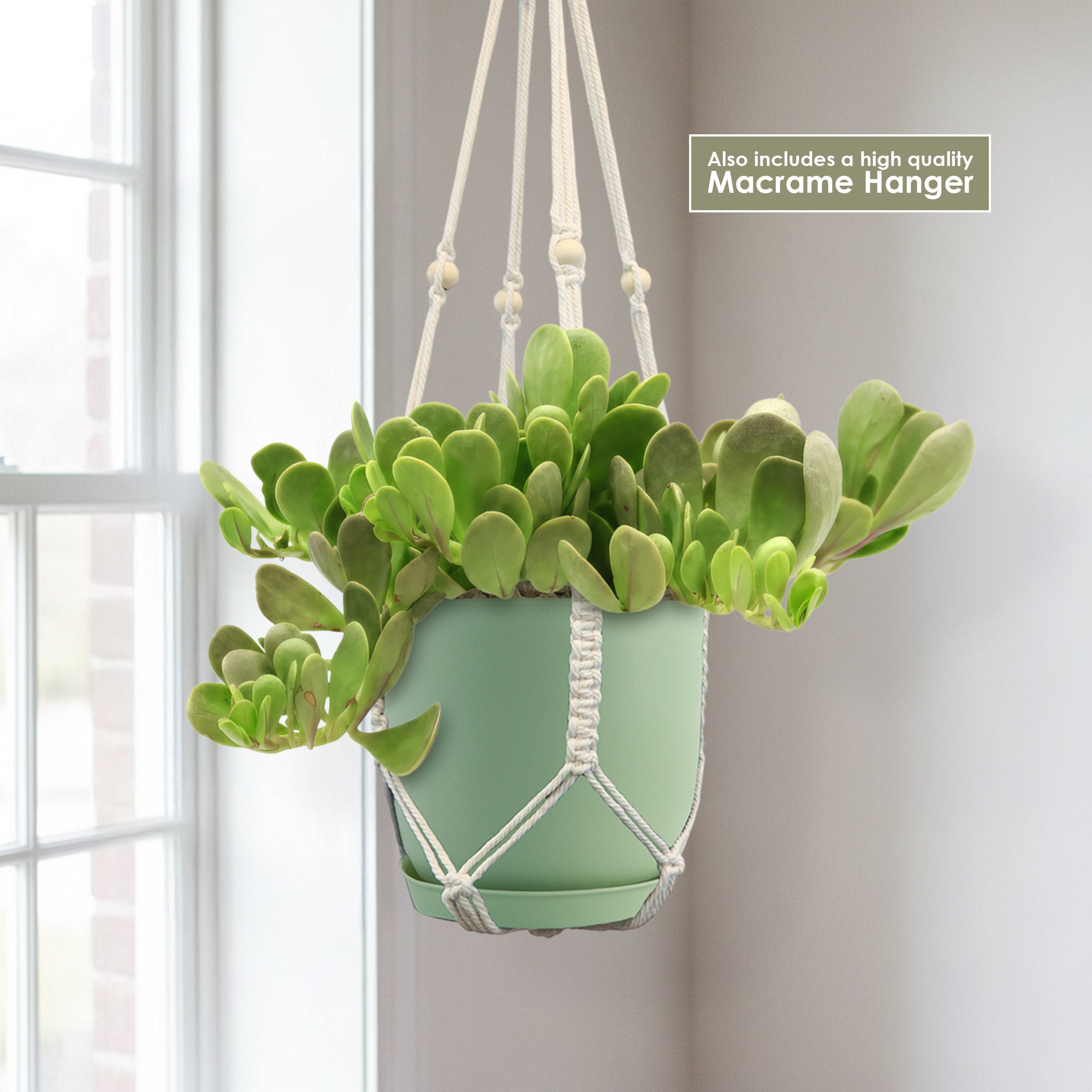
trailing pot plants Trailing Jade 'Senecio jacobsenii' 1 Gal. / Black / With Pot

Sale price$20.01 Regular price$22.23
Save 10%

Pay in installments of $5.56 with ShopPay, AfterPay and Klarna

Shipping Estimate
USA
  • USA
  • CAN

Ships within 48 hours · Estimated delivery Jul 22 - Jul 27

Promo Codes Available:

For Your Every Summer RSVP, with Code: SUMMER15

Description

trailing pot plants Trailing Jade 'Senecio jacobsenii' 1 Gal. / Black / With PotIntroducing the trailing jade plant, also known as Senecio jacobsenii, which is a popular hanging trailing succulent. Native to South Africa, it has several other common names such as weeping jade, vining jade, or Kleinia petraea. While it may look similar to the crassula ovata, it's actually not a jade plant. It's a succulent that belongs to the Senecio family. The trailing jade plant features thick stems with egg shaped leaves in a vibrant green

Introducing the trailing jade plant, also known as Senecio jacobsenii, which is a popular hanging/trailing succulent. Native to South Africa, it has several other common names such as weeping jade, vining jade, or Kleinia petraea. While it may look similar to the crassula ovata, it's actually not a jade plant. It's a succulent that belongs to the Senecio family. 

The trailing jade plant features thick stems with egg-shaped leaves in a vibrant green hue, that can grow up to 4 feet long, providing a lush and full appearance.

When exposed to chilly weather, the green leaves may turn shades of purple, mauve, or brown, adding a touch of seasonal beauty to your space.

This trailing jade is a fantastic choice for hanging baskets or trailing down from elevated planters.

The trailing jade flowers are small, orange, and bloom in clusters. The flowers are star-shaped and can appear in late summer or early fall. While the flowers are not the main attraction of this plant, they add a lovely touch of color and can attract pollinators like bees and butterflies. 

When and How to Water Your Trailing Jade 

When it comes to watering, the trailing jade plant stores water in its stems. That means you don't need to water it too often - just make sure the topsoil is completely dried before giving it another drink. This helps avoid overwatering and keeps your Senecio plant healthy and happy. 

In the spring and summer, during the growing season, water deeply, allowing the excess water to completely drain out through a drainage hole. In the fall and winter, when the plant is dormant, you can reduce watering to once every two to three weeks. 

And get this - any type of water (except hard water) will work just fine. So, whether you use tap, filtered, or even rainwater, your trailing jade will be thriving in your garden in no time. Just remember to avoid hard water since this cactus doesn't like lime very much. 

Remember, it's always better to underwater than overwater your succulent plant. Keep an eye on the leaves - if they start to look wrinkled, it's a sign that the plant needs a drink. 

Light Requirements - Where to Place Your Senecio jacobsenii

When it comes to indoor lighting, your trailing jade loves bright, indirect light. Find a spot near a west-facing window where it can receive plenty of filtered sunlight throughout the day. Avoid placing it in direct sunlight, as the intense rays can scorch the leaves. If you notice your plant regularly stretching or leaning towards the light, it might be an indication that it needs more brightness. 

If you decide to move your trailing jade Senecio jacobsenii outdoors, it will appreciate a location with partial shade. Too much direct sunlight can cause sunburn and damage to the leaves.

Look for a spot that receives a few hours of the morning or late afternoon sun but is shaded during the hottest part of the day. This will provide the plant with the right amount of light it needs to thrive.

Remember, it's always important to monitor your Senecio jacobsenii plant's response to lighting conditions. If the leaves become pale or develop brown spots, it might be a sign that the light is too intense. On the other hand, if the plant starts to stretch or lose its vibrant color, it might need more light. 

Optimal Soil & Fertilizer Needs 

The trailing jade plant favors very airy, sandy soil that drains well. Planting them in ordinary coarse sand will result in compacted roots, stunted growth, and most likely root rot. Instead of gritty soil, make or buy a well-draining potting mix, or ideally use our specialized succulent potting mix that contains 5 natural substrates and mycorrhizae to promote the development of a strong root system that helps your trailing jade succulent to thrive. 

As for fertilizer, trailing jade doesn't require a lot of feeding. During the growing season in the spring, you can fertilize your plant once a year with a balanced (5-10-5), water-soluble NPK fertilizer specifically made for succulents. Follow the instructions for the correct half-strength dilution ratio. Avoid over-fertilizing, as this can lead to salt buildup in the soil, which can harm your plant. During the dormant season in winter, you can hold off on fertilizing altogether. 

Hardiness Zone & More 

When planted indoors, the trailing jade plant thrives in average room temperatures between 60°F and 75°F. It can tolerate slightly cooler temperatures at night but avoid exposing it to extreme cold or drafts. As for humidity, this plant is adaptable and can handle normal indoor humidity levels, so no need to worry too much about that. 

When it comes to outdoor cultivation, there are only a few places in the United States where it grows well outdoors year-round. This Hanging Jade Plant is mostly a popular houseplant but can grow in USDA zones 10 and 11.

In terms of temperature, the trailing plant enjoys warm weather and can tolerate temperatures up to 90°F. However, it's important to provide some shade during the hottest part of the day, especially in regions with scorching summers. It can tolerate drier conditions, but if you live in a very arid climate, you may want to occasionally mist the leaves or place a tray of water nearby to increase humidity. 

Wildlife - Senecio jacobsenii Attracts the Following Friendly Pollinators

The Senecio jacobsenii vibrant flowers can attract pollinators like bees and, hummingbirds, butterflies. These pollinators help in the reproduction of the plant by transferring pollen from one flower to another, aiding in seed production and plant growth.

Butterflies
Bees
Hummingbirds
Lady Bugs
Multi Pollinators
Other Birds

The Trailing Jade is generally considered non-toxic to humans but is mildly toxic to dogs if ingested. It is safe for people to handle, as the plant does not cause skin irritation or other reactions upon touch.

How to Propagate Your Trailing Jade Plant

If you want to propagate the trailing jade Senecio jacobsenii, it can be easily done through stem cuttings. Simply take a healthy stem cutting, let it dry out for a few days to form a callus, then plant it in well-draining soil. The cutting will re-root and grow into a new plant. 

Key Takeaways

  1. Trailing Jade has a beautiful trailing growth habit, making it ideal for hanging baskets and elevated planters where it can cascade elegantly.
  2. This plant is highly drought-tolerant, thanks to its ability to store water in its thick, succulent leaves, making it resilient during dry spells.
  3. Senecio jacobsenii should be kept in warm climates or moved indoors during colder months to avoid frost damage.
  4. With its slow growth rate and low maintenance needs, Trailing Jade is an excellent choice for those seeking an easy-care plant.
  5. The plant’s fleshy leaves develop striking purple and pink tones when exposed to bright, indirect light, adding a colorful accent to any indoor or outdoor space.

The Bottom Line 

Overall, the trailing jade (Senecio jacobsenii) is a stunning succulent that resembles a jade plant but has its own unique charm. With its egg-shaped, green leaves that can grow up to 4 inches long, this plant adds a lush and full look to any space. What makes it even more interesting is that its leaves can change color to shades of purple, mauve, or brown in colder temperatures, adding a touch of seasonal beauty. As for care, this trailing jade prefers bright, indirect light and should be watered sparingly, allowing the soil to dry out between waterings. It's a low-maintenance plant that can tolerate periods of drought, making it a great choice for both indoor and outdoor settings. So, whether you're a succulent enthusiast or a plant lover looking for something unique, the trailing jade Senecio jacobsenii is definitely worth considering. 

Shipping Notes
  • Free Standard Shipping on $100+ Orders to the USA.
  • Except Preorder products are shipped in 48 hours.
  • Delivery to the USA:
  1. Standard Shipping : 3-10 business days
  • If time is of the essence, please consider selecting expedited delivery for faster service.
Exchange/Return Notes
  • We offer a 30-day return/exchange service after receiving.
  • Final sale items are not eligible for returns or exchanges.
  • To process your return/exchange, please contact us at [email protected]
  • Please click here for more details>>> Return & Exchange Policy
SKU: 46024185918

Discover Niche Categories That Outsell trailing pot plants

Top-Converting Item to Boost Your Average Order

4.7 ★★★★★
Based on 5 reviews
Sort
Highest Rating
Newest First
Oldest First
Product Reviews
N
Verified Purchase
Nidan Jutsu
Dallas, US
★★★★★ 5
Fast and Easy! Great Taste!
Color: A-Silver
This is my first espresso machine. The first thing you should know is to select the right beans -- especially if you choose the bottomless portafilter (optional, but recommended.) I bought a bag of Starbucks non-espresso dark roast beans, and it couldn't get to the espresso pressure in the bottomless filter; those beans are too oily for espresso. Their dark roast espresso beans work great, though. Here's why this is the best Casabrews machine (in my opinion.) The "Flash heat" tech is ready to brew FIVE SECONDS after hitting the power button (feels more like 3.) There are machines that take anywhere from 30 seconds to about 20 minutes to heat up. I don't know about you, but I don't like waiting. This same tech is ready to froth milk 5 seconds after brewing. You can't froth at the same time, but you're already potentially on your daily limit of caffeine while your "friends" are still waiting for their clunky machines with double boilers to warm up..! I've used mine daily since late November. If you have hard water, you will have to descale more often (I've done it once so far.) In my case, I use a Kangen filter on the 11.5 (alkaline) setting. This causes faster buildup, but the taste is worth it, and I've always used 11.5 pH for all coffee--drip and Keurig. I use 17.5g of those Starbucks beans -- different beans may require different amounts. If you overfill the basket, you will get more steam and dripping. If you underfill it, you won't hit espresso pressure and it will taste weak and sour due to underextraction. I prefer tending toward overextraction. This could cause some bitterness, but that's easily-fixed by adding a few pinches of salt (I use Himalayan Sea Salt) or some almond milk. The punch and complexity are worth it, though -- it's the SOUL of the beans! ⚡😍🤩💪🏼 I've also used preground espresso, but it won't be quite as strong. That works fine with the pressurized double basket that comes with this machine -- but it won't reach pressure with the bottomless basket. The long-ground grains have lost their potency. I drink this if it's already early evening or later--so I could actually SLEEP! Two things you'll want to get right away are a WDT tool (a bunch of needles like a long comb) and a "knock box" (where you tap the filter to remove the leftover coffee puck.) I 3D-printed a knockbox from Thingiverse.com Make sure you select enough infill and 4 walls because it'll have to take a lot of abuse. It also helps to have a dosing funnel (also 3D-printed from there.) Any concerns about food grade stuff is addressed by either buying PET-G food grade filament or wet-sanding (which I opted for.) The WDT tool breaks up the coffee clumps, and you'll want to stir it down and into the arcs of the filter to prevent sputtering, uneven flow, and bad espresso. I also have a 3D-printed distributor--but many consider it unnecessary. I like it because it helps to center the grinds and then I tamp it down (I got an aftermarket tamper--one that has ridges; it works better than the flat ones.) I have a flat metal tamper, too. I just don't use it. Making a double takes about 5 minutes--starting from grinding beans, weighing, transferring, stirring, tamping, putting on the included puck screen and attaching the portafilter. After that, you just press the button. I always get 3 streams that consolidate into one, and good crema (a bit of foam.) I use a digital Etek scale (~ $10.) On scale use... My Etek can measure volume. But there are TWO settings. One is for milk (slightly different density) and one is for water. The one for water is approximately the same as the gram unit setting--as water is 1 gram per milliliter. Make sure if you are leaving it on the milliliter setting that you are using the water one. It has a drop icon. The milk setting has a cup with an "M" on it. You will put too much coffee in if you try to measure it with the milk setting. I found that out recently, as I was not aware of the separate setting for milk. So LIVE and LEARN! 🤓📈📊 If the machine gets accumulated mineral deposits, I take a straightened paper clip and carefully (VERY) insert into the hole in the mounting plate. I then run 2-3 doubles without the portafilter. If it gets more far-gone, I use citric acid (1 tablespoon per liter of water.) You could buy some descaling powder from a dollar store, but I think citric acid is more economical. I use it on my Kangen machine which is why I had it. You will then want to run a few cycles of doubles through to get rid of any aftertaste. You might be tempted to use vinegar and water. I used that on my Keurig and I had to run probably 6 or more cycles to get the vinegar taste out; I don't recommend it! Make sure you run some hot water through the frothing tube after each use -- and wipe it down to remove the milk before it gets too solidified. This is done by turning the dial all the way back to the left, having the machine on, and then turning it all the way to the right. After you see the flow is constant (not sputtering or uneven--I watch for about 5 seconds), turn the dial back to the far-left. That's it! This machine has changed my morning routine. I eat grits and a fried egg with it so I don't bounce off into the stratosphere on a caffeine high. The taste is quite good. I very rarely drink drip coffee (or even use it or the Keurig for coffee) since having this resource. Being away from home is hard, because it's hard to find good espresso -- especially at those licensed "Starbucks." Those are the ones that just pay to use their materials, but are not the genuine deal. Let me know how yours works out, how it tastes, and if you have any questions! 💯 Note: I made the video before I started using other tools mentioned, above.
WAS THIS REVIEW HELPFUL?YesReportShare
Reviewed in the United States on April 15, 2026
E
Verified Purchase
Elizabeth C
Houston, US
★★★★★ 5
A must buy for espresso lovers and limited counterspace
Color: Black
If you want an espresso machine but don’t want to go though the entire massive machines this is the perfect beginning and even moderate espresso maker for you! So much you can do with it, makes a great solid shot of espresso. No concerns so far and fast and easy to learn steps. Recommending this to all our friends and family that are interested
WAS THIS REVIEW HELPFUL?YesReportShare
Reviewed in the United States on April 14, 2026
R
Verified Purchase
Raysa
Los Angeles, US
★★★★★ 5
Great value for your money!
Color: A-Silver
Yessss! Real espresso maker! Excellent brewing capacity. Easy to use. Made with great quality material. The machine comes with all the pamphlets & easy to read instructions which say to heat twice for extra hot coffee, but honestly the coffee comes out VERY hot & tasty without double-heating. Also comes carefully packaged to prevent damage during delivery. Great value for your money!
WAS THIS REVIEW HELPFUL?YesReportShare
Reviewed in the United States on April 10, 2026
J
Verified Purchase
Joe Martin
Dallas, US
★★★★★ 4
Plastic, but Well Performing Machine
Color: A-Silver
My household has been using the Casabrewa 5418 PRO multiple times a day for over a month now. It's function and directions are excellent. With some experimenting, it makes acceptable and delicious espresso. This is an entry model machine that does exactly what you want it to. It heats fast and produces espresso fast. However, for the price point the amount of plastic is a bit disappointing. The machine has the appearance of being stainless steel while being constructed almost entirely of plastic. If you want an entry level espresso machine and you don't mind the plastic, this is an excellent option.
WAS THIS REVIEW HELPFUL?YesReportShare
Reviewed in the United States on November 5, 2025
G
Verified Purchase
Gk
Bozeman, US
★★★★★ 5
Who cares if its plastic... let's not be silly
Color: A-Silver
Why are people so obsessed with metal housing? Metal literally serves no purpose. It's just a cover. It won't make a better coffee with metal housing nor will it last longer. I personally don't care what it "feels" like to touch it, I don't even notice it. I make coffee with it, it's a tool. I don't touch it to "feel how nice it is". That's just weird. Anyway, what a great machine. To me instant heating is worth all the missing features of fancier machines combined. I've had it for several months now, and I have it dialed in. I make up to 5-6 lattes a day and I've made about a 1000 by now. Still working great. Not interested in upgrading.
WAS THIS REVIEW HELPFUL?YesReportShare
Reviewed in the United States on May 25, 2026

recommand products